Results by title
138 books match the query 'Discovery and exploration' and 4 start with p
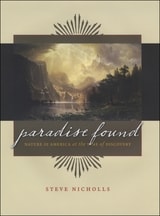
Paradise Found
Nature in America at the Time of DiscoverySteve Nicholls
University of Chicago Press, 2009
The first Europeans to set foot on North America stood in awe of the natural abundance before them. The skies were filled with birds, seas and rivers teemed with fish, and the forests and grasslands were a hunter’s dream, with populations of game too abundant and diverse to even fathom. It’s no wonder these first settlers thought they had discovered a paradise of sorts. Fortunately for us, they left a legacy of copious records documenting what they saw, and these observations make it possible to craft a far more detailed evocation of North America before its settlement than any other place on the planet.
Here Steve Nicholls brings this spectacular environment back to vivid life, demonstrating with both historical narrative and scientific inquiry just what an amazing place North America was and how it looked when the explorers first found it. The story of the continent’s colonization forms a backdrop to its natural history, which Nicholls explores in chapters on the North Atlantic, the East Coast, the Subtropical Caribbean, the West Coast, Baja California, and the Great Plains. Seamlessly blending firsthand accounts from centuries past with the findings of scientists today, Nicholls also introduces us to a myriad cast of characters who have chronicled the changing landscape, from pre–Revolutionary era settlers to researchers whom he has met in the field.
A director and writer of Emmy Award–winning wildlife documentaries for the Smithsonian Channel, Animal Planet, National Geographic, and PBS, Nicholls deploys a cinematic flair for capturing nature at its most mesmerizing throughout. But Paradise Found is much more than a celebration of what once was: it is also a reminder of how much we have lost along the way and an urgent call to action so future generations are more responsible stewards of the world around them. The result is popular science of the highest order: a book as remarkable as the landscape it recreates and as inspired as the men and women who discovered it.
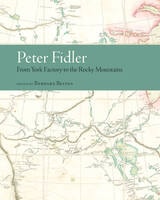
Peter Fidler
From York Factory to the Rocky MountainsBarbara Belyea
University Press of Colorado, 2026
The two journals—“From York Factory to Buckingham House” and “From Buckingham House to the Rocky Mountains”—detail Fidler’s travels over a period of nine months. They include remarks on fur trade history, organization of the inland brigade, three distinct geographical regions, and the daily life of a Plains nation. Belyea’s introduction and ample notes provide insight into the way geographic, specifically cartographic, information was noted in the journals, with additional information on industry trading techniques, traders’ economic decisions, broad changes in regional social and economic conditions, and interactions with indigenous peoples.
Fidler’s journals are an exceptional record of the fur trade’s western expansion and the daily life of a Plains nation at the height of its power and prosperity. With its rich analysis of primary source documents and painstaking reproduction of historical trade routes, Peter Fidler: From York Factory to the Rocky Mountains will be of great value to students and scholars in the fields of fur trade studies, cartography, travel literature, and Canadian history, as well as general readers interested in westward expansion, exploration, commerce, and indigenous-colonial relations.

Photographed All the Best Scenery
Don Fowler
University of Utah Press, 1972
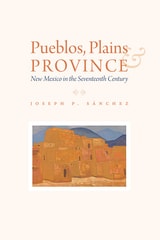
Pueblos, Plains, and Province
New Mexico in the Seventeenth CenturyJoseph P. Sánchez
University Press of Colorado, 2024
In Pueblos, Plains, and Province Joseph P. Sánchez offers an in-depth examination of sociopolitical conflict in seventeenth-century New Mexico, detailing the effects of Spanish colonial policies on settlers’, missionaries’, and Indigenous peoples’ struggle for economic and cultural control of the region. Sánchez explores the rich archival documentation that provides cultural, linguistic, and legal perspectives of the values of the period.
Spanish dual Indian policies for Pueblo and Plains tribes challenged Indigenous political and social systems to conform to the imperial structure for pacification purposes. Meanwhile, missionary efforts to supplant Indigenous religious beliefs with a Christian worldview resulted, in part, in a syncretism of the two worlds. Indigenous resentment of these policies reflected the contentious disagreements between Spanish clergymen and civil authorities, who feuded over Indigenous labor and encroachment on tribal sovereignties with demands for sworn loyalty to Spanish governance. The little-studied “starvation period” adversely affected Spanish-Pueblo relationships for the remainder of the century and contributed significantly to the battle at Acoma, the Jumano War, and the Pueblo Revolt of 1680.
Pueblos, Plains, and Province shows how history, culture, and tradition in New Mexico shaped the heritage shared by Spain, Mexico, the United States, and Native American tribes and will be of interest to scholars and students of Indigenous, colonial, and borderlands history.