Results by title
281 books match the query 'Disease & Health Issues' and 10 start with p
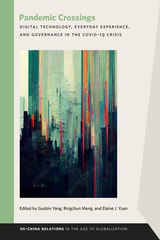
Pandemic Crossings
Digital Technology, Everyday Experience, and Governance in the COVID-19 CrisisGuobin Yang
Michigan State University Press, 2024

Pandemic Power
The Covid Response and the Erosion of Democracy - A Liberal CritiqueMuriel Blaive
Central European University Press, 2025
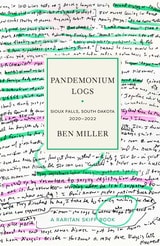
Pandemonium Logs
Sioux Falls, South Dakota, 2020–2022Ben Miller
Rutgers University Press, 2025
Balcones Prize Winner in Nonfiction
In 2015, Ben Miller and the poet Anne Pierson Wiese moved from New York City to Sioux Falls, South Dakota, to explore their midwestern roots and to focus on their writing careers. Working a day job in a hospital, Miller had a front-row seat to the COVID-19 pandemic as it moved from the coasts to the urban Midwest. Pandemonium Logs casts an unflinching eye on the state of the worker in the US health-care system during a global pandemic, giving voice to the doctors, nurses, support staff, patients, and families caught in the complex swirl of daily dilemmas and crucial choices.
In unsparing yet sympathetic prose, Ben Miller creates an intimate portrait of the impact of COVID on the diverse people of South Dakota. Through a wide range of characters—from understandably confused patients to quietly competent nurses—he explores the human complexities of the crisis: a doctor based in Mumbai who treats critically ill patients in the Dakotas via a tenuous hodgepodge of telehealth apparatus, a Hydra of six workplace trainers who together cannot train one employee to do one job, a vice president of corporate hospitality who lives to rip down safety signs as fast as nurses post them, a ninety-year-old hospital volunteer who pushes wheelchairs containing patients half his age.
In Pandemonium Logs, Miller provides precise and moving observations of ordinary people doing extraordinary things.
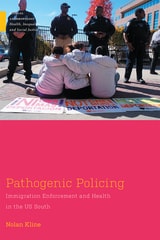
Pathogenic Policing
Immigration Enforcement and Health in the U.S. SouthNolan Kline
Rutgers University Press, 2019
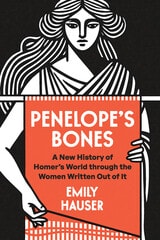
Penelope’s Bones
A New History of Homer’s World through the Women Written Out of ItEmily Hauser
University of Chicago Press, 2025
Achilles. Agamemnon. Odysseus. Hector. The lives of these and many other men in the greatest epics of ancient Greece have been pored over endlessly in the past three millennia. But these are not just tales about heroic men. There are scores of women as well—complex, fascinating women whose stories have gone unexplored for far too long.
In Penelope’s Bones, award-winning classicist and historian Emily Hauser pieces together compelling evidence from archaeological excavations and scientific discoveries to unearth the richly textured lives of women in Bronze Age Greece—the era of Homer’s heroes. Here, for the first time, we come to understand the everyday lives and experiences of the real women who stand behind the legends of Helen, Briseis, Cassandra, Aphrodite, Circe, Athena, Hera, Calypso, Penelope, and more. In this captivating journey through Homer’s world, Hauser explains era-defining discoveries, such as the excavation of Troy and the decipherment of Linear B tablets that reveal thousands of captive women and their children; more recent finds like the tomb of the Griffin Warrior at Pylos, whose tomb contents challenge traditional gender attributes; DNA evidence showing that groups of warriors buried near the Black Sea with their weapons and steeds were, in fact, Amazon-like female fighters; a prehistoric dye workshop on Crete that casts fresh light on “women’s work” of dyeing, spinning, and weaving textiles; and a superbly preserved shipwreck off the coast of Turkey whose contents tell of the economic and diplomatic networks crisscrossing the Bronze Age Mediterranean.
Essential reading for fans of Madeline Miller or Natalie Haynes, this riveting new history brings to life the women of the Bronze Age Aegean as never before, offering a groundbreaking reassessment of the ancient world.
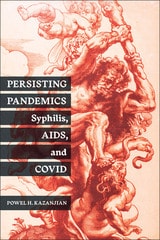
Persisting Pandemics
Syphilis, AIDS, and COVIDPowel H. Kazanjian
Rutgers University Press, 2025
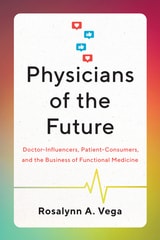
Physicians of the Future
Doctor-Influencers, Patient-Consumers, and the Business of Functional MedicineRosalynn A. Vega
University of Texas Press, 2024
The first scholarly exploration of the forums, practice, and economics of functional medicine.
Physicians of the Future interrogates the hidden logics of inclusion and exclusion in functional medicine (FM), a holistic form of personalized medicine that targets chronic disease. Rosalynn Vega uncovers how, as “wounded healers,” some FM practitioners who are former chronic disease sufferers turn their illness narratives into a form of social capital, leveraging social media to relate to patients and build practices as “doctor-influencers.” Arguing that power and authority operate distinctly in FM when compared to conventional medicine, largely because FM services are paid for out of pocket by socioeconomically privileged “clients,” Vega studies how FM practitioners engage in entrepreneurship of their own while critiquing the profit motives of the existing healthcare system, pharmaceutical industry, and insurance industry. Using data culled from online support groups, conferences, docuseries, blogs, podcasts, YouTube, and TED Talks, as well as her own battles with chronic illness, Vega argues that FM practices prioritize the individual while inadvertently reinscribing inequities based on race and class. Ultimately, she opens avenues of possibility for FM interlocutors wrestling with their responsibility for making functional medicine accessible to all.

Poverty in the Pandemic
Policy Lessons from COVID-19Zachary Parolin
Russell Sage Foundation, 2023
Drawing on dozens of data sources ranging from debit and credit card spending, the first national databases of school and childcare center closures in the U.S., and bi-weekly Census-run surveys on well-being, Parolin finds that entering the pandemic in poverty substantially increased a person’s likelihood of experiencing negative health outcomes due to the pandemic, such as contracting and dying from COVID, as well as losing their job. Additionally, he found that students from poor families suffered the greatest learning losses as a result of school closures and the shift to distance learning during the pandemic.
However, unprecedented legislative action by the U.S. government, including the passage of the Families First Coronavirus Response Act (FFCRA), the Coronavirus Aid, Relief, and Economic Security (CARES) Act, and the American Rescue Plan (ARP) helped mitigate the economic consequences of the pandemic and lifted around 18 million Americans out of poverty. Based on the success of these policies, Parolin concludes with policy suggestions that the U.S. can implement in more ‘normal’ times to improve the living conditions of low-income households after the pandemic subsides, including expanding access to Unemployment Insurance, permanently expanding the Child Tax Credit, promoting greater access to affordable, high-quality healthcare coverage, and investing more resources into the Census Bureau’s data-collection capabilities. He also details a method of producing a monthly measurement of poverty, to be used in conjunction with the traditional annual measurement, in order to better understand the intra-year volatility of poverty that many Americans experience.
Poverty in the Pandemic provides the most complete account to date of the unique challenges that low-income households in the U.S. faced during the COVID-19 pandemic.

Psychiatric Encounters
Madness and Modernity in Yucatan, MexicoReyes-Foster, Beatriz M.
Rutgers University Press, 2019
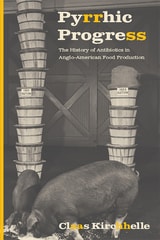
Pyrrhic Progress
The History of Antibiotics in Anglo-American Food ProductionClaas Kirchhelle
Rutgers University Press, 2020
2020 Choice Outstanding Academic Title
Winner of the 2020 Turriano Prize from ICOHTEC
Short-listed and highly commended for the Antibiotic Guardian Award from Public Health England
Long-listed for the Michel Déon Prize from the Royal Irish Academy
Pyrrhic Progress analyses over half a century of antibiotic use, regulation, and resistance in US and British food production. Mass-introduced after 1945, antibiotics helped revolutionize post-war agriculture. Food producers used antibiotics to prevent and treat disease, protect plants, preserve food, and promote animals’ growth. Many soon became dependent on routine antibiotic use to sustain and increase production. The resulting growth of antibiotic infrastructures came at a price. Critics blamed antibiotics for leaving dangerous residues in food, enabling bad animal welfare, and selecting for antimicrobial resistance (AMR) in bacteria, which could no longer be treated with antibiotics. Pyrrhic Progress reconstructs the complicated negotiations that accompanied this process of risk prioritization between consumers, farmers, and regulators on both sides of the Atlantic. Unsurprisingly, solutions differed: while Europeans implemented precautionary antibiotic restrictions to curb AMR, consumer concerns and cost-benefit assessments made US regulators focus on curbing drug residues in food. The result was a growing divergence of antibiotic stewardship and a rise of AMR. Kirchhelle’s comprehensive analysis of evolving non-human antibiotic use and the historical complexities of antibiotic stewardship provides important insights for current debates on the global burden of AMR. This Open Access ebook is available under a CC-BY-NC-ND license, and is supported by a generous grant from Wellcome Trust.