Results by title
218 books match the query 'Education, Higher' and 10 start with p
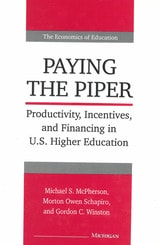
Paying the Piper
Productivity, Incentives, and Financing in U.S. Higher EducationMichael S. McPherson, Morton Owen Schapiro, and Gordon C. Winston, Editors
University of Michigan Press, 1994
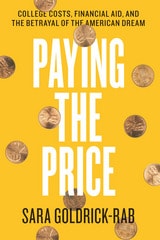
Paying the Price
College Costs, Financial Aid, and the Betrayal of the American DreamSara Goldrick-Rab
University of Chicago Press, 2016
Not necessarily, says Sara Goldrick-Rab, and with Paying the Price, she shows in damning detail exactly why. Quite simply, college is far too expensive for many people today, and the confusing mix of federal, state, institutional, and private financial aid leaves countless students without the resources they need to pay for it.
Drawing on an unprecedented study of 3,000 young adults who entered public colleges and universities in Wisconsin in 2008 with the support of federal aid and Pell Grants, Goldrick-Rab reveals the devastating effect of these shortfalls. Half the students in the study left college without a degree, while less than 20 percent finished within five years. The cause of their problems, time and again, was lack of money. Unable to afford tuition, books, and living expenses, they worked too many hours at outside jobs, dropped classes, took time off to save money, and even went without adequate food or housing. In many heartbreaking cases, they simply left school—not with a degree, but with crippling debt. Goldrick-Rab combines that shocking data with devastating stories of six individual students, whose struggles make clear the horrifying human and financial costs of our convoluted financial aid policies.
America can fix this problem. In the final section of the book, Goldrick-Rab offers a range of possible solutions, from technical improvements to the financial aid application process, to a bold, public sector–focused “first degree free” program. What’s not an option, this powerful book shows, is doing nothing, and continuing to crush the college dreams of a generation of young people.
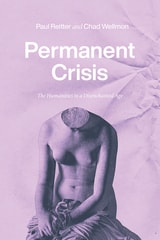
Permanent Crisis
The Humanities in a Disenchanted AgePaul Reitter and Chad Wellmon
University of Chicago Press, 2021
Leads scholars and anyone who cares about the humanities into more effectively analyzing the fate of the humanities and digging into the very idea of the humanities as a way to find meaning and coherence in the world.
The humanities, considered by many as irrelevant for modern careers and hopelessly devoid of funding, seem to be in a perpetual state of crisis, at the mercy of modernizing and technological forces that are driving universities towards academic pursuits that pull in grant money and direct students to lucrative careers. But as Paul Reitter and Chad Wellmon show, this crisis isn’t new—in fact, it’s as old as the humanities themselves.
Today’s humanities scholars experience and react to basic pressures in ways that are strikingly similar to their nineteenth-century German counterparts. The humanities came into their own as scholars framed their work as a unique resource for resolving crises of meaning and value that threatened other cultural or social goods. The self-understanding of the modern humanities didn’t merely take shape in response to a perceived crisis; it also made crisis a core part of its project. Through this critical, historical perspective, Permanent Crisis can take scholars and anyone who cares about the humanities beyond the usual scolding, exhorting, and hand-wringing into clearer, more effective thinking about the fate of the humanities. Building on ideas from Max Weber and Friedrich Nietzsche to Helen Small and Danielle Allen, Reitter and Wellmon dig into the very idea of the humanities as a way to find meaning and coherence in the world.
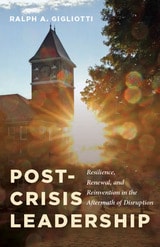
Post-Crisis Leadership
Resilience, Renewal, and Reinvention in the Aftermath of DisruptionRalph A. Gigliotti
Rutgers University Press, 2025
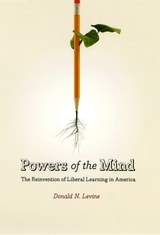
Powers of the Mind
The Reinvention of Liberal Learning in AmericaDonald N. Levine
University of Chicago Press, 2006
It is one thing to lament the financial pressures put on universities, quite another to face up to the poverty of resources for thinking about what universities should do when they purport to offer a liberal education. In Powers of the Mind, former University of Chicago dean Donald N. Levine enriches those resources by proposing fresh ways to think about liberal learning with ideas more suited to our times.
He does so by defining basic values of modernity and then considering curricular principles pertinent to them. The principles he favors are powers of the mind—disciplines understood as fields of study defined not by subject matter but by their embodiment of distinct intellectual capacities. To illustrate, Levine draws on his own lifetime of teaching and educational leadership, while providing a marvelous summary of exemplary educational thinkers at the University of Chicago who continue to inspire. Out of this vital tradition, Powers of the Mind constructs a paradigm for liberal arts today, inclusive of all perspectives and applicable to all settings in the modern world.

Practicing Transnationalism
American Studies in the Middle EastEdited Eileen T. Lundy and Edward J. Lundy
University of Texas Press, 2016
Practicing Transnationalism explores the challenges of teaching American studies in the Middle East during a time of tension and conflict between the United States and the region.
In the first decade of the twenty-first century, American studies programs began to spread in the Middle East. During a time of rising anti-American sentiment, ten major programs were established in the region. What impulses propelled universities in the Middle East to establish these centers and programs? What motivated students to take courses and pursue degrees in American studies? In part, American studies programs developed as a way to “know the enemy,” to better understand America’s ubiquitous influence in foreign relations, technology, and culture; however, some programs grew because residents admired the ideals set forth as American, including democracy and free speech.
Practicing Transnationalism investigates these issues and others, using the experiences and research of the editors and contributors, who worked either directly in these programs or as adjunct to them. These scholars seek to understand what American power means to people in the Middle East. They examine the challenge of developing American studies programs in a transnational paradigm, striving to build programs that are separate from and critical of American imperialism without simply becoming anti-American. In the essays, the contributors provide context for how the field of American studies has grown and developed, and they offer views of cultural interactions and classroom situations, demonstrating the problems instructors faced and how they worked to address them.
Preparing Students to Engage in Equitable Community Partnerships
A HandbookElizabeth A. Tryon
Temple University Press, 2023
Preparing Students to Engage in Equitable Community Partnerships provides a wealth of valuable resources and activities to help impart ideas of identity, privilege, oppression, bias, and power dynamics to best support students and community in these relationships. Believing that authenticity only comes about in an atmosphere of mutual respect and self-awareness, the authors argue for cultural and intellectual humility.
Each chapter looks at topics and issues through different lenses, complete with underlying theories, and relates those discussions to concrete classroom activities, facilitation strategies, and scholarly frames. In addition, the authors include contributions from a diverse group of practitioners at community colleges, private colleges, historically Black colleges and universities, and minority-serving institutions.
Preparing Students to Engage in Equitable Community Partnerships is a much-needed, comprehensive resource for community-engaged professionals as they prepare students for building relationships when entering a community for learning or research purposes.
Prescribing the Life of the Mind
An Essay on the Purpose of the University, the Aims of Liberal Education, the Competence of Citizens, and the Cultivation of Practical ReasonCharles W. Anderson
University of Wisconsin Press, 1996
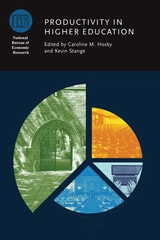
Productivity in Higher Education
Edited by Caroline M. Hoxby and Kevin Stange
University of Chicago Press, 2019
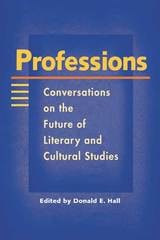
Professions
Conversations on the Future of Literary and Cultural StudiesEdited by Donald E. Hall
University of Illinois Press, 2001
This volume bares professional concerns, relationships, ambitions, and insecurities about working in academe. Professions provides hard-to-get insider information for students contemplating an academic career. It also challenges professional scholars to retrieve the intellectual curiosity that drew them to scholarship in the first place while demonstrating how disagreement on controversial issues can be conducted with respect, good humor, and an open mind.
Professions features:
Jane Tompkins and Gerald Graff
John McGowan and Regenia Gagnier
James Phelan and James Kincaid
Marjorie Perloff and Robert von Hallberg
Judith Jackson Fossett and Kevin Gaines
Dennis W. Allen and Judith Roof
Niko Pfund, Gordon Hutner, and Martha Banta
Geoffrey Galt Harpham
Donald E. Hall and Susan S. Lanser
J. Hillis Miller, Herbert Lindenberger, Sandra Gilbert, Bonnie Zimmerman, Nellie Y. McKay, and Elaine Marks