Results by title
76 books match the query 'Elite (Social sciences)' and 11 start with p
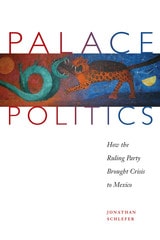
Palace Politics
How the Ruling Party Brought Crisis to MexicoBy Jonathan Schlefer
University of Texas Press, 2008
Bringing rare interviews and meticulous research to the cloaked world of Mexican politics in the mid-twentieth century, Palace Politics provides a captivating look at the authoritarian Mexican state—one of the longest-lived regimes of its kind in recent history—as well as the origins of political instability itself, with revelations that can be applied to a variety of contemporary political situations around the globe.
Culling a trove of remarkable firsthand accounts from former Mexican presidents, finance ministers, interior ministers, and other high officials from the 1950s through the 1980s, Jonathan Schlefer describes a world in which elite politics planted the seeds of a mammoth socioeconomic crisis. Palace Politics outlines the process by which political infighting among small rival factions of high officials drove Mexico to precarious situations at all levels of government. Schlefer also demonstrates how, earlier on, elite cooperation among these factions had helped sustain one of the most stable growth economies in Latin America, until all-or-nothing struggles began to tear the Mexican ruling party apart in the 1970s.
A vivid, seamlessly narrated history, Palace Politics is essential reading for anyone seeking to better understand not only the nation next door but also the workings of elite politics in general.
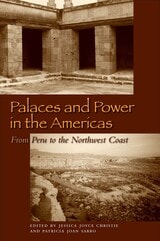
Palaces and Power in the Americas
From Peru to the Northwest CoastEdited by Jessica Joyce Christie and Patricia Joan Sarro
University of Texas Press, 2006
Ancient American palaces still captivate those who stand before them. Even in their fallen and ruined condition, the palaces project such power that, according to the editors of this new collection, it must have been deliberately drawn into their formal designs, spatial layouts, and choice of locations. Such messages separated palaces from other elite architecture and reinforced the power and privilege of those residing in them. Indeed, as Christie and Sarro write, "the relation between political power and architecture is a pervasive and intriguing theme in the Americas."
Given the variety of cultures, time periods, and geographical locations examined within, the editors of this book have grouped the articles into four sections. The first looks at palaces in cultures where they have not previously been identified, including the Huaca of Moche Site, the Wari of Peru, and Chaco Canyon in the U.S. Southwest. The second section discusses palaces as "stage sets" that express power, such as those found among the Maya, among the Coast Salish of the Pacific Northwest, and at El Tajín on the Mexican Gulf Coast. The third part of the volume presents cases in which differences in elite residences imply differences in social status, with examples from Pasado de la Amada, the Valley of Oaxaca, Teotihuacan, and the Aztecs. The final section compares architectural strategies between cultures; the models here are Farfán, Peru, under both the Chimú and the Inka, and the separate states of the Maya and the Inka.
Such scope, and the quality of the scholarship, make Palaces and Power in the Americas a must-have work on the subject.
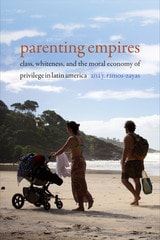
Parenting Empires
Class, Whiteness, and the Moral Economy of Privilege in Latin AmericaAna Yolanda Ramos-Zayas
Duke University Press, 2020
Paths to Power
Elite Mobility in Contemporary ChinaBy David M. Lampton with the assistance of Yeung Sai-cheung
University of Michigan Press, 2000
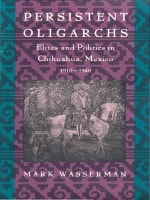
Persistent Oligarchs
Elites and Politics in Chihuahua, Mexico 1910–1940Mark Wasserman
Duke University Press, 1993
Chihuahua boasted one of the strongest pre-revolutionary elite networks, the Terrazas-Creel family. Wasserman describes this group's efforts to maintain its power after the Revolution, including its use of economic resources and intermarriage to forge partnerships with the new, revolutionary elite. Together, the old and new elites confronted a national government that sought to reestablish centralized control over the states and the masses. Wasserman shows how the revolutionary government and the popular classes, joined in opposition to the challenge of the elites, finally formalized into a national political party during the 1930s.
Persistent Oligarchs concludes with an account of the Revolution's ultimate outcome, largely accomplished by 1940: the national government gaining central control over politics, the popular classes obtaining land redistribution and higher wages, and regional elites, old and new, availing themselves of the great opportunities presented by economic development. A complex analysis of revolution as a vehicle for both continuity and change, this work is essential to an understanding of Mexico and Latin America, as well as revolutionary politics and history.

Playhouses and Privilege
The Architecture of Elite ChildhoodAbigail A. Van Slyck
University of Minnesota Press, 2025
Examining playhouses of the super-rich to understand how architecture contributed to the construction of elite identity and modern childhood
Playhouses and Privilege explores children’s playhouses built on British and American estates between the 1850s and the mid-1930s. Different from the prefabricated buildings that later populated suburban backyards, these playhouses were often fully functional cottages designed by well-known architects for British royalty, American industrialists, and Hollywood stars. As Abigail A. Van Slyck shows, these buildings were more than extravagant spaces to cultivate children’s imaginations and fantasy lives.
Reviewing a rich archive that includes extant buildings, site plans, family photographs, baby books, and intimate household correspondence, Van Slyck demonstrates that these structures were tools of social reproduction shaped by elite parents’ attitudes toward child-rearing, education, and class privilege. Recognizing playhouses as stages for the purposeful performance of upper-class identity, she illuminates their importance in influencing children to internalize gendered codes of conduct as they enacted rituals of hospitality and learned how to supervise servants.
From Queen Victoria and Prince Albert’s Swiss Cottage, built on their Osborne estate in 1853, to the children’s cottage constructed on the grounds of Cornelius Vanderbilt’s Newport mansion in 1886, and from the miniature bungalow commissioned in 1926 for the Dodge Brothers Motor Company heiress to the corporate-sponsored glass-block playhouse given to Shirley Temple in 1936, Van Slyck surveys a variety of playhouses and their milieus to trace the evolution of elite childhood and the broader social practices of wealth. Playhouses and Privilege makes clear that, far from being frivolous, playhouses were carefully planned architectural manifestations of adult concerns, integral to the reproduction of class privilege.
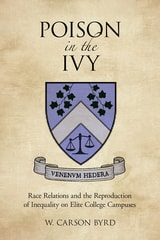
Poison in the Ivy
Race Relations and the Reproduction of Inequality on Elite College CampusesByrd, W. Carson
Rutgers University Press, 2017
Poison in the Ivy challenges popular beliefs about the importance of cross-racial interactions as an antidote to racism in the increasingly diverse United States. He shows that it is the context and framing of such interactions on college campuses that plays an important role in shaping students’ beliefs about race and inequality in everyday life for the future political and professional leaders of the nation. Poison in the Ivy is an eye-opening look at race on elite college campuses, and offers lessons for anyone involved in modern American higher education.
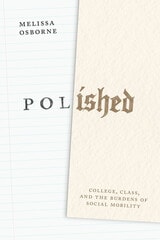
Polished
College, Class, and the Burdens of Social MobilityMelissa Osborne
University of Chicago Press, 2024
While college initiates a major transition in all students’ lives, low-income and first-generation students attending elite schools are often entering entirely new worlds. Amid the financial and academic challenges of adapting to college, their emotional lives, too, undergo a transformation. Surrounded by peers from different classes and cultural backgrounds, they are faced with an impossible choice: turn away from their former lives to blend in or stay true to themselves and remain on the outside.
An ethnography that draws on in-depth interviews with one hundred and fifty first-generation and low-income students across eighteen elite institutions, Polished uncovers the hidden consequences of the promise of social mobility in today’s educational landscape. Sociologist Melissa Osborne reveals how the very support designed to propel first-generation students forward can unexpectedly reshape their identities, often putting them at odds with their peers and families. Without direct institutional support, this emotional journey can lead to alienation, mental health challenges, poor academic outcomes, and difficult choices between upward mobility or maintaining authenticity and community. Whether you're an educator, advocate, or student, Polished provides a powerful perspective on the uncharted challenges of social mobility and personal identity during college.
Political Elites in Modern Societies
Empirical Research and Democratic TheorySamuel J. Eldersveld
University of Michigan Press, 1989
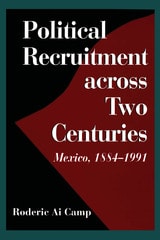
Political Recruitment across Two Centuries
Mexico, 1884-1991By Roderic Ai Camp
University of Texas Press, 1995
During more than twenty years of field research, Roderic Ai Camp built a monumental database of biographical information on more than 3,000 leading national figures in Mexico. In this major contribution to Mexican political history, he draws on that database to present a definitive account of the paths to power Mexican political leaders pursued during the period 1884 to 1992.
Camp’s research clarifies the patterns of political recruitment in Mexico, showing the consequences of choosing one group over another. It calls into question numerous traditional assumptions, including that upward political mobility was a cause of the Mexican Revolution of 1910.
Comparing Mexican practices with those in several East Asian countries also allows Camp to question many of the tenets of political recruitment theory. His book will be of interest to students not only of Mexican politics but also of history, comparative politics, political leadership, and Third World development.
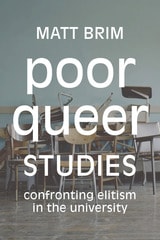
Poor Queer Studies
Confronting Elitism in the UniversityMatt Brim
Duke University Press, 2020