193 books match the query 'Empire' and 7 start with p
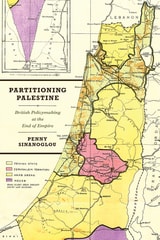
cover of Partitioning Palestine: British Policymaking at the End of Empire

Partitioning Palestine

British Policymaking at the End of Empire

Penny Sinanoglou

University of Chicago Press, 2019
Partitioning Palestine is the first history of the ideological and political forces that led to the idea of partition—that is, a division of territory and sovereignty—in British mandate Palestine in the first half of the twentieth century. Inverting the spate of narratives that focus on how the idea contributed to, or hindered, the development of future Israeli and Palestinian states, Penny Sinanoglou asks instead what drove and constrained British policymaking around partition, and why partition was simultaneously so appealing to British policymakers yet ultimately proved so difficult for them to enact. Taking a broad view not only of local and regional factors, but also of Palestine’s place in the British empire and its status as a League of Nations mandate, Sinanoglou deftly recasts the story of partition in Palestine as a struggle to maintain imperial control. After all, British partition plans imagined space both for a Zionist state indebted to Britain and for continued British control over key geostrategic assets, depending in large part on the forced movement of Arab populations. With her detailed look at the development of the idea of partition from its origins in the 1920s, Sinanoglou makes a bold contribution to our understanding of the complex interplay between internationalism and imperialism at the end of the British empire and reveals the legacies of British partitionist thinking in the broader history of decolonization in the modern Middle East.
[more]
cover of Penalties of Empire: Capital Trials in Colonial Hong Kong

Penalties of Empire

Capital Trials in Colonial Hong Kong

Christopher Munn

Hong Kong University Press, 2025

An eye-opening study of the evolution of the death penalty in Hong Kong.

"We must have a procedure – if we are going to hang anyone – that is just," said Chief Justice Sir Francis Piggott in 1909, on discovering that Chinese persons accused of murder were being denied interpretation in Hong Kong’s courts. Due process, no matter how costly or inconvenient, was "one of the penalties of empire," he declared.

Penalties of Empire explores how judges, juries, and lawyers strove to deliver justice during the 150 years when the death penalty was in force in Hong Kong. Nine main chapters focus on key capital trials in the first century of British rule. Among the cases are piracies, assassinations, crimes of passion, and murders committed from desperation. These chapters describe the proceedings and participants in court. They also examine the public debates surrounding each case and the exercise of mercy by governors. Two final chapters discuss the decline of the death penalty after World War II, its suspension after 1966, and the controversies leading to its formal abolition in 1993. Penalties of Empire traces the evolution of criminal justice at its highest levels. It also offers a prism for understanding some of the broader forces at work in Hong Kong’s history.
[more]
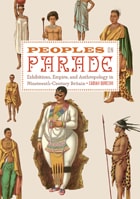
cover of Peoples on Parade: Exhibitions, Empire, and Anthropology in Nineteenth-Century Britain

Peoples on Parade

Exhibitions, Empire, and Anthropology in Nineteenth-Century Britain

Sadiah Qureshi

University of Chicago Press, 2011
In May 1853, Charles Dickens paid a visit to the “savages at Hyde Park Corner,” an exhibition of thirteen imported Zulus performing cultural rites ranging from songs and dances to a “witch-hunt” and marriage ceremony. Dickens was not the only Londoner intrigued by these “living curiosities”: displayed foreign peoples provided some of the most popular public entertainments of their day. At first, such shows tended to be small-scale entrepreneurial speculations of just a single person or a small group. By the end of the century, performers were being imported by the hundreds and housed in purpose-built “native” villages for months at a time, delighting the crowds and allowing scientists and journalists the opportunity to reflect on racial difference, foreign policy, slavery, missionary work, and empire.
 
Peoples on Parade provides the first substantial overview of these human exhibitions in nineteenth-century Britain. Sadiah Qureshi considers these shows in their entirety—their production, promotion, management, and performance—to understand why they proved so commercially successful, how they shaped performers’ lives, how they were interpreted by their audiences, and what kinds of lasting influence they may have had on notions of race and empire. Qureshi supports her analysis with diverse visual materials, including promotional ephemera, travel paintings, theatrical scenery, art prints, and photography, and thus contributes to the wider understanding of the relationship between science and visual culture in the nineteenth century.
 
Through Qureshi’s vibrant telling and stunning images, readers will see how human exhibitions have left behind a lasting legacy both in the formation of early anthropological inquiry and in the creation of broader public attitudes toward racial difference.
[more]
cover of Phantom Byzantium: Europe, Empire, and Identity from Late Antiquity to World War II

Phantom Byzantium

Europe, Empire, and Identity from Late Antiquity to World War II

Anthony Kaldellis

University of Chicago Press, 2026

How the West appropriated aspects of the eastern Roman empire while portraying it as inferior.
 
Unveiling the ideological foundations of Byzantine studies, Phantom Byzantium is a pioneering survey of western European perceptions of the eastern Roman empire (also known as Byzantium) spanning late antiquity to World War II. Through ten chronological chapters, Anthony Kaldellis makes the case that western Europe gradually formed its identity by adopting prestigious cultural elements from the eastern empire but simultaneously portraying the east as inferior. The West modeled its Roman imperial style on Constantinople while minimizing the latter as Greek rather than Roman; appropriated a host of Christian traditions from the east while casting the east as schismatic, heretical, or treacherous; and, during the Renaissance, used classical Hellenic philology from Greek scholars before marginalizing them as unworthy bearers of that tradition. This orientalizing impulse worked to buttress western exceptionalism and resulted in the fictitious construction of “Byzantium” as Europe’s evil doppelgänger, embodying the worst versions of traditions fundamental to European identity and casting the region as despotic, superstitious, and degenerate.

Explaining the creation, history, and functions of the ideological construct of Byzantium in the western imagination and European self-fashioning, this book has critical implications for contemporary views of European history.
 
[more]
cover of Poetry from Spaceship Earth: Empire and Ecology in Post-1945 American Poetry

Poetry from Spaceship Earth

Empire and Ecology in Post-1945 American Poetry

Samia Rahimtoola

University of Iowa Press, 2026

In the early decades of the postwar period, the planetary metaphor of “spaceship Earth” was everywhere in the West. It exerted its power on sites as various as Caribbean research stations, the shipping lanes of the U.S.-occupied Pacific, Palestinian refugee camps, and the internal colonies of segregated nations. At its heart was a new ideology and infrastructure of managing, administering, and rationalizing nature through which Western powers sought to maintain their grip on a decolonizing planet.

Poetry from Spaceship Earth retrieves a diverse array of postwar American poets—Robert Duncan, June Jordan, Joanne Kyger, Lorine Niedecker, and Charles Olson—who contested and cultivated alternatives to this emergent mode of environmentalism. By placing the major innovations of postwar poetry into conversation with environmental politics, Cold War science and technology studies, and postcolonial and Black studies, Samia Rahimtoola develops an original theoretical and historical account of the racial and colonial logics that underpin the supposedly neutral project of managing nature.
 

[more]
cover of Prostitution and the Ends of Empire: Scale, Governmentalities, and Interwar India

Prostitution and the Ends of Empire

Scale, Governmentalities, and Interwar India

Stephen Legg

Duke University Press, 2014
Officially confined to red-light districts, brothels in British India were tolerated until the 1920s. Yet, by this time, prostitution reform campaigns led by Indian, imperial, and international bodies were combining the social scientific insights of sexology and hygiene with the moral condemnations of sexual slavery and human trafficking. These reformers identified the brothel as exacerbating rather than containing "corrupting prostitutes" and the threat of venereal diseases, and therefore encouraged the suppression of brothels rather than their urban segregation. In this book, Stephen Legg tracks the complex spatial politics surrounding brothels in the interwar period at multiple scales, including the local, regional, national, imperial, and global. Campaigns and state policies against brothels did not just operate at different scales but made scales themselves, forging new urban, provincial, colonial, and international formations. In so doing, they also remade the boundary between the state and the social, through which the prostitute was, Legg concludes, "civilly abandoned."
[more]
cover of Puerto Ricans in the Empire: Tobacco Growers and U.S. Colonialism

Puerto Ricans in the Empire

Tobacco Growers and U.S. Colonialism

Teresita A. Levy

Rutgers University Press, 2015

Most studies of Puerto Rico’s relations with the United States have focused on the sugar industry, recounting a tale of victimization and imperial abuse driven by the interests of U.S. sugar companies. But in Puerto Ricans in the Empire, Teresita A. Levy looks at a different agricultural sector, tobacco growing, and tells a story in which Puerto Ricans challenged U.S. officials and fought successfully for legislation that benefited the island.
 
Levy describes how small-scale, politically involved, independent landowners grew most of the tobacco in Puerto Rico. She shows how, to gain access to political power, tobacco farmers joined local agricultural leagues and the leading farmers’ association, the Asociación de Agricultores Puertorriqueños (AAP). Through their affiliation with the AAP, they successfully lobbied U.S. administrators in San Juan and Washington, participated in government-sponsored agricultural programs, solicited agricultural credit from governmental sources, and sought scientific education in a variety of public programs, all to boost their share of the tobacco-leaf market in the United States. By their own efforts, Levy argues, Puerto Ricans demanded and won inclusion in the empire, in terms that were defined not only by the colonial power, but also by the colonized.
 
The relationship between Puerto Rico and the United States was undoubtedly colonial in nature, but, as Puerto Ricans in the Empire shows, it was not unilateral. It was a dynamic, elastic, and ever-changing interaction, where Puerto Ricans actively participated in the economic and political processes of a negotiated empire.
 
[more]