Results by title
99 books match the query 'Environment' and 4 start with p

Plane Truth
Aviation's Real Impact on People and the EnvironmentRose Bridger
Pluto Press, 2013
As aviation charges ahead to become one of the world's fastest growing industries, with passenger numbers and cargo volumes projected to double in the next 20 years, Plane Truth sounds a highly informed note of scepticism.
Rose Bridger provides a comprehensive account of aviation's impact, including how new airports are gobbling up farmland and wildlife habitats and inflicting noise and air pollution on communities. She reveals the extraordinary level of subsidy for the industry, from government expenditure on infrastructure to tax breaks, which helps to support the industry in the face of rising oil prices and the global economic downturn.
Plane Truth demolishes industry claims that fuel-efficient aircraft and alternative fuels can enable growth without increasing climate change and reveals the symbiotic relationship between aviation and the wider socio-economic problems facing humanity.
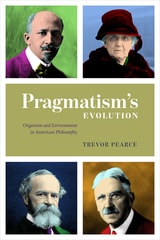
Pragmatism's Evolution
Organism and Environment in American PhilosophyTrevor Pearce
University of Chicago Press, 2020
Although the various thinkers associated with pragmatism—from Charles Sanders Peirce to Jane Addams and beyond—were towering figures in American intellectual life, few realize the full extent of their engagement with the life sciences. In his analysis, Pearce focuses on a series of debates in biology from 1860 to 1910—from the instincts of honeybees to the inheritance of acquired characteristics—in which the pragmatists were active participants. If we want to understand the pragmatists and their influence, Pearce argues, we need to understand the relationship between pragmatism and biology.
Prometheus Reimagined
Technology, Environment, and Law in the Twenty-first CenturyAlbert C. Lin
University of Michigan Press, 2013
Technologies such as synthetic biology, nanotechnology, artificial intelligence, and geoengineering promise to address many of our most serious problems, yet they also bring environmental and health-related risks and uncertainties. Moreover, they can come to dominate global production systems and markets with very little public input or awareness. Existing governance institutions and processes do not adequately address the risks of new technologies, nor do they give much consideration to the concerns of persons affected by them.
Instead of treating technology, health, and the environment as discrete issues, Albert C. Lin argues that laws must acknowledge their fundamental relationship, anticipating both future technological developments and their potential adverse effects. Laws should encourage international cooperation and the development of common global standards, while allowing for flexibility and reassessment.

Provincialising nature
multidisciplinary approaches to the politics of the environment in Latin AmericaEdited by Michela Coletta and Malayna Raftopoulos
University of London Press, 2016