Results by title
60 books match the query 'Era' and 3 start with p

Pivotal Voices, Era of Transition
Toward a 21st Century PoeticsRigoberto González
University of Michigan Press, 2017
This book fills a glaring gap in existing poetry scholarship by focusing exclusively on writers of color, and particularly on Latino poetry. González makes important observations about the relevance, urgency, and exquisite craft of the work coming from writers who represent marginalized communities. His insightful connections between the Latino, African American, Asian American, and Native American literatures persuasively position them as a collective movement critiquing, challenging, and reorienting the direction of American poetry with their nuanced and politicized verse. González’s inclusive vision covers a wide landscape of writers, opening literary doors for sexual and ethnic minorities.

Political Aesthetics in the Era of Shakespeare
Edited by Christopher Pye
Northwestern University Press, 2020
Taking up this expansive conception of aesthetics, Political Aesthetics in the Era of Shakespeare suggests that the political stakes of the literary work—and Shakespeare’s work in particular—extend from the most intimate dimensions of affective response to the problem of the grounds of political society. The approaches to aesthetic thought included in this volume explore the intersections between the literary work and the full range of concerns animating the field today: political philosophy, affect theory, and ecocritical analysis of environs and habitus.
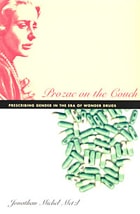
Prozac on the Couch
Prescribing Gender in the Era of Wonder DrugsJonathan Michel Metzl
Duke University Press, 2003
Prozac on the Couch traces the notion of “pills for everyday worries” from the 1950s to the early twenty-first century, through psychiatric and medical journals, popular magazine articles, pharmaceutical advertisements, and popular autobiographical "Prozac narratives.” Metzl shows how clinical and popular talk about these medications often reproduces all the cultural and social baggage associated with psychoanalytic paradigms—whether in a 1956 Cosmopolitan article about research into tranquilizers to “cure” frigid women; a 1970s American Journal of Psychiatry ad introducing Jan, a lesbian who “needs” Valium to find a man; or Peter Kramer’s description of how his patient “Mrs. Prozac” meets her husband after beginning treatment.
Prozac on the Couch locates the origins of psychiatry’s “biological revolution” not in the Valiumania of the 1970s but in American popular culture of the 1950s. It was in the 1950s, Metzl points out, that traditional psychoanalysis had the most sway over the American imagination. As the number of Miltown prescriptions soared (reaching 35 million, or nearly one per second, in 1957), advertisements featuring uncertain brides and unfaithful wives miraculously cured by the “new” psychiatric medicines filled popular magazines. Metzl writes without nostalgia for the bygone days of Freudian psychoanalysis and without contempt for psychotropic drugs, which he himself regularly prescribes to his patients. What he urges is an increased self-awareness within the psychiatric community of the ways that Freudian ideas about gender are entangled in Prozac and each new generation of wonder drugs. He encourages, too, an understanding of how ideas about psychotropic medications have suffused popular culture and profoundly altered the relationship between doctors and patients.