Results by title
375 books match the query 'Excavations (Archaeology)' and 25 start with p
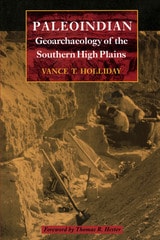
Paleoindian Geoarchaeology of the Southern High Plains
By Vance T. Holliday
University of Texas Press, 1997
The Southern High Plains of northwestern Texas and eastern New Mexico are rich in Paleoindian archaeological sites, including such well-known ones as Clovis, Lubbock Lake, Plainview, and Midland. These sites have been extensively researched over decades, not only by archaeologists but also by geoscientists, whose studies of soils and stratigraphy have yielded important information about cultural chronology and paleoenvironments across the region.
In this book, Vance T. Holliday synthesizes the data from these earlier studies with his own recent research to offer the most current and comprehensive overview of the geoarchaeology of the Southern High Plains during the earliest human occupation. He delves into twenty sites in depth, integrating new and old data on site geomorphology, stratigraphy, soils, geochronology, and paleoenvironments. He also compares the Southern High Plains sites with other sites across the Great Plains, for a broader chronological and paleoenvironmental perspective.
With over ninety photographs, maps, cross sections, diagrams, and artifact drawings, this book will be essential reading for geoarchaeologists, archaeologists, and Quaternary geoscientists, as well as avocational archaeologists who take part in Paleoindian site study throughout the American West.
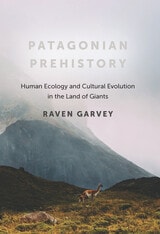
Patagonian Prehistory
Human Ecology and Cultural Evolution in the Land of GiantsRaven Garvey
University of Utah Press, 2021
Garvey’s novel hypotheses question common assumptions regarding Patagonia’s suitability for prehistoric hunter-gatherers. She makes four primary arguments: (1) the surprising lack of clothing in parts of prehistoric Patagonia supports a relatively slow initial colonization of the Americas; (2) the sparse record of human habitation during the middle Holocene may be due to prehistoric behavioral changes and archaeological sampling methods rather than population decline; (3) farming never took root in Patagonia because risks associated with farming likely outweighed potential benefits; and, finally, (4) the broad trajectory of cultural change in Patagonia owes as much to feedback between population size and technology as to conditions in the rugged Patagonian outback itself.
Patina
A Profane ArchaeologyShannon Lee Dawdy
University of Chicago Press, 2016
In Patina, anthropologist Shannon Lee Dawdy examines what was lost and found through the destruction of Hurricane Katrina. Tracking the rich history and unique physicality of New Orleans, she explains how it came to adopt the nickname “the antique city.” With innovative applications of thing theory, Patina studies the influence of specific items—such as souvenirs, heirlooms, and Hurricane Katrina ruins—to explore how the city’s residents use material objects to comprehend time, history, and their connection to one another. A leading figure in archaeology of the contemporary, Dawdy draws on material evidence, archival and literary texts, and dozens of post-Katrina interviews to explore how the patina aesthetic informs a trenchant political critique. An intriguing study of the power of everyday objects, Patina demonstrates how sharing in the care of a historic landscape can unite a city’s population—despite extreme divisions of class and race—and inspire civil camaraderie based on a nostalgia that offers not a return to the past but an alternative future.
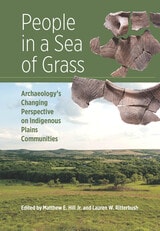
People in a Sea of Grass
Archaeology's Changing Perspective on Indigenous Plains CommunitiesEdited by Matthew E. Hill and Lauren W. Ritterbush
University of Utah Press, 2021
Contributors highlight how Indigenous Plains groups participated in large-scale social networks in which ideas, symbols, artifacts, and people moved across North America over the last 2,000 years. They also discuss cultural transformation, focusing on key demographic, economic, social, and ceremonial factors associated with change, including colonization and integration into the social and political economies of transatlantic societies. Cultural traditions covered include Woodland-era Kansas City Hopewell, late prehistoric Central Plains tradition, and ancestral and early historic Wichita, Pawnee and Arikara, Kanza, Plains Apache, and Puebloan migrants. As the first review of Plains archaeology in more than a decade, this book brings studies of early Indigenous
peoples of the central and southern Plains into a new era.
Pikillacta
The Wari Empire in CuzcoMcEwan, Gordon F.
University of Iowa Press, 2005
Pinson Mounds
Middle Woodland Ceremonialism in the MidsouthRobert C. Mainfort Jr.
University of Arkansas Press, 2013
Plains Village Archaeology
Bison Hunting Farmers in the Central and Northern PlainsStanley A. Ahler and Marvin Kay
University of Utah Press, 2007
This volume presents a cross section of current research about the origins and internal developments of prehistoric Plains village people in the Central and Northern Plains.
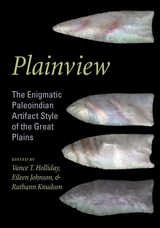
Plainview
The Enigmatic Paleoindian Artifact Style of the Great PlainsEdited by Vance T. Holliday, Eileen Johnson, and Ruthann Knudson
University of Utah Press, 2017
Plants from the Past
Works Of Leonard W. Blake & Hugh C. CutlerLeonard W. Blake and Hugh C. Cutler; With an Introduction by Gayle J. Fritz and Patty Jo Watson
University of Alabama Press, 2001
Plants from the Past is a fascinating, comprehensive record of the work of two dedicated plant scientists who were instrumental in the establishment of archaeobotany and paleoethnobotany as vigorous subdisciplines within American archaeology. Hugh Carson Cutler and Leonard Watson Blake worked together for many decades at the Missouri Botanical Garden in St. Louis, identifying and interpreting plant remains from archaeological sites all over North America.
Covering a period of 30 years and tracing the development of the study of plant remains from archaeological sites, the volume will give archaeologists access to previously unavailable data and interpretations. It features the much-sought-after extensive inventory "Plants from Archaeological Sites East of the Rockies," which serves as a reference to archaeobotanical collections curated at the Illinois State Museum. The chapters dealing with protohistory and early historic foodways and trade in the upper Midwest are especially relevant at this time of increasing attention to early Indian-white interactions.
The editors' introduction provides coherence and historical context for the papers and points to the book's potential as a resource for future research. Graced by Dr. Blake's brief introductions to each chapter, Plants from the Past neatly compiles the earliest research in archaeobotany by two originators of the science.
Plaquemine Archaeology
Edited by Mark A. Rees and Patrick Livingood, with a preface by Stephen Williams
University of Alabama Press, 2006
First major work to deal solely with the Plaquemine societies.
Plaquemine, Louisiana, about 10 miles south of Baton Rouge on the banks of the Mississippi River, seems an unassuming southern community for which to designate an entire culture. Archaeological research conducted in the region between 1938 and 1941, however, revealed distinctive cultural materials that provided the basis for distinguishing a unique cultural manifestation in the Lower Mississippi Valley. Plaquemine was first cited in the archaeological literature by James Ford and Gordon Willey in their 1941 synthesis of eastern U.S. prehistory.
Lower Valley researchers have subsequently grappled with where to place this culture in the local chronology based on its ceramics, earthen mounds, and habitations. Plaquemine cultural materials share some characteristics with other local cultures but differ significantly from Coles Creek and Mississippian
cultures of the Southeast. Plaquemine has consequently received the dubious distinction of being defined by the characteristics it lacks, rather than by those it possesses.
The current volume brings together eleven leading scholars devoted to shedding new light on Plaquemine and providing a clearer understanding of its relationship to other Native American cultures. The authors provide a thorough yet focused review of previous research, recent revelations, and directions for future research. They present pertinent new data on cultural variability and connections in the Lower Mississippi Valley and interpret the implications for similar cultures and cultural relationships. This volume finally places Plaquemine on the map, incontrovertibly demonstrating the accomplishments and importance of Plaquemine peoples in the long history of native North America.
Political Identity & Arch
T Cuddy
University Press of Colorado, 2007
Polity and Ecology in Formative Period Coastal Oaxaca
Arthur A. Joyce
University Press of Colorado, 2012
This period saw the earliest agricultural settlements in the region as well as the origins of sedentism and social complexity, and witnessed major changes in floodplain and coastal environments that expanded the productivity of subsistence resources. The book addresses theoretically significant questions of broad relevance such as the origins and spread of agriculture, the social negotiation of complex political formations, the effects of long-distance trade and interaction, the macroregional effects of landscape change, and prehispanic ideology and political power.
Focusing on questions of interregional interaction, environmental change, and political centralization, Polity and Ecology in Formative Period Coastal Oaxaca provides a comprehensive understanding of the Formative period archaeology of this important and long neglected region of Oaxaca.
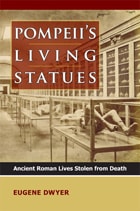
Pompeii's Living Statues
Ancient Roman Lives Stolen from DeathEugene Dwyer
University of Michigan Press, 2010
In AD 79, Mt. Vesuvius erupted in two stages. While the first stage was incredibly destructive, it was the second stage, a so-called pyroclastic flow, that inundated Pompeii with a combination of superheated gases, pumice, and rocks, killing tens of thousands of people and animals and burying them in ash and mud.
During excavations of the town in 1863, Giuseppe Fiorelli, the director of the dig, poured plaster of paris into a cavity under the soil revealed by a workman's pick. When the plaster set and the mound was uncovered, all were amazed to see the secret that the ground had held for 1,800 years: a detailed cast of an ancient Pompeian such as no one had seen before, frozen in the instant of dying and complete in every respect, including outlines of the clothes he was wearing at the time of the destruction. The bodies, photographed and exhibited in the specially built Pompeii Museum, completely changed the world's ideas of life in ancient Italy.
Pompeii's Living Statues is a narrative account, supported by contemporary documents, of the remarkable discovery of those ancient victims preserved in the volcanic mud of Vesuvius.
Eugene Dwyer examines these casts and related records, the originals of a number of which (along with their museum) were lost in World War II bombing. As he considers the casts as archaeological and cultural pieces, he also discusses Pompeii and its artifacts in the context of Italian unification and party politics, the development of modern excavation methods, and the challenges of maintaining a very large archaeological site. Dwyer's clear organization and writing style, combined with a collection of photographs and engravings, make for a fascinating exploration of Pompeii and its victims.
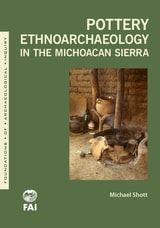
Pottery Ethnoarchaeology in the Michoacán Sierra
Michael J. Shott
University of Utah Press, 2018
Over a five-year period Shott inventoried the household pottery of about twenty-five homes in five towns in Michoacán, Mexico, recording age and types of use. He also looked at a subsample on a monthly basis over two years to estimate the magnitude of early vessel failure that would go unnoticed in an annual census. His analysis of about 900 vessels clearly shows that context does not explain use life, but vessel size does. Bigger pots last longer. Consulting other ethnoarchaeological sources for comparison and cross-cultural perspectives, Shott shows that his results can be applied to other archaeological datasets for determining numbers of original whole vessels as well as site occupation span.

Pox, Empire, Shackles, and Hides
The Townsend Site, 1670-1715Jon Bernard Marcoux
University of Alabama Press, 2010
Marcoux studies the material remains of daily life in order to identify the strategies that households enacted while adapting to the social, political, and economic disruptions associated with European contact. The author focuses on households as the basic units of analysis because these represent the most fundamental and pervasive unit of economic and social production in the archaeological record. His investigations show how the daily lives of Cherokee households changed dramatically as they coped with the shifting social, political, and economic currents of the times. He demonstrates that the community excavated at the Townsend site was formed by immigrant households who came together from geographically disparate and ethnically distinct Cherokee settlements as a way to ameliorate population losses. He also explores changes in community and household patterning, showing how the spatial organization of the Townsend community became less formal and how households became more transient compared to communities predating contact with Europeans. From this evidence, Marcoux concludes that these changes reflect a broader strategic shift to a more flexible lifestyle that would have aided Cherokee households in negotiating the social, political, and economic uncertainty of the period.
Pre-Columbian Jamaica
Phillip Allsworth-Jones
University of Alabama Press, 2008
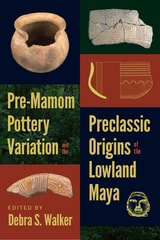
Pre-Mamom Pottery Variation and the Preclassic Origins of the Lowland Maya
Debra S. Walker
University Press of Colorado, 2022
Analyzing ceramics found at sites in Belize, Petén (Guatemala), and Mexico, the contributors provide evidence that the pre-Mamom expansion of pottery resulted from increased dependence on maize agriculture, exploitation of limestone caprock, and greater reliance on a preexisting system of long-distance exchange. The chapters describe the individual experiences of new potting communities at various sites across the region. They are supplemented by appendixes presenting key chronological data as well as the principal types and varieties of pre-Mamom ceramic complexes across the various spheres: Xe, Eb, Swasey, Cunil, and Ek.
A significant amount of new material has been excavated in the last decade, changing what is known about the early Middle Preclassic period and making Pre-Mamom Pottery Variation and the Preclassic Origins of the Lowland Maya a first read of the early ceramic prehistory of the Maya lowlands. It will be a valuable resource for students and scholars interested in the archaeology of the Maya lowlands, Mesoamerican social complexity, and ceramic technology.
Contributors: E. Wyllys Andrews V, Jaime Awe, George J. Bey III, Ronald L. Bishop, Michael G. Callaghan, Ryan H. Collins, Kaitlin Crow, Sara Dzul Góngora, Jerald Ek, Tomás Gallareta Negrón, Bernard Hermes, Takeshi Inomata, Betsy M. Kohut, Laura J. Kosakowsky, Wieslaw Koszkul, Jon Lohse, Michael Love, Nina Neivens, Terry Powis, Duncan C. Pring, Kathryn Reese-Taylor, Prudence M. Rice, Robert M. Rosenswig, Kerry L. Sagebiel, Donald A. Slater, Katherine E. South, Lauren A. Sullivan, Travis Stanton, Juan Luis Velásquez Muñoz, Debra S. Walker, Michal Wasilewski, Jaroslaw Źrałka
Preclassic Maya Pottery at Cuello, Belize
Laura J. Kosakowsky
University of Arizona Press, 1987
Prehistoric Culture Change on the Colorado Plateau
Ten Thousand Years on Black MesaEdited by Shirley Powell and Francis E. Smiley
University of Arizona Press, 2002
Now a single comprehensive work summarizes the results of this intensive survey, excavation, and analysis. Prehistoric Culture Change on the Colorado Plateau offers the only complete synthesis of Kayenta-area archaeology as well as the single most intensive study of the ancestral Puebloan and Navajo occupation of the Four Corners region. It also provides the human context for more than two decades of theoretical, methodological, and empirical work.
The authors—all associated with the Black Mesa project—synthesize previous analyses of faunal, lithic, ceramic, chronometric, and human osteological data, weaving a coherent and compelling story of the prehistory and ethnohistory of northern Arizona. Through these data, they provide a summary of culture history which emphasizes that organizational variation and other aspects of culture change are largely a response to a changing natural environment.
The volume provides a systematic overview of human occupation on and around Black Mesa through time, beginning with the Paleoindian period, moving through the Archaic and Basketmaker periods, considering the Puebloan dispersion and the magnificent remains of the Pueblo III period, and culminating with Hopi and Navajo perspectives on their history. The authors examine relationships among population density, subsistence strategies, and social organization, and use these data to identify the regional context within which the Black Mesa people may have operated during different time periods.
Broad in scope with a wealth of supporting detail, Prehistoric Culture Change on the Colorado Plateau offers a basic reference on this important project that collects twenty years of analysis into one volume. It is a unique touchstone in Southwest archaeology that will stand as the last word on Black Mesa.
Prehistoric Life on the Mississippi Floodplain
Stone Tool Use, Settlement Organization, and Subsistence Practices at the Labras Lake Site, IllinoisRichard W. Yerkes
University of Chicago Press, 1987
With a fine-tuned control of the data, Yerkes challenges prevailing theories based on simple classifications of stone tools according to shape or on simple models of diffuse and focal economies. He views environment as a dynamic factor in economic and cultural life, rather than as merely a backdrop to it. Using incident light microscopy, he examines wear patterns on stone tools to determine what activities were performed during each period the site was inhabited—the Late Archaic, the Late Woodland, and the Mississippian. As he documents environmental change at Labras Lake, he analyzes plant and animal remains in context to explore diet and seasonal patterns of subsistence and settlement.
The result is a more accurate and detailed picture than ever before what prehistoric life on the Mississippi floodplain was like. Yerkes shows how to assess the duration and size of occupations and how to determine where and when true permanent settlements arose. What others call "sedentary encampments" he reveals as sequences of small residental occupations for a narrow range of activities during shorter, seasonal periods. His contribution to the study of the development of sedentism is potentially far-reaching and will interest many North American anthropologists and archeologists.
Prehistoric Quarries and Terranes
The Modena and Tempiute Obsidian SourcesMichael J. Shott
University of Utah Press, 2021
Prehistory of the Central Mississippi Valley
Edited by Charles H. McNutt
University of Alabama Press, 1996
The Central Mississippi Valley, defined as the region along the Mississippi River from where the Ohio River joins in the north to its confluence with the Arkansas River in the south, lies between the two most important archaeological areas of the Southeast: American Bottom/Cahokia and the Lower Yazoo Basin. The valley has been influenced by these major centers and has a complex history of its own. Contributions from experts throughout the region present current, if sometimes conflicting, views of the regional cultural sequences supported by data from recent surveys and excavations, as well as radiocarbon and chronometric determinations. By examining this new information and reevaluating earlier interpretations of local archaeological sequences, this volume provides a comprehensive overview of the valley and defines future research goals.
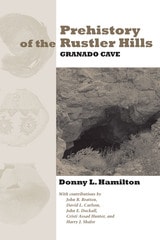
Prehistory of the Rustler Hills
Granado CaveBy Donny L. Hamilton
University of Texas Press, 2001
The Northeastern Trans-Pecos region of Texas is an unforgiving environment for anyone living off the land, yet nomadic hunters and gatherers roamed its deserts and mountains and sheltered in caves and sinkholes from around AD 200 to 1450. This book provides detailed insights into the lifeways of these little-known prehistoric peoples. It places their occupation of the region in a wider temporal and cultural framework through a comprehensive description and analysis of the archaeological remains excavated by Donny L. Hamilton at Granado Cave in 1978.
Hamilton begins with a brief overview of the geology and environment of the Granado Cave area and reviews previous archaeological investigations. Then he and other researchers present detailed analyses of the burials and other material remains found in the cave, as well as the results of radiocarbon dating. From these findings, he reconstructs the subsistence patterns and burial practices of these Native Americans, whom he identifies as a distinct group that was pushed into the environment by surrounding peoples. He proposes that they should be represented by a new archaeological phase, thus helping to clarify the poorly understood late prehistory of the Trans-Pecos.
Principles of Geoarchaeology
A North American PerspectiveMichael R. Waters
University of Arizona Press, 1992
CONTENTS
1. Research Objectives of Geoarchaeology
2. Geoarchaeological Foundations: The Archaeological Site Matrix: Sediments and Soils / Stratigraphy / The Geoarchaeological Interpretation of Sediments, Soils, and Stratigraphy
3. Alluvial Environments: Streamflow / Sediment Erosion, Transport, and Deposition / Alluvial Environments: Rivers, Arroyos, Terraces, and Fans / Alluvial Landscapes Evolution and the Archaeological Record / Alluvial Landscape Reconstruction
4. Eolian Environments: Sediment Erosion, Transport, and Deposition / Sand Dunes / Loess and Dust / Stone Pavements / Eolian Erosion / Volcanic Ash (Tephra)
5. Springs, Lakes, Rockshelters, and Other Terrestrial Environments: Springs / Lakes / Slopes / Glaciers / Rockshelters and Caves
6. Coastal Environments: Coastal Processes / Late Quaternary Sea Level Changes / Coastal Environments / Coastal Landscape Evolution and the Archaeological Record / Coastal Landscape Reconstruction
7. The Postburial Disturbance af Archaeological Site Contexts: Cryoturbation / Argilliturbation / Graviturbation / Deformation / Other Physical Disturbances / Floralturbation / Faunalturbation
8. Geoarchaeological Research
Appendix A: Geoarchaeological Studies Illustrating the Effects of Fluvial Landscape Evolution on the Archaeological Record
Appendix B: Geoarchaeological Studies Illustrating Site-Specific Synchronic and Diachronic Alluvial Landscape Reconstructions
Appendix C: Geoarchaeological Studies Illustrating Regional Synchronic and Diachronic Alluvial Landscape Reconstructions
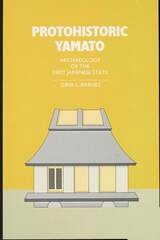
Protohistoric Yamato
Archaeology of the First Japanese StateGina Lee Barnes
University of Michigan Press, 1988