67 books match the query 'Exile' and 5 start with p
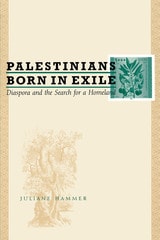
cover of Palestinians Born in Exile: Diaspora and the Search for a Homeland

Palestinians Born in Exile

Diaspora and the Search for a Homeland

By Juliane Hammer

University of Texas Press, 2005

In the decade following the 1993 Oslo Peace Accords, some 100,000 diasporic Palestinians returned to the West Bank and Gaza. Among them were children and young adults who were born in exile and whose sense of Palestinian identity was shaped not by lived experience but rather through the transmission and re-creation of memories, images, and history. As a result, "returning" to the homeland that had never actually been their home presented challenges and disappointments for these young Palestinians, who found their lifeways and values sometimes at odds with those of their new neighbors in the West Bank and Gaza.

This original ethnography records the experiences of Palestinians born in exile who have emigrated to the Palestinian homeland. Juliane Hammer interviews young adults between the ages of 16 and 35 to learn how their Palestinian identity has been affected by living in various Arab countries or the United States and then moving to the West Bank and Gaza. Their responses underscore how much the experience of living outside of Palestine has become integral to the Palestinian national character, even as Palestinians maintain an overwhelming sense of belonging to one another as a people.
[more]
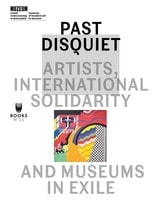
cover of Past Disquiet: Artists, International Solidarity and Museums in Exile

Past Disquiet

Artists, International Solidarity and Museums in Exile

Edited by Kristine Khouri and Rasha Salti

Museum of Modern Art in Warsaw, 2018
The International Art Exhibition for Palestine took place in Beirut in 1978 and mobilized international networks of artists in solidarity with anti-imperialist movements of the 1960s and ’70s. In that era, individual artists and artist collectives assembled collections; organized touring exhibitions, public interventions and actions; and collaborated with institutions and political movements. Their aim was to lend support and bring artistic engagement to protests against the ongoing war in Vietnam, the Pinochet dictatorship in Chile, and the apartheid regime in South Africa, and they were aligned in international solidarity for anti-colonial struggles. Past Disquiet brings together contributions from scholars, curators and writers who reflect on these marginalized histories and undertakings that took place in Baghdad, Beirut, Belgrade, Damascus, Paris, Rabat, Tokyo, and Warsaw. The book also offers translations of primary texts and recent interviews with some of the artists involved.
[more]
cover of Poetry in Exile: Czech Poets during the Cold War and the Western Poetic Tradition

Poetry in Exile

Czech Poets during the Cold War and the Western Poetic Tradition

Josef Hrdlicka

Karolinum Press, 2021

In this comparative tour de force, Josef Hrdlička--one of the Czech Republic’s foremost experts on lyric poetry--examines the impact of exile, literal or spiritual, on poetry. Hrdlička argues that exile serves to disrupt the fundamental elements of poetry, especially its linguistic and cultural framework. Beginning with an examination of exile as a cultural phenomenon in the Western tradition, Hrdlička follows its complex history and treatment by poets from Solon to Celan. Focusing on the specific poetics of exile, he identifies Ovid’s elegies as an early model of exile in poetics before tracing the metamorphosis of exile as a concept through the modern age and the very Baudelarian idea that a person can be metaphorically exiled by the act of daily living itself. The core of Poetry in Exile, however, hews closer to Hrdlička’s homeland, homing in on the postwar poetry of Czech exiles. Poets such as Ivan Blatný, Milada Součková, Ivan Diviš, and Petr Král are investigated as examples to test the theoretical questions raised in the first part of the book and discover the answers that their individual poems provide.
 
[more]
cover of Political Discourse in Exile: Karl Marx and the Jewish Question

Political Discourse in Exile

Karl Marx and the Jewish Question

Dennis Fischman

University of Massachusetts Press, 1991
Over the years, Karl Marx's tangled relation with Judaism has provoked heated debate among followers and critics alike. Can the Jewish tradition better help us understand Marx's political theory? Which themes in Marx's writings become clearer when read in a Jewish context? This book argues that Marx's work, from his doctoral dissertation to Capital, resounds with characteristic concerns of Jewish thought, identifying three key elements that Marx's theory shares with Judaism - its ontology, its use of texts, and its conception of liberation as a return from exile.
[more]
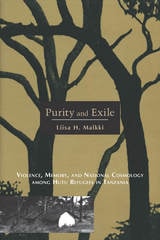
cover of Purity and Exile: Violence, Memory, and National Cosmology among Hutu Refugees in Tanzania

Purity and Exile

Violence, Memory, and National Cosmology among Hutu Refugees in Tanzania

Liisa H. Malkki

University of Chicago Press, 1995

In this study of Hutu refugees from Burundi, driven into exile in Tanzania after their 1972 insurrection against the dominant Tutsi was brutally quashed, Liisa Malkki shows how experiences of dispossession and violence are remembered and turned into narratives, and how this process helps to construct identities such as "Hutu" and "Tutsi."

Through extensive fieldwork in two refugee communities, Malkki finds that the refugees' current circumstances significantly influence these constructions. Those living in organized camps created an elaborate "mythico-history" of the Hutu people, which gave significance to exile, and envisioned a collective return to the homeland of Burundi. Other refugees, who had assimilated in a more urban setting, crafted identities in response to the practical circumstances of their day to day lives. Malkki reveals how such things as national identity, historical consciousness, and the social imagination of "enemies" get constructed in the process of everyday life. The book closes with an epilogue looking at the recent violence between Hutu and Tutsi in Rwanda and Burundi, and showing how the movement of large refugee populations across national borders has shaped patterns of violence in the region.
[more]