Results by title
95 books match the query 'Fall' and 5 start with p

Persuasions Of Fall
Ann Lauinger
University of Utah Press, 2004
The Agha Shahid Ali Prize in Poetry was inaugurated in 2003 to honor the late poet, a nationally recognized author of numerous collections of poetry and a former professor at the University of Utah, and is sponsored by the University of Utah Press and the University of Utah Department of English. In Persuasion of Fall, the first prizewinning volume of the annual competition, Ann Lauinger celebrates the quotidian in ways that are wise, uncompromising, and sometimes sly in their playfulness.

Pikachu's Global Adventure
The Rise and Fall of PokemonJoseph Tobin, ed.
Duke University Press, 2004
In analyzing the popularity of Pokémon, this innovative volume addresses core debates about the globalization of popular culture and about children’s consumption of mass-produced culture. Topics explored include the origins of Pokémon in Japan’s valorization of cuteness and traditions of insect collecting and anime; the efforts of Japanese producers and American marketers to localize it for foreign markets by muting its sex, violence, moral ambiguity, and general feeling of Japaneseness; debates about children’s vulnerability versus agency as consumers; and the contentious question of Pokémon’s educational value and place in school. The contributors include teachers as well as scholars from the fields of anthropology, media studies, sociology, and education. Tracking the reception of Pokémon in Japan, the United States, Great Britain, France, and Israel, they emphasize its significance as the first Japanese cultural product to enjoy substantial worldwide success and challenge western dominance in the global production and circulation of cultural goods.
Contributors. Anne Allison, Linda-Renée Bloch, Helen Bromley, Gilles Brougere, David Buckingham, Koichi Iwabuchi, Hirofumi Katsuno, Dafna Lemish, Jeffrey Maret, Julian Sefton-Green, Joseph Tobin, Samuel Tobin, Rebekah Willet, Christine Yano

Played Out on the Strip
The Rise and Fall of Las Vegas Casino BandsJanis L. McKay
University of Nevada Press, 2016
From 1940 to 1989, nearly every hotel on the Las Vegas Strip employed a full-time band or orchestra. After the late 1980s, when control of the casinos changed hands from independent owners to corporations, almost all of these musicians found themselves unemployed. Played Out on the Strip traces this major shift in the music industry through extensive interviews with former musicians.
In 1989, these soon-to-be unemployed musicians went on strike. Janis McKay charts the factors behind this strike, which was precipitated by several corporate hotel owners moving to replace live musicians with synthesizers and taped music, a strategic decision made in order to save money. The results of this transitional period in Las Vegas history were both long-lasting and far-reaching for the entertainment industry. With its numerous oral history interviews and personal perspectives from the era, this book will appeal to readers interested in Las Vegas history, music history, and labor issues.
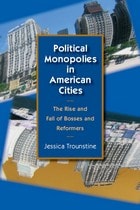
Political Monopolies in American Cities
The Rise and Fall of Bosses and ReformersJessica Trounstine
University of Chicago Press, 2008
Situating her in-depth studies of Chicago and San Jose in the broad context of data drawn from more than 240 cities over the course of a century, she finds that the answer—a resounding yes—illuminates the nature of political power. Both political machines and reform governments, she reveals, bias the system in favor of incumbents, effectively establishing monopolies that free governing coalitions from dependence on the support of their broader communities. Ironically, Trounstine goes on to show, the resulting loss of democratic responsiveness eventually mobilizes residents to vote monopolistic regimes out of office. Envisioning an alternative future for American cities, Trounstine concludes by suggesting solutions designed to free urban politics from this damaging cycle.
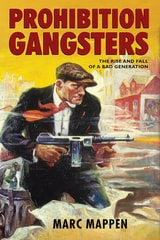
Prohibition Gangsters
The Rise and Fall of a Bad GenerationMappen, Marc
Rutgers University Press, 2013
On January 16, 1920, the Eighteenth Amendment to the Constitution went into effect in the United States, “outlawing the manufacture, sale, or transportation of intoxicating liquors.” A group of young criminals from immigrant backgrounds in cities around the nation stepped forward to disobey the law of the land in order to provide alcohol to thirsty Americans.
Today the names of these young men—Al Capone, Lucky Luciano, Dutch Schultz, Legs Diamond, Nucky Johnson—are more familiar than ever, thanks in part to such cable programs as Boardwalk Empire. Here, Mappen strips way the many myths and legends from television and movies to describe the lives these gangsters lived and the battles they fought. Placing their criminal activities within the context of the issues facing the nation, from the Great Depression, government crackdowns, and politics to sexual morality, immigration, and ethnicity, he also recounts what befell this villainous group as the decades unwound.
Making use of FBI and other government files, trial transcripts, and the latest scholarship, the book provides a lively narrative of shootouts, car chases, courtroom clashes, wire tapping, and rub-outs in the roaring 1920s, the Depression of the 1930s, and beyond. Mappen asserts that Prohibition changed organized crime in America. Although their activities were mercenary and violent, and they often sought to kill one another, the Prohibition generation built partnerships, assigned territories, and negotiated treaties, however short lived. They were able to transform the loosely associated gangs of the pre-Prohibition era into sophisticated, complex syndicates. In doing so, they inspired an enduring icon—the gangster—in American popular culture and demonstrated the nation’s ideals of innovation and initiative.
View a three minute video of Marc Mappen speaking about Prohibition Gangsters.