Results by title
366 books match the query 'Family & Relationships' and 21 start with p

Parent Education
A Survey of the Minnesota ProgramEdith Davis
University of Minnesota Press, 1939
Parent Education
The Northwest Conference on Child Health and Parent EducationRichard Beard
University of Minnesota Press, 1927
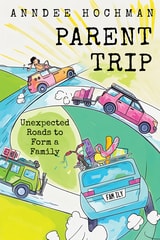
Parent Trip
Unexpected Roads to Form a FamilyAnndee Hochman
Temple University Press, 2026
Hochman recounts the fraught emotions of couples struggling with infertility, the joy of a single gay man becoming a father in his forties, and the anxiety of people waiting for the adoption worker to call with good news. Parent Trip tells of sperm donors and gestational surrogates, midwives and miscarriages; it chronicles how children prompt parents to recalibrate their lives.
In personal essays that weave throughout the profiles, Hochman connects her interviewees’ lives to the love, heartbreak, and uncertainty in her own path to parenthood. Through myriad mundane and extraordinary moments, Parent Trip not only chronicles the magic and labor of childrearing, it also celebrates the infinite ways real families come to be.
Parental Priorities and Economic Inequality
Casey B. Mulligan
University of Chicago Press, 1997
In Mulligan's model, parents determine the degree of their altruistic concern for their children and spend time with and resources on them accordingly—just as they might make choices about how they spend money. Mulligan tests his model against both old and new evidence on the intergenerational transmission of consumption, earnings, and wealth, including models that emphasize "financial constraints." One major prediction of Mulligan's model confirmed by the evidence is that children of wealthy parents typically spend more than they earn.
Mulligan's innovative approach can also help explain other important behavior, such as charitable giving and "corporate loyalty," and will appeal to a wide range of quantitatively oriented social scientists and sociobiologists.
Parenting While PhDing
Surviving and Improving the Working Conditions of Graduate Student ParentsJackie Hoermann-Elliott
Rutgers University Press, 2025
Featuring contributions from more than forty current and former graduate students raising children, Parenting While PhDing offers valuable advice for students and administrators. Parents will get practical recommendations on both child care and self-care, learning how to form supportive personal and professional networks while establishing a healthy work/life balance. The collection also offers thoughtful suggestions on how to make graduate programs less toxic and more inclusive.
Recognizing that not all graduate students have similar backgrounds or needs, Parenting While PhDing features a diverse range of viewpoints, including queer, trans, disabled, BIPOC, immigrant, and first-generation college students. The authors represent a variety of disciplines, from the natural and social sciences to the humanities and health care professions. Together, they share fresh perspectives on the experiences of graduate students with children and offer strategies they can use to navigate the dual pressures of the academy and parenting.

Parents and Peers in Social Development
A Sullivan-Piaget PerspectiveJames Youniss
University of Chicago Press, 1980
Following a discussion of the views of Harry Stack Sullivan and Jean Piaget, whose theories are synthesized in Youniss's perspective, Youniss presents a wealth of empirical data from studies in which children describe their own views of their two social worlds.
Parents and Their Deaf Children
The Early YearsKathryn P. Meadow-Orlans
Gallaudet University Press, 2003
To correct the paucity of information on deaf or hard of hearing children and their parents’ experiences with early intervention services, researchers explored these relationships as part of the National Parent Project. From this investigation, Parents and Their Deaf Children details the experiences of a group of parents and their deaf children from the first identification of the latter’s hearing loss through their early years in elementary school. Renowned scholars Kathryn Meadow-Orlans, Donna Mertens, and Marilyn Sass-Lehrer reveal here for the first time the goals and expectations of the parents, the children’s achievements and troubles, and the families’ satisfaction and disappointment with health and educational systems.
Parents and their Deaf Children stems from a nationwide survey of parents with six-to-seven-year-old deaf or hard of hearing children, followed up by interviews with 80 parents. The authors not only discuss the parents’ communication choices for their children, but also provide how parents’ experiences differ, especially for those whose children are hard of hearing, have additional conditions, or have cochlear implants. Also, one chapter is devoted to families from minority cultures. The final section of this distinctive study offers solid advice for other parents of deaf children and also the professionals who serve them.
Peer Power
Preadolescent Culture and IdentityAdler, Peter
Rutgers University Press, 1998
The Adlers explore some of the patterns that develop in this social space, noting both the differences in boys' and girls' gendered cultures and the overlap in many social dynamics, afterschool activities, role behaviour, romantic inclinations and social stratification. For example, children's participation in adult-organized afterschool activities - a now-prominent feature of many American children's social experience - has profound implications for their socialization and development, moving them away from the negotiated, spontaneous character of play into the formal systems of adult norms and values at ever-younger ages. When they retreat from adults, however, they still display distinctive peer group dynamics, forging strong ingroup/outgroup differentiation, loyalty and identification. Peer culture thus contains informal social mechanisms through which children create their social order, determine their place and identity, and develop positive and negative feelings about themselves. Studying children's peer culture is thus valuable as it reveals not only how this subculture parallels the adult world but also how it differs from it.
Perfect Dirt
And Other Things I've Gotten WrongKeegan Lester
West Virginia University Press, 2021
Words have meaning and meaning evolves over time. In Perfect Dirt, Keegan Lester drags us through his failure to grasp the meaning that always seems to be just beyond his fingertips. These lyrical vignettes depict a lifelong search for home, identity, and the language to say the things we wish we could tell people in the moment.
Born in Southern California to parents who had migrated from West Virginia and South Florida, Lester spent summers with his grandparents in Morgantown, which instilled a deep anchor of place that continued to call to him, an Appalachian at heart even while living in New York City as a poet. As small successes started to come his way—a book and numerous tours—so did crises. Lester’s father, meanwhile, experiencing his own life crisis, embarked on a journey to sail the Caribbean. Both end up lost.
Part memoir, part tour diary, part homage to the places and people who have made him who he is, Perfect Dirt digs into the sometimes painful, sometimes jubilant questions of identity and success. This is a book searching to better understand the world and our place in it, the family we’re born into, and the family we make along the way.
Perfect Motherhood
Science and Childrearing in AmericaApple, Rima
Rutgers University Press, 2006
Parenting today is virtually synonymous with worry. We want to ensure that our children are healthy, that they get a good education, and that they grow up to be able to cope with the challenges of modern life. In our anxiety, we are keenly aware of our inability to know what is best for our children. When should we toilet train? What is the best way to encourage a fussy child to eat? How should we protect our children from disease and injury?
Before the nineteenth century, maternal instinct—a mother’s “natural know-how”—was considered the only tool necessary for effective childrearing. Over the past two hundred years, however, science has entered the realm of motherhood in increasingly significant ways. In Perfect Motherhood, Rima D. Apple shows how the growing belief that mothers need to be savvy about the latest scientific directives has shifted the role of expert away from the mother and toward the professional establishment. Apple, however, argues that most women today are finding ways to negotiate among the abundance of scientific recommendations, their own knowledge, and the reality of their daily lives.
Perversion of Power
Sexual Abuse in the Catholic ChurchMary Gail Frawley-O'Dea
Vanderbilt University Press, 2007
Celibacy, homosexuality in the priesthood, the infiltration into the priesthood of secular moral relativism, too much liberalism in the Church since Vatican II, damaging rollback of Vatican II reforms by conservative prelates--all have been suggested as causes for the crisis. This book, however, begins with the premise that, because the pattern of abuse and cover-up was so similar across the world, there is something fundamentally awry with Church traditions and power structures in relationship to sexuality and sexual abuse.
Specifically, in chapters on suffering and sadomasochism, bodies and gender, desire and sexuality, celibacy and homosexuality, the author concludes that aspects of the Catholic theology of sexuality set the stage for the abuse of minors and its cover-up. Frawley-O'Dea also analyzes the American bishops' lack of pastoral care and tendency towards clerical narcissism--the belief that the needs of the hierarchy represent the needs of the wider Church--as central factors in the scandal. She balances this criticism with a discussion of the backgrounds of the bishops presiding over the crisis and the challenges they faced in their relationships with the Pope and Vatican officials.
Drawing on twenty years of clinical experience, she imagines the dynamics of sexual abuse both from the victim's point of view and from the priest's, and she probes why the Church hierarchy, fellow priests, and lay people were silent for so long. Finally, Frawley-O'Dea examines factors internal to the Church and outside of it that drew this scandal into the public square and kept it there.
Phenomenology and Deconstruction, Volume Two
Method and ImaginationRobert Denoon Cumming
University of Chicago Press, 1992
Cumming also shows that conversion is not merely a personal predisposition of Sartre's—further manifest in his later conversions to Heidegger and to a version of Marxism. Conversion is also philosophical preoccupation, illustrated by the "conversion to the imaginary" whereby Sartre explains how he himself, as well as Genet and Flaubert, became writers. Finally, Cumming details how Husserl's phenomenological method contributed both to the shaping of Sartre's style as a literary writer and to his theory of style.
Post-Racial No More
Race, Realities, and Resources of Ethnic Minority Families: Groves Monographs on Marriage and Family (Volume 7)Helyne Frederick
Michigan Publishing Services, 2022
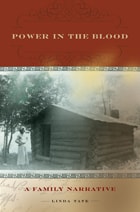
Power in the Blood
A Family NarrativeLinda Tate
Ohio University Press, 2009
Power in the Blood: A Family Narrative traces Linda Tate’s journey to rediscover the Cherokee-Appalachian branch of her family and provides an unflinching examination of the poverty, discrimination, and family violence that marked their lives. In her search for the truth of her own past, Tate scoured archives, libraries, and courthouses throughout Kentucky, Tennessee, Alabama, Illinois, and Missouri, visited numerous cemeteries, and combed through census records, marriage records, court cases, local histories, old maps, and photographs. As she began to locate distant relatives — fifth, sixth, seventh cousins, all descended from her great-greatgrandmother Louisiana — they gathered in kitchens and living rooms, held family reunions, and swapped stories. A past that had long been buried slowly came to light as family members shared the pieces of the family’s tale that had been passed along to them.
Power in the Blood is a dramatic family history that reads like a novel, as Tate’s compelling narrative reveals one mystery after another. Innovative and groundbreaking in its approach to research and storytelling, Power in the Blood shows that exploring a family story can enhance understanding of history, life, and culture and that honest examination of the past can lead to healing and liberation in the present.
Prayers and Rituals at a Time of Illness and Dying
The Practices of Five World ReligionsPatricia Fosarelli
Templeton Press, 2008
In the course of caring for the ill or dying, health care professionals are sometimes the only ones available to provide spiritual comfort to their patients. In our modern pluralistic society, where patients could come from any number of religious traditions, it can often be difficult to find exactly the right words in these situations.
Prayers and Rituals at a Time of Illness and Dying: The Practices of Five World Religions by experienced physician and theologian Pat Fosarelli offers clear instructions for health care professionals on how to better understand the needs of their Buddhist, Hindu, Muslim, Christian, and Jewish patients during these difficult times. Devoting separate chapters to each tradition, Fosarelli briefly outlines the basic beliefs and then looks at the main tenets of each religion, exploring the varied approaches that they take to illness and end-of-life issues. For each tradition, she also describes practices and offers suitable prayers. Each chapter suggests modifications that may be necessary for Western hospitals, modifications for children, and specific suggestions about what not to do or say in respect to different faith traditions.
This easy-to-use, pocket-sized resource will be referenced again and again by physicians, paramedics, hospital and military chaplains, pastoral counselors, hospice providers, and other medical professionals.
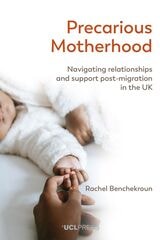
Precarious Motherhood
Navigating Relationships and Support Post-Migration in the UKRachel Benchekroun
University College London, 2025
Precarious Motherhood is a deeply human investigation of the lives of racially minoritized mothers as they navigate the intersecting challenges of financial hardship and the UK’s hostile immigration policies. Based on thorough ethnographic research, Rachel Benchekroun examines how these mothers forge relationships to access support, maintain their children’s well-being, and carve out spaces of belonging in an often unwelcoming system. The book captures the resilience and the relentless precarity of motherhood in migration, where every relationship shapes social barriers and everyday survival.
Through the voices of over twenty migrant mothers, this work sheds light on the personal and political dimensions of motherhood. It provides critical insights into state policies and social infrastructures that shape migrant lives, making it a valuable resource for scholars of migration and social justice.
Preventing Child Maltreatment in the U.S.
American Indian and Alaska Native PerspectivesRoyleen J Ross
Rutgers University Press, 2022
This book is part of a concentrated series of books that examines child maltreatment across minoritized, cultural groups.Specifically, this volume addresses American Indian and Alaska Native populations. However, in an effort to contextualize the experiences of 574 federally recognized tribes and 50+ state recognized tribes, as well as villages, the authors focus on populations within rural and remote regions and discuss the experiences of some tribal communities throughout US history. It should be noted that established research has primarily drawn attention to the pervasive problems impacting Indigenous individuals, families, and communities. Aligned with an attempt to adhere to a decolonizing praxis, the authors share information in a strength-based framework for the Indigenous communities discussed within the text. The authors review federally funded programs (prevention, intervention, and treatment) that have been adapted for tribal communities (e.g., Safecare) and include cultural teachings that address child maltreatment. The intention of this book is to inform researchers, practitioners, policy makers, and advocates about the current state of child maltreatment from an Indigenous perspective.
Preventing Child Maltreatment in the U.S.
Multicultural ConsiderationsMilton A Fuentes
Rutgers University Press, 2022
Preventing Child Maltreatment in the U.S.
The Black Community PerspectiveMelissa Phillips
Rutgers University Press, 2022
Preventing Child Maltreatment in the U.S.
The Latinx Community PerspectiveEsther J. Calzada
Rutgers University Press, 2022
Purpose & Power In Retirement
New Opportunities for Meaning and SignificanceHarold Koenig
Templeton Press, 2003
Eighty million baby boomers are heading toward retirement. Some are retiring now, either out of choice or because they have been laid off. Others will work for a few more years until their retirement plans kick in, until they feel they can retire, or until they're forced to retire. Whatever their age at retirement, they will have better health and live longer than their parents. And each of them will face these questions:
•Do I want a reason to get up in the morning and be excited about the day ahead?•Do I still want to make a difference in the world?
They need a vision—a goal that takes into account their experience, wisdom, strengths, and limitations, and gives purpose to their lives.
Dr. Harold G. Koenig, with expertise in the fields of geriatrics, mental health, and religion, explains that the notion of retirement was in fact a marketing tool developed in the post–World War II period. Continuing today, society's image of retirement is based largely on myths, such as: things will get better when you retire—you'll be able to do everything you wanted to but couldn't when you worked. In fact, these beliefs can be harmful, leading to emotional issues, identity crises, and problems with physical health.
Citing current scientific and medical research, Koenig illustrates how having a purpose motivates and energizes people in their retirement years. He presents a step-by-step guide to identifying a goal toward which they can strive. And he shows how striving for that goal in itself brings meaning, satisfaction, and a sense of reward to retirement years.
"Finding purpose is more urgent than ever during the retirement years, when the search for purpose becomes one of the deepest of human longings," says Koenig. His Purpose and Power in Retirement is an invaluable resource for everyone heading toward retirement, and for anyone seeking meaning in life.