Results by title
455 books match the query 'Feminism' and 23 start with p
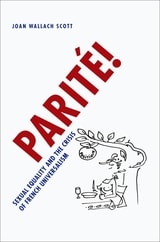
Parité!
Sexual Equality and the Crisis of French UniversalismJoan Wallach Scott
University of Chicago Press, 2005
During the 1990s, le mouvement pour la parité successfully campaigned for women's inclusion in elective office with an argument that is unprecedented in the annals of feminism. The paritaristes insisted that if the abstract individual were thought of as sexed, then sexual difference would no longer be a relevant consideration in politics. Scott insists that this argument was neither essentialist nor separatist; it was not about women's special qualities or interests. Instead, parité was rigorously universalist—and for that reason was both misunderstood and a source of heated debate.
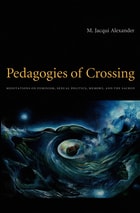
Pedagogies of Crossing
Meditations on Feminism, Sexual Politics, Memory, and the SacredM. Jacqui Alexander
Duke University Press, 2005
In these meditations, Alexander deftly unites large, often contradictory, historical processes across time and space. She focuses on the criminalization of queer communities in both the United States and the Caribbean in ways that prompt us to rethink how modernity invents its own traditions; she juxtaposes the political organizing and consciousness of women workers in global factories in Mexico, the Caribbean, and Canada with the pressing need for those in the academic factory to teach for social justice; she reflects on the limits and failures of liberal pluralism; and she presents original and compelling arguments that show how and why transgenerational memory is an indispensable spiritual practice within differently constituted women-of-color communities as it operates as a powerful antidote to oppression. In this multifaceted, visionary book, Alexander maps the terrain of alternative histories and offers new forms of knowledge with which to mold alternative futures.
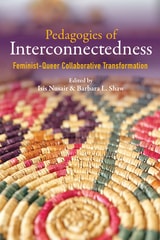
Pedagogies of Interconnectedness
Feminist-Queer Collaborative TransformationEdited by Isis Nusair and Barbara Shaw
University of Illinois Press, 2025
The contributors describe ways of building communities within and beyond academic programs and examine what it means to engage in community-building work and action across institutional boundaries. In Part One, the essayists focus on the centrality of community building and reinterpreting bodies of knowledge with students, staff, faculty, and community members. Part Two looks at bringing transnational approaches to feminist collaborations in ways that challenge the classroom’s central place in knowledge production. Part Three explores organic collaborations in and beyond the classroom.
A practical and much-needed resource, Pedagogies of Interconnectedness offers cutting-edge ideas for collaboration in pedagogy, education justice, community-based activities, and liberatory worldmaking.
Contributors: Jordyn Alderman, Leen Al-Fatafta, Meryl Altman, María Claudia André, Andrea N. Baldwin, Carolyn Beer, Luisa Bieri, Rebecca Dawson, Misty De Berry, Danielle M. DeMuth, Emily Fairchild, Sara Youngblood Gregory, Letizia Guglielmo, Jeremy Hall, K. Melchor Hall, Linh U. Hua, Christine Keating, Charlotte Meehan, Brayden Milam, Isis Nusair, Montserrat Pérez-Toribio, Andrea Putala, Ariella Rotramel, Ann Russo, Kimberly Sanchez, Barbara L. Shaw, M. Gabriela Torres, Ayana K. Weekley, and Sharon R. Wesoky

Pedagogy of Democracy
Feminism and the Cold War in the U.S. Occupation of JapanMire Koikari
Temple University Press, 2009
Pedagogy of Democracy re-interprets the U.S. occupation of Japan from 1945 to 1952 as a problematic instance of Cold War feminist mobilization rather than a successful democratization of Japanese women as previously argued. By combining three fields of research—occupation, Cold War, and postcolonial feminist studies—and examining occupation records and other archival sources, Koikari argues that postwar gender reform was one of the Cold War containment strategies that undermined rather than promoted women’s political and economic rights.

Perspectives on Women in the 1980s
Joan Turner
University of Manitoba Press, 1983

Perspectives on Women's Archives
All rights reserved. No part of this publication may be reproduced, stored in a retrieval system, or transmitted in any form or by any means without prior permission from the publisher.
Society of American Archivists, 2013

Pin-Up Grrrls
Feminism, Sexuality, Popular CultureMaria Elena Buszek
Duke University Press, 2006
Beginning with the pin-up’s origins in mid-nineteenth-century carte-de-visite photographs of burlesque performers, Buszek explores how female sex symbols, including Adah Isaacs Menken and Lydia Thompson, fought to exert control over their own images. Buszek analyzes the evolution of the pin-up through the advent of the New Woman, the suffrage movement, fanzine photographs of early film stars, the Varga Girl illustrations that appeared in Esquire during World War II, the early years of Playboy magazine, and the recent revival of the genre in appropriations by third-wave feminist artists. A fascinating combination of art history and cultural history, Pin-Up Grrrls is the story of how women have publicly defined and represented their sexuality since the 1860s.
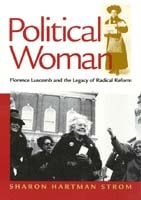
Political Woman
FlorenceSharon Strom
Temple University Press, 2001
Politcal Women counters the traditional narratives that place men at the center of political thinking and history. Showing how three generations of Luscomb's family had set the stage for her activism, this biography presents her story against the backdrop of Boston's politics and larger struggles for social justice. Luscomb participated in every significant social reform movement of her time -- from securing women's right to vote and supporting trade unionism to advocating an end to the war in Vietnam. Luscomb also ran for public office; she was narrowly defeated when she ran for Boston's city council in 1922. Although unsuccessful as a third-party candidate for Congress (in 1936 and 1950) and for Governor of Massachusetts (in 1952), she was one of the few women of her time to seek office. Independent, athletic, and spirited, she apparently never thought that traditional gender prescriptions applied to her. A practicing architect before the First World War, an exuberant hiker all her life, and a member in collective-living arrangements, Luscomb enjoyed a life of rich experiences and sustaining relationships.
In Florence Luscomb's biography, Sharon Hartman Strom suggests that although women were excluded from the activities and sites associated with conventional politics until recently, they did political work that gave purpose to their lives and affected political thinking in their communities, states, and ultimately the nation.

Politics and Scholarship
Feminist Academic Journals and the Production of KnowledgePatrice McDermott
University of Illinois Press, 1994
-- J'nana Morse Sellery, coauthor of Elizabeth Bowen: A Bibliography
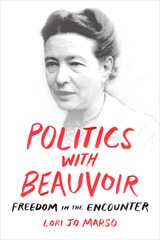
Politics with Beauvoir
Freedom in the EncounterLori Jo Marso
Duke University Press, 2017

Pope John Paul II Speaks on Women
Brooke Williams Deely
Catholic University of America Press, 2014

Pornography, Feminism and the Individual
Alison Assiter
Pluto Press, 1989
Postcolonial Hauntings
Play and Transnational FeminismSushmita Chatterjee
University of Illinois Press, 2024
Often examined separately, play and hauntings in fact act together to frame postcolonial issues. Sushmita Chatterjee showcases their braided workings in social and political fabrics. Drawing on this intertwined idea of play and hauntings, Chatterjee goes to the heart of conundrums within transnational postcolonial feminisms by examining the impossible echoes of translations, differing renditions of queer, and the possibilities of solidarity beyond the fraternal friendships that cement nation-states. Meaning-plays, or slippages through language systems as we move from one language to another, play a pivotal role in a global world. As Chatterjee shows, an attentiveness to meaning-plays discerns the past and present, here and there, and moves us toward responsive ethics in our theories and activisms.
Insightful and stimulating, Postcolonial Hauntings centers the inextricable work of play and hauntings as a braided ethics for postcolonial transnational struggles.
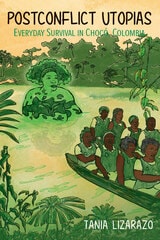
Postconflict Utopias
Everyday Survival in Chocó, ColombiaTania Lizarazo
University of Illinois Press, 2024
A merger of eyewitness accounts and theory, Postconflict Utopias explores the links between lived knowledge and survival while revealing the power unleashed when women ask the simple question, “Why not?”
Power Lines
On the Subject of Feminist AlliancesAimee Carrillo Rowe
Duke University Press, 2008
Combining theory, criticism, and narrative nonfiction, Carrillo Rowe develops a politics of relation that encourages the formation of feminist alliances across racial and other boundaries within academia. Such a politics of relation is founded on her belief that our subjectivities emerge in community; our affective investments inform and even create our political investments. Thus experience, consciousness, and agency must be understood as coalitional rather than individual endeavors. Carrillo Rowe’s conversations with academic feminists reveal that women who restrict their primary allies to women of their same race tend to have limited notions of feminism, whereas women who build transracial alliances cultivate more nuanced, intersectional, and politically transformative feminisms. For Carrillo Rowe, the institutionalization of feminism is not so much an achievement as an ongoing relational process. In Power Lines, she offers a set of critical, practical, and theoretical tools for building and maintaining transracial feminist alliances.
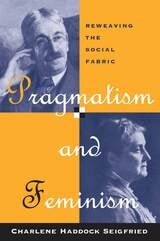
Pragmatism and Feminism
Reweaving the Social FabricCharlene Haddock Seigfried
University of Chicago Press, 1996
With careful attention to their interwoven histories and contemporary concerns, Pragmatism and Feminism effectively invigorates both traditions, opening them to new interpretations and appropriations and asserting their timely philosophical relevance. This foundational work in feminist theory simultaneously invites and guides future scholarship in an area of rapidly emerging significance.
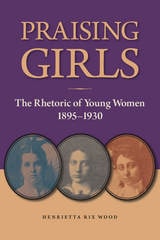
Praising Girls
The Rhetoric of Young Women, 1895-1930Henrietta Rix Wood
Southern Illinois University Press, 2016
The site of the study—Kansas City, Missouri—reflects the diverse rhetorical experiences of girls in cities across the United States at the beginning of the last century. Four case studies examine the writing of privileged white girls at a college preparatory school, Native American girls at an off-reservation boarding school, African American girls at a segregated high school, and working- and middle-class girls at a large whites-only public high school. Wood’s analysis reveals a contemporary concept of epideictic rhetoric that accounts for issues of gender, race, class, and age.

Primal Screams
How the Sexual Revolution Created Identity PoliticsEberstadt, Mary
Templeton Press, 2021
Who am I? The question today haunts every society in the Western world.
Legions of people—especially the young—have become unmoored from a firm sense of self. To compensate, they join the ranks of ideological tribes spawned by identity politics and react with frenzy against any perceived threat to their group.
As identitarians track and expose the ideologically impure, other citizens face the consequences of their rancor: a litany of “isms” run amok across all levels of cultural life, the free marketplace of ideas muted by agendas shouted through megaphones, and a spirit of general goodwill warped into a state of perpetual outrage.
How did we get here? Why have we divided against one another so bitterly? In Primal Screams, acclaimed cultural critic Mary Eberstadt presents the most provocative and original theory to come along in recent years. The rise of identity politics, she argues, is a direct result of the fallout of the sexual revolution, especially the collapse and shrinkage of the family.
As Eberstadt illustrates, humans have forged their identities within the kinship structure from time immemorial. The extended family, in a real sense, is the first tribe and teacher. But with its unprecedented decline across various measures, generations of people have been set adrift and can no longer answer the question Who am I? concerning primordial ties. Desperate for solidarity and connection, they claim membership in politicized groups whose displays of frantic irrationalism amount to primal screams for familial and communal loss.
Written in her impeccable style and with empathy rarely encountered in today’s divisive discourse, Eberstadt’s theory holds immense explanatory power that no serious citizen can afford to ignore. The book concludes with three incisive essays by Rod Dreher, Mark Lilla, and Peter Thiel, each sharing their perspective on the author’s formidable argument.
Privately Empowered
Expressing Feminism in Islam in Northern Nigerian FictionShirin Edwin
Northwestern University Press, 2016

Progressive Women in Conservative Times
Racial Justice, Peace, and FeminismSusan Lynn
Rutgers University Press, 1992
Susan Lynn explores women's progressive social reform efforts in the 1940s and 1950s, an era when women activists promoted a postwar vision of a society based on an expanded welfare state, a powerful labor movement, a strong tradition of civil liberties, racial equality, and a peaceful international order. Lynn focuses on two organizations, the YWCA and the American Friends Service Committee, to explore this agenda.

Proper Women
Feminism and the Politics of Respectability in IranFae Chubin
Temple University Press, 2024
Chubin brings attention to the varying class, ethnic, religious, and national identities of NGO staff and clients that shaped their differing understandings of oppression and justice. Her examination of the tensions within the organization reveals why the efforts of the NGO workers failed to gain purchase among the intended beneficiaries.
Proper Women concludes by encouraging feminist activists to not only examine the role of local politics and transnational connections in shaping their definitions of empowerment, but also consider the advantages of a justice-enhancing practice as opposed to justice monism for their target populations.

Psychosomatic
Feminism and the Neurological BodyElizabeth A. Wilson
Duke University Press, 2004
Public Feminisms
From Academy to CommunityEdited by Carrie N. Baker and Aviva Dove-Viebahn
Lever Press, 2023
The field of feminist studies grew from the U.S. women’s movements of the 1960s and 1970s and has continued to be deeply connected to ongoing movements for social justice. As educational institutions are increasingly seeing public scholarship and community engagement as relevant and fruitful complements to traditional academic work, feminist scholars have much to offer in demonstrating different ways to inform and interact with various communities. In Public Feminisms: From Academy to Community edited by Carrie N. Baker and Aviva Dove-Viebahn, a diverse range of feminist scholar-activists write about the dynamic and varied methods they use to reach beyond the traditional academic classroom and scholarly journals to share their work with the public.
Part one explores how feminist scholars engage broader audiences through art, media, and public programming, including essays on a public discussion series teaching intersectional feminist analysis of popular films, and a podcast from Latina scholars discussing issues of reproductive justice, social justice, motherhood, sexuality, race, and gender. Part two focuses on activism and public education, including essays on “Take Back the Night,” and archiving the women’s march protests. Part three turns to public writing and scholarship, including an essay on elevating the perspectives and voices of underrepresented creatives in the film and television industry. Part four explores feminist pedagogies for community engagement and for teaching public feminisms.
Accessible and engaging to a broad range of readers, the essays in this volume are a rich resource for scholars and students interested in infusing their academic knowledge into the public sphere. With this timely book, the editors offer an opportunity to reflect on the meaning and importance of community engagement and highlight some of the important public-facing work feminist scholars are doing today. Faculty, graduate, and undergraduate students, as well as administrators hoping to increase their schools’ connections to the community, will find this volume indispensable.