Results by title
329 books match the query 'Folklore & Mythology' and 15 start with p
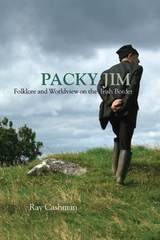
Packy Jim
Folklore and Worldview on the Irish BorderRay Cashman
University of Wisconsin Press, 2017
Ray Cashman, who has been interviewing McGrath for more than fifteen years, demonstrates how Packy Jim embellishes daily conversation with stories of ghosts and fairies, heroic outlaws and hateful landlords. Such folklore is a boundless resource that he uses to come to grips with the past and present, this world and the next. His stories reveal an intricate worldview that is both idiosyncratic and shared—a testament to individual intelligence and talent, and a window into Irish vernacular culture.
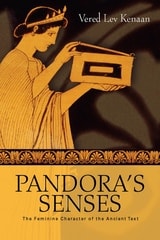
Pandora's Senses
The Feminine Character of the Ancient TextVered Lev Kenaan
University of Wisconsin Press, 2010
In this compelling study, Vered Lev Kenaan offers a radical revision of the Greek myth of the first woman. She argues that Pandora leaves a decisive mark on ancient poetics and shows that we can unravel the profound impact of Pandora’s image once we recognize that Pandora embodies the very idea of the ancient literary text. Locating the myth of the first woman right at the heart of feminist interrogation of gender and textuality, Pandora’s Senses moves beyond a feminist critique of masculine hegemony by challenging the reading of Pandora as a one-dimensional embodiment of the misogynist vision of the feminine. Uncovering Pandora as a textual principle operating outside of the feminine, Lev Kenaan shows the centrality of this iconic figure among the poetics of such central genres as the cosmological and didactic epic, the Platonic dialogue, the love elegy, and the ancient novel. Pandora’s Senses innovates our understanding of gender as a critical lens through which to view ancient literature.
Past Titan Rock
Journeys into an Appalachian ValleyEllesa Clay High
West Virginia University Press, 2021
Past Titan Rock, a winner of the Appalachian Award for Literature, is available in a new edition as part of the series Sounding Appalachia, with an introduction by series editor Travis D. Stimeling.
In 1977 Ellesa Clay High thought she would spend an afternoon interviewing Lily May Ledford, best known as the lead performer of an all-female string band that began playing on the radio in the 1930s. That meeting began an unexpected journey leading into the mountains of eastern Kentucky and a hundred years into the past. Set in Red River Gorge, an area of steep ridges and box canyons, Past Titan Rock is a multigenre, multivocal re-creation of life in that region. With Ledford’s guidance, High traveled and lived in the gorge, visiting with people who could remember life there before the Works Progress Administration built roads across the ridges and into the valleys during the New Deal. What emerges through a unique combination of personal essay, oral history, and short fiction is a portrait of a mountain culture rich in custom, oral tradition, and song. Past Titan Rock demonstrates the depth of community ties in the Red River Gorge and raises important questions about how to resist destructive forces today.
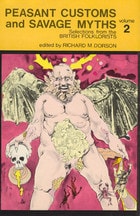
Peasant Customs and Savage Myths
Selections from the British FolkloristsEdited by Richard M. Dorson
University of Chicago Press, 1969
Professor Dorson traces the historical development of folklore as a field of learning, beginning with sixteenth-century antiquarians whose studies encompassed the preservation of local customs and reaching its climax with the "Great Team" of Andrew Lang and his co-workers from the 1870's to the First World War.
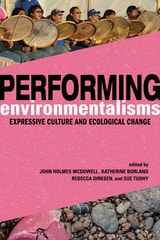
Performing Environmentalisms
Expressive Culture and Ecological ChangeEdited by John Holmes McDowell, Katherine Borland, Rebecca Dirksen, and Sue Tuohy
University of Illinois Press, 2021
Interdisciplinary in approach and wide-ranging in scope, Performing Environmentalisms is an engaging look at the merger of cultural expression and environmental action on the front lines of today's global emergency.
Contributors: Aaron S. Allen, Eduardo S. Brondizio, Assefa Tefera Dibaba, Rebecca Dirksen, Mary Hufford, John Holmes McDowell, Mark Pedelty, Jennifer C. Post, Chie Sakakibara, Jeff Todd Titon, Rory Turner, Lois Wilcken
Pissing in the Snow and Other Ozark Folktales
Vance Randolph
University of Illinois Press, 1976
Randolph's reputation rests on the massive accumulation of folksong, folktale, and ballad materials he collected during forty years of living and working in the Ozarks. Unfortunately, in the 1950s when Randolph published several collection of Ozark tales, the material in this volume was considered unprintable.
Pissing in the Snow departs from the academic prudery that until recently has restricted the amount of bawdy folklore available for study. It presents a body of material that for twenty years has circulated only in manuscript or microfilm under its present title.
When placed in their rightful context alongside Randolph's other collections of folk material, the bawdy tales help provide evidence of what Ozark hill people think about their own lives and language. As Rayna Green writes in her introduction, "The entire body of material . . . offers a picture of expressive behavior unparalleled by any other American region's or group's study." Hoffmann's annotations draw parallels between the erotic narrative tradition of the Ozarks and that in other parts of the country and the world, especially Europe.
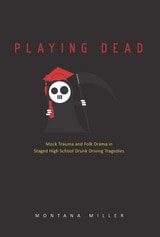
Playing Dead
Mock Trauma and Folk Drama in Staged High School Drunk Driving TragediesMontana Miller
Utah State University Press, 2012
As the Grim Reaper pulls a student out of class to be a “victim” of drunk driving in a program called “Every 15 Minutes,” Montana Miller observes the ritual through a folklorist’s lens. Playing Dead examines why hundreds of American schools and communities each year organize these mock tragedies without any national sponsorship or coordination. Often, the event is complete with a staged accident in the parking lot, a life-flight helicopter, and faux eulogies for the “dead” students read in school assemblies. Grounding her research in play theory, frame theory, and theory of folk drama, Miller investigates key aspects of this emergent tradition, paying particular attention to its unplanned elements—enabled by the performance’s spontaneous nature and the participants’ tendency to stray from the intended frame. Miller examines such variations in terms of the program as a whole, analyzing its continued popularity and weighing its success as perceived by participants. Her fieldwork reveals a surprising aspect of Every 15 Minutes that typical studies of ritual do not include: It can be fun. Playing Dead is volume two of the series Ritual, Festival, and Celebration, edited by Jack Santino.
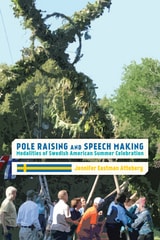
Pole Raising and Speech Making
Modalities of Swedish American Summer CelebrationJennifer Eastman Attebery
Utah State University Press, 2015
In Pole Raising and Speech Making, author Jennifer Eastman Attebery focuses on the beginnings of the traditional Scandinavian Midsummer celebration and the surrounding spring-to-summer seasonal festivities in the Rocky Mountain West during the height of Swedish immigration to the area—1880–1917.
Combining research in folkloristics and history, Attebery explores various ways that immigrants blended traditional Swedish Midsummer-related celebrations with local civic celebrations of American Independence Day on July 4 and the Mormons’ Pioneer Day on July 24. Functioning as multimodal observances with multiple meanings, these holidays represent and reconsider ethnicity and panethnicity, sacred and secular relationships, and the rural and the urban, demonstrating how flexible and complex traditional celebrations can be.
Providing a wealth of detail and information surrounding little-studied celebrations and valuable archival and published primary sources—diaries, letters, speeches, newspaper reports, and images—Pole Raising and Speech Making is proof that non-English immigrant culture must be included when discussing “American” culture. It will be of interest to scholars and graduate students in ethnic studies, folklore, ritual and festival studies, and Scandinavian American cultural history.

Polish-American Folklore
Deborah Anders Silverman
University of Illinois Press, 2000
Silverman surveys rituals of courtship, marriage, coming of age, and funerals, also noting those customs that have been rediscovered after falling into disuse. She follows the trail of folk stories and delves into folk music and dance, particularly the polka, providing a detailed discussion of texts, contexts, and performance practices. She also describes birthing practices, home remedies, superstitions, folk blessings, and miracle cures. In addition, she offers a wealth of information on foodways and on the origins and celebration of holy days, from Christmas Eve vigils to the Dyngus Day festivals of the Easter season.
Polish-American Folklore reveals a community that preserves distinctive traditions even though geographically dispersed in a new homeland. Polish Americans retain ties to their ethnicity though ethnic media, social clubs, churches, group events, and the Internet. This "Polonia without walls" is united by a resilient, dynamic, family-oriented culture that attracts not only Polish immigrants and their descendants but also newcomers from other ethnic and racial groups.
By including first-person commentary from a wide range of Polish American individuals and families, from first-generation immigrants to non-Polish in-laws who embrace Polish foods, music, and traditions, Silverman brings to life a thriving ethnic subculture that values equally its Polish roots and its American harvest.
Poor Pearl, Poor Girl!
The Murdered-Girl Stereotype in Ballad and NewspaperBy Anne B. Cohen
University of Texas Press, 1973
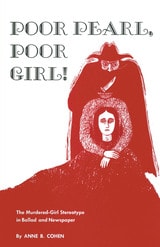
The year was 1896, and nineteenth-century journalists called the murder of Pearl Bryan the "Crime of the Century." From the day Pearl's headless body was found to the execution of her murderers on the gallows, the details of the murder fascinated newspaper reporters and ballad composers alike.
Often glossing over the facts of the case, newspaper accounts presented the events according to stereotypes that were remarkably similar to those found in well-known murdered-girl ballads, such as "Pretty Polly," "Omie Wise," and "The Jealous Lover." Events, characters, motivations, and plot were presented through this framework: the simple country girl led astray by a clever degenerate. Nearly all variants of the Pearl Bryan ballad point the same moral:
Young ladies now take warning
Young men are so unjust,
It may be your best lover
But you know not whom to trust.
Representations of this formula appear in such diverse genres as the ballad "Poor Ellen Smith" and the novel An American Tragedy.
As Anne Cohen demonstrates, both newspaper accounts and ballads tell the Pearl Bryan story from the same moral stance, express the same interpretation of character, and are interested in the same details. Both distort facts to accommodate a shared pattern of storytelling. This pattern consists of a plot formula—the murdered-girl formula—that is accompanied by stereotyped scenes, actors, and phrases. The headless body—surely the most striking element in the Pearl Bryan case—is absent from those ballads that have survived. Anne Cohen contends that a decapitated heroine does not belong to the formula—a murdered heroine, yes, but not a decapitated one. Similarly, newspapers made much of Pearl's "innocence" and tended to downplay the second murderer. Only one murderer, the lover, belongs to the stereotype.
Poor Pearl, Poor Girl! is a ballad study conducted on historic- geographic lines; that is, it seeks to trace the history and interrelations of a series of ballad texts and to relate the ballads directly to their ideological and historical context in the American scene. It also compares the narrative techniques of ballad composition with the techniques of other forms of popular narrative, especially newspaper journalism.

Popular Culture Theory and Methodology
A Basic IntroductionEdited by Harold E. Hinds, Marilyn F. Motz, and Angela M.S. Nelson
University of Wisconsin Press, 2006

Practically Joking
Moira Marsh
Utah State University Press, 2015
In Practically Joking, the first full-length study of the practical joke, Moira Marsh examines the value, artistry, and social significance of this ancient and pervasive form of vernacular expression.
Though they are sometimes dismissed as the lowest form of humor, practical jokes come from a lively tradition of expressive play. They can reveal both sophistication and intellectual satisfaction, with the best demanding significant skill and talent not only to conceive but also to execute. Practically Joking establishes the practical joke as a folk art form subject to critical evaluation by both practitioners and audiences, operating under the guidance of local aesthetic and ethical canons.
Marsh studies the range of genres that pranks comprise; offers a theoretical look at the reception of practical jokes based on “benign transgression”—a theory that sees humor as playful violation—and uses real-life examples of practical jokes in context to establish the form’s varieties and meanings as an independent genre, as well as its inextricable relationship with a range of folklore forms. Scholars of folklore, humor, and popular culture will find much of interest in Practically Joking.
Princess, Priestess, Poet
The Sumerian Temple Hymns of EnheduannaBy Betty De Shong Meador
University of Texas Press, 2009
Public Performances
Studies in the Carnivalesque and RitualesqueJack Santino
Utah State University Press, 2024
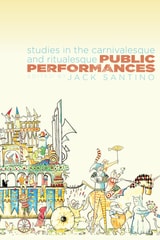
Public Performances offers a deep and wide-ranging exploration of relationships among genres of public performance and of the underlying political motivations they share. Illustrating the connections among three themes—the political, the carnivalesque, and the ritualesque—this volume provides rich and comprehensive insight into public performance as an assertion of political power.
Contributors consider how public genres of performance express not only celebration but also dissent, grief, and remembrance; examine the permeability of the boundaries between genres; and analyze the approval or regulation of such events by municipalities and other institutions. Where the particular use of public space is not sanctioned or where that use meets with hostility from institutions or represents a critique of them, performers are effectively reclaiming public space to make public statements on their own terms—an act of popular sovereignty.
Through these concepts, Public Performances distinguishes the sometimes overlapping dimensions of public symbolic display. Carnival, and thus the carnivalesque, is understood to possess tacit social permission for unconventional or even deviant performance, on the grounds that normal social order will resume when the performance concludes. Ritual, and the ritualesque, leverages a deeper symbolic sensibility, one believed—or at least intended—by the participants to effect transformative, longer-term change.
Contributors: Roger D. Abrahams, John Borgonovo, Laurent Sébastien Fournier, Lisa Gilman, Barbara Graham, David Harnish, Samuel Kinser, Scott Magelssen, Elena Martinez, Pamela Moro, Beverly J. Stoeltje, Daniel Wojcik, Dorothy L. Zinn
Putting the Supernatural in Its Place
Folklore, the Hypermodern, and the EtherealJeannie B. Thomas
University of Utah Press, 2015
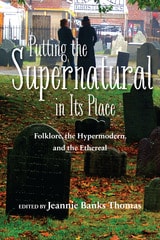
Putting the Supernatural in Its Place explores zombies, vampires, witches, demented nuns, mediums, and ghosts in their natural (and unnatural) habitats while making sense of the current ubiquity of the supernatural on the Internet, in the movies, in tourism, and in places like New Orleans. This unique study of how we locate the supernatural sheds light on why certain sites and their stories captivate us and shows how pondering the supernatural can bring a better understanding of the places we create and inhabit. Each chapter is authored by a noted folklorist who examines the supernatural as it appears “in place.” Among the locales are Salem, Massachusetts; Lily Dale, New York; and Internet fan sites for the Twilight movies and the TV series Buffy the Vampire Slayer. Supernatural places have the potential to alter perceptions of reality—sometimes enchanting, sometimes terrifying, and sometimes even schooling those who experience them. Ultimately, the authors demonstrate that, culturally speaking, the supernatural’s place is important and not trivial.