Results by title
107 books match the query 'Form' and 6 start with p

Parent Trip
Unexpected Roads to Form a FamilyAnndee Hochman
Temple University Press, 2026
Hochman recounts the fraught emotions of couples struggling with infertility, the joy of a single gay man becoming a father in his forties, and the anxiety of people waiting for the adoption worker to call with good news. Parent Trip tells of sperm donors and gestational surrogates, midwives and miscarriages; it chronicles how children prompt parents to recalibrate their lives.
In personal essays that weave throughout the profiles, Hochman connects her interviewees’ lives to the love, heartbreak, and uncertainty in her own path to parenthood. Through myriad mundane and extraordinary moments, Parent Trip not only chronicles the magic and labor of childrearing, it also celebrates the infinite ways real families come to be.
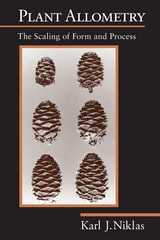
Plant Allometry
The Scaling of Form and ProcessKarl J. Niklas
University of Chicago Press, 1994
Niklas covers a broad spectrum of plant life, from unicellular algae to towering trees, including fossil as well as extant taxa. He examines the relation between organic size and variations in plant form, metabolism, reproduction, and evolution, and draws on the zoological literature to develop allometric techniques for the peculiar problems of plant height, the relation between body mass and body length, and size-correlated variations in rates of growth. For readers unfamiliar with the basics of allometry, an appendix explains basic statistical methods.
For botanists interested in an original, quantitative approach to plant evolution and function, and for zoologists who want to learn more about the value of allometric techniques for studying evolution, Plant Allometry makes a major contribution to the study of plant life.
Plant Biomechanics
An Engineering Approach to Plant Form and FunctionKarl J. Niklas
University of Chicago Press, 1992
This volume emphasizes not only methods of biomechanical analysis but also the ways in which it allows one to ask, and answer, a host of interesting questions. As Niklas points out in the first chapter, "From the archaic algae to the most derived multicellular terrestrial plants, from the spectral properties of light-harvesting pigments in chloroplasts to the stacking of leaves in the canopies of trees, the behavior of plants is in large part responsive to and intimately connected with the physical environment. In addition, plants tend to be exquisitely preserved in the fossil record, thereby giving us access to the past." Its biomechanical analyses of various types of plant cells, organs, and whole organisms, and its use of the earliest fossil records of plant life as well as sophisticated current studies of extant species, make this volume a unique and highly integrative contribution to studies of plant form, evolution, ecology, and systematics.
Play Redux
The Form of Computer GamesDavid Myers
University of Michigan Press, 2010
"Play Redux excels in tying together intellectual traditions that are rooted in literary studies, cognitive science, play studies and several other fields, thereby creating a logical whole. Through this, the book makes service to several academic communities by pointing out their points of contact. This is clearly an important contribution to a growing academic field, and will no doubt become important in many future discussions about digital games and play."
---Frans Mäyrä, University of Tampere, Finland
"David Myers has researched video games longer than anyone else. Play Redux shows him continually relevant, never afraid of courting controversy."
---Jesper Juul, IT University of Copenhagen, Denmark
Play Redux is an ambitious description and critical analysis of the aesthetic pleasures of video game play, drawing on early twentieth-century formalist theory and models of literature. Employing a concept of biological naturalism grounded in cognitive theory, Myers argues for a clear delineation between the aesthetics of play and the aesthetics of texts. In the course of this study, Myers asks a number of interesting questions: What are the mechanics of human play as exhibited in computer games? Can these mechanisms be modeled? What is the evolutionary function of cognitive play, and is it, on the whole, a good thing? Intended as a provocative corrective to the currently ascendant, if not dominant, cultural and ethnographic approach to game studies and play, Play Redux will generate interest among scholars of communications, new media, and film.
David Myers is Reverend Aloysius B. Goodspeed Distinguished Professor at the School of Mass Communication, Loyola University New Orleans.
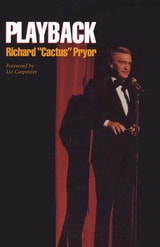
Playback
By Richard "Cactus" Pryor
University of Texas Press, 1995
From the town that brought you Molly Ivins, Liz Carpenter, John Henry Faulk, and Greater Tuna, here's Cactus Pryor. For decades, Cactus' wit and wisdom have delighted radio listeners, as well as the many social, political, business, and philanthropic groups throughout the United States whose functions have been enlivened by this accomplished master of ceremonies and after-dinner speaker.
Now the University of Texas Press takes great pleasure in bringing you this quintessential Texas humorist. Playback gathers over forty of Cactus Pryor's favorite radio essays, translating "ear words into eye words," as he puts it. In these pieces, Cactus paints vivid word pictures of people and places, offering readers the same "you are there" immediacy that makes his radio broadcasts so popular. In them, you'll take a sentimental journey with Cactus and his wife to the Maui grave site of Charles Lindbergh—discover how legendary University of Texas football coach Darrell Royal faced the agony of defeat with humor—meet unsung heroes like the 104-year-old who's teaching himself to read and write—get acquainted with the notable folks Cactus has known, including Lady Bird Johnson, John Wayne, Jane Fonda, and James Michener—and, of course, share Cactus' love of family, friends, and the Texas coast.
As Bailey White's essays on National Public Radio have introduced listeners across the country to the lifeways of the Deep South, so Cactus Pryor offers a humorous, revealing look at how we Texans view ourselves, our neighbors, and the world. Read Playback now, and see what you've been missing.
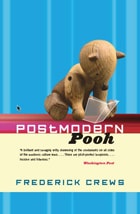
Postmodern Pooh
Frederick Crews
Northwestern University Press, 2006