Results by title
167 books match the query 'Gardening' and 14 start with p

Parsnips in the Snow
Talks with Midwestern GardenersJane Anne Staw
University of Iowa Press, 1990
Through conversations with twelve vastly different gardeners—among them a Trappist monk, a retired mailman, and an advertising copywrite—this enchanting volume captures the spirit of midwestern garderners. Illustrated throughout it is the wholesale dedication of midwesterners to their gardens—despite drought, heat, disabilities, and other challenges. Anyone who delights in gardening, the Midwest, or human triumph will enjoy this book.
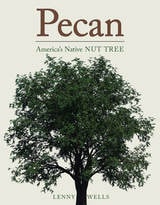
Pecan
America's Native Nut TreeLenny Wells
University of Alabama Press, 2017
From the first written record of it made by the Spaniard Cabeza de Vaca in 1528 to its nineteenth-century domestication and its current development into a multimillion dollar crop, the pecan tree has been broadly appreciated for its nutritious nuts and its beautiful wood. In Pecan: America’s Native Nut Tree, Lenny Wells explores the rich and fascinating story of one of North America’s few native crops, long an iconic staple of southern foods and landscapes.
Fueled largely by a booming international interest in the pecan, new discoveries about the remarkable health benefits of the nut, and a renewed enthusiasm for the crop in the United States, the pecan is currently experiencing a renaissance with the revitalization of America’s pecan industry. The crop’s transformation into a vital component of the US agricultural economy has taken many surprising and serendipitous twists along the way. Following the ravages of cotton farming, the pecan tree and its orchard ecosystem helped to heal the rural southern landscape. Today, pecan production offers a unique form of agriculture that can enhance biodiversity and protect the soil in a sustainable and productive manner.
Among the many colorful anecdotes that make the book fascinating reading are the story of André Pénicaut’s introduction of the pecan to Europe, the development of a Latin name based on historical descriptions of the same plant over time, the use of explosives in planting orchard trees, the accidental discovery of zinc as an important micronutrient, and the birth of “kudzu clubs” in the 1940s promoting the weed as a cover crop in pecan orchards.
**Published in cooperation with the Samuel Roberts Noble Foundation, Ellis Brothers Pecan, Inc., and The Mason Pecans Group**
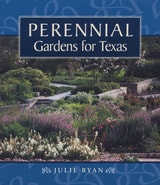
Perennial Gardens for Texas
By Julie Ryan
University of Texas Press, 1998
A perennial garden is an ever-changing source of delight. Each season brings new colors and textures in flowers and foliage. As the years go by, perennial plantings mature and interweave into forms more beautiful and surprising than a season's growth of annuals can ever give. Best of all, a perennial garden can grow almost anywhere with plants suited to local soils, temperatures, and rainfall.
This book is a complete guide to perennial gardening in Texas and similar regions of eastern New Mexico, Oklahoma, Arkansas, Louisiana, Mississippi, Alabama, Georgia, Florida, and the Carolinas. In Part One, Julie Ryan offers a historical sketch of cottage gardens and perennial borders, with a sampler of some of their modern variations. In Part Two, she defines the major ecological regions of Texas and, with words and color photographs, takes you on a tour of lovely public and private gardens in each region.
You'll find all the "how to" information for creating your own garden in Part Three. Ms. Ryan describes and pictures over 300 flowering perennials, bulbs, foliage plants, and old roses suitable for Texas gardens, with lists of companion annuals, vines, shrubs, and small trees. Accompanying charts provide quick reference to each plant's preferred regions and cultivation requirements. In addition, Ms. Ryan discusses how to design a garden and select plants, prepare the beds, and deal with garden pests. She concludes with substantial lists of resources, including mail-order suppliers of perennials, bulbs, and old roses.
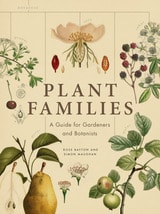
Plant Families
A Guide for Gardeners and BotanistsRoss Bayton and Simon Maughan
University of Chicago Press, 2017
Plant Families is an easy-to-use, beautifully illustrated guide to the more than one hundred core plant families every horticulturist, gardener, or budding botanist needs to know. It introduces the basics of plant genealogy and teaches readers how to identify and understand the different structures of flowers, trees, herbs, shrubs, and bulbs. It then walks through each family, explaining its origins and range, and describing characteristics such as size, flowers, and seeds. Each family is accompanied by full-color botanical illustrations and diagrams. “Uses For” boxes planted throughout the book provide practical gardening tips related to each family.
We have much to gain by learning about the relationships between plant families. By understanding how botanists create these groupings, we can become more apt at spotting the unique characteristics of a plant and identify them faster and more accurately. Understanding plant families also helps us to make sense of—and better appreciate—the enormous biological diversity of the plant kingdom.
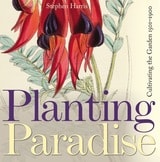
Planting Paradise
Cultivating the Garden, 1501-1900Stephen Harris
Bodleian Library Publishing, 2011
Beautifully illustrated, Planting Paradise charts the evolution of thinking about the cultivation of gardens from the sixteenth to the nineteenth centuries. In this age of discovery, when the world was being explored as never before, gardening itself took on new dimensions. The Renaissance belief in direct observation of nature offered an alternative way of thinking and inspired the scientific approach of the Enlightenment, and soon gardens were no longer just places of beauty, but also laboratories for scientific investigation.
Planting Paradise reveals how the botanic gardens of early modern Europe were largely viewed as a means of supplying surgeons with medicines but by the seventeenth and eighteenth century the interest in gardens and cultivating exotic plants had spread to all levels of society. As global exploration took Europeans all over the world, gardens became a tapestry of many diverse botanical histories—some plants were native, some were introduced from foreign lands, and others were bred in the garden. Planting Paradise shows how the garden became a symbol of human interactions within the botanical world.
A lovely gift book for garden lovers, Planting Paradise showcases the superb collection of botanical illustrations in the Plant Sciences Department and Bodleian Library, University of Oxford, and presents a handsome and fascinating look at the history of the garden from the picturesque to the practical and back again.
Plantlore/Dena'ina K'et'una
An Ethnobotany of the Dena'ina People of Southcentral AlaskaPriscilla N. Russell
University of Alaska Press, 2020
This book is the culmination of more than a decade of ethnobotanical study and provides accounts of the traditional lore associated with these plants based on a wealth of interviews with Dena’ina people. This new edition includes new graphical content consolidating practical plant information and traditional uses.
Plants for Houston and the Gulf Coast
By Howard Garrett
University of Texas Press, 2008
Whether you're a first-time homeowner, dedicated gardener, or landscape professional, if you're gardening on the Gulf Coast, you need Howard Garrett's Plants for Houston and the Gulf Coast. Garrett is one of Texas's top organic gardening experts, and gardeners rely on him for accurate, sensible advice about what to plant and how to maintain healthy yards and landscapes without synthetic fertilizers and toxic pesticides. In Plants for Houston and the Gulf Coast, Garrett presents nearly 400 plants, both native and adapted, that grow well in Southeast Texas.
Like all of Howard Garrett's books, Plants for Houston and the Gulf Coast is loaded with indispensable gardening information:
- Nearly 400 trees, shrubs, groundcovers and vines, annuals and perennials, and grasses
- 400 full-color, close-up photos of the plants
- Expert information about each plant's appearance, growing requirements, landscape uses, potential problems, and other interesting facts
- Precise, easy-to-follow instructions about how to design a garden, prepare the soil, install trees and other plants, grow grass and control weeds, and maintain the landscape and control pests
- A detailed gardening calendar for Southeast Texas that lists specific plants to plant and maintenance tasks to perform each month
No other book currently available provides such extensive and reliable information for Texas Gulf Coast gardeners.
Plants of the World
Maarten J. M. Christenhusz, Michael F. Fay, and Mark W. Chase
Royal Botanic Gardens, Kew, 2017
Plants of the World
An Illustrated Encyclopedia of Vascular PlantsMaarten J. M. Christenhusz, Michael F. Fay, and Mark W. Chase
University of Chicago Press, 2017
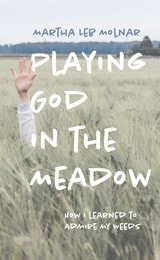
Playing God in the Meadow
How I Learned to Admire My WeedsMartha Leb Molnar
University of Massachusetts Press, 2022
After decades of fantasizing and saving, of working multiple jobs and embracing frugality in the midst of Manhattan, Martha Leb Molnar and her husband had found their parcel of land. Determined to turn an overgrown and unproductive Vermont apple orchard into a thriving and beautiful landscape, they decided to restore this patch of land to a pristine meadow and build a safe haven for their family and nearby wildlife.
Once they cleared the gnarled and dying trees away, Molnar was forced to wage war on the invasive species that had sprung up around the property. Propelled by the heated debates surrounding non-native species and her own complicated family history and migration, she was driven to research the Vermont landscape, turning to scientific literature, experts in botany and environmental science, and locals who have long tended the land in search of answers. At turns funny, thoughtful, and conversational, Playing God in the Meadow follows this big city transplant as she learns to make peace with rural life and an evolving landscape that she cannot entirely control.
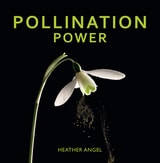
Pollination Power
Heather Angel
University of Chicago Press, 2016
In stunning full-color images, employing the latest photographic techniques, esteemed photographer Heather Angel has captures the intimate interactions of plants with their floral pollinators. The plants come not only from Angel’s Surrey backyard and the Royal Botanic Garden at Kew, but from twenty countries where Angel has travelled—from the rich floral kingdoms of the Cape of South Africa to the diversity of China and the Americas. The photos illustrate the varied techniques that flowers use to communicate with their pollinators. Some, for example, change color when the flower no longer has rewards to offer. Others control precisely when pollinators enter or leave by timing when they open and close their petals or when they emit a scent. This fascinating array of pollination repertoires crossfertilizes Angel’s photos with a descriptive text.
Featuring both common and exotic plants and temperate and tropical floral, Pollination Power will entice anyone with a passion for botanicals, from gardeners to botanists alike.
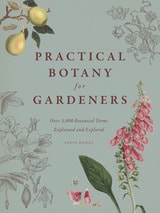
Practical Botany for Gardeners
Over 3,000 Botanical Terms Explained and ExploredGeoff Hodge
University of Chicago Press, 2013
Practical Botany for Gardeners provides an elegant and accessible introduction to the world of botany. It presents the essentials that every gardener needs to know, connecting explanations of scientific facts with useful gardening tips. Flip to the roots section and you’ll not only learn how different types of roots support a plant but also find that adding fungi to soil aids growth. The pruning section both defines “lateral buds” and explains how far back on a shoot to cut in order to propagate them.
The book breaks down key areas and terminology with easy-to-navigate chapters arranged by theme, such as plant types, plant parts, inner workings, and external factors. “Great Botanists” and “Botany in Action” boxes delve deeper into the fascinating byways of plant science. This multifaceted book also includes two hundred botanical illustrations and basic diagrams that hearken to the classic roots of botany.
Part handbook, part reference, Practical Botany for Gardeners is a beautifully captivating read. It’s a must for garden lovers and backyard botanists who want to grow and nurture their own plant knowledge.
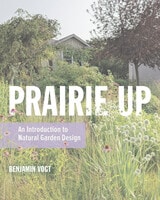
Prairie Up
An Introduction to Natural Garden DesignBenjamin Vogt
University of Illinois Press, 2023
Landscaping with native plants has encouraged gardeners from the Midwest and beyond to embark on a profound scientific, ecological, and emotional partnership with nature. Benjamin Vogt shares his expertise with prairie plants in a richly photographed guide aimed at gardeners and homeowners, making big ideas about design approachable and actionable. Step-by-step blueprints point readers to plant communities that not only support wildlife and please the eye but that rethink traditional planting and maintenance. Additionally, Vogt provides insider information on plant sourcing, garden tools, and working with city ordinances. This book will be an invaluable reference in sustainable garden design for those wanting both beautiful and functional landscapes.
Easy to use and illustrated with over 150 color photos, Prairie Up is a practical guide to artfully reviving diversity and wildness in our communities.
Received Honorable Mention from the AHS Book Awards (American Horticultural Society)
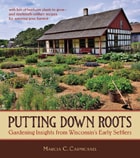
Putting Down Roots
Gardening Insights from Wisconsin’s Early SettlersMarcia C. Carmichael
Wisconsin Historical Society Press, 2013