Results by title
1104 books match the query 'Gender Studies' and 48 start with p

Package Deal
Marriage, Work And Fatherhood In Men'S LivesNicholas W. Townsend
Temple University Press, 2002
Paid to Care
Domestic Workers in Contemporary Latin American CultureRachel Randall
University of Texas Press, 2023
An insight into the struggles of paid domestic workers in Latin America through an exploration of films, texts, and digital media produced since the 1980s in collaboration with them or inspired by their experiences.
Paid domestic work in Latin America is often undervalued, underpaid, and underregulated. Exploring a wave of Latin American cultural texts since the 1980s that draw on the personal experiences of paid domestic work or intimate ties to domestic employees, Paid to Care offers insights into the struggles domestic workers face through an analysis of literary testimonials, documentary and fiction films, and works of digital media.
From domestic workers’ experiences of unionization in the 1980s to calls for their rights to be respected today, the cultural texts analyzed in Paid to Care provide additional insight into public debates about paid domestic work. Rachel Randall examines work made in Brazil, Argentina, Chile, Mexico, Peru, and Uruguay. The most recent of these texts respond to the Covid-19 pandemic, which put many domestic workers’ health and livelihoods at risk. Engaging with the legal histories of domestic work in multiple distinct national contexts, Randall demonstrates how the legacy of colonialism and slavery shapes the profession even today. Focusing on personal or coproduced cultural representations of domestic workers, Paid to Care explores complex ethical issues relating to consent, mediation, and appropriation.
Paid to Party
Working Time and Emotion in Direct Home SalesMullaney, Jamie L
Rutgers University Press, 2012
On any given night in living rooms across America, women gather for a fun girls’ night out to eat, drink, and purchase the latest products—from Amway to Mary Kay cosmetics. Beneath the party atmosphere lies a billion-dollar industry, Direct Home Sales (DHS), which is currently changing how women navigate work and family.
Drawing from numerous interviews with consultants and observations at company-sponsored events, Paid to Party takes a closer look at how DHS promises to change the way we think and feel about the struggles of balancing work and family. Offering a new approach to a flexible work model, DHS companies tell women they can, in fact, have it all and not feel guilty. In DHS, work time is not measured by the hands of the clock, but by the emotional fulfillment and fun it brings.
Pain in Relation
On Causality, Chronicity, and (Crip) EvidenceAlyson Patsavas
University of Michigan Press, 2026
Pain in Relation: On Causality, Chronicity, and (Crip) Evidence argues that the dominant stories circulating within contemporary US culture are marked by seemingly contradictory certainties: pain is at once subjective yet universal; that pain makes life unlivable and can be overcome with perseverance. These certainties graft onto pained people as impossible imperatives: the imperatives to live “despite” our pain and to defend the value of lives imagined to be compromised “because of” it. Alyson Patsavas outlines the harm these imperatives cause and draws on feminist, queer, and disability theory to offer alternative frameworks for making sense of and relating to pain.
The study fleshes out “crip autotheory” and experiments with evidencing practices, using anecdotes, journal entries, personal reflections, list-making, and photography to map “cripistemologies of pain,” or critical, disability-informed experiential ways of knowing pain. Equal parts cultural critique, intimate portrait of pained life, and commentary, Pain in Relation invites readers to challenge what they think they know about pain and explore new ways of relating to pain, pained life, and the futures we imagine for pained people.
Paper Money Men
Commerce, Manhood, and the Sensational Public Sphere in Antebellum AmericaDavid Anthony
The Ohio State University Press, 2009

Paper Tangos
Julie Taylor
Duke University Press, 1998
Taylor, born in the United States, has lived much of her adult life in Latin America. She has spent years studying the tango in Buenos Aires, dancing during and after the terror of military dictatorships. This book is at once an account of a life lived crossing the borders of two distinct and complex cultures and an exploration of the conflicting meanings of tango for women who love the poetry of its movement yet feel uneasy with the roles it bestows on the male and female dancers. Drawing parallels among the violences of the Argentine Junta, the play with power inherent in tango dancing, and her own experiences with violence both inside and outside the intriguing tango culture, Taylor weaves the line between engaging memoir and insightful cultural critique. Within the contexts of tango’s creative birth and contemporary presentations, this book welcomes us directly into the tango subculture and reveals the ways that personal, political, and historical violence operate in our lives.
The book’s experimental design includes photographs on every page, which form a flip-book sequence of a tango. Not simply a book for tango dancers and fans, Paper Tangos will reward students of Latin American studies, cultural studies, anthropology, feminist studies, dance studies, and the art of critical memoir.
Parenting and Professing
Balancing Family Work with an Academic CareerRachel Hile Bassett
Vanderbilt University Press, 2005
Partners in Conflict
The Politics of Gender, Sexuality, and Labor in the Chilean Agrarian Reform, 1950–1973Heidi Tinsman
Duke University Press, 2002
Tinsman restores women to a scholarly narrative that has been almost exclusively about men, recounting the centrality of women’s labor to the pre-Agrarian Reform world of the hacienda during the 1950s and recovering women’s critical roles in union struggles and land occupations during the Agrarian Reform itself. Providing a theoretical framework for understanding why the Agrarian Reform ultimately empowered men more than women, Tinsman argues that women were marginalized not because the Agrarian Reform ignored women but because, under both the Frei and Allende governments, it promoted the male-headed household as the cornerstone of a new society. Although this emphasis on gender cooperation stressed that men should have more respect for their wives and funneled unprecedented amounts of resources into women’s hands, the reform defined men as its protagonists and affirmed their authority over women.
This is the first monographic social history of Chile’s Agrarian Reform in either English or Spanish, and the first historical work to make sexuality and gender central to the analysis of the reforms.
Passing Illusions
Jewish Visibility in Weimar GermanyKerry Wallach
University of Michigan Press, 2017
Passing Performances
Queer Readings of Leading Players in American Theater HistoryRobert A. Schanke and Kim Marra, Editors
University of Michigan Press, 1998
The actors, directors, producers, and agents examined here include Edwin Forrest, Charlotte Cushman, and Adah Isaacs Menken, whose personal lives and careers traded on the same-sex erotics of "true love" in the antebellum period; Elisabeth Marbury, Elsie de Wolfe, Elsie Janis, Nance O'Neil, and Alla Nazimova, whose intimate female liaisons were variously interpreted around the turn of the century; the "lavender marriages" of Alfred Lunt to Lynne Fontanne and Guthrie McClintic to Katharine Cornell; the lesbian collaborations of Margaret Webster and Cheryl Crawford; the comic antics of Monty Woolley, which negotiated codified constructions of homosexual perversion in the post-Freudian interwar years; and the on- and offstage performances of Mary Martin and Joe Cino, which resisted the paranoid enforcements of heterosexual normality in the McCarthy era. Central to these investigations are the complex connections of performances of sexuality and gender and their different implications for men and women practitioners working under pervasive sexism and homophobia.
The volume also includes striking archival photographs of the performers and their performances, and an index to facilitate the cross-referencing of subjects' intersecting careers. Passing Performances will engage both general and academic readers interested in theater, gay and lesbian history, American studies, and biography.
Robert A. Schanke is Professor of Theatre and Chair of the Division of Fine Arts, Central College, Iowa. Kim Marra is Associate Professor of Theatre Arts, University of Iowa.

Passing Performances
Queer Readings of Leading Players in American Theater HistoryRobert A. Schanke and Kim Marra, Editors
University of Michigan Press, 0

Perfect Copies
Reproduction and the Contemporary ComicShiamin Kwa
Rutgers University Press, 2023
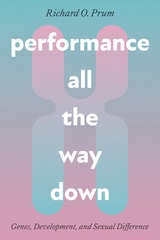
Performance All the Way Down
Genes, Development, and Sexual DifferenceRichard O. Prum
University of Chicago Press, 2023
The idea that gender is a performance—a tenet of queer feminist theory since the nineties—has spread from college classrooms to popular culture. This transformative concept has sparked reappraisals of social expectations as well as debate over not just gender, but sex: what it is, what it means, and how we know it. Most scientific and biomedical research over the past seventy years has assumed and reinforced a binary concept of biological sex, though some scientists point out that male and female are just two outcomes in a world rich in sexual diversity.
In Performance All the Way Down, MacArthur Fellow and Pulitzer Prize finalist Richard O. Prum brings feminist thought into conversation with biology, arguing that the sexual binary is not essential to human genes, chromosomes, or embryos. Our genomes are not blueprints, algorithms, or recipes for the physical representation of our individual sexual essences or fates. In accessible language, Prum shows that when we look closely at the science, we see that gene expression is a material action in the world, a performance through which the individual regulates and achieves its own becoming. A fertilized zygote matures into an organism with tissues and organs, neurological control, immune defenses, psychological mechanisms, and gender and sexual behavior through a performative continuum. This complex hierarchy of self-enactment reflects the evolved agency of individual genes, molecules, cells, and tissues.
Rejecting the notion of an intractable divide between the humanities and the sciences, Prum proves that the contributions of queer and feminist theorists can help scientists understand the human body in new ways, yielding key insights into genetics, developmental biology, physiology. Sure to inspire discussion, Performance All the Way Down is a book about biology for feminists, a book about feminist theory for biologists, and a book for anyone curious about how our sexual bodies grow.

Performing Piety
Singers and Actors in Egypt's Islamic RevivalBy Karin van Nieuwkerk
University of Texas Press, 2013
In the 1980s, Egypt witnessed a growing revival of religiosity among large sectors of the population, including artists. Many pious stars retired from art, “repented” from “sinful” activities, and dedicated themselves to worship, preaching, and charity. Their public conversions were influential in spreading piety to the Egyptian upper class during the 1990s, which in turn enabled the development of pious markets for leisure and art, thus facilitating the return of artists as veiled actresses or religiously committed performers.
Revisiting the story she began in “A Trade like Any Other”: Female Singers and Dancers in Egypt, Karin van Nieuwkerk draws on extensive fieldwork among performers to offer a unique history of the religious revival in Egypt through the lens of the performing arts. She highlights the narratives of celebrities who retired in the 1980s and early 1990s, including their spiritual journeys and their influence on the “pietization” of their fans, among whom are the wealthy, relatively secular, strata of Egyptian society. Van Nieuwkerk then turns to the emergence of a polemic public sphere in which secularists and Islamists debated Islam, art, and gender in the 1990s. Finally, she analyzes the Islamist project of “art with a mission” and the development of Islamic aesthetics, questioning whether the outcome has been to Islamize popular art or rather to popularize Islam. The result is an intimate thirty-year history of two spheres that have tremendous importance for Egypt—art production and piety.

Picturing Men
A Century of Male Relationships in Everyday American PhotographyJohn Ibson
University of Chicago Press, 2006
Such is the time John Ibson evokes in Picturing Men, a striking visual record of changes in attitudes about relationships between gentlemen, soldiers, cowboys, students, lumberjacks, sailors, and practical jokers. Spanning from 1850 to 1950, the 142 everyday photographs that richly illustrate Picturing Men radiate playfulness, humor, and warmth. They portray a lost world for American men: a time when their relationships with each other were more intimate than they commonly are today, regardless of sexual orientation. Picturing Men starkly contrasts the calm affection displayed in earlier photographs with the absence of intimacy in photos from the mid-1950s on. In doing so, this lively, accessible book makes a significant contribution to American history and cultural studies, gender studies, and the history of photography.

Pillar of Salt
Gender, Memory, and the Perils of Looking BackHaaken, Janice
Rutgers University Press, 2000

Pillar of Salt
Gender, Memory, and the Perils of Looking BackHaaken, Janice
Rutgers University Press, 1998
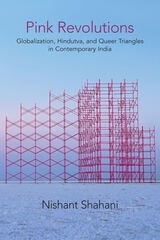
Pink Revolutions
Globalization, Hindutva, and Queer Triangles in Contemporary IndiaNishant Shahani
Northwestern University Press, 2021
Eschewing structures of absolute complicity or abject alterity, Pink Revolutions pays attention to the logics of triangulation in various contexts: gay tourism, university campus politics, diasporic cultural productions, and AIDS activism. The book articulates a framework through which queer politics can challenge rather than participate in neoliberal imperatives, an approach that will interest scholars engaged with queer studies and postcolonial scholarship, as well as activists and academics wrestling with global capitalism and right-wing regimes around the world.
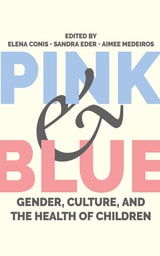
Pink and Blue
Gender, Culture, and the Health of ChildrenElena Conis
Rutgers University Press, 2021

Planning the Family in Egypt
New Bodies, New SelvesBy Kamran Asdar Ali
University of Texas Press, 2002
In this ethnographic study, the author examines the policies and practices of family planning programs in Egypt to see how an elitist, Western-informed state attempts to create obliging citizens. The state sees voluntary compliance with the law for the common good as the cornerstone of modernity. Family planning programs are a training ground for the construction of self-disciplined individuals, and thus a rewarding area of study for the fate of social programs in developing countries.
Through a careful examination of state-endorsed family planning practices in urban and rural contexts, the author shows us the pervasive, high-pressure persuasion of women, who are encouraged to think as individual decision makers of their immediate families and their national interests. But what of the other forces at work in these women’s lives, binding them to their extended families and to their religious identities? And what of the laws that allow for polygamy and discriminate against women in marriage, inheritance, and as part of the workforce?
These forces operate against the received wisdom of the state. Is the Muslim community thought to end at the borders of Egypt? What about local constructions of masculinity when the state appeals to wives to decide for themselves? How does widespread labor migration to foreign countries affect attitudes toward family planning? How is female contraception viewed by the Islamic Brotherhood and other modern Muslim groups?
This book questions much that we have taken for granted and gives us grounds for reexamining our assumptions about family planning and the individual and state in developing countries such as Egypt.
Policy Issues Affecting Lesbian, Gay, Bisexual, and Transgender Families
Sean Cahill and Sarah Tobias
University of Michigan Press, 2010
Lesbian, gay, bisexual, and transgender people face the same family issues as their heterosexual counterparts, but that is only the beginning of their struggle. The LGBT community also encounters legal barriers to government recognition of their same-sex relationships and relationships to their own children. Policy Issues Affecting Lesbian, Gay, Bisexual, and Transgender Families addresses partner recognition, parenting, issues affecting children of LGBT parents, health care, discrimination, senior care and elder rights, and equal access to social services.
Sean Cahill and Sarah Tobias provide up-to-date, accurate analysis of the major policies affecting LGBT people, their same-sex partners, and their children. This valuable resource offers literature reviews of demographic research as well as original research based on the U.S. Census same-sex couple sample. It also provides a look at the 30-year history of right-wing anti-gay activism and the intra-community intellectual debates over the fight for marriage.
"The sheer diversity of gay people and opinion shines through Cahill and Tobias's fact-packed depiction of same-sex couples and their kids, their needs and day-to-day challenges, and the movement for fairness and the freedom to marry. The disparate personal stories and struggles in this informative book underscore the importance of ending discrimination in marriage and ensuring that no family is left behind."
—Evan Wolfson, Founder and Executive Director of the Freedom to Marry Project
"A concise, comprehensive guide to gay-family issues that combines an impassioned progressive sensibility with a firm respect for facts."
—Jonathan Rauch, senior writer and columnist for National Journal,Atlantic Monthly correspondent, and author of Gay Marriage: Why It Is Good for Gays, Good for Straights, and Good for America
"Cahill and Tobias offer readers a thorough and immensely readable guide to the legal problems faced by LGBT families."
—Ellen Andersen, Indiana University–Purdue University at Indianapolis
"For an account of policy issues that frame lesbian, gay, bisexual, and transgender (LGBT) family lives here in the United States, one need look no further. Sean Cahill and Sarah Tobias supply accurate and up-to-date information about the legal and policy contexts of LGBT lives across the country. This book is sure to be a valuable resource for students and scholars, as well as for others seeking to understand and challenge discrimination based on sexual orientation or gender identity."
—Charlotte J. Patterson, University of Virginia
Sean Cahill is Director of the National Gay and Lesbian Task Force Policy Institute.
Sarah Tobias is a feminist theorist and LGBT activist who earned her Ph.D. in Political Science from Columbia University. She has taught Political Theory at colleges in New York and New Jersey, and currently works as Senior Policy Analyst in the Democracy program at Demos, a New York City–based think tank.
Policy Issues Affecting Lesbian, Gay, Bisexual, and Transgender Families
Sean Cahill and Sarah Tobias
University of Michigan Press, 2006
Lesbian, gay, bisexual, and transgender people face the same family issues as their heterosexual counterparts, but that is only the beginning of their struggle. The LGBT community also encounters legal barriers to government recognition of their same-sex relationships and relationships to their own children. Policy Issues Affecting Lesbian, Gay, Bisexual, and Transgender Families addresses partner recognition, parenting, issues affecting children of LGBT parents, health care, discrimination, senior care and elder rights, and equal access to social services.
Sean Cahill and Sarah Tobias provide up-to-date, accurate analysis of the major policies affecting LGBT people, their same-sex partners, and their children. This valuable resource offers literature reviews of demographic research as well as original research based on the U.S. Census same-sex couple sample. It also provides a look at the 30-year history of right-wing anti-gay activism and the intra-community intellectual debates over the fight for marriage.
"The sheer diversity of gay people and opinion shines through Cahill and Tobias's fact-packed depiction of same-sex couples and their kids, their needs and day-to-day challenges, and the movement for fairness and the freedom to marry. The disparate personal stories and struggles in this informative book underscore the importance of ending discrimination in marriage and ensuring that no family is left behind."
—Evan Wolfson, Founder and Executive Director of the Freedom to Marry Project
"A concise, comprehensive guide to gay-family issues that combines an impassioned progressive sensibility with a firm respect for facts."
—Jonathan Rauch, senior writer and columnist for National Journal,Atlantic Monthly correspondent, and author of Gay Marriage: Why It Is Good for Gays, Good for Straights, and Good for America
"Cahill and Tobias offer readers a thorough and immensely readable guide to the legal problems faced by LGBT families."
—Ellen Andersen, Indiana University–Purdue University at Indianapolis
"For an account of policy issues that frame lesbian, gay, bisexual, and transgender (LGBT) family lives here in the United States, one need look no further. Sean Cahill and Sarah Tobias supply accurate and up-to-date information about the legal and policy contexts of LGBT lives across the country. This book is sure to be a valuable resource for students and scholars, as well as for others seeking to understand and challenge discrimination based on sexual orientation or gender identity."
—Charlotte J. Patterson, University of Virginia
Sean Cahill is Director of the National Gay and Lesbian Task Force Policy Institute.
Sarah Tobias is a feminist theorist and LGBT activist who earned her Ph.D. in Political Science from Columbia University. She has taught Political Theory at colleges in New York and New Jersey, and currently works as Senior Policy Analyst in the Democracy program at Demos, a New York City–based think tank.

Political Justice in Budapest after World War II
Andrea Peto
Central European University Press, 2015
In Hungary, which fell under Soviet influence at the end of World War II, those who had participated in the wartime atrocities were tried by so called people’s courts. This book analyses this process in an objective, quantitative way, contributing to the present timely discussion on the Hungarian war guilt. The authors apply a special focus on the gender aspect of the trials.
Political justice had a specific nature in Hungary. War criminals began to be brought to trial while fighting was still underway in the western part of the country, well before the Nuremberg trials. Not only crimes committed during the war were tried in the same frame but also post-war ones. As far as the post-war period is concerned, legal proceedings regarding these crimes were most often launched on the basis of Act VII of 1946. This act of law concerned “the criminal law protection of the democratic constitutional order and the republic” and its basic aim was to facilitate the creation of a communist dictatorship and to deal with perceived or real enemies of the regime.

Politics of Rightful Killing
Civil Society, Gender, and Sexuality in WeblogistanSima Shakhsari
Duke University Press, 2020

Porno Chic and the Sex Wars
American Sexual Representation in the 1970sCarolyn Bronstein
University of Massachusetts Press, 2016
For many Americans, the emergence of a “porno chic” culture provided an opportunity to embrace the sexual revolution by attending a film like Deep Throat (1972) or leafing through an erotic magazine like Penthouse. By the 1980s, this pornographic moment was beaten back by the rise of Reagan-era political conservatism and feminist anti-pornography sentiment.
This volume places pornography at the heart of the 1970s American experience, exploring lesser-known forms of pornography from the decade, such as a new, vibrant gay porn genre; transsexual/female impersonator magazines; and pornography for new users, including women and conservative Christians. The collection also explores the rise of a culture of porn film auteurs and stars as well as the transition from film to video. As the corpus of adult ephemera of the 1970s disintegrates, much of it never to be professionally restored and archived, these essays seek to document what pornography meant to its producers and consumers at a pivotal moment.
In addition to the volume editors, contributors include Peter Alilunas, Gillian Frank, Elizabeth Fraterrigo, Lucas Hilderbrand, Nancy Semin Lingo, Laura Helen Marks, Nicholas Matte, Jennifer Christine Nash, Joe Rubin, Alex Warner, Leigh Ann Wheeler, and Greg Youmans.

Possessing Polynesians
The Science of Settler Colonial Whiteness in Hawai`i and OceaniaMaile Arvin
Duke University Press, 2019
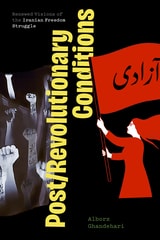
Post/Revolutionary Conditions
Renewed Visions of the Iranian Freedom StruggleAlborz Ghandehari
Northwestern University Press, 2025
An exploration of how the Iranian people have renewed their longtime struggle for freedom
The Woman, Life, Freedom uprising is only the latest manifestation of a century-long struggle for liberation in Iran. This ongoing movement for justice has encompassed two revolutions against domestic dictatorship and foreign imperialism, as well as a series of uprisings since the 1979 Iranian Revolution, which was followed by a new era of repression. Post/Revolutionary Conditions: Renewed Visions of the Iranian Freedom Struggle offers an intersectional analysis of how progressive and radical movement builders have reenvisioned liberation in the post-’79 era, despite new forms of oppression under the Islamic Republic and from US and other foreign imperial powers. Bringing together a diverse array of sources, including oral histories with Iranian labor, student, and gender justice organizers, as well as resistance literature and art, Alborz Ghandehari challenges narratives that treat working-class, feminist, queer, and oppressed ethnic minorities’ movements as separate from one another. Post/Revolutionary Conditions demonstrates how such potent reimaginings of collective liberation and a radically democratic future have been shaped by multiple generations of protest and kindred struggles globally.

Postcards, Translators and Esperanto Pioneers
An Alternative History of International CommunicationGuilherme Fians, Bernhard Struck, and Claire Taylor
University of London Press, 2025
The early twentieth century was a time when steamships, international postal services and the telephone were setting the pace of an early wave of globalisation in Europe. In this increasingly international scenario, what role did language play? To address the geopolitical problem of cross-border linguistic (mis)understanding, international auxiliary languages like Esperanto were created. But what happened to a constructed language when it travelled to different places?
This book tackles these questions by exploring the letters, postcards and activities of John Beveridge (1857–1943) and his family. This Scottish clergyman was a proficient Esperanto speaker, translator and co-founder of several Esperanto organisations. His long-standing engagement with the language left a unique archive that reveals how many Esperanto speakers exchanged letters across borders, produced literature for an international readership, organised congresses and used this language as an entry point into modernity and globalisation from their ‘marginal’ positions in the world.
By tracing this language-based form of grassroots internationalism, the book uncovers wide-reaching networks connecting a corner of Scotland with rural settings and villages in Finland, Bulgaria and Brazil. Ultimately, it asks: what do we learn about international communication and globalisation through the lens of Esperanto and postcards? Focusing on a constructed language and communication technologies that preceded the dominance of global English and social media, this book offers an alternative vantage point on the history of international communication.
Postdigital Intimacies
Relational Lives in the Networked Public-PrivateEdited by Adrienne Evans, Jamie Hakim, Jessica Ringrose, Amy Shields Dobson, and Shaka McGlotten
University College London, 2026
The first full-length study to explore, analyze, and critically engage with intimacy in a world where the digital is embedded in everyday life.
Postdigital Intimacies is a timely collection of research into the complex interplay between digital and nondigital relationships. From vibey social media experiences to shared activism, access to online mental health care, and exposure to harm, the book reveals the social, political, and cultural implications of intimacy in a blurry public-private.
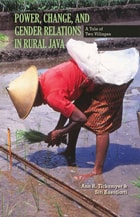
Power, Change, and Gender Relations in Rural Java
A Tale of Two VillagesAnn R. Tickamyer
Ohio University Press, 2012
Women’s status in rural Java can appear contradictory to those both inside and outside the culture. In some ways, women have high status and broad access to resources, but other situations suggest that Javanese women lack real power and autonomy. Javanese women have major responsibilities in supporting their families and controlling household finances. They may also own and manage their own property. Yet these symbols and potential sources of independence and influence are determined by a culturally prescribed, state-reinforced, patriarchal gender ideology that limits women’s autonomy. Power, Change, and Gender Relations in Rural Java examines this contradiction as well as sources of stability and change in contemporary Javanese gender relations.
The authors conducted their research in two rural villages in Yogyakarta, Indonesia, during three important historical and political periods: the end of the New Order regime; the transitional period of reformation; and the subsequent establishment of a democratic government. Their collaboration brings a unique perspective, analyzing how gender is constructed and reproduced and how power is exercised as Indonesia faces the challenges of building a new social order.
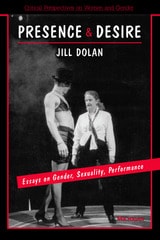
Presence and Desire
Essays on Gender, Sexuality, PerformanceJill Dolan
University of Michigan Press, 1993
This book critically bridges feminist theory and theatrical practice. Dolan examines how performance can subvert normative constructs of gender and sexuality. The collection evaluates mainstream theater, academic stages, subcultural venues, and performance in daily life. It centers sexuality as a primary analytical framework to explore queer visibility and cultural representation. It bridges contemporary feminist theory, poststructuralism, and theatrical practice and places sexuality at the center of its analytical framework to explore how theatrical representation can subvert normative constructs of gender and desire. Dolan evaluates a vast spectrum of performance spaces—ranging from mainstream professional and academic stages to subcultural venues, pornography, and everyday social interactions—to champion queer visibility and claim recognition for women's bodies. Ultimately, the volume functions as a foundational text in performance studies and LGBTQ+ cultural criticism, demonstrating how deliberate theatrical strategies can provoke American culture to actively dismantle and reimagine its traditional social relations
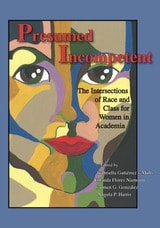
Presumed Incompetent
The Intersections of Race and Class for Women in Academiaedited by Gabriella Gutiérrez y Muhs, Yolanda Flores Niemann, Carmen G. González, and Angela P. Harris
Utah State University Press, 2012
Presumed Incompetent is a pathbreaking account of the intersecting roles of race, gender, and class in the working lives of women faculty of color. Through personal narratives and qualitative empirical studies, more than 40 authors expose the daunting challenges faced by academic women of color as they navigate the often hostile terrain of higher education, including hiring, promotion, tenure, and relations with students, colleagues, and administrators. The narratives are filled with wit, wisdom, and concrete recommendations, and provide a window into the struggles of professional women in a racially stratified but increasingly multicultural America.
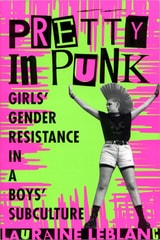
Pretty in Punk
Girl's Gender Resistance in a Boy's SubcultureLeblanc, Lauraine
Rutgers University Press, 1999
Pretty in Punk combines autobiography, interviews, and sophisticated analysis to create the first insider’s examination of the ways punk girls resist gender roles and create strong identities.
Why would an articulate, intelligent, thoughtful young women shave off most of her hair, dye the remainder green, shape it into a mohawk, and glue it onto her head? What attracts girls to male-dominated youth subcultures like the punk movement? What role does the subculture play in their perceptions of themselves, and in their self-esteem? How do girls reconcile a subcultural identity that is deliberately coded “masculine” with the demands of femininity?
Research has focused on the ways media and cultural messages victimize young women, but little attention has been paid to the ways they resist these messages. In Pretty in Punk, Lauraine Leblanc examines what happens when girls ignore these cultural messages, parody ideas of beauty, and refuse to play the games of teenage femininity. She explores the origins and development of the punk subculture, the processes by which girls decide to “go punk,” patterns of resistance to gender norms, and tactics girls use to deal with violence and harassment.
Pretty in Punk takes readers into the lives of girls living on the margins of contemporary culture. Drawing on interviews with 40 girls and women between the ages of 14-37, Leblanc examines the lives of her subjects, illuminating their forms of rebellion and survival. Pretty in Punk lets readers hear the voices of these women as they describe the ways their constructions of femininity—from black lipstick to slamdancing—allow them to reject damaging cultural messages and build strong identities. The price they pay for resisting femininity can be steep—girls tell of parental rejection, school expulsion, institutionalization, and harassment. Leblanc illuminates punk girls’ resistance to adversity, their triumphs over tough challenges, and their work to create individual identities in a masculine world.
Prevention
Gender, Sexuality, HIV, and the Media in Côte d'IvoireChristine Cynn
The Ohio State University Press, 2018
More specifically, Cynn argues that through the bolstering of normative conceptions of gendered sexualities and families, HIV prevention media campaigns seek to actively create proper subjects, a goal corresponding with nation-building projects and reproducing their terms of belonging. During periods of increasingly virulent political and economic struggles in Côte d’Ivoire, such HIV prevention messages have lent support to lender- and state-mandated structural adjustment policies and to the exclusionary logic that casts some—such as those suffering from AIDS-related illnesses, those labeled as “homosexual,” sex workers, intravenous drug users, and the HIV-positive child—as implicitly unassimilable to the community and nation. Deeply interdisciplinary, Prevention brings to light new forms of exclusion and expands scholarship on gender and sexual normativities as it intersects with that on public health, neoliberalism, and film and media.

Primal Screams
How the Sexual Revolution Created Identity PoliticsEberstadt, Mary
Templeton Press, 2021
Who am I? The question today haunts every society in the Western world.
Legions of people—especially the young—have become unmoored from a firm sense of self. To compensate, they join the ranks of ideological tribes spawned by identity politics and react with frenzy against any perceived threat to their group.
As identitarians track and expose the ideologically impure, other citizens face the consequences of their rancor: a litany of “isms” run amok across all levels of cultural life, the free marketplace of ideas muted by agendas shouted through megaphones, and a spirit of general goodwill warped into a state of perpetual outrage.
How did we get here? Why have we divided against one another so bitterly? In Primal Screams, acclaimed cultural critic Mary Eberstadt presents the most provocative and original theory to come along in recent years. The rise of identity politics, she argues, is a direct result of the fallout of the sexual revolution, especially the collapse and shrinkage of the family.
As Eberstadt illustrates, humans have forged their identities within the kinship structure from time immemorial. The extended family, in a real sense, is the first tribe and teacher. But with its unprecedented decline across various measures, generations of people have been set adrift and can no longer answer the question Who am I? concerning primordial ties. Desperate for solidarity and connection, they claim membership in politicized groups whose displays of frantic irrationalism amount to primal screams for familial and communal loss.
Written in her impeccable style and with empathy rarely encountered in today’s divisive discourse, Eberstadt’s theory holds immense explanatory power that no serious citizen can afford to ignore. The book concludes with three incisive essays by Rod Dreher, Mark Lilla, and Peter Thiel, each sharing their perspective on the author’s formidable argument.
Primitive Normativity
Race, Sexuality, and Temporality in Colonial KenyaElizabeth W. Williams
Duke University Press, 2024

Primitive Passions
Men, Women, and the Quest for EcstasyMarianna Torgovnick
University of Chicago Press, 1998
"Primitive Passions intends to provoke thought, not to tell you what you already know and for that reason alone it's extraordinary."—Walter Kendrick, New York Times Book Review
"A powerfully argued, impassioned, and intelligent exploration of the 'primitive' in our culture and in ourselves. Like Marianna Torgovnick's previous work, it is certain to be much discussed and provocative."—Joyce Carol Oates
"An inspiring effort to bring gender to bear on matters of race, ethnic identity, and spirituality."—Susan Gubar
"A fascinating, wide-ranging and provocative tour of twentieth century Western culture."—Cynthia D. Schrager, Women's Review of Books

Private Women, Public Lives
Gender and the Missions of the CaliforniasBy Bárbara O. Reyes
University of Texas Press, 2009
Through the lives and works of three women in colonial California, Bárbara O. Reyes examines frontier mission social spaces and their relationship to the creation of gendered colonial relations in the Californias. She explores the function of missions and missionaries in establishing hierarchies of power and in defining gendered spaces and roles, and looks at the ways that women challenged, and attempted to modify, the construction of those hierarchies, roles, and spaces.
Reyes studies the criminal inquiry and depositions of Barbara Gandiaga, an Indian woman charged with conspiracy to murder two priests at her mission; the divorce petition of Eulalia Callis, the first lady of colonial California who petitioned for divorce from her adulterous governor-husband; and the testimonio of Eulalia Pérez, the head housekeeper at Mission San Gabriel who acquired a position of significant authority and responsibility but whose work has not been properly recognized. These three women's voices seem to reach across time and place, calling for additional, more complex analysis and questions: Could women have agency in the colonial Californias? Did the social structures or colonial processes in place in the frontier setting of New Spain confine or limit them in particular gendered ways? And, were gender dynamics in colonial California explicitly rigid as a result of the imperatives of the goals of colonization?
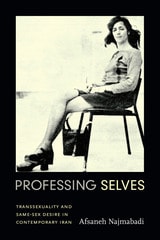
Professing Selves
Transsexuality and Same-Sex Desire in Contemporary IranAfsaneh Najmabadi
Duke University Press, 2013
Pronouncing and Persevering
Gender and the Discourses of Disputing in an African Islamic CourtSusan F. Hirsch
University of Chicago Press, 1998
Pronouncing and Persevering focuses closely on the language used in disputes, particularly how men and women narrate their claims and how their speech shapes and is shaped by gender hierarchy in postcolonial Swahili society. Based on field research and court testimony, Hirsch's book debunks the conventional view that women are powerless under Islamic law and challenges the dichotomies through which Islam and gender relations are currently understood.
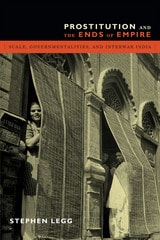
Prostitution and the Ends of Empire
Scale, Governmentalities, and Interwar IndiaStephen Legg
Duke University Press, 2014

Protected Children, Regulated Mothers
Gender and the "Gypsy Question" in State Care in Postwar Hungary, 1949–1956Eszter Varsa
Central European University Press, 2021
Protected Children, Regulated Mothers examines child protection in Stalinist Hungary as a part of twentieth-century East Central, Eastern, and Southeastern European history. Across the communist bloc, the prewar foster care system was increasingly replaced after 1945 by institutionalization in residential homes. This shift was often interpreted as a further attempt to establish totalitarian control. However, this study—based on hundreds of children's case files and interviews with institution leaders, teachers, and people formerly in state care—provides a new perspective. Rather than being merely a tool of political repression, state care in postwar Hungary was often shaped by the efforts of policy actors and educators to address the myriad of problems engendered by the social and economic transformations that emerged after World War II. This response built on, rather than broke with, earlier models of reform and reformatory education. Yet child protection went beyond safeguarding and educating children; it also focused on parents, particularly lone mothers, regulating not only their entrance to paid work but also their sexuality. In so doing, children's homes both reinforced and changed existing cultural and social patterns, whether about gendered division of work or the assimilation of minorities. Indeed, a major finding of the book is that state socialist child protection continued a centuries-long national project of seeking a “solution to the Gypsy question,” rooted in efforts to eliminate the perceived “workshyness” of Roma.
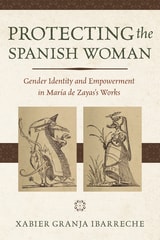
Protecting the Spanish Woman
Gender Identity and Empowerment in María de Zayas's WorksXabier Granja Ibarreche
University of Nevada Press, 2023
María de Zayas is unique in the seventeenth century as the only Spanish woman to write a collection of exemplary novels whose quality is often compared to Miguel de Cervantes’ masterful works. Her two main collections of short stories, Novelas amorosas y ejemplares and Desengaños amorosos, encompass a social critique based on literary fiction that exposes flaws in the idealized archetypes of masculine identity in early modern Spain. Zayas’s stories redefine women’s patriarchal disadvantage as a tool to expose the ways in which early modern Spanish women could be empowered to counteract men’s discursive and political authority, which they use to unfairly maintain their own social privilege.
Xabier Granja Ibarreche explores how Zayas defies Spanish hegemony by manipulating and transforming the ideals of courtly masculinity that had been popularized by conduct manuals and the traits they specified for appropriate noble comportment. In doing so, Zayas elaborates a nonofficial discourse throughout plots that subvert patriarchal hierarchies: she rearticulates the existing ideological order to empower women who are no longer willing to remain silent and oppressed by masculine domination after centuries of failing to attain a sufficiently self-sufficient political position to ascend in the social hierarchy. By inverting the male gaze that assumes masculinity as a preeminent identity, Zayas subverts the patriarchal subject/masculine, object/feminine order and destabilizes manly superiority as a basic universal reality, thereby empowering and unshackling Spanish women to liberate Iberian culture from the repressive and pernicious future she forebodes.

Psychosomatic
Feminism and the Neurological BodyElizabeth A. Wilson
Duke University Press, 2004
Public Feminisms
From Academy to CommunityEdited by Carrie N. Baker and Aviva Dove-Viebahn
Lever Press, 2023
The field of feminist studies grew from the U.S. women’s movements of the 1960s and 1970s and has continued to be deeply connected to ongoing movements for social justice. As educational institutions are increasingly seeing public scholarship and community engagement as relevant and fruitful complements to traditional academic work, feminist scholars have much to offer in demonstrating different ways to inform and interact with various communities. In Public Feminisms: From Academy to Community edited by Carrie N. Baker and Aviva Dove-Viebahn, a diverse range of feminist scholar-activists write about the dynamic and varied methods they use to reach beyond the traditional academic classroom and scholarly journals to share their work with the public.
Part one explores how feminist scholars engage broader audiences through art, media, and public programming, including essays on a public discussion series teaching intersectional feminist analysis of popular films, and a podcast from Latina scholars discussing issues of reproductive justice, social justice, motherhood, sexuality, race, and gender. Part two focuses on activism and public education, including essays on “Take Back the Night,” and archiving the women’s march protests. Part three turns to public writing and scholarship, including an essay on elevating the perspectives and voices of underrepresented creatives in the film and television industry. Part four explores feminist pedagogies for community engagement and for teaching public feminisms.
Accessible and engaging to a broad range of readers, the essays in this volume are a rich resource for scholars and students interested in infusing their academic knowledge into the public sphere. With this timely book, the editors offer an opportunity to reflect on the meaning and importance of community engagement and highlight some of the important public-facing work feminist scholars are doing today. Faculty, graduate, and undergraduate students, as well as administrators hoping to increase their schools’ connections to the community, will find this volume indispensable.

Public Loves, Private Troubles
Migration, Technology, and Intimacy in Rural Indigenous GuatemalaMeghan Farley Webb
University of Alabama Press, 2025
Examines the role of digital technologies in the lives of Kaqchikel Maya women whose husbands work abroad.
Anthropologist Meghan Farley Webb’s ethnography, Public Loves, Private Troubles, uses the lens of cellphones and other digital technologies to unpack marriage, love, sexuality, and family issues of Kaqchikel Maya women who remain in Guatemala while their husbands are part of the transnational migration workforce. Indigenous intimacy has been underexplored in ethnographic literature, and this is among the first books to focus on information technology's impact on intimacy and family in the Maya area. Overall, Webb shows how Maya women are empowered with their more autonomous lives when the husbands are absent but also are constrained by social media monitoring of their activities.
To begin, Webb surveys the Tecpán highland setting and civil war and migration history. She discusses how neoliberal policies are manifested in the financial and emotional stress of having to leave for the United States for economic opportunities. Chapter 1 characterizes the lives of Maya women in Guatemala who “endure” while their husbands are working abroad. Webb describes how marriage, family, and even the Catholic Church shape how the women see themselves and their situations. Chapter 2 delves into the history and use of technologies, such as cellphones and WhatsApp, and how they affect communication in these transnational households. Insight is given to the family and personhood. Chapter 3 focuses on the prominent use of the Facebook platform. Men use the app to conduct extramarital affairs, but the app is also used by couples as a way to express a public performance of devotion and a happy family. Chapter 4 focuses on the surveillance, including malicious gossip, that Kaqchikel women are subjected to especially from their mothers-in-law, who live nearby or in the same household. The narrative culminates in a discussion of how many wives are happier and more empowered without the men at home, yet they still can experience uncertainty, loneliness, and depression.
Public Negotiations
Gender and Journalism in Contemporary US Latina/o LiteratureAriana E. Vigil
The Ohio State University Press, 2019
Vigil also reveals how these conversations inevitably engage with gender concerns, showing how the role of gender in this relationship is neither static nor consistent over time. Examining how these works represent such things as gendered Latina/o counter publics, how Central American–American communities are gendered in relation to other US Latina/o communities, how and why gendered expressions of Latinidad are produced and marketed, and how print media provides an important space for dissemination of diverse ideas, Public Negotiations considers the way in which gender functions in terms of both the construction and reception of a Latina/o public in a transnational space. Through thorough examination and with deep insight, Vigil shows how literature can invaluably reflect current and historical issues surrounding media and the public sphere and help us imagine new, hopefully better, possibilities.
Pursuing Justice in Africa
Competing Imaginaries and Contested PracticesJessica Johnson
Ohio University Press, 2018
Pursuing Justice in Africa focuses on the many actors pursuing many visions of justice across the African continent—their aspirations, divergent practices, and articulations of international and vernacular idioms of justice. The essays selected by editors Jessica Johnson and George Hamandishe Karekwaivanane engage with topics at the cutting edge of contemporary scholarship across a wide range of disciplines. These include activism, land tenure, international legal institutions, and postconflict reconciliation.
Building on recent work in sociolegal studies that foregrounds justice over and above concepts such as human rights and legal pluralism, the contributors grapple with alternative approaches to the concept of justice and its relationships with law, morality, and rights. While the chapters are grounded in local experiences, they also attend to the ways in which national and international actors and processes influence, for better or worse, local experiences and understandings of justice. The result is a timely and original addition to scholarship on a topic of major scholarly and pragmatic interest.
Contributors:
Felicitas Becker, Jonathon L. Earle, Patrick Hoenig, Stacey Hynd, Fred Nyongesa Ikanda, Ngeyi Ruth Kanyongolo, Anna Macdonald, Bernadette Malunga, Alan Msosa, Benson A. Mulemi, Holly Porter, Duncan Scott, Olaf Zenker.