Results by title
932 books match the query 'Genres & Styles' and 46 start with p

PUNK! Las Américas Edition
Edited by Olga Rodríguez-Ulloa, Rodrigo Quijano, and Shane Greene
Intellect Books, 2022
This book interrogates the dominant vision of punk—particularly its white masculine protagonists and deep Anglocentrism—by analyzing punk as a critical lens into the disputed territories of “America,” a term that hides the heterogeneous struggles, global histories, hopes, and despairs of late twentieth- and early twenty-first-century experience. Compiling academic essays and punk paraphernalia (including interviews, zines, poetry, and visual segments) into a single volume, the book explores punk life through its multiple registers: vivid musical dialogues, excessive visual displays, and underground literary expression.

Palestinian Music
Modernity, Culture, and Identity from the Arab Revolt to Black SeptemberIssa Boulos
University of Texas Press, 2027
An exploration of how Palestinian music—from village songs to urban broadcasts—adapted to political upheaval, colonial pressure, and diaspora life, serving as both a cultural anchor and a vehicle for regional identity during the mid-twentieth century.
Palestinian music has long been embedded in everyday life, shaping and reflecting social, cultural, and political identities. It has served as a means of storytelling and news-sharing, a part of ritual and community life, and a connection to the broader musical traditions of the Near East. As displacement scattered Palestinians across Lebanon, Syria, Jordan, and beyond, musicians carried folk and urban musical traditions into new political and cultural contexts, blending them with various modernities and transforming the process of music-making. In the decades that followed, music and dance were increasingly folklorized and mobilized as symbols of Palestinian identity.
Palestinian Music traces these transformations from the British Mandate through the rise of the Palestine Liberation Organization in the 1970s. Drawing on rare recordings, oral histories, archival materials, and original musical transcriptions, ethnomusicologist Issa Boulos examines two dozen artists across five countries and follows the composers, producers, and performers whose innovations helped shape the musical scene of the entire region. Palestinian music emerges as a dynamic medium through which Palestinians continually negotiated identity, solidarity, and hope—balancing preservation and innovation, rootedness and displacement.
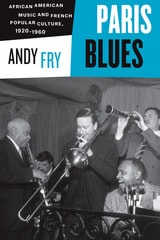
Paris Blues
African American Music and French Popular Culture, 1920-1960Andy Fry
University of Chicago Press, 2014
In Paris Blues, Andy Fry provides an alternative history of African American music and musicians in France, one that looks beyond familiar personalities and well-rehearsed stories. He pinpoints key issues of race and nation in France’s complicated jazz history from the 1920s through the 1950s. While he deals with many of the traditional icons—such as Josephine Baker, Django Reinhardt, and Sidney Bechet, among others—what he asks is how they came to be so iconic, and what their stories hide as well as what they preserve. Fry focuses throughout on early jazz and swing but includes its re-creation—reinvention—in the 1950s. Along the way, he pays tribute to forgotten traditions such as black musical theater, white show bands, and French wartime swing. Paris Blues provides a nuanced account of the French reception of African Americans and their music and contributes greatly to a growing literature on jazz, race, and nation in France.

Parodies of Ownership
Hip-Hop Aesthetics and Intellectual Property LawRichard L. Schur
University of Michigan Press, 2009
"Richard Schur offers a provocative view of contemporary African American cultural politics and the relationship between African American cultural production and intellectual property law."
---Mark Anthony Neal, Duke University
"Whites used to own blacks. Now, they accomplish much the same thing by insisting that they 'own' ownership. Blacks shouldn't let them. A culture that makes all artists play by its rules will end up controlling new ideas and stifling change. Richard Schur's fine book explains why."
---Richard Delgado, Seattle University
What is the relationship between hip-hop and African American culture in the post--Civil Rights era? Does hip-hop share a criticism of American culture or stand as an isolated and unique phenomenon? How have African American texts responded to the increasing role intellectual property law plays in regulating images, sounds, words, and logos? Parodies of Ownership examines how contemporary African American writers, artists, and musicians have developed an artistic form that Schur terms "hip-hop aesthetics." This book offers an in-depth examination of a wide range of contemporary African American painters and writers, including Anna Deavere Smith, Toni Morrison, Adrian Piper, Colson Whitehead, Michael Ray Charles, Alice Randall, and Fred Wilson. Their absence from conversations about African American culture has caused a misunderstanding about the nature of contemporary cultural issues and resulted in neglect of their innovative responses to the post--Civil Rights era. By considering their work as a cross-disciplinary and specifically African American cultural movement, Schur shows how a new paradigm for artistic creation has developed.
Parodies of Ownership offers a broad analysis of post--Civil Rights era culture and provides the necessary context for understanding contemporary debates within American studies, African American studies, intellectual property law, African American literature, art history, and hip-hop studies. Weaving together law, literature, art, and music, Schur deftly clarifies the conceptual issues that unify contemporary African American culture, empowering this generation of artists, writers, and musicians to criticize how racism continues to affect our country.
Richard L. Schur is Director, Interdisciplinary Studies Center, and Associate Professor of Interdisciplinary Studies at Drury University. Visit the author's website: http://www2.drury.edu/rschur/index.htm.

Party in the U.S.A.
A Song by Miley CyrusMike Barthel
Duke University Press, 2027
Passing the Baton
The Chicago Symphony Orchestra and the Music Directors Who Shaped Its GreatnessPhillip Huscher
University of Chicago Press, 2026
The untold story of how the Chicago Symphony Orchestra forged its place among the world’s foremost performing arts institutions through 135 years of change.
The Chicago Symphony Orchestra boasts a tradition and staying power that few cultural institutions can rival—a legacy that is tested each time one music director passes the conductor’s baton to another. In this first narrative account of the orchestra’s 135-year history, music critic and historian Phillip Huscher delivers a passionate description of how an upstart ensemble rose to international prominence and established itself as the premier symphony orchestra in the United States.
With a scholar’s care for detail and a novelist’s attention to drama, Huscher invites us into the tangled machinations behind the success or failure of each chapter in the orchestra’s storied past. We see how legendary directors such as Fritz Reiner, Sir Georg Solti, and Riccardo Muti carried the orchestra to new heights of technical perfection and sonic brilliance, but also how others provoked public outcry, caved to insider hostility, or fell to cruel press. The result is a vivid portrait of an orchestra fighting to sustain its identity amid the constant contest between past and present, supporters and critics, and artistic and financial vision.
Woven into this saga are personal stories drawn from newly uncovered documents and interviews with players, conductors, and policymakers about the burden of inheritance, the price of ambition, and the yearning to forge a legacy. Taken together, this is a tale about the power of music—how it can help us navigate our lives and leave a lasting impact on the world around us.
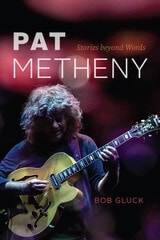
Pat Metheny
Stories beyond WordsBob Gluck
University of Chicago Press, 2024
Guitarist and composer Pat Metheny, among the most acclaimed, visionary musicians of our time, has for five decades toured with his many creative musical projects, most prominently the Pat Metheny Group, while collaborating with celebrated artists, including Charlie Haden, Ron Carter, Herbie Hancock, Ornette Coleman, and Steve Reich.
Bob Gluck, whose perspective as pianist, composer, and educator has illuminated the music of Herbie Hancock and Miles Davis in his two previous books, now focuses his lens on the music of Metheny. Neither a biography nor chronological record of Metheny’s musical output, Pat Metheny: Stories beyond Words instead captures Metheny’s self-conception as a musician and the threads that unite and distinguish his creative process. Drawing upon a wealth of new interviews and close readings of musical examples, Gluck offers a bird’s-eye view of Metheny’s musical ideas. Among these are the metaphor of storytelling, the complementarity of simplicity and complexity, and the integrated roles of composer, performer, and band leader. Much like Metheny’s signature style, this book is accessible to a wide range of readers, presenting new clarity, musical insight, and historical perspective about the legacy of Metheny’s groundbreaking music.

Pataphysics and Surrealism in Alabama
A Cultural HistorySteven Harris
University of Alabama Press, 2026
An exploration of the surrealist artists, musicians, and performers who forged a unique experimental arts community in Alabama
Pataphysics and Surrealism in Alabama: A Cultural History is the first book to uncover a remarkable chapter in American experimental art, music, dance and writing, tracing the activities of a creative group known as Raudelunas, the music collective Transcendprovisation, and the surrealist association initially called Glass Veal: a series of interrelated artistic and cultural movements that originated in Tuscaloosa and Birmingham, Alabama, during the 1970s. Drawing on extensive archival research and firsthand accounts, including interviews with twenty-six participants in these groups, sound recordings, publications, and other primary sources, Steven Harris traces the history of a vibrant creative community that began when three University of Alabama students started improvising music together and encouraged others to join them.
From these sessions emerged a dynamic network of performers and artists whose work challenged conventional boundaries between disciplines. Inspired by musical improvisation, surrealism, and pataphysics, participants embraced spontaneity and absurdity as they developed a positive expression of creativity that was both uniquely Southern and sharply distinctive from the dominant culture that surrounded them.
Harris situates these movements within broader histories of Alabama, Dada, pataphysics, surrealism, and improvised music and dance while charting their lasting influence on the artists who participated in them. Featuring a timeline of major events, biographies of key members, and an anthology of representative writings, Pataphysics and Surrealism in Alabama is an essential contribution to the history of American experimental culture.
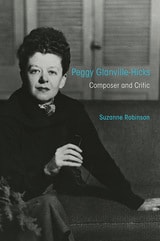
Peggy Glanville-Hicks
Composer and CriticSuzanne Robinson
University of Illinois Press, 2019
Drawing on interviews, archival research, and fifty-four years of extraordinary pocket diaries, Suzanne Robinson places Glanville-Hicks within the history of American music and composers. "P.G.H." forged alliances with power brokers and artists that gained her entrance to core American cultural entities such as the League of Composers, New York Herald Tribune, and the Harkness Ballet. Yet her impeccably cultivated public image concealed a private life marked by unhappy love affairs, stubborn poverty, and the painstaking creation of her artistic works.
Evocative and intricate, Peggy Glanville-Hicks clears away decades of myth and storytelling to provide a portrait of a remarkable figure and her times.

Peggy Seeger
A Life of Music, Love, and PoliticsJean R. Freedman
University of Illinois Press, 2020
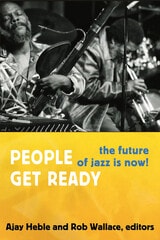
People Get Ready
The Future of Jazz Is Now!Ajay Heble and Rob Wallace, eds.
Duke University Press, 2013
Contributors. Tamar Barzel, John Brackett, Douglas Ewart, Ajay Heble, Vijay Iyer, Thomas King, Tracy McMullen, Paul D. Miller/DJ Spooky, Nicole Mitchell, Roscoe Mitchell, Famoudou Don Moye, Aldon Lynn Nielsen, Eric Porter, Marc Ribot, Matana Roberts, Jaribu Shahid, Julie Dawn Smith, Wadada Leo Smith, Alan Stanbridge, John Szwed, Greg Tate, Scott Thomson, Rob Wallace, Ellen Waterman, Corey Wilkes
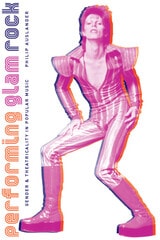
Performing Glam Rock
Gender and Theatricality in Popular MusicPhilip Auslander
University of Michigan Press, 2006
Yet glam was as much about substance as style, and Performing Glam Rock delves into the many ways glam paved the way for new explorations of identity in terms of gender, sexuality, and performance. Philip Auslander positions glam historically and examines it as a set of performance strategies, exploring the ways in which glam rock-while celebrating the showmanship of 1950s rock and roll-began to undermine rock's adherence to the ideology of authenticity in the late 1960s.
In this important study of a too-often-overlooked phenomenon, Auslander takes a fresh look at the genius of the glam movement and introduces glam to a new generation of performance enthusiasts and scholars alike.
Philip Auslander is Professor in the School of Literature, Communication, and Culture at the Georgia Institute of Technology and author of numerous books, including Liveness: Performance in a Mediatized Culture and Presence and Resistance: Postmodernism and Cultural Politics in Contemporary American Performance. He is editor of the major reference work Performance: Critical Concepts and coeditor, with Carrie Sandahl, of Bodies in Commotion: Disability and Performance.
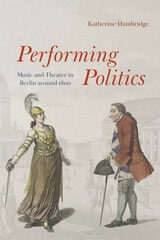
Performing Politics
Music and Theater in Berlin Around 1800Katherine Hambridge
University of Chicago Press, 2027
A new account of the emergence of modern cultural politics through a study of music and theater in Berlin around 1800.
Berlin around 1800 has been seen—at the time and since—as somewhat behind other major European cities in terms of its musical culture, peripheral to the momentous developments attributed to the period. By contrast, early nineteenth-century Berlin has been exhaustively studied as the site of a nascent German-national movement and the Prussian Reforms. In Performing Politics, Katherine Hambridge examines the confluence of music and politics in Berlin around 1800, engaging directly with the themes of being behind/ahead, central/peripheral, in order to tell new stories about nineteenth-century German history, musical and otherwise.
Performing Politics emphasizes events as much as repertoires, and non-canonical repertoires over the more familiar music of this period: dynastic birthday celebrations, the music of historical dramas, political song and communal singing, popular music theater. By focusing our attention on the unfamiliar specificity of Berlin Nationaltheater, Hambridge reenergizes our understanding of 1800–1815 as a key period in the development of musical and political modernity. Using sources largely unexploited by musicologists, and phenomena neglected by historians, she reveals the quotidian aesthetics, values, and practices that shaped both the sociopolitical narratives and musical developments of the time. Performing Politics is thus not only a history of music and theater in Berlin at a critical moment, but a music history of modern cultural politics.
Petrushka
Sources and ContextsAndrew Baruch Wachtel
Northwestern University Press, 1998
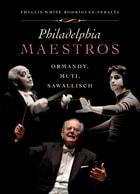
Philadelphia Maestros
Ormandy, Muti, SawallischPhyllis Rodriquez-Peralta
Temple University Press, 2006
Philosophy of New Music
Theodor W. Adorno
University of Minnesota Press, 2019
An indispensable key to Adorno’s influential oeuvre—now in paperback
In 1949, Theodor W. Adorno’s Philosophy of New Music was published, coinciding with the prominent philosopher’s return to a devastated Europe after his exile in the United States. Intensely polemical from its first publication, every aspect of this work was met with extreme reactions, from stark dismissal to outrage. Even Arnold Schoenberg reviled it.
Despite the controversy, Philosophy of New Music became highly regarded and widely read among musicians, scholars, and social philosophers. Marking a major turning point in his musicological philosophy, Adorno located a critique of musical reproduction as internal to composition, rather than a matter of musical performance. Consisting of two distinct essays, “Schoenberg and Progress” and “Stravinsky and Reaction,” Philosophy of New Music poses the musical extremes in which Adorno perceived the struggle for the cultural future of Europe: between human emancipation and barbarism, between the compositional techniques and achievements of Schoenberg and Stravinsky.
In this translation, which is accompanied by an extensive introduction by distinguished translator Robert Hullot-Kentor, Philosophy of New Music emerges as an essential guide to the whole of Adorno's oeuvre.
Phonographic Modernity
The Gramophone Industry and Music Genres in East and Southeast AsiaEdited by Fumitaka Yamauchi and Ying-fen Wang
University of Illinois Press, 2024
A roster of experts on countries from Japan to Indonesia explores the complicated relationship between the gramophone industry and music genres in East and Southeast Asia. Extending the boundaries of their research across multiple disciplines, the contributors connect the gramophone industry to theories surrounding phonography and modernity. Their focus on phonography combines an interest in discs with an interest in the sounds contributing to the recent sonic-auditory turn in sound studies.
Ambitious and expansive, Phonographic Modernity examines the bloc of East and Southeast Asia within the larger global history of sound recording.
Phonographies
Grooves in Sonic Afro-ModernityAlexander G. Weheliye
Duke University Press, 2005
Weheliye surveys literature, film, and music to focus on engagements with recorded sound. He offers substantial new readings of canonical texts by W. E. B. Du Bois and Ralph Ellison, establishing dialogues between these writers and popular music and film ranging from Louis Armstrong’s voice to DJ mixing techniques to Darnell Martin’s 1994 movie I Like It Like That. Looking at how questions of diasporic belonging are articulated in contemporary black musical practices, Weheliye analyzes three contemporary Afro-diasporic musical acts: the Haitian and African American rap group the Fugees, the Afro- and Italian-German rap collective Advanced Chemistry, and black British artist Tricky and his partner Martina. Phonographies imagines the African diaspora as a virtual sounding space, one that is marked, in the twentieth century and twenty-first, by the circulation of culture via technological reproductions—records and tapes, dubbing and mixing, and more.
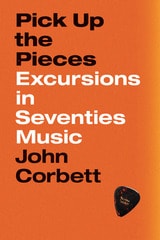
Pick Up the Pieces
Excursions in Seventies MusicJohn Corbett
University of Chicago Press, 2019
Rock. Disco. Pop. Soul. Jazz. Folk. Funk. The music scene of the 1970s was as varied as it was exhilarating, but the decade’s diversity of sound has never been captured in one book before now. Pick Up the Pieces gives a panoramic view of the era’s music and culture through seventy-eight essays that allow readers to dip in and out of the decade at random or immerse themselves completely in Corbett’s chronological journey.
An inviting mix of skilled music criticism and cultural observation, Pick Up the Pieces is also a coming-of-age story, tracking the author’s absorption in music as he grows from age seven to seventeen. Along with entertaining personal observations and stories, Corbett includes little-known insights into musicians from Pink Floyd, Joni Mitchell, James Brown, and Fleetwood Mac to the Residents, Devo, Gal Costa, and Julius Hemphill.
A master DJ on the page, Corbett takes us through the curated playlist that is Pick Up the Pieces with captivating melody of language and powerful enthusiasm for the era. This funny, energetic book will have readers longing nostalgically for a decade long past.
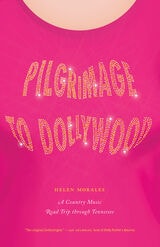
Pilgrimage to Dollywood
A Country Music Road Trip through TennesseeHelen Morales
University of Chicago Press, 2014
In Pilgrimage to Dollywood, Morales sets out to discover Parton’s Tennessee. Her travels begin at the top celebrity pilgrimage site of Elvis Presley’s Graceland, then take her to Loretta Lynn’s ranch in Hurricane Mills; the Country Music Hall of Fame and the Grand Ole Opry in Nashville; to Sevierville, Gatlinburg, and the Great Smoky Mountains National Park; and finally to Pigeon Forge, home of the “Dolly Homecoming Parade,” featuring the star herself as grand marshall. Morales’s adventure allows her to compare the imaginary Tennessee of Parton’s lyrics with the real Tennessee where the singer grew up, looking at essential connections between country music, the land, and a way of life. It’s also a personal pilgrimage for Morales. Accompanied by her partner, Tony, and their nine-year-old daughter, Athena (who respectively prefer Mozart and Miley Cyrus), Morales, a recent transplant from England, seeks to understand America and American values through the celebrity sites and attractions of Tennessee.
This celebration of Dolly and Americana is for anyone with an old country soul who relies on music to help understand the world, and it is guaranteed to make a Dolly Parton fan of anyone who has not yet fallen for her music or charisma.

Pinery Boys
Songs and Songcatching in the Lumberjack EraEdited by Franz Rickaby with Gretchen Dykstra and James P. Leary
University of Wisconsin Press, 2017
Pinery Boys now incorporates, commemorates, contextualizes, and complements Rickaby's early work. It includes an introduction and annotations throughout by eminent folklore scholar James P. Leary and an engaging, impressively researched biography by Rickaby's granddaughter Gretchen Dykstra. Central to this edition are Rickaby's own introduction and the original fifty-one songs that he published—including "Jack Haggerty's Flat River Girl," "The Little Brown Bulls," "Ole from Norway," "The Red Iron Ore," and "Morrissey and the Russian Sailor"—plus fourteen additional songs selected to represent the varied collecting Rickaby did beyond the lumber camps.
Supplemented by historical photographs, Pinery Boys fully reveals Franz Rickaby as a visionary artist and scholar and provides glimpses into the past lives of woods poets and singers.
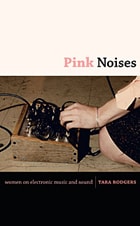
Pink Noises
Women on Electronic Music and SoundTara Rodgers
Duke University Press, 2010
Contemporary electronic music practices are illuminated through the stories of women artists of different generations and cultural backgrounds. They include the creators of ambient soundscapes, “performance novels,” sound sculptures, and custom software, as well as the developer of the Deep Listening philosophy and the founders of the Liquid Sound Lounge radio show and the monthly Basement Bhangra parties in New York. These and many other artists open up about topics such as their conflicted relationships to formal music training and mainstream media representations of women in electronic music. They discuss using sound to work creatively with structures of time and space, and voice and language; challenge distinctions of nature and culture; question norms of technological practice; and balance their needs for productive solitude with collaboration and community. Whether designing and building modular synthesizers with analog circuits or performing with a wearable apparatus that translates muscle movements into electronic sound, these artists expand notions of who and what counts in matters of invention, production, and noisemaking. Pink Noises is a powerful testimony to the presence and vitality of women in electronic music cultures, and to the relevance of sound to feminist concerns.
Interviewees: Maria Chavez, Beth Coleman (M. Singe), Antye Greie (AGF), Jeannie Hopper, Bevin Kelley (Blevin Blectum), Christina Kubisch, Le Tigre, Annea Lockwood, Giulia Loli (DJ Mutamassik), Rekha Malhotra (DJ Rekha), Riz Maslen (Neotropic), Kaffe Matthews, Susan Morabito, Ikue Mori, Pauline Oliveros, Pamela Z, Chantal Passamonte (Mira Calix), Maggi Payne, Eliane Radigue, Jessica Rylan, Carla Scaletti, Laetitia Sonami, Bev Stanton (Arthur Loves Plastic), Keiko Uenishi (o.blaat)
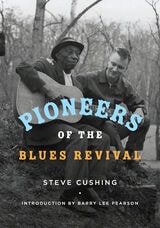
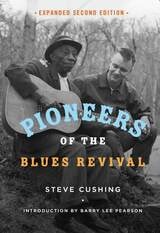
Pioneers of the Blues Revival
Steve Cushing
University of Illinois Press, 2014
Opinionated and territorial, the American, British, and French interviewees provide fascinating first-hand accounts of the era and movement. Experts including Paul Oliver, Gayle Dean Wardlow, Sam Charters, Ray Flerledge, Paul Oliver, Richard K. Spottswood, and Pete Whelan chronicle in their own words their obsessive early efforts at cataloging blues recordings and retrace lifetimes spent loving, finding, collecting, reissuing, and producing records. They and nearly a dozen others recount relationships with blues musicians, including the discoveries of prewar bluesmen Mississippi John Hurt, Son House, Skip James, and Bukka White, and the reintroduction of these musicians and many others to new generations of listeners. The accounts describe fieldwork in the South, renew lively debates, and tell of rehearsals in Muddy Waters's basement and randomly finding Lightning Hopkins's guitar in a pawn shop.
Blues scholar Barry Lee Pearson provides a critical and historical framework for the interviews in an introduction.
Pioneers of the Blues Revival
Steve Cushing
University of Illinois Press, 2018
Places and Purposes of Popular Music Education
Perspectives from the FieldEdited by Bryan Powell and Gareth Dylan Smith
Intellect Books, 2022
This book provides a variety of perspectives on popular music education. With a mixture of rants, manifestos, and punchy position pieces, the volume moves from scholarly essays replete with citations and references to descriptions of practice and straight-talking polemics. The writing is approachable in tone, and the chapters are intended to whet appetites, prime pumps, open eyes, and keep cogs turning for academics of all ages and stages.
The book will appeal to those working in popular music studies, communication studies, and education research. It also holds relevance for researchers of the music industry and music ecosystems around the world. International in reach and scope and edited by recognized voices at the vanguard of progressive music education, this is an eye-opening exploration of education in and through the widespread cultural phenomenon of popular music.

Play Like a Man
My Life in Poster ChildrenRose Marshack
University of Illinois Press, 2023
An inside look at a scene and a career, Play Like a Man is the evocative and humorous tale of one woman’s life in the trenches and online.
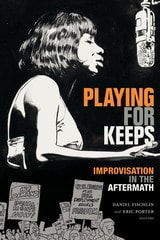
Playing for Keeps
Improvisation in the AftermathDaniel Fischlin and Eric Porter
Duke University Press, 2020
Contributors. Randy DuBurke, Rana El Kadi, Kevin Fellezs, Daniel Fischlin, Kate Galloway, Reem Abdul Hadi, Vijay Iyer, Mark Lomanno, Moshe Morad, Eric Porter, Sara Ramshaw, Matana Roberts, Darci Sprengel, Paul Stapleton, Odeh Turjman, Stephanie Vos
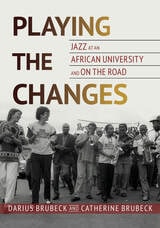
Playing the Changes
Jazz at an African University and on the RoadDarius Brubeck and Catherine Brubeck
University of Illinois Press, 2024
Catherine and Darius Brubeck’s 1983 move to South Africa launched them on a journey that helped transform jazz education. Blending biography with storytelling, the pair recount their time at the University of KwaZulu-Natal, where they built a pioneering academic program in jazz music and managed and organized bands, concerts, and tours around the world.
The Brubecks and the musicians faced innumerable obstacles, from the intensification of apartheid and a lack of resources to the hardscrabble lives that forced even the most talented artists to the margins. Building a program grounded in multi-culturalism, Catherine and Darius encouraged black and white musicians to explore and expand the landscape of South African jazz together Their story details the sometimes wily, sometimes hilarious problem-solving necessary to move the institution forward while offering insightful portraits of South African jazz players at work, on stage, and providing a soundtrack to the freedom struggle and its aftermath.
Frank and richly detailed, Playing the Changes provides insiders’ accounts of how jazz intertwined with struggle and both expressed and resisted the bitter unfairness of apartheid-era South Africa.
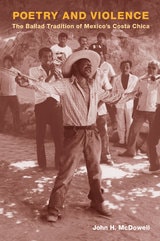
Poetry and Violence
The Ballad Tradition of Mexico's Costa ChicaJohn H. McDowell
University of Illinois Press, 1999
Detailed and rife with social and cultural implications, Poetry and Violence is a compelling commentary on violence as both human experience and communicative action.

Politics as Sound
The Washington, DC, Hardcore Scene, 1978-1983Shayna L. Maskell
University of Illinois Press, 2021
A fascinating analysis of a punk rock hotbed, Politics as Sound tells the story of how a generation created music that produced--and resisted--politics and power.

Polka Heartland
Why the Midwest Loves to PolkaRick March
Wisconsin Historical Society Press, 2015
"Polka Heartland" captures the beat that pulses in the heart of Midwestern culture--the polka--and offers up the fascinating history of how "oompah-pah" came to be the sound of middle America. From the crowded dance tent at Pulaski Polka Days to an off-the-grid Mexican polka dance in small-town Wisconsin, "Polka Heartland" explores the people, places, and history behind the Midwest's favorite music.
From polka's surprising origin story as a cutting-edge European fad to an exploration of the modern-day polka scene, author Rick March and photographer Dick Blau take readers on a joyful romp through this beloved, unique, and richly storied genre. "Polka Heartland" describes the artists, venues, instruments, and music-makers who have been pivotal to polka's popularity across the Midwest and offers six full-color photo galleries to immerse readers in today's vibrant polka scene.
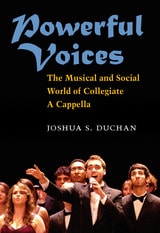
Powerful Voices
The Musical and Social World of Collegiate A CappellaJoshua S. Duchan
University of Michigan Press, 2016
Collegiate a cappella, part of a long tradition of unaccompanied singing, is known to date back on American college campuses to at least the colonial era. Considered in the context of college glee clubs, barbershop quartets, early-twentieth-century vocal pop groups, doo-wop groups, and contemporary a cappella manifestations in pop music, collegiate a cappella is an extension of a very old tradition of close harmony singing---one that includes but also goes beyond the founding of the Yale Whiffenpoofs. Yet despite this important history, collegiate a cappella has until now never been the subject of scholarly examination.
In Powerful Voices: The Musical and Social World of Collegiate A Cappella, Joshua S. Duchan offers the first thorough accounting of the music's history and reveals how the critical issues of sociability, gender, performance, and technology affect its music and experience. Just as importantly, Duchan provides a vital contribution to music scholarship more broadly, in several important ways: by expanding the small body of literature on choruses and amateur music; by addressing musical and social processes in a field where the vast majority of scholarship focuses on individuals and their products; and by highlighting a musical context long neglected by musicologists---the college campus. Ultimately, Powerful Voices is a window on a world of amateur music that has begun to expand its reach internationally, carrying this uniquely American musical form to new global audiences, while playing an important role in the social, cultural, and musical education of countless singers over the last century.
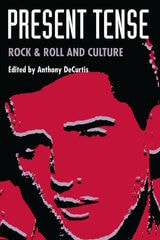
Present Tense
Rock & Roll and CultureAnthony DeCurtis, ed.
Duke University Press, 1992
In this collection, Greil Marcus creates a collage of words and pictures that evokes and explores Elvis Presley's grisly fate as an American cultural image, while Robert Palmer tells the gripping tale of the origins and meanings of the electric guitar. Rap music, MTV, and the issue of gender identity in the work of Bruce Springsteen all undergo thorough examination; rock & roll's complex relationship with the forces of censorship gets a remarkably fresh reading; and the mainstreaming of rock & roll in the 1980s is detailed and analyzed. And, in an interview with Laurie Anderson and an essay by Atlanta musician Jeff Calder, the artists speak for themselves.
Contributors. Jeff Calder, Anthony DeCurtis, Mark Dery, Paul Evans, Glenn Gass, Trent Hill, Michael Jarrett, Alan Light, Greil Marcus, Robert Palmer, Robert B. Ray, Dan Rubey, David R. Shumway, Martha Nell Smith, Paul Smith
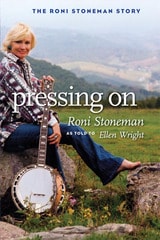
Pressing On
The Roni Stoneman StoryRoni Stoneman as told to Ellen Wright
University of Illinois Press, 2006
Drawn from more than seventy-five hours of recorded interviews, Pressing On reveals Roni's gifts as a master storyteller. With characteristic spunk and candor, she describes her "pooristic" ("way beyond 'poverty-stricken'") Appalachian childhood, and how her brother Scott taught her to play the challenging and innovative three-finger banjo picking style developed by Earl Scruggs. She also warmly recounts Hee Haw-era adventures with Minnie Pearl, Roy Clark, and Buck Owens; her encounters as a musician with country greats like Loretta Lynn, Johnny Cash, June Carter, and Patsy Cline; as well as her personal struggles with shiftless and violent husbands, her relationships with her children, and her musical life after Hee Haw.
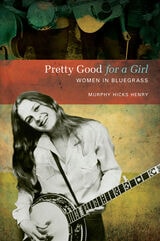
Pretty Good for a Girl
Women in BluegrassMurphy Henry
University of Illinois Press, 2013
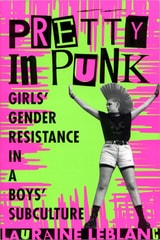
Pretty in Punk
Girl's Gender Resistance in a Boy's SubcultureLeblanc, Lauraine
Rutgers University Press, 1999
Pretty in Punk combines autobiography, interviews, and sophisticated analysis to create the first insider’s examination of the ways punk girls resist gender roles and create strong identities.
Why would an articulate, intelligent, thoughtful young women shave off most of her hair, dye the remainder green, shape it into a mohawk, and glue it onto her head? What attracts girls to male-dominated youth subcultures like the punk movement? What role does the subculture play in their perceptions of themselves, and in their self-esteem? How do girls reconcile a subcultural identity that is deliberately coded “masculine” with the demands of femininity?
Research has focused on the ways media and cultural messages victimize young women, but little attention has been paid to the ways they resist these messages. In Pretty in Punk, Lauraine Leblanc examines what happens when girls ignore these cultural messages, parody ideas of beauty, and refuse to play the games of teenage femininity. She explores the origins and development of the punk subculture, the processes by which girls decide to “go punk,” patterns of resistance to gender norms, and tactics girls use to deal with violence and harassment.
Pretty in Punk takes readers into the lives of girls living on the margins of contemporary culture. Drawing on interviews with 40 girls and women between the ages of 14-37, Leblanc examines the lives of her subjects, illuminating their forms of rebellion and survival. Pretty in Punk lets readers hear the voices of these women as they describe the ways their constructions of femininity—from black lipstick to slamdancing—allow them to reject damaging cultural messages and build strong identities. The price they pay for resisting femininity can be steep—girls tell of parental rejection, school expulsion, institutionalization, and harassment. Leblanc illuminates punk girls’ resistance to adversity, their triumphs over tough challenges, and their work to create individual identities in a masculine world.

Prison Song
Music and Incarceration in the United StatesDavid Metzer
University of Michigan Press, 2026
Prophets of the Hood
Politics and Poetics in Hip HopImani Perry
Duke University Press, 2004
Perry offers detailed readings of the lyrics of many hip hop artists, including Ice Cube, Public Enemy, De La Soul, krs-One, OutKast, Sean “Puffy” Combs, Tupac Shakur, Lil’ Kim, Biggie Smalls, Nas, Method Man, and Lauryn Hill. She focuses on the cultural foundations of the music and on the form and narrative features of the songs—the call and response, the reliance on the break, the use of metaphor, and the recurring figures of the trickster and the outlaw. Perry also provides complex considerations of hip hop’s association with crime, violence, and misogyny. She shows that while its message may be disconcerting, rap often expresses brilliant insights about existence in a society mired in difficult racial and gender politics. Hip hop, she suggests, airs a much wider, more troubling range of black experience than was projected during the civil rights era. It provides a unique public space where the sacred and the profane impulses within African American culture unite.

Prosdocimo de' Beldomandi's Musica Plana and Musica Speculativa
Prosdocimo de Beldomandi. Translated by Jan Herlinger.
University of Illinois Press, 2007
Available in English for the first time, Prosdocimo's Tractatus plane musice (1412) and Tractatus musice speculative (1425) are exemplary texts for understanding the high sophistication of music theory in the early fifteenth century. Known for considering music as a science based on demonstrable mathematical principles, Prosdocimo praises Marchetto for his theory of plainchant but criticizes his influential Lucidarium for its heterodox mathematics. In dismissing Marchetto as a “mere performer,” Prosdocimo takes up matters as broad as the nature and definition of music and as precise as counterpoint, tuning, and ecclesiastical modes. The treatises also reveal much about Prosdocimo’s understanding of plainchant; his work with Euclid's Elementa; and his familiarity with the music theory of Boethius, Macrobius, and Johannes de Muris. A foremost authority on Italian music theory of the Middle Ages and early Renaissance, Jan Herlinger consults manuscripts from Bologna, Cremona, and Lucca in preparing these valuable first critical editions.
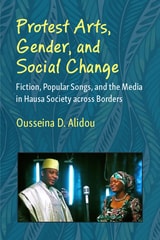
Protest Arts, Gender, and Social Change
Fiction, Popular Songs, and the Media in Hausa Society across BordersOusseina D. Alidou
University of Michigan Press, 2024
While there is an abundance of social science studies giving voice to the dominant actors of hegemonic violence in Hausa society, there is a dearth of works that center the voices of the afflicted, unprivileged, and marginalized class, among whom are women and youth. One aim of this book is to examine the ways popular songs and fiction fill up the humanistic urgency to capture the dignity of the life of those dehumanized by local, national, and international hegemonic religious and secular forces. The book focuses on the resistance narratives of one female novelist and six song composers and performers that generate alternative counterhegemonic responses to dominant patriarchal discourses produced by cultural, religious, and political elites, thus reaching out to marginalized local and national communities and global audiences. Alidou interweaves the social, political, and biomedical epidemics with the concept of “Hausa interiority” to create a unique perspective on contemporary Hausa culture and politics through the lens of artistic productions.

Puccini and The Girl
History and Reception of The Girl of the Golden WestAnnie J. Randall and Rosalind Gray Davis
University of Chicago Press, 2004
Adapted from American playwright David Belasco's Broadway production, The Girl of the Golden West, Fanciulla was Puccini's most consciously modern work, and its Met debut received mixed reviews. Annie J. Randall and Rosalind Gray Davis base their account of its creation on previously unknown letters from Puccini to his main librettist, Carlo Zangarini. They mine musical materials, newspaper accounts, and rare photographs and illustrations to tell the full story of this controversial opera. Puccini and the Girl considers the production and reception of Puccini's "cowboy" opera in the light of contemporary criticism, providing both fascinating insight into its history and a look to the future as its centenary approaches.

Puccini
His International ArtMichele Girardi
University of Chicago Press, 2000
Punk Identities, Punk Utopias
Global Punk and MediaEdited by Russ Bestley, Mike Dines, Matt Grimes, Paula Guerra
Intellect Books, 2021
Punk Identities, Punk Utopias unpacks punk and the factors that shape its increasingly complex and indefinable social, political, and economic setting. The third offering in Intellect’s Global Punk series, produced in collaboration with the Punk Scholars Network, this volume examines the broader social, political, and technological concerns that affect punk scenes around the world, from digital technology and new media to gender, ethnicity, identity, and representation.
Drawing on scholarship in cultural studies, musicology, and social sciences, this interdisciplinary collection will add to the academic discussion of contemporary popular culture, particularly in relation to punk and the critical understanding of transnational and cross-cultural dialogue.
Punk Now!!
Contemporary Perspectives on PunkEdited by Matt Grimes and Mike Dines
Intellect Books, 2020
Punk and Revolution
Seven More Interpretations of Peruvian RealityShane Greene
Duke University Press, 2016

Punks in Peoria
Making a Scene in the American HeartlandJonathan Wright and Dawson Barrett
University of Illinois Press, 2021
Synonymous with American mediocrity, Peoria was fertile ground for the boredom- and anger-fueled fury of punk rock. Jonathan Wright and Dawson Barrett explore the do-it-yourself scene built by Peoria punks, performers, and scenesters in the 1980s and 1990s. From fanzines to indie record shops to renting the VFW hall for an all-ages show, Peoria's punk culture reflected the movement elsewhere, but the city's conservatism and industrial decline offered a richer-than-usual target environment for rebellion. Eyewitness accounts take readers into hangouts and long-lost venues, while interviews with the people who were there trace the ever-changing scene and varied fortunes of local legends like Caustic Defiance, Dollface, and Planes Mistaken for Stars. What emerges is a sympathetic portrait of a youth culture in search of entertainment but just as hungry for community—the shared sense of otherness that, even for one night only, could unite outsiders and discontents under the banner of music.
A raucous look at a small-city underground, Punks in Peoria takes readers off the beaten track to reveal the punk rock life as lived in Anytown, U.S.A.