230 books match the query 'Government relations' and 9 start with p
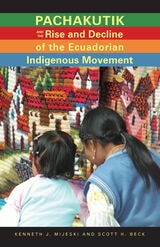
cover of Pachakutik and the Rise and Decline of the Ecuadorian Indigenous Movement

Pachakutik and the Rise and Decline of the Ecuadorian Indigenous Movement

Kenneth J. Mijeski

Ohio University Press, 2011

The mobilization of militant indigenous politics is one of the most important stories in Latin American studies today. In this critical work, Kenneth J. Mijeski and Scott H. Beck examine the rise and decline of Ecuador’s leading indigenous party, Pachakutik, as it tried to transform the state into a participative democracy.

Using in-depth interviews with political activists, as well as a powerful statistical analysis of election results, the authors show that the political election game failed to advance the causes of Ecuador’s poor or the movement’s own indigenous supporters. Pachakutik and the Rise and Decline of the Ecuadorian Indigenous Movement is an extraordinarily valuable case study of Ecuador’s indigenous movement and the challenges it still faces.
[more]
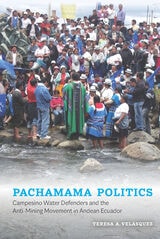
cover of Pachamama Politics: Campesino Water Defenders and the Anti-Mining Movement in Andean Ecuador

Pachamama Politics

Campesino Water Defenders and the Anti-Mining Movement in Andean Ecuador

Teresa A. Velásquez

University of Arizona Press, 2022

Ecuador became the first country in the world to grant the Pachamama, or Mother Earth, constitutional rights in 2008. This landmark achievement represented a shift to incorporate Indigenous philosophies of Sumak Kawsay or Buen Vivir (to live well) as a framework for social and political change. The extraordinary move coincided with the rise of neoextractivism, where the self-described socialist President Rafael Correa contended that Buen Vivir could be achieved through controversial mining projects on Indigenous and campesino territories, including their watersheds.

Pachamama Politics provides a rich ethnographic account of the tensions that follow from neoextractivism in the southern Ecuadorian Andes, where campesinos mobilized to defend their community-managed watershed from a proposed gold mine. Positioned as an activist-scholar, Teresa A. Velásquez takes the reader inside the movement—alongside marches, road blockades, and river and high-altitude wetlands—to expose the rifts between social movements and the “pink tide” government. When the promise of social change turns to state criminalization of water defenders, Velásquez argues that the contradictions of neoextractivism created the political conditions for campesinos to reconsider their relationship to indigeneity.

The book takes an intersectional approach to the study of anti-mining struggles and explains how campesino communities and their allies identified with and redeployed Indigenous cosmologies to defend their water as a life-sustaining entity. Pachamama Politics shows why progressive change requires a shift away from the extractive model of national development to a plurinational defense of community water systems and Indigenous peoples and their autonomy.
 
[more]
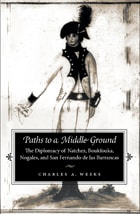
cover of Paths to a Middle Ground: The Diplomacy of Natchez, Boukfouka, Nogales, and San Fernando de las Barrancas, 1791-1795

Paths to a Middle Ground

The Diplomacy of Natchez, Boukfouka, Nogales, and San Fernando de las Barrancas, 1791-1795

Charles A. Weeks

University of Alabama Press, 2005

Spanish imperial attempts to form strong Indian alliances to thwart American expansion in the Mississippi Valley.
 
Charles Weeks explores the diplomacy of Spanish colonial officials in New Orleans and Natchez in order to establish posts on the Mississippi River and Tombigbee rivers in the early 1790s. Another purpose of this diplomacy, urged by Indian leaders and embraced by Spanish officials, was the formation of a regional Indian confederation that would deter American expansion into Indian lands.

Weeks shows how diplomatic relations were established and maintained in the Gulf South between Choctaw, Chickasaw, Creek, and Cherokee chiefs and their Spanish counterparts aided by traders who had become integrated into Indian societies. He explains that despite the absence of a European state system, Indian groups had diplomatic skills that Europeans could understand: full-scale councils or congresses accompanied by elaborate protocol, interpreters, and eloquent metaphorical language.

Paths to a Middle Ground
is both a narrative and primary documents. Key documents from Spanish archival sources serve as a basis for the examination of the political culture and imperial rivalry playing out in North America in the waning years of the 18th century.


[more]
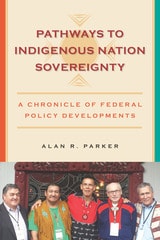
cover of Pathways to Indigenous Nation Sovereignty: A Chronicle of Federal Policy Developments

Pathways to Indigenous Nation Sovereignty

A Chronicle of Federal Policy Developments

Alan R Parker

Michigan State University Press, 2018
In a story that could only be told by someone who was an insider, this book reveals the background behind major legislative achievements of U.S. Tribal Nations leaders in the 1970s and beyond. American Indian attorney and proud Chippewa Cree Nation citizen Alan R. Parker gives insight into the design and development of the public policy initiatives that led to major changes in the U.S. government’s relationships with Tribal Nations. Here he relates the history of the federal government’s attempts, beginning in 1953 and lasting through 1965, to “terminate” its obligations to tribes that had been written into over 370 Indian treaties in the nineteenth century. When Indian leaders gathered in Chicago in 1961, they developed a common strategy in response to termination that led to a new era of “Indian Self-Determination, not Termination,” as promised by President Nixon in his 1970 message to Congress. Congressional leaders took up Nixon’s challenge and created a new Committee on Indian Affairs. Parker was hired as Chief Counsel to the committee, where he began his work by designing legislation to stop the theft of Indian children from their communities and writing laws to settle long-standing Indian water and land claims based on principles of informed consent to negotiated agreements. A decade later, Parker was called back to the senate to work as staff director to the Committee on Indian Affairs, taking up legislation designed by tribal leaders to wrest control from the Bureau of Indian Affairs over governance on the nation’s 250 Indian reservations and negotiating agreements between the tribes that led to the Indian Gaming Regulatory Act. A valuable educational tool, this text weaves together the ideas and goals of many different American Indian leaders from different tribes and professional backgrounds, and shows how those ideas worked to become the law of the land and transform Indian Country.
[more]
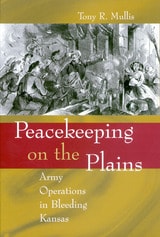
cover of Peacekeeping on the Plains: Army Operations in Bleeding Kansas

Peacekeeping on the Plains

Army Operations in Bleeding Kansas

Tony R. Mullis

University of Missouri Press, 2004
 

Historians have written on “Bleeding Kansas” and on the frontier army as a constabulary force, but little scholarship exists on how the army performed its peacekeeping operations in the 1850s. In Peacekeeping on the Plains, Tony R. Mullis is one of the first scholars to detail the military concerns associated with peace enforcement in Kansas and the trans-Missouri West.


Between 1854 and 1856, the Franklin Pierce administration called upon the U.S. Army to conduct a series of peace operations in the newly formed Kansas and Nebraska territories. The army responded to the president’s call by successfully completing a mission against the Lakota Sioux in 1855 and by aiding civil authorities in the imposition of peace among competing factions in Kansas during 1856.


Although these police duties were not always popular with the soldiers that conducted them, the purpose behind them remained constant—the maintenance of peace, order, and security. Given Americans’ misgivings about a standing army and their limited expectations for it as a domestic peacekeeper, its use in this fashion during the 1850s was a delicate proposition.


By drawing on diverse sources, including official army correspondence, personal papers of key military and political leaders, and local accounts of army activities, Mullis shows how peace operations were conducted by the U.S. Army long before the second half of the twentieth century. He alsopresents a thorough analysis of the professional dilemmas confronted by army officers, as well as the delicate command and control issues associated with the different types of peace operations.


Mullis’s assessment of the army’s peacekeeping efforts in the mid-1850s offers a full understanding of the constraints and frustrations involved. Many of the dilemmas faced by the army in Kansas parallel those encountered in various spots around the globe today. Peacekeeping on the Plains will provide any reader with a better insight into the nuances of peace operations in the 1850s and assist military historians in their understanding of these activities as they relate to the twenty-first century.
[more]
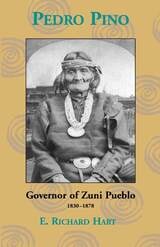
cover of Pedro Pino: Governor of Zuni Pueblo, 1830-1878

Pedro Pino

Governor of Zuni Pueblo, 1830-1878

E. Richard Hart

Utah State University Press, 2003

Pedro Pino, or Lai-iu-ah-tsai-lu (his Zuni name) was for many years the most important Zuni political leader. He served during a period of tremendous change and challenges for his people. Born in 1788, captured by Navajos in his teens, he was sold into a New Mexican household, where he obtained his Spanish name. When he returned to Zuni, he spoke three languages and brought with him a wealth of knowledge regarding the world outside the pueblo. For decades he ably conducted Zuni foreign relations, defending the pueblo's sovereignty and lands, establishing trade relationships, interacting with foreigners-from prominent military and scientific expeditions to common emigrants-and documenting all in a remarkable archive. Steeped in Zuni traditions, he was known among other things for his diplomatic savvy, as a great warrior, for his oratory, and for his honesty and hospitality.

More than a biography, Richard Hart's work provides a history of Zuni during an especially significant period. Also the author of Zuni and the Courts: A Struggle for Sovereign
Land Rights
and the co-author of A Zuni Atlas, Hart originally wrote the manuscript in 1979 after a decade of historical work for Zuni Pueblo. He then set it aside but continued to pursue research about and for Zuni. Its publication, at last, inscribes an important contribution to Pueblo history and biography and a testimonial to a remarkable Native American leader. In an afterword written for this publication, Hart discusses his original intentions in writing about Pedro Pino and Zuni and situates the biography in relation to current scholarship.

[more]
cover of Pobladoras, Indígenas, and the State: Conflict Over Women's Rights in Chile

Pobladoras, Indígenas, and the State

Conflict Over Women's Rights in Chile

Richards, Patricia

Rutgers University Press, 2004

Can laws, policies, and agencies that are designed to help women achieve equality with men accommodate differences among women themselves? In Pobladoras, Indígenas, and the State, Patricia Richards examines how Chilean state policy shapes the promotion of women’s interests but at the same time limits the advancement of different classes and racial-ethnic groups in various ways.

Chile has made a public commitment to equality between women and men through the creation of a National Women’s Service, SERNAM. Yet, indigenous Mapuche women and working-class pobladora activists assert that they have been excluded from programs implemented by SERNAM. Decisions about what constitutes "women’s interests" are usually made by middle class, educated, lighter-skinned women, and the priorities and concerns of poor, working-class, and indigenous women have not come to the fore.

Through critical analysis of the role of the state, the diversity of women’s movements, and the social and political position of indigenous peoples in Latin America, Richards provides an illuminating discussion of the ways in which the state defines women’s interests and constructs women’s citizenship. This book makes important contributions to feminist studies, theories of citizenship, and studies of the intersections of class, gender, and race.

[more]
cover of Power Struggles: Hydro Development and First Nations in Manitoba and Quebec

Power Struggles

Hydro Development and First Nations in Manitoba and Quebec

Thibault Martin

University of Manitoba Press, 2008
Power Struggles: Hydro Development and First Nations in Manitoba and Quebec examines the evolution of new agreements between First Nations and Inuit and the hydro corporations in Quebec and Manitoba, including the Wuskwatim Dam Project, Paix des Braves, and the Great Whale Project. In the 1970s, both provinces signed so-called “modern treaties” with First Nations for the development of large hydro projects in Aboriginal territories. In recent times, however, the two provinces have diverged in their implementation, and public opinion of these agreements has ranged from celebratory to outrage.Power Struggles brings together perspectives on these issues from both scholars and activists. In debating the relative merits and limits of these agreements, they raise a crucial question: Is Canada on the eve of a new relationship with First Nations, or do the same colonial attitudes that have long characterized Canadian-Aboriginal relations still prevail?
[more]
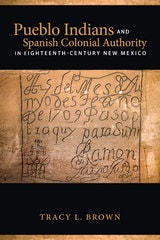
cover of Pueblo Indians and Spanish Colonial Authority in Eighteenth-Century New Mexico

Pueblo Indians and Spanish Colonial Authority in Eighteenth-Century New Mexico

Tracy L. Brown

University of Arizona Press, 2013

Pueblo people reacted to Spanish colonialism in many different ways. While some resisted change and struggled to keep to their long-standing traditions, others reworked old practices or even adopted Spanish ones. Pueblo Indians and Spanish Colonial Authority in Eighteenth-Century New Mexico examines the multiple approaches Pueblo individuals and villages adopted to mitigate and manage the demands that Spanish colonial authorities made upon them. In doing so, author Tracy L. Brown counters the prevailing argument that Pueblo individuals and communities’ only response to Spanish colonialism was to compartmentalize—and thus freeze in time and space—their traditions behind a cultural “iron curtain.”
 
Brown addresses an understudied period of Pueblo Indian/Spanish colonial history of New Mexico with a work that paints a portrait of pre-contact times through the colonial period with a special emphasis on the eighteenth century. The Pueblo communities that the Spaniards encountered were divided by language, religion,and  political and kinship organization. Brown highlights the changes to, but also the maintenance of, social practices and beliefs in the economic, political, spiritual and familial and intimate realms of life that resulted from Pueblo attempts to negotiate Spanish colonial power.
 
The author combines an analysis of eighteenth century Spanish documentation with archaeological findings concerning Pueblo beliefs and practices that spans the pre-contact period to the eighteenth century in the Southwest. Brown presents a nonlinear view of Pueblo life that examines politics, economics, ritual, and personal relationships. The book paints a portrait of the Pueblo peoples and their complex responses to Spanish colonialism by making sense of little-researched archival documents and archaeological findings that cast light on the daily life of Pueblo peoples.
[more]