Results by title
406 books match the query 'Greece' and 21 start with p
PLOTINUS Ennead VI.4 and VI.5
On the Presence of Being, One and the Same, Everywhere as a Whole: Translation with an Introduction and CommentaryEyjólfur K. Emilsson
Parmenides Publishing, 2015

Parties and Elections in Greece
The Search for LegitimacyRichard Clogg
Duke University Press, 1987
Penelope’s Bones
A New History of Homer's World through the Women Written Out of ItEmily Hauser
University of Chicago Press, 2025
Weaving together literary and archaeological evidence, Emily Hauser illuminates the rich, intriguing lives of the real women behind Homer’s Iliad and Odyssey.
Achilles. Agamemnon. Odysseus. Hector. The lives of these and many other men in the greatest epics of ancient Greece have been pored over endlessly in the past three millennia. But these are not just tales about heroic men. There are scores of women as well—complex, fascinating women whose stories have gone unexplored for far too long.
In Penelope’s Bones, award-winning classicist and historian Emily Hauser pieces together compelling evidence from archaeological excavations and scientific discoveries to unearth the richly textured lives of women in Bronze Age Greece—the era of Homer’s heroes. Here, for the first time, we come to understand the everyday lives and experiences of the real women who stand behind the legends of Helen, Briseis, Cassandra, Aphrodite, Circe, Athena, Hera, Calypso, Penelope, and more. In this captivating journey through Homer’s world, Hauser explains era-defining discoveries, such as the excavation of Troy and the decipherment of Linear B tablets that reveal thousands of captive women and their children; more recent finds like the tomb of the Griffin Warrior at Pylos, whose tomb contents challenge traditional gender attributes; DNA evidence showing that groups of warriors buried near the Black Sea with their weapons and steeds were, in fact, Amazon-like female fighters; a prehistoric dye workshop on Crete that casts fresh light on “women’s work” of dyeing, spinning, and weaving textiles; and a superbly preserved shipwreck off the coast of Turkey whose contents tell of the economic and diplomatic networks crisscrossing the Bronze Age Mediterranean.
Essential reading for fans of Madeline Miller or Natalie Haynes, this riveting new history brings to life the women of the Bronze Age Aegean as never before, offering a groundbreaking reassessment of the ancient world.
Penelope’s Bones
A New History of Homer’s World through the Women Written Out of ItEmily Hauser
University of Chicago Press, 2025
Achilles. Agamemnon. Odysseus. Hector. The lives of these and many other men in the greatest epics of ancient Greece have been pored over endlessly in the past three millennia. But these are not just tales about heroic men. There are scores of women as well—complex, fascinating women whose stories have gone unexplored for far too long.
In Penelope’s Bones, award-winning classicist and historian Emily Hauser pieces together compelling evidence from archaeological excavations and scientific discoveries to unearth the richly textured lives of women in Bronze Age Greece—the era of Homer’s heroes. Here, for the first time, we come to understand the everyday lives and experiences of the real women who stand behind the legends of Helen, Briseis, Cassandra, Aphrodite, Circe, Athena, Hera, Calypso, Penelope, and more. In this captivating journey through Homer’s world, Hauser explains era-defining discoveries, such as the excavation of Troy and the decipherment of Linear B tablets that reveal thousands of captive women and their children; more recent finds like the tomb of the Griffin Warrior at Pylos, whose tomb contents challenge traditional gender attributes; DNA evidence showing that groups of warriors buried near the Black Sea with their weapons and steeds were, in fact, Amazon-like female fighters; a prehistoric dye workshop on Crete that casts fresh light on “women’s work” of dyeing, spinning, and weaving textiles; and a superbly preserved shipwreck off the coast of Turkey whose contents tell of the economic and diplomatic networks crisscrossing the Bronze Age Mediterranean.
Essential reading for fans of Madeline Miller or Natalie Haynes, this riveting new history brings to life the women of the Bronze Age Aegean as never before, offering a groundbreaking reassessment of the ancient world.

Perfidy and Passion
Reintroducing the IliadMark Buchan
University of Wisconsin Press, 2012
Homer’s Iliad is often considered a poem of blunt truthfulness, his characters’ motivation pleasingly simple. A closer look, however, reveals a complex interplay of characters who engage in an awful lot of lies. Beginning with Achilles, who hatches a secret plot to destroy his own people, Mark Buchan traces motifs of deception and betrayal throughout the poem. Homer’s heroes offer bluster, their passion linked to and explained by their lack of authenticity. Buchan reads Homer’s characters between the lies, showing how the plot is structured individual denial and what cannot be said.
Performing the Greek Crisis
Navigating National Identity in the Age of AusterityNatalie Zervou
University of Michigan Press, 2024
Winner of the 2025 Dance Studies Association de la Torre Bueno Book Prize
Performing the Greek Crisis explores the impact of the Greek financial crisis (2009–19) on the performing arts sector in Greece, and especially on contemporary concert dance. When Greece became the first European Union member to be threatened with default, the resulting budget cuts pushed dance to develop in unprecedented directions. The book examines the repercussions that the crisis had on artists’ daily lives and experiences, weaving the personal with the political to humanize a phenomenon that, to date, had been examined chiefly through economic and statistical lenses. Informed by the author’s experience of growing up in Greece and including interviews and rich descriptions of performances, the book offers a glimpse into a pivotal moment in Greek history.
In Greece, dance (and, by extension, the body) has historically held a central role in the process of national identity construction. When the crisis broke out, artists had to navigate through a precariously fluctuating landscape, with their bodies as their only stable referent. By centering the analysis of the Greek crisis on the dancing bodies, Performing the Greek Crisis is able to examine the various ways that artists reconceptualized their history and reframed ideas of national belonging, race, citizenship, and immigration.

Pericles on Stage
Political Comedy in Aristophanes' Early PlaysBy Michael Vickers
University of Texas Press, 1996
Since the eighteenth century, classical scholars have generally agreed that the Greek playwright Aristophanes did not as a matter of course write "political" plays. Yet, according to an anonymous Life of Aristophanes, when Dionysius the tyrant of Syracuse wanted to know about the government of Athens, Plato sent him a copy of Aristophanes' Clouds.
In this boldly revisionist work, Michael Vickers convincingly argues that in his earlier plays, Aristophanes in fact commented on the day-to-day political concerns of Athenians. Vickers reads the first six of Aristophanes' eleven extant plays in a way that reveals the principal characters to be based in large part on Pericles and his ward Alcibiades.
According to Vickers, the plays of Aristophanes—far from being nonpolitical—actually allow us to gauge the reaction of the Athenian public to the events that followed Pericles' death in 429 B.C., to the struggle for the political succession, and to the problems presented by Alcibiades' emergence as one of the most powerful figures in the state. This view of Aristophanes reaffirms the central role of allegory in his work and challenges all students of ancient Greece to rethink long-held assumptions about this important playwright.
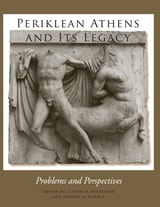
Periklean Athens and Its Legacy
Problems and PerspectivesEdited by Judith M. Barringer and Jeffrey M. Hurwit
University of Texas Press, 2005
The late fifth century BC was the golden age of ancient Athens. Under the leadership of the renowned soldier-statesman Perikles, Athenians began rebuilding the Akropolis, where they created the still awe-inspiring Parthenon. Athenians also reached a zenith of artistic achievement in sculpture, vase painting, and architecture, which provided continuing inspiration for many succeeding generations.
The specially commissioned essays in this volume offer a fresh, innovative panorama of the art, architecture, history, culture, and influence of Periklean Athens. Written by leading experts in the field, the articles cover a wide range of topics, including:
- An evaluation of Perikles' military leadership during the early stages of the Peloponnesian War.
- Iconographical and iconological studies of vase paintings, wall paintings, and sculpture.
- Explorations of the Parthenon and other monuments of the Athenian Akropolis.
- The legacy of Periklean Athens and its influence upon later art.
- Assessments of the modern reception of the Akropolis.
As a whole, this collection of essays proves that even a well-explored field such as Periklean Athens can yield new treasures when mined by perceptive and seasoned investigators.
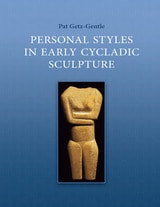
Personal Styles in Early Cycladic Sculpture
Pat Getz-Gentle; With a Chapter by Jack de Vries
University of Wisconsin Press, 2001
Physics Or Natural Hearing
Glen Aristotle
St. Augustine's Press, 2005
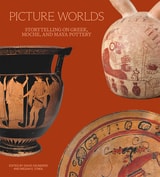
Picture Worlds
Storytelling on Greek, Moche, and Maya PotteryDavid Saunders
J. Paul Getty Trust, The, 2024
Satyrs and sphinxes, violent legumes, and a dancing maize deity figure in the stories painted on the pottery produced by the ancient Greek, Moche, and Maya cultures, respectively. Picture Worlds is the first book to examine the elaborately decorated terracotta vessels of these three distinct civilizations. Although the cultures were separated by space and time, they all employed pottery as a way to tell stories, explain the world, and illustrate core myths and beliefs. Each of these painted pots is a picture world. But why did these communities reach for pottery as a primary method of visual communication? How were the vessels produced and used? In this book, experts offer introductions to the civilizations, exploring these foundational questions and examining the painted imagery. Readers will be rewarded with a better understanding of each of these ancient societies, fascinating insights into their cultural commonalities and differences, and fresh perspectives on image making and storytelling, practices that remain vibrant to this day.
This volume is published to accompany an exhibition on view at the J. Paul Getty Museum at the Getty Villa from April 10 to July 29, 2024, and at the Michael C. Carlos Museum at Emory University from September 14 to December 15, 2024.

Picturing Immigration
Photojournalistic Representation of Immigrants in Greek and Spanish PressAthanasia Batziou
Intellect Books, 2011

Place Names of Southwest Peloponnesus
Register and IndexesDemetrius J. Georgacas and William A. McDonald
University of Minnesota Press, 1969
Place Names of Southwest Peloponnesus was first published in 1969. Minnesota Archive Editions uses digital technology to make long-unavailable books once again accessible, and are published unaltered from the original University of Minnesota Press editions.
This work contains listings, in Greek, of nearly 10,000 place names collected in approximately 300 settlements of regions in Peloponnesus, the southern peninsula of Greece. In their introduction the authors point out that the present-day toponyms reflect historical and linguistic developments through the ages and thus provide important source material for scholarly studies. Inhabitants of the region whose language was ancient Greek, Koine Greek, Byzantine Greek, South Slavic, Frankish, Venetian, Albanian, Turkish, or Neo-Greek have all left discernible traces in the local place names. The book will be useful not only to specialists in onomastics and linguistics but also to historians, archaeologists, geographers, and other researchers in Greek and comparative studies.

Plant Foods of Greece
A Culinary Journey to the Neolithic and Bronze AgesSoultana Maria Valamoti
University of Alabama Press, 2023
2024 INAUGURAL MARY BEAUDRY BOOK AWARD FOR THE ARCHAEOLOGY OF FOOD
A synthesis of culinary practices of prehistoric Greece based on plant food ingredients
In Plant Foods of Greece, Greek archaeologist Soultana Maria Valamoti takes readers on a culinary journey, reconstructing the plant foods and culinary practices of Neolithic and Bronze Age Greece. For more than thirty years, she has been analyzing a large body of archaeobotanical data that was retrieved from nearly twenty sites in mainland Greece and the Greek islands, with an additional analysis of other sites as referenced by published colleagues. Plant foods were the main ingredients of daily meals in prehistoric Greece and most likely of special dishes prepared for feasts and rituals.
Valamoti’s approach allows an exploration of culinary variability through time. The thousands of charred seeds identified from occupation debris correspond to minuscule time capsules. She is able to document changes from the cooking of the first farmers to the sophisticated cuisines of the elites who inhabited palaces in the first cities of Europe in the south of Greece during the Late Bronze Age. Along the way, she explains the complex processes for the addition of new ingredients (such as millet and olives), condiments, sweet tastes, and complex recipes. Valamoti also addresses regional variability and diversity as well as detailing experimentation and research using occasional input from ancient written sources.
Comprehensive and synthetic coverage encompasses bread/cereals, pulses, oils, fruit and nuts, fermented brews, healing foods, cooking, and identity. In addition, Valamoti offers insight into engaging in public archaeology and provides recipes that incorporate ancient plant ingredients and connect prehistory to the present in a critical way. A definitive source for a range of food scientists and scholars, it will also appeal to foodies.
Playing the Other
Gender and Society in Classical Greek LiteratureFroma I. Zeitlin
University of Chicago Press, 1995
Zeitlin demonstrates the indispensable workings of gender as a major factor in Greek social, religious, and cultural practices and in more abstract ideas about nature and culture, public and private, citizen and outsider, self and other, and mortal and immortal. Focusing on the prominence of female figures in these male authored texts, she enlarges our perspective on critical components of political order and civic identity by including issues of sexuality, the body, modes of male and female maturation, and speculations about parentage, kinship, and reproductive strategies. Along with considerations of genre, poetics, and theatrical mimesis, she points to the powerful mythmaking capacities of Greek culture for creating memorable paradigms and dramatic scenarios that far exceed simple notions of male and female opposition and predictable enforcement of social norms. Consisting of both new and revised essays, Playing the Other is a wide-ranging account of a central category of Greek literature by a scholar who pioneered an approach to classics through the perspective of gender.
Poetics
Aristotle
University of Michigan Press, 1967
In his masterful translation and accompanying notes, Dr. Else makes a special effort to achieve maximum clarity, while remaining faithful to the original. His constant aim is to provide -- for all readers -- a "way in" to Aristotle's processes of thinking about literature.
This important modern translation is made form the 1965 Oxford Classical Text edition of the Poetics by Rudolf Kassel and thus reflects the latest and most authoritative textual scholarship. Not only the translation but the valuable fund of commentary will delight anyone -- literary critic, philosopher, classicist, or general reader -- who want to learn what Aristotle really said.
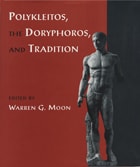
Polykleitos, the Doryphoros, and Tradition
Warren G. Moon
University of Wisconsin Press, 1995
Polykleitos of Argos, who flourished between 450 and 420 BC, is one of the most celebrated sculptors of classical Greece. A philosopher and theoretician as well as a sculptor, Polykleitos sought to capture in his statues the ideal proportions of the human body, and his work was frequently copied by later artists. This richly illustrated volume of superb essays by art historians, classical scholars, and archaeologists discusses Polykleitos’ life and influence, his intellectual and cultural milieu, and his best-known work, the Doryphoros, or “Spearbearer.”
Polykleitos, the Doryphoros, and Tradition displays an impressive range of approaches, beginning with commentary on the artistic and philosophical antecedents that influenced Polykleitos’ own aesthetic, as well as the role of contemporary Greek anatomical knowledge in his representation of the human form. Many of the essays offer extended analysis and detailed illustration of his surviving sculptures, later copies of his work, and reflections of his style in sculpture, paintings, coins, and other art in Greece, Italy, and Asia Minor. Several essays offer an extended discussion of Polykleitos’ original bronze Doryphoros, its pose, its relation to other spearbearer sculptures, and the fine Roman marble copy of it now at the Minneapolis Institute of Arts.
The volume as a whole is a visually and intellectually appealing work that will interest not only specialists but general readers interested in the art of ancient Greece. This volume resulted from a 1989 symposium held at the University of Wisconsin–Madison and the Minneapolis Institute of Arts.
Popular Tyranny
Sovereignty and Its Discontents in Ancient GreeceEdited by Kathryn A. Morgan
University of Texas Press, 2003
The nature of authority and rulership was a central concern in ancient Greece, where the figure of the king or tyrant and the sovereignty associated with him remained a powerful focus of political and philosophical debate even as Classical Athens developed the world's first democracy. This collection of essays examines the extraordinary role that the concept of tyranny played in the cultural and political imagination of Archaic and Classical Greece through the interdisciplinary perspectives provided by internationally known archaeologists, literary critics, and historians.
The book ranges historically from the Bronze and early Iron Age to the political theorists and commentators of the middle of the fourth century B.C. and generically across tragedy, comedy, historiography, and philosophy. While offering individual and sometimes differing perspectives, the essays tackle several common themes: the construction of authority and of constitutional models, the importance of religion and ritual, the crucial role of wealth, and the autonomy of the individual. Moreover, the essays with an Athenian focus shed new light on the vexed question of whether it was possible for Athenians to think of themselves as tyrannical in any way. As a whole, the collection presents a nuanced survey of how competing ideologies and desires, operating through the complex associations of the image of tyranny, struggled for predominance in ancient cities and their citizens.
Present Shock in Late Fifth-Century Greece
Francis M. Dunn
University of Michigan Press, 2010
Francis M. Dunn's Present Shock in Late Fifth-Century Greece examines the widespread social and cultural disorientation experienced by Athenians in a period that witnessed the revolution of 411 B.C.E. and the military misadventures in 413 and 404---a disturbance as powerful as that described in Alvin Toffler's Future Shock. The late fifth century was a time of vast cultural and intellectual change, ultimately leading to a shift away from Athenians' traditional tendency to seek authority in the past toward a greater reliance on the authority of the present. At the same time, Dunn argues, writers and thinkers not only registered the shock but explored ways to adjust to living with this new sense of uncertainty. Using literary case studies from this period, Dunn shows how narrative techniques changed to focus on depicting a world in which events were no longer wholly predetermined by the past, impressing upon readers the rewards and challenges of struggling to find their own way forward.
Although Present Shock in Late Fifth-Century Greece concentrates upon the late fifth century, this book's interdisciplinary approach will be of broad interest to scholars and students of ancient Greece, as well as anyone fascinated by the remarkably flexible human understanding of time.
Francis M. Dunn is Professor of Classics at the University of California, Santa Barbara. He is author of Tragedy's End: Closure and Innovation in Euripidean Drama (Oxford, 1996), and coeditor of Beginnings in Classical Literature (Cambridge, 1992) and Classical Closure: Reading the End in Greek and Latin Literature (Princeton, 1997).
"In this fascinating study, Francis Dunn argues that in late fifth-century Athens, life became focused on the present---that moving instant between past and future. Time itself changed: new clocks and calendars were developed, and narratives were full of suspense, accident, and uncertainty about things to come. Suddenly, future shock was now."
---David Konstan, John Rowe Workman Distinguished Professor of Classics and the Humanistic Tradition and Professor of Comparative Literature, Brown University
"In this fascinating work, Dunn examines the ways in which the Greeks constructed time and then shows how these can shed new light on various philosophical, dramatic, historical, scientific and rhetorical texts of the late fifth century. An original and most interesting study."
---Michael Gagarin, James R. Dougherty, Jr., Centennial Professor of Classics, the University of Texas at Austin
"Interesting, clear, and compelling, Present Shock in Late Fifth-Century Greece analyzes attitudes toward time in ancient Greece, focusing in particular on what Dunn terms 'present shock,' in which rapid cultural change undermined the authority of the past and submerged individuals in a disorienting present in late fifth-century Athens. Dunn offers smart and lucid analyses of a variety of complex texts, including pre-Socratic and sophistic philosophy, Euripidean tragedy, Thucydides, and medical texts, making an important contribution to discussions about classical Athenian thought that will be widely read and cited by scholars working on Greek cultural history and historiography."
---Victoria Wohl, Associate Professor, Department of Classics, University of Toronto
Prostitutes and Courtesans in the Ancient World
Edited by Christopher A. Faraone and Laura K. McClure
University of Wisconsin Press, 2006
Prostitutes and Courtesans in the Ancient World explores the implications of sex-for-pay across a broad span of time, from ancient Mesopotamia to the early Christian period. In ancient times, although they were socially marginal, prostitutes connected with almost every aspect of daily life. They sat in brothels and walked the streets; they paid taxes and set up dedications in religious sanctuaries; they appeared as characters—sometimes admirable, sometimes despicable—on the comic stage and in the law courts; they lived lavishly, consorting with famous poets and politicians; and they participated in otherwise all-male banquets and drinking parties, where they aroused jealousy among their anxious lovers.
The chapters in this volume examine a wide variety of genres and sources, from legal and religious tracts to the genres of lyric poetry, love elegy, and comic drama to the graffiti scrawled on the walls of ancient Pompeii. These essays reflect the variety and vitality of the debates engendered by the last three decades of research by confronting the ambiguous terms for prostitution in ancient languages, the difficulty of distinguishing the prostitute from the woman who is merely promiscuous or adulterous, the question of whether sacred or temple prostitution actually existed in the ancient Near East and Greece, and the political and social implications of literary representations of prostitutes and courtesans.
Public Spending and Democracy in Classical Athens
By David M. Pritchard
University of Texas Press, 2015
In his On the Glory of Athens, Plutarch complained that the Athenian people spent more on the production of dramatic festivals and “the misfortunes of Medeas and Electras than they did on maintaining their empire and fighting for their liberty against the Persians.” This view of the Athenians’ misplaced priorities became orthodoxy with the publication of August Böckh’s 1817 book Die Staatshaushaltung der Athener [The Public Economy of Athens], which criticized the classical Athenian dēmos for spending more on festivals than on wars and for levying unjust taxes to pay for their bloated government. But were the Athenians’ priorities really as misplaced as ancient and modern historians believed?
Drawing on lines of evidence not available in Böckh’s time, Public Spending and Democracy in Classical Athens calculates the real costs of religion, politics, and war to settle the long-standing debate about what the ancient Athenians valued most highly. David M. Pritchard explains that, in Athenian democracy, voters had full control over public spending. When they voted for a bill, they always knew its cost and how much they normally spent on such bills. Therefore, the sums they chose to spend on festivals, politics, and the armed forces reflected the order of the priorities that they had set for their state. By calculating these sums, Pritchard convincingly demonstrates that it was not religion or politics but war that was the overriding priority of the Athenian people.