Results by title
228 books match the query 'Guidebooks' and 5 start with p
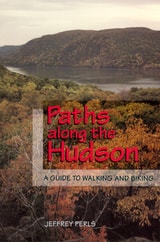
Paths Along The Hudson
A Guide to Walking and BikingPerls, Jeffrey
Rutgers University Press, 1999
Whether you are an ardent hiker or prefer to enjoy the great outdoors from your living-room armchair, Jeffrey Perls has written the essential guidebook on one of the most majestic natural areas of the eastern United States-the Hudson River.
From the rugged topography of the Hudson Highlands Gorge to the crowded towers of Manhattan, the Hudson has been an inspiration for poets, writers, artists, and countless others who have enjoyed the many wonders of the river. The area surrounding the Hudson abounds in history. It’s played a pivotal part in our country's development, from its strategic role in the American Revolution to its heritage as the nation’s primary entry point for immigrants to this country. The river also supports an incredibly rich diversity of flora and fauna, from the bald eagle to the short-nosed sturgeon.
Perls brings together the culture, history, nature, and recreational activities along the Hudson River in one convenient guide book. He not only maps out walks and bike trails, both urban and rural, but also introduces readers to the landscape, geology, history, and culture of the Hudson Valley region. Perls provides a practical and geographically comprehensive guide to exploring the area on foot and by bike. The trail routes bring readers as close to the river as possible and guides them to rewarding vistas, nature preserves, and historic landmarks. It’s a useful guide for visitors to the Hudson region and local residents as it acquaints them to the natural treasures to be found in their own backyards.
Phila Magazine'S Ultimate Restaurant Gde
Restaurant GuideApril White
Temple University Press, 2004
What's on the menu:
* Profiles of Philadelphia's most influential chefs and restaurant owners, including Le Bec-Fin's Georges Perrier, and restaurant mogul Stephen Starr.
* A behind-the-scenes look at the Philadelphia food purveyors, who are responsible for some of the nation's hottest food trends—from La Colombe coffee to Metropolitan Bakery's artisanal breads to Jubilee Chocolates.
* Reviews of more than 230 of the best restaurants in the Philadelphia region, from Center City mainstays Susanna Foo and Morimoto to suburban destinations Alison at Blue Bell and Carmine's Café.
* Easy-to-use index of restaurants by cuisine and neighborhood.

Pizza City
The Ultimate Guide to New York's Favorite FoodGenovese, Peter
Rutgers University Press, 2013
In this funny, fascinating book, Genovese explores the bloggers who write about New York pizza, the obsessive city dwellers who collect and analyze the delivery boxes, Mark Bello’s school where students spend a day making pies from scratch, and Scott Wiener’s pizza bus tours.
Along the way, readers learn the history of legendary Totonno’s on Coney Island (Zagat’s number-one pizzeria for 2012), along with behind-the-scenes stories about John’s on Bleecker Street, Joe’s on Carmine, Lombardi’s, Paulie Gee’s, Motorino, and more than a dozen other favorite spots and their owners. Throughout these profiles, Genovese presents a brief history of how pizza came to the city in 1905 and developed into a major attraction in Little Italy, a neighborhood that became a training ground for many of the city’s best-loved pizzerias. Enjoyable facts and figures abound. Did you know that Americans put 250 million pounds of pepperoni on their pies every year? Or that Domino’s has more outlets per capita in Iceland than in any other country?
Beyond the stories and tidbits, Genovese provides detailed, borough-by-borough reviews of 250 pizzerias, from simple “slice shops” with scant atmosphere to gourmet pizzerias, including shops that use organic ingredients and experiment with new variations of crusts and toppings. Complemented by hundreds of current and never-before-seen archival photos, the book gives the humble slice its proper due and will leave readers overwhelmed by a sudden desire for New York pizza.
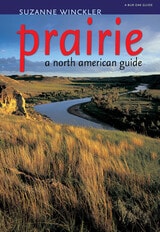
Prairie
A North American GuideSuzanne Winckler
University of Iowa Press, 2004
North America’s grasslands once stretched from southern Canada to northern Mexico, and across this considerable space different prairie types evolved to express the sum of their particular longitude and latitude, soils, landforms, and aspect. This prairie guide is your roadmap to what remains of this varied and majestic landscape.
Suzanne Winckler’s goal is to encourage travelers to get off the highways, out of their cars, and onto North America’s last remaining prairies. She makes this adventure as easy as possible by providing exact driving directions to the more than three hundred sites in her guide. She also includes information about size, management, phone numbers, and outstanding characteristics for every prairie site and provides readers with a thorough list of recommended readings and Web sites.
The scope of the guide is impressive. It encompasses prairies found within national grasslands, parks, forests, recreation areas, wildlife refuges, state parks, preserves, and natural areas and on numerous working ranches in Saskatchewan and Manitoba, the Dakotas, Minnesota, Illinois, Iowa, Kansas, Missouri, Nebraska, Oklahoma, and Texas. A series of maps locate the prairies both geographically and by name.
From “the largest restoration project within the historic range of tallgrass prairie” at Neal Smith National Wildlife Refuge in Iowa to Big Bend National Park in Texas, where “the Chisos Mountains, completely surrounded by the park, rise up majestically from the Chihuahuan Desert floor,” Winckler celebrates the dramatic expanses of untouched prairie, the crown jewels of prairie reconstruction and restoration, and the neglected remnants that deserve to be treasured.
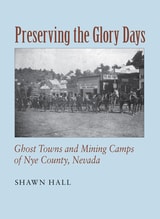
Preserving The Glory Days
Ghost Towns And Mining Camps Of Nye County, NevadaShawn Hall
University of Nevada Press, 1999
Nye County is Nevada’s largest and least populated county, but it is also the site of many of the state’s most colorful ghost towns and mining camps. The county’s economy throughout its history has been largely based on its mines--first, exploiting veins of gold and silver, and more recently deposits of raw materials for modern industry, such as molybdenum and barite. It was here that famous boomtowns like Tonopah and Rhyolite sprang up after the discovery of nearby lodes brought in rushes of prospectors and the merchants who supported them. But the county includes many smaller, shorter-lived camps and numerous abandoned stagecoach and railroad stops associated with defunct mining operations.This book offers a lively, informative record of Nevada’s isolated interior. Hall first published a guide to Nye County’s ghost towns in 1981. Since then, he has continued his research into the county’s past and has uncovered much new information and corrected some errors. To prepare this revised and greatly expanded edition, he revisited all 175 sites recorded earlier and has added more than 20 previously unlisted sites.