Results by title
123 books match the query 'Human Sexuality' and 3 start with p
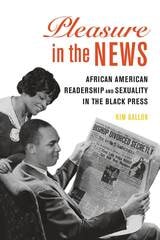
Pleasure in the News
African American Readership and Sexuality in the Black PressKim T. Gallon
University of Illinois Press, 2020
Gallon discusses how journalists and editors created black sexual publics that offered everyday African Americans opportunities to discuss sexual topics that exposed class and gender tensions. While black churches and black schools often encouraged sexual restraint, the black press printed stories that complicated notions about respectability. Sensational coverage also expanded African American women’s sexual consciousness and demonstrated the tenuous position of female impersonators, black gay men, and black lesbians in early twentieth African American urban communities.
Informative and empowering, Pleasure in the News redefines the significance of the black press in African American history and advancement while shedding light on the important cultural and social role that sexuality played in the power of the black press.

Pleasures Taken
Performances of Sexuality and Loss in Victorian PhotographsCarol Mavor
Duke University Press, 1995
Mavor’s original approach to these photographs emphatically sees sexuality where it has been previously rendered invisible. She insists that the sexuality of the girls in Carroll’s pictures is not only present, but deserves recognition, respect, and scrutiny. Similarly, she sees in Cameron’s photographs of sensual Madonnas surprising visions of motherhood that outstrip both Victorian and contemporary understandings of the maternal as untouchable and inviolate, without sexuality. Finally she shows how Hannah Cullwick, posing in various masquerades for her secret paramour, emerges as a subject with desires rather than simply a victim of her upper-class partner. Even when confronting the darker areas of these photographs, Mavor perseveres in her insistence on the pleasures taken—by the viewer, the photographer, and often by the model herself—in the act of imagining these sexualities. Inspired by Roland Barthes, and drawing on other theorists such as Julia Kristeva and Luce Irigaray, Mavor creates a text that is at once interdisciplinary, personal, and profoundly pleasurable.

Puta Life
Seeing Latinas, Working SexJuana María Rodríguez
Duke University Press, 2023