Results by title
85 books match the query 'Humanities' and 10 start with p
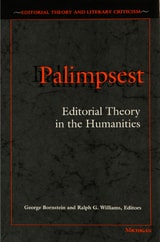
Palimpsest
Editorial Theory in the HumanitiesGeorge Bornstein and Ralph G. Williams, Editors
University of Michigan Press, 1993

Past Imperfect
Essays on History, Libraries, and the HumanitiesLawrence W. Towner
University of Chicago Press, 1993
Towner's essays and talks cover a broad range of topics of continuing relevance to scholarship and the humanities. His writings gathered in Past Imperfect are concerned with such issues as the role of independent research libraries and the politics of funding. A section of historical essays on the common people of New England reveal his concern with neglected fields of history, a theme that guided his career as a librarian. Spanning the range of his experience and expertise, this volume expresses Towner's coherent vision of the place of humanities, libraries, and scholarship in American life.
Lawrence W. Towner (1921-92) taught history at M.I.T., the College of William and Mary, and Northwestern University. In 1962 he was appointed librarian of the Newberry Library and directed the library for the next twenty-four years.
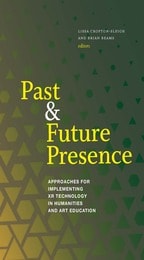
Past and Future Presence
Approaches for Implementing XR Technology in Humanities and Art EducationLissa Crofton-Sleigh and Brian Beams, editors
Amherst College Press, 2024
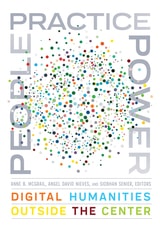
People, Practice, Power
Digital Humanities outside the CenterAnne B. McGrail
University of Minnesota Press, 2021
An illuminating volume of critical essays charting the diverse territory of digital humanities scholarship
The digital humanities have traditionally been considered to be the domain of only a small number of prominent and well-funded institutions. However, through a diverse range of critical essays, this volume serves to challenge and enlarge existing notions of how digital humanities research is being undertaken while also serving as a kind of alternative guide for how it can thrive within a wide variety of institutional spaces.
Focusing on the complex infrastructure that undergirds the field of digital humanities, People, Practice, Power examines the various economic, social, and political factors that shape such academic endeavors. The multitude of perspectives comprising this collection offers both a much-needed critique of the existing structures for digital scholarship and the means to generate broader representation within the field.
This collection provides a vital contribution to the realm of digital scholarly research and pedagogy in acknowledging the role that small liberal arts colleges, community colleges, historically black colleges and universities, and other underresourced institutions play in its advancement. Gathering together a range of voices both established and emergent, People, Practice, Power offers practitioners a self-reflexive examination of the current conditions under which the digital humanities are evolving, while helping to open up new sustainable pathways for its future.
Contributors: Matthew Applegate, Molloy College; Taylor Arnold, U of Richmond; Eduard Arriaga, U of Indianapolis; Lydia Bello, Seattle U; Kathi Inman Berens, Portland State U; Christina Boyles, Michigan State U; Laura R. Braunstein, Dartmouth College; Abby R. Broughton; Maria Sachiko Cecire, Bard College; Brennan Collins, Georgia State U; Kelsey Corlett-Rivera, U of Maryland; Brittany de Gail, U of Maryland; Madelynn Dickerson, UC Irvine Libraries; Nathan H. Dize, Vanderbilt U; Quinn Dombrowski, Stanford U; Ashley Sanders Garcia, UCLA; Laura Gerlitz; Erin Rose Glass; Kaitlyn Grant; Margaret Hogarth, Claremont Colleges; Maryse Ndilu Kiese, U of Alberta; Pamella R. Lach, San Diego State U; James Malazita, Rensselaer Polytechnic Institute; Susan Merriam, Bard College; Chelsea Miya, U of Alberta; Jamila Moore Pewu, California State U, Fullerton; Urszula Pawlicka-Deger, Aalto U, Finland; Jessica Pressman, San Diego State U; Jana Remy, Chapman U; Roopika Risam, Salem State U; Elizabeth Rodrigues, Grinnell College; Dylan Ruediger, American Historical Association; Rachel Schnepper, Wesleyan U; Anelise Hanson Shrout, Bates College; Margaret Simon, North Carolina State U; Mengchi Sun, U of Alberta; Lauren Tilton, U of Richmond; Michelle R. Warren, Dartmouth College.
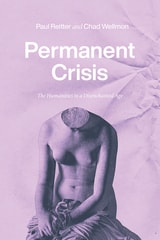
Permanent Crisis
The Humanities in a Disenchanted AgePaul Reitter and Chad Wellmon
University of Chicago Press, 2021
Leads scholars and anyone who cares about the humanities into more effectively analyzing the fate of the humanities and digging into the very idea of the humanities as a way to find meaning and coherence in the world.
The humanities, considered by many as irrelevant for modern careers and hopelessly devoid of funding, seem to be in a perpetual state of crisis, at the mercy of modernizing and technological forces that are driving universities towards academic pursuits that pull in grant money and direct students to lucrative careers. But as Paul Reitter and Chad Wellmon show, this crisis isn’t new—in fact, it’s as old as the humanities themselves.
Today’s humanities scholars experience and react to basic pressures in ways that are strikingly similar to their nineteenth-century German counterparts. The humanities came into their own as scholars framed their work as a unique resource for resolving crises of meaning and value that threatened other cultural or social goods. The self-understanding of the modern humanities didn’t merely take shape in response to a perceived crisis; it also made crisis a core part of its project. Through this critical, historical perspective, Permanent Crisis can take scholars and anyone who cares about the humanities beyond the usual scolding, exhorting, and hand-wringing into clearer, more effective thinking about the fate of the humanities. Building on ideas from Max Weber and Friedrich Nietzsche to Helen Small and Danielle Allen, Reitter and Wellmon dig into the very idea of the humanities as a way to find meaning and coherence in the world.
Professing Criticism
Essays on the Organization of Literary StudyJohn Guillory
University of Chicago Press, 2022
As the humanities in higher education struggle with a labor crisis and with declining enrollments, the travails of literary study are especially profound. No scholar has analyzed the discipline’s contradictions as authoritatively as John Guillory. In this much-anticipated new book, Guillory shows how the study of literature has been organized, both historically and in the modern era, both before and after its professionalization. The traces of this volatile history, he reveals, have solidified into permanent features of the university. Literary study continues to be troubled by the relation between discipline and profession, both in its ambivalence about the literary object and in its anxious embrace of a professionalism that betrays the discipline’s relation to its amateur precursor: criticism.
In a series of timely essays, Professing Criticism offers an incisive explanation for the perennial churn in literary study, the constant revolutionizing of its methods and objects, and the permanent crisis of its professional identification. It closes with a robust outline of five key rationales for literary study, offering a credible account of the aims of the discipline and a reminder to the professoriate of what they already do, and often do well.
Professional Academic Writing in the Humanities and Social Sciences
Susan Peck MacDonald
Southern Illinois University Press, 1994
In Professional Academic Writing in the Humanities and Social Sciences, Susan Peck MacDonald tackles important and often controversial contemporary questions regarding the rhetoric of inquiry, the social construction of knowledge, and the professionalization of the academy. MacDonald argues that the academy has devoted more effort to analyzing theory and method than to analyzing its own texts. Professional texts need further attention because they not only create but are also shaped by the knowledge that is special to each discipline. Her assumption is that knowledge-making is the distinctive activity of the academy at the professional level; for that reason, it is important to examine differences in the ways the professional texts of subdisciplinary communities focus on and consolidate knowledge within their fields.
Throughout the book, MacDonald stresses her conviction that academics need to do a better job of explaining their text-making axioms, clarifying their expectations of students at all levels, and monitoring their own professional practices. MacDonald’s proposals for both textual and sentence-level analysis will help academic professionals better understand how they might improve communication within their professional communities and with their students.
Professions
Conversations on the Future of Literary and Cultural StudiesEdited by Donald E. Hall
University of Illinois Press, 2001
This volume bares professional concerns, relationships, ambitions, and insecurities about working in academe. Professions provides hard-to-get insider information for students contemplating an academic career. It also challenges professional scholars to retrieve the intellectual curiosity that drew them to scholarship in the first place while demonstrating how disagreement on controversial issues can be conducted with respect, good humor, and an open mind.
Professions features:
Jane Tompkins and Gerald Graff
John McGowan and Regenia Gagnier
James Phelan and James Kincaid
Marjorie Perloff and Robert von Hallberg
Judith Jackson Fossett and Kevin Gaines
Dennis W. Allen and Judith Roof
Niko Pfund, Gordon Hutner, and Martha Banta
Geoffrey Galt Harpham
Donald E. Hall and Susan S. Lanser
J. Hillis Miller, Herbert Lindenberger, Sandra Gilbert, Bonnie Zimmerman, Nellie Y. McKay, and Elaine Marks
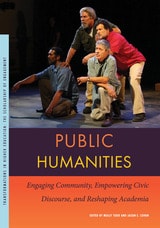
Public Humanities
Engaging Community, Empowering Civic Discourse, and Reshaping AcademiaMolly Todd
Michigan State University Press, 2025
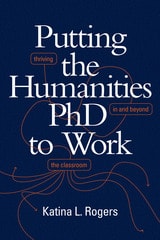
Putting the Humanities PhD to Work
Thriving in and beyond the ClassroomKatina L. Rogers
Duke University Press, 2020