Results by title
192 books match the query 'Humor' and 6 start with p
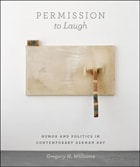
Permission to Laugh
Humor and Politics in Contemporary German ArtGregory H. Williams
University of Chicago Press, 2012
Permission to Laugh explores the work of three generations of German artists who, beginning in the 1960s, turned to jokes and wit in an effort to confront complex questions regarding German politics and history. Gregory H. Williams highlights six of them—Martin Kippenberger, Isa Genzken, Rosemarie Trockel, Albert Oehlen, Georg Herold, and Werner Büttner—who came of age in the mid-1970s in the art scenes of West Berlin, Cologne, and Hamburg. Williams argues that each employed a distinctive brand of humor that responded to the period of political apathy that followed a decade of intense political ferment in West Germany.
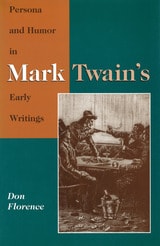
Persona and Humor in Mark Twain's Early Writings
Don Florence
University of Missouri Press, 1995
In Persona and Humor in Mark Twain's Early Writings, Don Florence explains that Samuel Clemens did more than use the borrowed name of Mark Twain to sign his writings. He also developed a separate identity, or persona, becoming "a literary personality in his own right."
Challenging mainstream Twain criticism on many fronts, Florence focuses exclusively on Twain's early writings. He demonstrates how Twain evolved in his early narratives into the "Mark Twain" we now recognize. Florence maintains that this process was evolutionary: Although Twain might have been dependent on Clemens for the initial experiences, they become Twain's experiences, necessary for his development as a persona. Traditionally, critics of Twain have been preoccupied with dualities, but Florence sees this emphasis upon polarities as an oversimplification. He argues that much of Twain's humor strives to shape more and more of the world, giving Twain multiple narrative voices and letting him be inclusive, not exclusive.
Finally, this study asserts that there is more continuity to Mark Twain's career than has been generally recognized. Many Twain scholars have argued that Twain's later writings are radically different from his earlier writings because of their emphasis upon illusion and dream. Florence argues that the preoccupation with illusion and fantasy is scarcely new. Whether Twain's mood is exuberant or dark, he emphasizes subjectivity over objectivity, the dominance of fantasy, the creative powers of humor, and his ability as persona to determine what we consider "reality." Florence contends that Twain's early writings show Mark Twain gradually evolving into a masterfully comic persona.
Jargon-free and eloquently written, Persona and Humor in Mark Twain's Early Writings provides a fascinating look at Mark Twain's developing genius and will be a welcome addition to Twain literature.
Philip Guston's Poor Richard
Debra Bricker Balken
University of Chicago Press, 2001
A visual narrative of Nixon's life, the drawings trace Nixon from his childhood, through his ascent to power, to his years in the White House. They incorporate Henry Kissinger (a pair of glasses), Spiro Agnew (a cone-head), and John Mitchell (a dolt smoking a pipe). They depict Nixon and his cohorts in China, plotting strategy in Key Biscayne, and shamelessly pandering to African Americans, hippies, and elderly tourists.
As Balken discusses in her accompanying essay, these drawings also reflect a dramatic transformation in Guston's work. In response to social unrest and the Vietnam War, he began to question the viability of a private art given to self-expression. His betrayal of aesthetic abstraction in favor of imagery imbued with personal and political meaning largely engendered the renewal of figuration in painting in America in the 1970s. These drawings not only represent one of the few instances of an artist in the late twentieth century engaging caricature in his work, they are also a witty, acerbic take on a corrupt figure and a scandalous political regime.
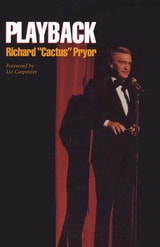
Playback
By Richard "Cactus" Pryor
University of Texas Press, 1995
From the town that brought you Molly Ivins, Liz Carpenter, John Henry Faulk, and Greater Tuna, here's Cactus Pryor. For decades, Cactus' wit and wisdom have delighted radio listeners, as well as the many social, political, business, and philanthropic groups throughout the United States whose functions have been enlivened by this accomplished master of ceremonies and after-dinner speaker.
Now the University of Texas Press takes great pleasure in bringing you this quintessential Texas humorist. Playback gathers over forty of Cactus Pryor's favorite radio essays, translating "ear words into eye words," as he puts it. In these pieces, Cactus paints vivid word pictures of people and places, offering readers the same "you are there" immediacy that makes his radio broadcasts so popular. In them, you'll take a sentimental journey with Cactus and his wife to the Maui grave site of Charles Lindbergh—discover how legendary University of Texas football coach Darrell Royal faced the agony of defeat with humor—meet unsung heroes like the 104-year-old who's teaching himself to read and write—get acquainted with the notable folks Cactus has known, including Lady Bird Johnson, John Wayne, Jane Fonda, and James Michener—and, of course, share Cactus' love of family, friends, and the Texas coast.
As Bailey White's essays on National Public Radio have introduced listeners across the country to the lifeways of the Deep South, so Cactus Pryor offers a humorous, revealing look at how we Texans view ourselves, our neighbors, and the world. Read Playback now, and see what you've been missing.
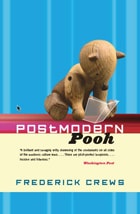
Postmodern Pooh
Frederick Crews
Northwestern University Press, 2006
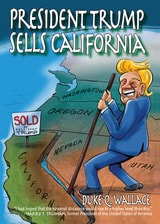
President Trump Sells California
Duke Q. Wallace
Parkhurst Brothers, Inc., 2016
A short political satire in which a President Trump nationalizes the Girl Scouts, privatizes the Supreme Court, and sells the state of California—his way of paying off the Federal debt. Nine brief chapters, each one resolving a real national issue with an excess of creativity and zeal. What happens when the zeal is spent?