83 books match the query 'Inclusive Education' and 3 start with p
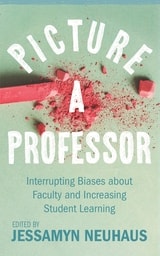
cover of Picture a Professor: Interrupting Biases about Faculty and Increasing Student Learning

Picture a Professor

Interrupting Biases about Faculty and Increasing Student Learning

Jessamyn Neuhaus

West Virginia University Press, 2022

“Does a service to all who would prefer a different path, offering realistic strategies to engage students in undermining scholarly stereotypes.”—Science

Picture a Professor is a collection of evidence-based insights and intersectional teaching strategies crafted by and for college instructors. It aims to inspire transformative student learning while challenging stereotypes about what a professor looks like.

Representing a variety of scholarly disciplines, the volume’s contributing authors offer practical advice for effectively navigating student preconceptions about embodied identity and academic expertise. Each contributor recognizes the pervasiveness of racialized, gendered, and other biases about professors and recommends specific ways to respond to and interrupt such preconceptions—helping students, teachers, and others reenvision what we think of when we picture a professor.

Educators at every stage of their career will find affirming acknowledgment of the ways systemic inequities affect college teaching conditions, as well as actionable advice about facilitating student learning with innovative course design, classroom activities, assessment techniques, and more.

[more]
cover of Poison in the Ivy: Race Relations and the Reproduction of Inequality on Elite College Campuses

Poison in the Ivy

Race Relations and the Reproduction of Inequality on Elite College Campuses

Byrd, W. Carson

Rutgers University Press, 2017

The world of elite campuses is one of rarified social circles, as well as prestigious educational opportunities. W. Carson Byrd studied twenty-eight of the most selective colleges and universities in the United States to see whether elite students’ social interactions with each other might influence their racial beliefs in a positive way, since many of these graduates will eventually hold leadership positions in society. He found that students at these universities believed in the success of the ‘best and the brightest,’ leading them to situate differences in race and status around issues of merit and individual effort.

Poison in the Ivy challenges popular beliefs about the importance of cross-racial interactions as an antidote to racism in the increasingly diverse United States. He shows that it is the context and framing of such interactions on college campuses that plays an important role in shaping students’ beliefs about race and inequality in everyday life for the future political and professional leaders of the nation. Poison in the Ivy is an eye-opening look at race on elite college campuses, and offers lessons for anyone involved in modern American higher education.  
 
[more]
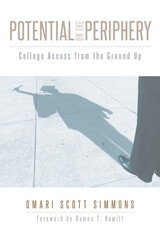
cover of Potential on the Periphery: College Access from the Ground Up

Potential on the Periphery

College Access from the Ground Up

Omari Scott Simmons

Rutgers University Press, 2019

Even high-performing students sometimes need assistance to transform their high school achievement into a higher education outcome that matches their potential, especially when those students come from vulnerable backgrounds. Without intervention, many of these students, lost in the transition between secondary school and higher education, would not attend selective colleges that provide greater opportunities. Potential on the Periphery profiles the Simmons Memorial Foundation (SMF), a grassroots non-profit organization co-founded by author Omari Scott Simmons, that promotes college access for students in North Carolina and Delaware. Simmons discusses how the organization has helped students secure admission and succeed in college, using this example to contextualize the broader realm of existing education practice, academic theory, and public policy. Using data gleaned from interviews with past student participants in the programs run by the SMF, Simmons illuminates the underlying factors thwarting student achievement, such as inadequate information about college options, limited opportunities for social capital acquisition, financial pressures, self-doubt, and political weakness. Simmons then identifies policy solutions and pragmatic strategies that college access organizations can adopt to address these factors. 
[more]