Results by title
338 books match the query 'Indigenous Studies' and 15 start with p
Pachamama Politics
Campesino Water Defenders and the Anti-Mining Movement in Andean EcuadorTeresa A. Velásquez
University of Arizona Press, 2022
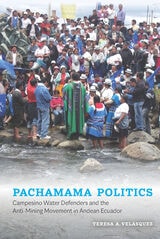
Pachamama Politics provides a rich ethnographic account of the tensions that follow from neoextractivism in the southern Ecuadorian Andes, where campesinos mobilized to defend their community-managed watershed from a proposed gold mine. Positioned as an activist-scholar, Teresa A. Velásquez takes the reader inside the movement—alongside marches, road blockades, and river and high-altitude wetlands—to expose the rifts between social movements and the “pink tide” government. When the promise of social change turns to state criminalization of water defenders, Velásquez argues that the contradictions of neoextractivism created the political conditions for campesinos to reconsider their relationship to indigeneity.
The book takes an intersectional approach to the study of anti-mining struggles and explains how campesino communities and their allies identified with and redeployed Indigenous cosmologies to defend their water as a life-sustaining entity. Pachamama Politics shows why progressive change requires a shift away from the extractive model of national development to a plurinational defense of community water systems and Indigenous peoples and their autonomy.
Painting Culture
The Making of an Aboriginal High ArtFred R. Myers
Duke University Press, 2002
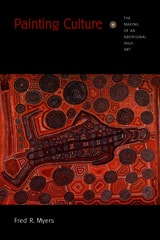
Painting Culture describes in detail the actual practice of painting, insisting that such a focus is necessary to engage directly with the role of the art in the lives of contemporary Aboriginals. The book includes a unique local art history, a study of the complete corpus of two painters over a two-year period. It also explores the awkward local issues around the valuation and sale of the acrylic paintings, traces the shifting approaches of the Australian government and key organizations such as the Aboriginal Arts Board to the promotion of the work, and describes the early and subsequent phases of the works’ inclusion in major Australian and international exhibitions. Myers provides an account of some of the events related to these exhibits, most notably the Asia Society’s 1988 "Dreamings" show in New York, which was so pivotal in bringing the work to North American notice. He also traces the approaches and concerns of dealers, ranging from semi-tourist outlets in Alice Springs to more prestigious venues in Sydney and Melbourne.
With its innovative approach to the transnational circulation of culture, this book will appeal to art historians, as well as those in cultural anthropology, cultural studies, museum studies, and performance studies.
People and Plants in Ancient Eastern North America
Edited by Paul E. Minnis
University of Arizona Press, 2003
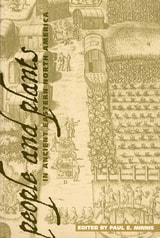
The most comprehensive overview in more than half a century about the interconnectedness of prehistoric Native Americans and their botanical world, this book and its forthcoming companion volume, People and Plants in Ancient Western North America, present the latest information on three major topics: the use of native plants, the history of crops and their uses, and how humans affected their environment. In this volume, expert scholars summarize the prehistoric ethnobotany of four regions: the Eastern Woodlands (W. Cowan, K. Gremillion, M. Scarry, B. Smith, and G. Wagner), Northeast (G. Crawford and D. Smith), Plains (M. Adair), and Caribbean (L. Newsom and D. Pearsall).
This volume contributes significantly to our understanding of the lives of prehistoric people as well as the forces that influenced their communities, their ingenuity, and their ecological impact. It also serves as a guide for designing environmentally sustainable lives today.
People and Plants in Ancient Western North America
Edited by Paul E. Minnis
University of Arizona Press, 2004
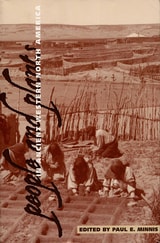
The most comprehensive overview in more than half a century on the interconnectedness of people and plants, this book and its companion volume, People and Plants in Ancient Eastern North America, present the latest information on three major topics: the uses of native plants, the history of crops and their uses, and the impact of humans on their environment. They not only contribute to our understanding of the lives of prehistoric people but also serve as guides for designing sustainable living today.
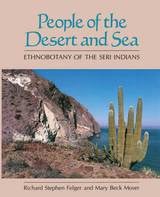
People of the Desert and Sea
Ethnobotany of the Seri IndiansRichard Stephen Felger, Mary Beck Moser
University of Arizona Press, 1985
"To read and gaze through this elegantly illustrated book is to be exposed, as if through a work of science fiction, to an astonishing and unknown cultural world."—North Dakota Quarterly
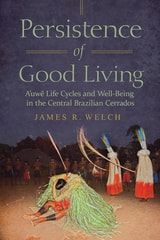
Persistence of Good Living
A’uwe Life Cycles and Well-Being in the Central Brazilian CerradosJames R. Welch
University of Arizona Press, 2023
Anthropologist James R. Welch transparently presents ethnographic insights from his long-term fieldwork in two A’uwẽ communities. He addresses how distinctive constructions of age organization contribute to social well-being in an era of major ecological, economic, and sociocultural change. Welch shows how A’uwẽ perspectives on the human life cycle help define ethnic identity, promote cultural resilience, and encourage the betterment of youth. They provide frameworks that people may creatively mobilize to responsibly and respectfully engage with others at different stages of life. They also motivate people to access and manage landscape resources essential to the social construction of good living. Through careful analysis, Welch shows how contemporary traditional peoples can foster enthusiasm for service to family and community amid dominant cultures that prioritize individual well-being.
This book is an essential resource for students and scholars interested in sociocultural anthropology, Indigenous cultures, health and culture, and human ecology.
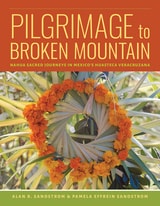
Pilgrimage to Broken Mountain
Nahua Sacred Journeys in Mexico's Huasteca Veracruzanaby Alan R. Sandstrom & Pamela Effrein Sandstrom illustrated by Michael K. Aakhus, Ana Laura Ávila-Myers & Michael A. Sandstrom
University Press of Colorado, 2022
Pilgrimage to Broken Mountain contains richly detailed descriptions and analyses of ritual procedures as well as translations from the Nahuatl of core myths, chants performed before decorated altars, and statements from participants. Particular emphasis is placed on analyzing the role of sacred paper figures that are produced by the thousands for each pilgrimage. The work contains drawings of these cuttings of spirit entities along with hundreds of color photographs illustrating how they are used throughout the pilgrimages. The analysis reveals the monist philosophy that underlies Nahua religious practice in which altars, dancing, chanting, and the paper figures themselves provide direct access to the sacred.
In the context of their pilgrimage traditions, the ritual practices of Nahua religion show one way that people interact effectively with the forces responsible for not only their own prosperity but also the very survival of humanity. A magnum opus with respect to Nahua religion and religious practice, Pilgrimage to Broken Mountain is a significant contribution to several fields, including but not limited to anthropology, Indigenous literatures of Mesoamerica, Nahuatl studies, Latinx and Chicanx studies, and religious studies.
Piman Shamanism and Staying Sickness (Ká
cim Múmkidag)Donald M. Bahr, Juan Gregorio, David I. Lopez, and Albert Alvarez
University of Arizona Press, 1974
This definitive study of shamanic theory and practice was developed through a four-person collaboration: three Tohono O’odham Indians—a shaman, a translator, and a trained linguist—and a non-Indian explicator. It provides an in-depth examination of the Piman philosophy of sickness as well as an introduction to the world view of an entire people.
Using the most highly developed techniques of modern ethnolinguistics, anthropologist Bahr investigates the culturally based concept of staying sickness. He conducted extensive discussions in the Piman language with shaman Gregorio. The native informant theorized at length about the cause of staying sickness, the dúajida (divination), and ritual prayers. The translator and the linguist analyzed the content and style of Gregorio’s discussions. Texts in the Piman language of Gregorio’s discussions are included, as well as literal and idiomatic English translations.
American Anthropologist cites “the infinite care with which each utterance has been analyzed” and “the richness of cultural expression captured in the texts themselves and in their explanation. To read Piman Shamanism and Staying Sickness is to become familiar with the unique properties of Piman thinking and modes of expression: abstract, elliptical, contracted, and yet filled with a rich and natural imagery.”
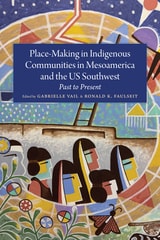
Place-Making in Indigenous Communities in Mesoamerica and the US Southwest
Past to PresentGabrielle Vail
University Press of Colorado, 2027
Place-Making in Indigenous Communities in Mesoamerica and the US Southwest explores shared Indigenous place-making concepts and practices across culturally diverse regions of Mesoamerica and the US Southwest from both historical and contemporary perspectives. Drawing on multidisciplinary research approaches, the volume demonstrates how Indigenous communities create and maintain deep connections to landscapes through stories, rituals, and reciprocal relationships, stressing the dynamic nature of the place-making process.
Contributors emphasize themes that crosscut Mesoamerican and Southwestern Indigenous cultures, including place-making through the (re)activation of primordial time, how people and spiritual energies embodied in geographical features of the land co-define time and space, the role of nonlocal materials and beings in establishing new—and often prestigious—place-based connections, and the impact of colonialism and neocolonialism on place-making and identity. Integrating archaeological evidence with contemporary ethnographic work, contributors explore the significance of places like Chichen Itzá's Balankanche cave as manifestations of primordial emergence sites. They also examine Hopi pilgrimages to ancestral shrines and how places such as Mirador Mountain in Chiapas, Cerro Danush in Oaxaca, and Black Mesa near San Ildefonso Pueblo continue to serve as focal points for ritual processions and community belonging.
Organized into sections emphasizing deep-time perspectives and contemporary heritage issues, Place-Making in Indigenous Communities in Mesoamerica and the US Southwest advocates for collaborative research approaches that center Indigenous voices and knowledge systems. By highlighting the deep connections between Indigenous communities and their sacred landscapes, this work brings a new perspective to ongoing conversations centered on land—one that urges engagement with Indigenous communities in a spirit of openness, collaboration, and respect.
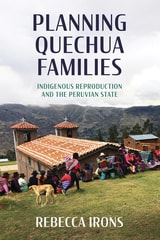
Planning Quechua Families
Indigenous Reproduction and the Peruvian StateRebecca Irons
University of Arizona Press, 2027
Planning Quechua Families: Indigenous Reproduction and the Peruvian State examines how reproductive health is shaped by a history of colonial power, state intervention, and social upheaval. This ethnography is centered on the experiences of Indigenous women in the Andes. The book situates contemporary family planning within the legacy of forced sterilizations and political violence during the era of Shining Path terrorism. Drawing on extensive fieldwork, Rebecca Irons brings together the perspectives of both Quechua women and the health-care workers who serve them, offering a nuanced account of how reproductive services are experienced, negotiated, and contested in rural clinics.
The book explores how reproductive health is embedded within broader processes of social change, including “Incanization,” shifting ideas of citizenship, and efforts to integrate marginalized communities into the Peruvian nation. Irons demonstrates how Indigenous understandings of kinship, health, and identity intersect with state policies and biomedical practices, revealing forms of violence that are often less visible but deeply consequential.
By placing Indigenous reproductive experiences within a wider cultural and political context, Planning Quechua Families provides a critical perspective on how power operates through intimate aspects of life in the contemporary Andes.
Posterity Is Now
Practicing Museum Anthropology, Collections Care, and Collaborative Research with Indigenous PeoplesJennifer A. Shannon
University of Wyoming Press, 2025
In this handbook based on over twenty years of teaching and practice at the intersection of museums, anthropology, and Indigenous peoples, Jennifer A. Shannon covers both the theoretical (i.e., exploring the idea of objects as kin) and the pragmatic (i.e., guidelines for how to design and budget collaborative projects). She advocates for fundamental change in how anthropological research design and practice are done within and beyond the museum and how leadership and staff view the very purpose of the museum. She also demonstrates how collaborative museum anthropology can be a model for the fields of anthropology, public scholarship, and social science research more broadly.
Posterity Is Now is a starting point, a “companion to practice,” written in accessible language and equally relevant for use in university classrooms, by qualitative researchers, and by practitioners in museums and cultural centers.
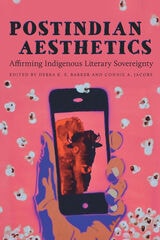
Postindian Aesthetics
Affirming Indigenous Literary SovereigntyEdited by Debra K. S. Barker and Connie A. Jacobs
University of Arizona Press, 2022
The works featured are inventive and current, and the writers covered are visionaries who are boldly redefining Indigenous literary aesthetics. The artists covered include Orlando White, LeAnne Howe, Stephen Graham Jones, Deborah Miranda, Heid E. Erdrich, Sherwin Bitsui, and many others.
Postindian Aesthetics is expansive and comprehensive with essays by many of today’s leading Indigenous studies scholars. Organized thematically into four sections, the topics in this book include working-class and labor politics, queer embodiment, national and tribal narratives, and new directions in Indigenous literatures. By urging readers to think beyond the more popularized Indigenous literary canon, the essays in this book open up a new world of possibilities for understanding the contemporary Indigenous experience.
The volume showcases thought-provoking scholarship about literature written by important contemporary Indigenous authors who are inspiring critical acclaim and offers new ways to think about the Indigenous literary canon and encourages instructors to broaden the scope of works taught in literature courses more broadly.
ContributorsEric Gary Anderson
Ellen L. Arnold
Debra K. S. Barker
Laura J. Beard
Esther G. Belin
Jeff Berglund
Sherwin Bitsui
Frank Buffalo Hyde
Jeremy M. Carnes
Gabriel S. Estrada
Stephanie Fitzgerald
Jane Haladay
Connie A. Jacobs
Daniel Heath Justice
Virginia Kennedy
Denise Low
Molly McGlennen
Dean Rader
Kenneth M. Roemer
Susan Scarberry-García
Siobhan Senier
Kirstin L. Squint
Robert Warrior
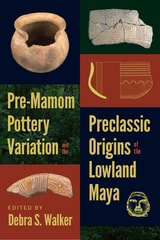
Pre-Mamom Pottery Variation and the Preclassic Origins of the Lowland Maya
Debra S. Walker
University Press of Colorado, 2022
Analyzing ceramics found at sites in Belize, Petén (Guatemala), and Mexico, the contributors provide evidence that the pre-Mamom expansion of pottery resulted from increased dependence on maize agriculture, exploitation of limestone caprock, and greater reliance on a preexisting system of long-distance exchange. The chapters describe the individual experiences of new potting communities at various sites across the region. They are supplemented by appendixes presenting key chronological data as well as the principal types and varieties of pre-Mamom ceramic complexes across the various spheres: Xe, Eb, Swasey, Cunil, and Ek.
A significant amount of new material has been excavated in the last decade, changing what is known about the early Middle Preclassic period and making Pre-Mamom Pottery Variation and the Preclassic Origins of the Lowland Maya a first read of the early ceramic prehistory of the Maya lowlands. It will be a valuable resource for students and scholars interested in the archaeology of the Maya lowlands, Mesoamerican social complexity, and ceramic technology.
Contributors: E. Wyllys Andrews V, Jaime Awe, George J. Bey III, Ronald L. Bishop, Michael G. Callaghan, Ryan H. Collins, Kaitlin Crow, Sara Dzul Góngora, Jerald Ek, Tomás Gallareta Negrón, Bernard Hermes, Takeshi Inomata, Betsy M. Kohut, Laura J. Kosakowsky, Wieslaw Koszkul, Jon Lohse, Michael Love, Nina Neivens, Terry Powis, Duncan C. Pring, Kathryn Reese-Taylor, Prudence M. Rice, Robert M. Rosenswig, Kerry L. Sagebiel, Donald A. Slater, Katherine E. South, Lauren A. Sullivan, Travis Stanton, Juan Luis Velásquez Muñoz, Debra S. Walker, Michal Wasilewski, Jaroslaw Źrałka
Preventing Child Maltreatment in the U.S.
American Indian and Alaska Native PerspectivesRoyleen J Ross
Rutgers University Press, 2022
This book is part of a concentrated series of books that examines child maltreatment across minoritized, cultural groups.Specifically, this volume addresses American Indian and Alaska Native populations. However, in an effort to contextualize the experiences of 574 federally recognized tribes and 50+ state recognized tribes, as well as villages, the authors focus on populations within rural and remote regions and discuss the experiences of some tribal communities throughout US history. It should be noted that established research has primarily drawn attention to the pervasive problems impacting Indigenous individuals, families, and communities. Aligned with an attempt to adhere to a decolonizing praxis, the authors share information in a strength-based framework for the Indigenous communities discussed within the text. The authors review federally funded programs (prevention, intervention, and treatment) that have been adapted for tribal communities (e.g., Safecare) and include cultural teachings that address child maltreatment. The intention of this book is to inform researchers, practitioners, policy makers, and advocates about the current state of child maltreatment from an Indigenous perspective.
Producing Sovereignty
The Rise of Indigenous Media in CanadaKarrmen Crey
University of Minnesota Press, 2024
Exploring how Indigenous media has flourished across Canada from the 1990s to the present
In the early 1990s, Indigenous media experienced a boom across Canada, resulting in a vast landscape of film, TV, and digital media. Coinciding with a resurgence of Indigenous political activism, Indigenous media highlighted issues around sovereignty and Indigenous rights to broader audiences in Canada. In Producing Sovereignty, Karrmen Crey considers the conditions—social movements, state policy, and evolutions in technology—that enabled this proliferation.
Exploring the wide field of media culture institutions, Crey pays particular attention to those that Indigenous media makers engaged during this cultural moment, including state film agencies, arts organizations, provincial broadcasters, and more. Producing Sovereignty ranges from the formation of the Aboriginal Film and Video Art Alliance in the early 1990s and its partnership with the Banff Centre for the Arts to the Canadian Broadcasting Corporation’s 2016 production of Highway of Tears—an immersive 360-degree short film directed by Anishinaabe filmmaker Lisa Jackson—highlighting works by Indigenous creators along the way and situating Indigenous media within contexts that pay close attention to the role of media-producing institutions.
Importantly, Crey focuses on institutions with limited scholarly attention, shifting beyond the work of the National Film Board of Canada to explore lesser-known institutions such as educational broadcasters and independent production companies that create programming for the Aboriginal Peoples Television Network. Through its refusal to treat Indigenous media simply as a set of cultural aesthetics, Producing Sovereignty offers a revealing media history of this cultural moment.