Results by title
748 books match the query 'Influence' and 35 start with p

Paradoxes of Nostalgia
Cold War Triumphalism and Global Disorder since 1989Penny M. Von Eschen
Duke University Press, 2022
Paraguay and the Triple Alliance
The Postwar Decade, 1869-1878By Harris Gaylord Warren
University of Texas Press, 1978
In the War of the Triple Alliance—the most terrible conflict in South American history—Paraguay was almost annihilated by the armed forces of Brazil, Argentina, and Uruguay. The chaotic postwar decade began with the Allied occupation of Asunción, which lasted seven years, and was marked by Brazilian-Argentine rivalry and interference in Paraguayan affairs and by the efforts of Paraguay’s governments to revive their stricken land, efforts often thwarted by corruption, factionalism, and revolutions. It ended with the arbitral award eliminating Argentina as a claimant to the Chaco Boreal and with the ascendancy of the Colorado Party, which dominated Paraguayan politics for most of the next century.
This is the first book in any language that examines political, economic, and social developments to provide a well-integrated study of this significant and eventful period. It is based on archival resources, largely unused before, in England, the United States, Brazil, Argentina, and Paraguay, as well as on newspapers, books, pamphlets, and published documents in many libraries. As one historian has said, the study is “a masterpiece of sleuthing and historical synthesis.” It will be of interest not only to students of Paraguay but also to those concerned with Brazilian, Argentine, and Latin American history.
Parcels
Memories of Salvadoran MigrationMike Anastario
Rutgers University Press, 2019
Parodies of Ownership
Hip-Hop Aesthetics and Intellectual Property LawRichard L. Schur
University of Michigan Press, 2009
"Richard Schur offers a provocative view of contemporary African American cultural politics and the relationship between African American cultural production and intellectual property law."
---Mark Anthony Neal, Duke University
"Whites used to own blacks. Now, they accomplish much the same thing by insisting that they 'own' ownership. Blacks shouldn't let them. A culture that makes all artists play by its rules will end up controlling new ideas and stifling change. Richard Schur's fine book explains why."
---Richard Delgado, Seattle University
What is the relationship between hip-hop and African American culture in the post--Civil Rights era? Does hip-hop share a criticism of American culture or stand as an isolated and unique phenomenon? How have African American texts responded to the increasing role intellectual property law plays in regulating images, sounds, words, and logos? Parodies of Ownership examines how contemporary African American writers, artists, and musicians have developed an artistic form that Schur terms "hip-hop aesthetics." This book offers an in-depth examination of a wide range of contemporary African American painters and writers, including Anna Deavere Smith, Toni Morrison, Adrian Piper, Colson Whitehead, Michael Ray Charles, Alice Randall, and Fred Wilson. Their absence from conversations about African American culture has caused a misunderstanding about the nature of contemporary cultural issues and resulted in neglect of their innovative responses to the post--Civil Rights era. By considering their work as a cross-disciplinary and specifically African American cultural movement, Schur shows how a new paradigm for artistic creation has developed.
Parodies of Ownership offers a broad analysis of post--Civil Rights era culture and provides the necessary context for understanding contemporary debates within American studies, African American studies, intellectual property law, African American literature, art history, and hip-hop studies. Weaving together law, literature, art, and music, Schur deftly clarifies the conceptual issues that unify contemporary African American culture, empowering this generation of artists, writers, and musicians to criticize how racism continues to affect our country.
Richard L. Schur is Director, Interdisciplinary Studies Center, and Associate Professor of Interdisciplinary Studies at Drury University. Visit the author's website: http://www2.drury.edu/rschur/index.htm.
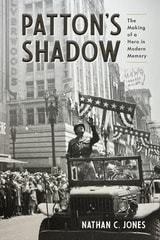
Patton's Shadow
The Making of a Hero in Modern MemoryNathan C. Jones
University of Alabama Press, 2024
An engrossing account of the myth and legend of George S. Patton and what his reputation illuminates about American culture and hero worship
Patton’s Shadow by Nathan C. Jones, a leading authority on George S. Patton, offers a definitive account of the creation of the Patton legend and what it illuminates about American culture and the worship of heroes. Jones traces how the persona of Patton, a brash and brilliant general in the European theater of World War II, transcended the individual man and became a cultural icon and byword for triumphal American might.
Patton was a hero lionized and celebrated in his own time. Patton as well as the US Army cultivated his persona during and after the war. His image was used to promote patriotism, commercial goods, and military recruitment. The 1970 Academy Award–winning film starring George C. Scott cemented his iconic image for millions of Americans, further embellishing Patton’s persona and introducing him to entirely new generations of young Americans.
Patton’s Shadow is an intellectually omnivorous tour de force that draws on ideas about heroes from sources as timeless as ancient mythology and as contemporary as Abraham Maslow, Max Weber, and Carl Jung. Jones artfully locates the honored altar that heroes occupy in the human heart and then answers insightful questions about what America’s embrace of Patton in particular as a military hero illuminates about the United States, about Patton’s generation, and about our own.
Jones’s engrossing work will fascinate readers interested in American history, military history, and the psychology of heroism.
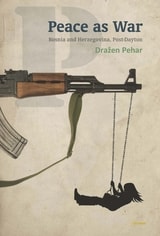
Peace as War
Bosnia-Herzegovina Post-DaytonDrazen Pehar
Central European University Press, 2019
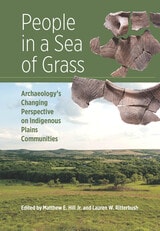
People in a Sea of Grass
Archaeology's Changing Perspective on Indigenous Plains CommunitiesEdited by Matthew E. Hill and Lauren W. Ritterbush
University of Utah Press, 2021
Contributors highlight how Indigenous Plains groups participated in large-scale social networks in which ideas, symbols, artifacts, and people moved across North America over the last 2,000 years. They also discuss cultural transformation, focusing on key demographic, economic, social, and ceremonial factors associated with change, including colonization and integration into the social and political economies of transatlantic societies. Cultural traditions covered include Woodland-era Kansas City Hopewell, late prehistoric Central Plains tradition, and ancestral and early historic Wichita, Pawnee and Arikara, Kanza, Plains Apache, and Puebloan migrants. As the first review of Plains archaeology in more than a decade, this book brings studies of early Indigenous
peoples of the central and southern Plains into a new era.
Performing Unification
History and Nation in German Theater after 1989Matt Cornish
University of Michigan Press, 2017
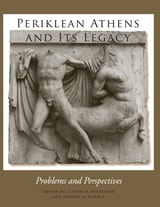
Periklean Athens and Its Legacy
Problems and PerspectivesEdited by Judith M. Barringer and Jeffrey M. Hurwit
University of Texas Press, 2005
The late fifth century BC was the golden age of ancient Athens. Under the leadership of the renowned soldier-statesman Perikles, Athenians began rebuilding the Akropolis, where they created the still awe-inspiring Parthenon. Athenians also reached a zenith of artistic achievement in sculpture, vase painting, and architecture, which provided continuing inspiration for many succeeding generations.
The specially commissioned essays in this volume offer a fresh, innovative panorama of the art, architecture, history, culture, and influence of Periklean Athens. Written by leading experts in the field, the articles cover a wide range of topics, including:
- An evaluation of Perikles' military leadership during the early stages of the Peloponnesian War.
- Iconographical and iconological studies of vase paintings, wall paintings, and sculpture.
- Explorations of the Parthenon and other monuments of the Athenian Akropolis.
- The legacy of Periklean Athens and its influence upon later art.
- Assessments of the modern reception of the Akropolis.
As a whole, this collection of essays proves that even a well-explored field such as Periklean Athens can yield new treasures when mined by perceptive and seasoned investigators.
Philodemus in Italy
The Books from HerculaneumMarcello Gigante
University of Michigan Press, 2002
Philosophical Witnessing
The Holocaust as PresenceBerel Lang
Brandeis University Press, 2012
Picasso and the Chess Player
Pablo Picasso, Marcel Duchamp, and the Battle for the Soul of Modern ArtLarry Witham
University Press of New England, 2013
Pieter Geyl and Britain
Encounters, Controversies, ImpactEdited by Stijn van Rossem and Ulrich Tiedau
University of London Press, 2022
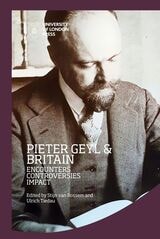
Pieter Geyl (1887—1966) was undoubtedly one of the most internationally renowned Dutch historians of the twentieth century, but also one of the most controversial. Having come to the United Kingdom as a journalist, he started his academic career at the University of London in the aftermath of World War I and played an important role in the early days of the Institute of Historical Research. Known in this time for his reinterpretation of the sixteenth-century Dutch Revolt against the Habsburgs that challenged existing historiographies of both Belgium and the Netherlands but was also linked to his political activism in favor of the Flemish movement in Belgium, Geyl left his stamp on the British perception of Low Countries history before moving back to his country of origin in 1935. Having spent World War II in German hostage camps, he famously coined the adage of history being “a discussion without end” and reengaged in public debates with British historians after the war, partly conducted on the airwaves of the BBC. A prolific writer and an early example of a public intellectual, Geyl remains one of the most influential thinkers on history of his time. The present volume reexamines Geyl’s relationship with Britain (and the Anglophone world at large) and sheds new light on his multifaceted work as a historian, journalist, homme de lettres, and political activist.

Pissarro, Neo-Impressionism, and the Spaces of the Avant-Garde
Martha Ward
University of Chicago Press, 1996
Paying particular attention to the participation of Camille Pissarro, the only older artist to join the otherwise youthful movement, Ward sets the neo-impressionists' individual achievements in the context of a generational struggle to redefine the purposes of painting. She describes the conditions of display, distribution, and interpretation that the neo-impressionists challenged, and explains how these artists sought to circulate their own work outside of the prevailing system. Paintings, Ward argues, often anticipate and respond to their own conditions of display and use, and in the case of the neo-impressionists, the artists' relations to market forces and exhibition spaces had a decisive impact on their art.
Ward details the changes in art dealing, and chronicles how these and new freedoms for the press made artistic vanguardism possible while at the same time affecting the content of painting. She also provides a nuanced account of the neo-impressionists' engagements with anarchism, and traces the gradual undermining of any strong correlation between artistic allegiance and political direction in the art world of the 1890s.
Throughout, there are sensitive discussions of such artists as Georges Seurat and Paul Signac, as well as Pissarro. Yet the touchstone of the book is Pissarro's intricate relationship to the various factions of the Paris art world.
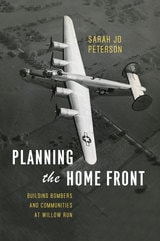
Planning the Home Front
Building Bombers and Communities at Willow RunSarah Jo Peterson
University of Chicago Press, 2013
Plotinus Ennead I.5
On Whether Well-Being Increases with Time: Translation with an Introduction and CommentaryDanielle A. Layne
Parmenides Publishing, 2023
Poe Abroad
Influence Reputation AffinitiesLois Davis Vines
University of Iowa Press, 1999
In Poe Abroad, Lois Vines has brought together a collection of essays that document the American writer's influence on the diverse literatures—and writers—of the world. Over twenty scholars demonstrate how and why Poe has significantly influenced many of the major literary figures of the last 150 years.
Part One includes studies of Poe's popularity among general readers, his influence on literary movements, and his reputation as a poet, fiction writer, and literary critic. Part Two presents analyses of the role Poe played in the literary development of specific writers representing many different cultures.
Poe Abroad commemorates the 150th anniversary of Poe's death and celebrates his worldwide impact, beginning with the first literal translation of Poe into a foreign language, “The Gold-Bug”into French in 1845. Charles Baudelaire translated another Poe tale in 1848 and four years later wrote an essay that would make Poe a well-known author in Europe even before he achieved recognition in America.
Poe died knowing only that some of his stories had been translated into French. He probably never would have imagined that his work would be admired and imitated as far away as Japan, China, and India or would have a lasting influence on writers such as Baudelaire, August Strindberg, Franz Kafka, Jorge Luis Borges, Julio Cortázar, and Tanizaki Junichiro.
As we approach the sesquicentennial of his death, Poe Abroad brings together a timely one-volume assessment of Poe's influence throughout the world.
Poe, Fuller, and the Mesmeric Arts
Transition States in the American RenaissanceBruce Mills
University of Missouri Press, 2005
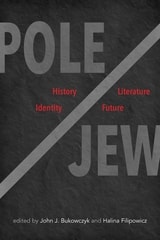
Pole/Jew
History, Literature, Identity, FutureJohn J. Bukowczyk and Halina Filipowicz
Ohio University Press, 0
Pole/Jew brings together a group of scholars—about half of them Jewish, about half of them ethnic Poles—from the United States, Poland, the United Kingdom, and Canada and enlists their diverse methodological and generational perspectives to push debates over Polish-Jewish relations beyond entrenched and reductive positions. At the core of the volume are the following questions:
–What impact has the Holocaust had on Polish history and Polish literature?
–How has the Holocaust affected Polish-Jewish—and Polish—identity?
–What future is there for relations between Poland’s small Jewish minority and the country’s overwhelming ethnic Polish majority? Between Poland and Israel? Between Jews of the diaspora and ethnic Poles abroad?
–Which research areas have yet to be addressed or revisited and reexamined?
–Are there ways to move beyond the reductive notion of 1989 (i.e., the fall of the communist regime in Poland) as wall and fulcrum?
By addressing these compelling questions, this volume offers fresh perspectives and encourages a nuanced understanding of Polish-Jewish relations.
Contributors:
M. B. B. Biskupski
Robert Blobaum
John J. Bukowczyk
Patrice M. Dabrowski
Halina Filipowicz
Agnieszka Jezyk
Bozena Karwowska
Kamil Kijek
Kate Korycki
Elzbieta Kossewska
Grazyna J. Kozaczka
Stanislaw Krajewski
Adam Lipszyc
Wiktor Marzec
Alina Molisak
Stanislaw Obirek
Benjamin Paloff
Antony Polonsky
Brian Porter-Szucs
Piotr Puchalski
Roma Sendyka
Dariusz Stola
Katarzyna Zechenter
Joshua D. Zimmerman
Geneviève Zubrzycki
Slawomir Zurek
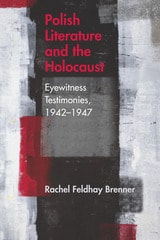
Polish Literature and the Holocaust
Eyewitness Testimonies, 1942–1947Rachel Feldhay Brenner
Northwestern University Press, 2019
Polish Literature and the Holocaust: Eyewitness Testimonies,1942–1947 is a particularly timely book in view of the continuing debate about the attitudes of Poles toward the Jews during the war. The literary voices from the past that Brenner examines posit questions that are as pertinent now as they were then. And so, while this book speaks to readers who are interested in literary responses to the Holocaust, it also illuminates the universal issue of the responsibility of witnesses toward the victims of any atrocity.
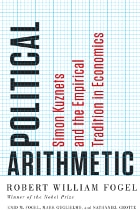
Political Arithmetic
Simon Kuznets and the Empirical Tradition in EconomicsRobert William Fogel, Enid M. Fogel, Mark Guglielmo, and Nathaniel Grotte
University of Chicago Press, 2013
With Political Arithmetic, Nobel Prize–winning economist Robert Fogel and his collaborators tell the story of economist Simon Kuznets, the founding of the National Bureau of Economic Research, and the creation of the concept of GNP, which for the first time enabled us to measure the performance of entire economies. The book weaves together the many strands of political and economic thought and historical pressures that together created the demand for more detailed economic thinking—Progressive-era hopes for activist government, the production demands of World War I, Herbert Hoover’s interest in business cycles as President Harding’s commerce secretary, and the catastrophic economic failures of the Great Depression—and shows how, through trial and error, measurement and analysis, economists such as Kuznets rose to the occasion and in the process built a discipline whose knowledge could be put to practical use in everyday decision-making.
The product of a lifetime of studying the workings of economies and skillfully employing the tools of economics, Political Arithmetic is simultaneously a history of a key period of economic thought and a testament to the power of applied ideas.
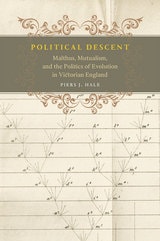
Political Descent
Malthus, Mutualism, and the Politics of Evolution in Victorian EnglandPiers J. Hale
University of Chicago Press, 2014
These two traditions, Hale shows, developed in a context of mutual hostility, debate, and refutation. Participants disagreed not only about evolutionary processes but also on broader questions regarding the kind of creature our evolution had made us and in what kind of society we ought therefore to live. Significantly, and in spite of Darwin’s acknowledgement that natural selection was “the doctrine of Malthus, applied to the whole animal and vegetable kingdoms,” both sides of the debate claimed to be the more correctly “Darwinian.” By exploring the full spectrum of scientific and political issues at stake, Political Descent offers a novel approach to the relationship between evolution and political thought in the Victorian and Edwardian eras.
Politics, Religion, and Art
Hegelian DebatesDouglas Moggach
Northwestern University Press, 2011
Post-Postmodernist Fiction and the Rise of Digital Epitexts
Virginia Pignagnoli
The Ohio State University Press, 2023
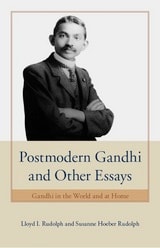
Postmodern Gandhi and Other Essays
Gandhi in the World and at HomeLloyd I. Rudolph and Susanne Hoeber Rudolph
University of Chicago Press, 2006
Gandhi, with his loincloth and walking stick, seems an unlikely advocate of postmodernism. But in Postmodern Gandhi, Lloyd and Susanne Rudolph portray him as just that in eight thought-provoking essays that aim to correct the common association of Gandhi with traditionalism.
Combining core sections of their influential book Gandhi: The Traditional Roots of Charisma with substantial new material, the Rudolphs reveal here that Gandhi was able to revitalize tradition while simultaneously breaking with some of its entrenched values and practices. Exploring his influence both in India and abroad, they tell the story of how in London the young activist was shaped by the antimodern “other West” of Ruskin, Tolstoy, and Thoreau and how, a generation later, a mature Gandhi’s thought and action challenged modernity’s hegemony. Moreover, the Rudolphs argue that Gandhi’s critique of modern civilization in his 1909 book Hind Swaraj was an opening salvo of the postmodern era and that his theory and practice of nonviolent collective action (satyagraha) articulate and exemplify a postmodern understanding of situational truth.
This radical interpretation of Gandhi's life will appeal to anyone who wants to understand Gandhi’s relevance in this century, as well as students and scholars of politics, history, charismatic leadership, and postcolonialism.
Postmodern Spiritual Practices
The Construction of the Subject and the Reception of Plato in Lacan, Derrida, and FoucaultPaul Allen Miller
The Ohio State University Press, 2007
On the other hand, blindness to the merits of postmodern thought is also due to Anglo-American philology’s own parochial instincts. Ensconced within a nineteenth-century model of Alterumswissenschaft, only a minority of classicists have made forays into philosophical, psychoanalytic, and other speculative modes of inquiry. The result has been that postmodern French thought has largely been the province of scholars of modern languages.
A situation thus emerges in which most classicists do not know theory, and so cannot appreciate the scope of these thinkers’ contribution to our understanding of the genealogy of Western thought, while most theorists do not know the Platonic texts and their contexts that ground them. This book bridges this gap, offering detailed and theoretically informed readings of French postmodernism’s chief thinkers’ debts to Plato and the ancient world.
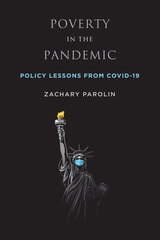
Poverty in the Pandemic
Policy Lessons from COVID-19Zachary Parolin
Russell Sage Foundation, 2023
Drawing on dozens of data sources ranging from debit and credit card spending, the first national databases of school and childcare center closures in the U.S., and bi-weekly Census-run surveys on well-being, Parolin finds that entering the pandemic in poverty substantially increased a person’s likelihood of experiencing negative health outcomes due to the pandemic, such as contracting and dying from COVID, as well as losing their job. Additionally, he found that students from poor families suffered the greatest learning losses as a result of school closures and the shift to distance learning during the pandemic.
However, unprecedented legislative action by the U.S. government, including the passage of the Families First Coronavirus Response Act (FFCRA), the Coronavirus Aid, Relief, and Economic Security (CARES) Act, and the American Rescue Plan (ARP) helped mitigate the economic consequences of the pandemic and lifted around 18 million Americans out of poverty. Based on the success of these policies, Parolin concludes with policy suggestions that the U.S. can implement in more ‘normal’ times to improve the living conditions of low-income households after the pandemic subsides, including expanding access to Unemployment Insurance, permanently expanding the Child Tax Credit, promoting greater access to affordable, high-quality healthcare coverage, and investing more resources into the Census Bureau’s data-collection capabilities. He also details a method of producing a monthly measurement of poverty, to be used in conjunction with the traditional annual measurement, in order to better understand the intra-year volatility of poverty that many Americans experience.
Poverty in the Pandemic provides the most complete account to date of the unique challenges that low-income households in the U.S. faced during the COVID-19 pandemic.
Powerful Devices
Prayer and the Political Praxis of Spiritual WarfareAbimbola Adunni Adelakun
Rutgers University Press, 2023
Prehistoric Future
Max Ernst and the Return of Painting between the WarsRalph Ubl
University of Chicago Press, 2013
Pressed by a Double Loyalty
Hungarian Attendance at the Second Vatican Council, 1959-1965András Fejérdy
Central European University Press, 2017
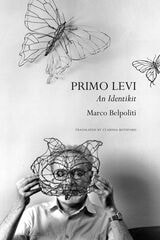
Primo Levi
An IdentikitMarco Belpoliti
Seagull Books, 2022
Over the last seventy years, Primo Levi (1919–87) has been recognized as the foremost literary witness of the extermination of the European Jews. In Primo Levi: An Identikit, a product of twenty years of research, Marco Belpoliti explores Levi’s tormented life, his trajectory as a writer and intellectual, and, above all, his multifaceted and complex oeuvre.
Organized in a mosaic format, this volume devotes a different chapter to each of Levi’s books. In addition to tracing the history of each book’s composition, publication, and literary influences, Belpoliti explores their contents across the many worlds of Primo Levi: from chemistry to anthropology, biology to ethology, space flights to linguistics. If This Is a Man, his initially rejected masterpiece, is also reread with a fresh perspective. We learn of dreams, animals, and travel; of literary writing, comedy, and tragedy; of shame, memory, and the relationship with other writers such as Franz Kafka and Georges Perec, Jean Améry and Varlam Shalamov. Fundamental themes such as Judaism, the camp, and testimony innervate the book, which is complemented by photographs and letters found by the author in hitherto unexplored archives.
This will be the definitive book on Primo Levi, a treasure trove of stories and reflections that paint a rich, nuanced composite portrait of one of the twentieth century’s most unique and urgent voices.
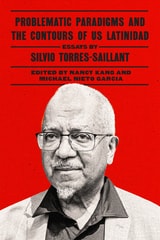
Problematic Paradigms and the Contours of US Latinidad
Essays by Silvio Torres-SaillantEdited by Nancy Kang and Michael Nieto Garcia
University of Texas Press, 2026
Silvio Torres-Saillant’s collected writings examine political contradictions within Latinx identity in the United States.
Since the 1990s Silvio Torres-Saillant’s work has questioned the notion of Latinidad, challenging presumptions of panethnic unity within the US Hispanic population and assessing dominant modes of Latinx representation. The essays in Problematic Paradigms and the Contours of US Latinidad examine the dynamics of a diverse collective of over 65 million people whose cultural heritage, ancestral origins, and belief systems arguably differ as much as they resemble one another. The volume dissects prevailing assumptions, namely the essentializing sense of homogeneity in the Latinx “community,” which mask important nuances and fascinating contradictions. Torres-Saillant also targets the role of marketing and mass communications in shaping popular perceptions of ethnic groups, thereby tracing connections between media rhetoric and the language of scholarship.
Newly revised by editors Nancy Kang and Michael Nieto Garcia, this collection curates Torres-Saillant’s core contributions to Latinx studies over the last two decades and underscores the veteran scholar’s evolving thoughts on key conversations in the field. The epilogue narrates his beginnings in Caribbean studies, acknowledges his ongoing analysis of Dominican blackness, and discourages uncritical views of cultural heritage.
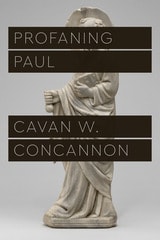
Profaning Paul
Cavan W. Concannon
University of Chicago Press, 2021
The letters of Paul have been used to support and condone a host of evils over the span of more than two millennia: racism, slavery, imperialism, misogyny, and anti-Semitism, to name a few. Despite, or in some cases because of, this history, readers of Paul have felt compelled to reappropriate his letters to fit liberal or radical politics, seeking to set right the evils done in Paul’s name. Starting with the language of excrement, refuse, and waste in Paul’s letters, Profaning Paul looks at how Paul’s “shit” is recycled and reconfigured. It asks why readers, from liberal Christians to academic biblical scholars to political theorists and philosophers, feel compelled to make Paul into a hero, mining his words for wisdom. Following the lead of feminist, queer, and minoritized scholarship, Profaning Paul asks what would happen if we stopped recycling Paul’s writings. By profaning the status of his letters as sacred texts, we might open up new avenues for imagining political figurations to meet our current and coming political, economic, and ecological challenges.

Psycho-Sexual
Male Desire in Hitchcock, De Palma, Scorsese, and FriedkinBy David Greven
University of Texas Press, 2013
Bridging landmark territory in film studies, Psycho-Sexual is the first book to apply Alfred Hitchcock’s legacy to three key directors of 1970s Hollywood—Brian De Palma, Martin Scorsese, and William Friedkin—whose work suggests the pornographic male gaze that emerged in Hitchcock’s depiction of the voyeuristic, homoerotically inclined American man. Combining queer theory with a psychoanalytic perspective, David Greven begins with a reconsideration of Psycho and the 1956 remake of The Man Who Knew Too Much to introduce the filmmaker’s evolutionary development of American masculinity.
Psycho-Sexual probes De Palma’s early Vietnam War draft-dodger comedies as well as his film Dressed to Kill, along with Scorsese’s Taxi Driver and Friedkin’s Cruising as reactions to and inventive elaborations upon Hitchcock’s gendered themes and aesthetic approaches. Greven demonstrates how the significant political achievement of these films arises from a deeply disturbing, violent, even sorrowful psychological and social context. Engaging with contemporary theories of pornography while establishing pornography’s emergence during the classical Hollywood era, Greven argues that New Hollywood filmmakers seized upon Hitchcock’s radical decentering of heterosexual male dominance. The resulting images of heterosexual male ambivalence allowed for an investment in same-sex desire; an aura of homophobia became informed by a fascination with the homoerotic. Psycho-Sexual also explores the broader gender crisis and disorganization that permeated the Cold War and New Hollywood eras, reimagining the defining premises of Hitchcock criticism.
Public Debate in the Civil War Era
A Rhetorical History of the United States, Volume IVDavid Zarefsky
Michigan State University Press, 2023