Results by title
173 books match the query 'Ireland' and 9 start with p
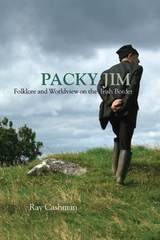
Packy Jim
Folklore and Worldview on the Irish BorderRay Cashman
University of Wisconsin Press, 2017
Ray Cashman, who has been interviewing McGrath for more than fifteen years, demonstrates how Packy Jim embellishes daily conversation with stories of ghosts and fairies, heroic outlaws and hateful landlords. Such folklore is a boundless resource that he uses to come to grips with the past and present, this world and the next. His stories reveal an intricate worldview that is both idiosyncratic and shared—a testament to individual intelligence and talent, and a window into Irish vernacular culture.
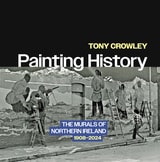
Painting History
The Murals of Northern Ireland, 1908–2024Tony Crowley
Amherst College Press, 2025
In Painting History, Tony Crowley provides a detailed analysis of the complex tradition of muralism in the context of the history that produced it, with particular attention given to the cultural politics of this remarkable form. The book also raises and discusses a series of theoretical questions about murals and muralism that transcend Northern Ireland: issues of propriety and legality, form and content, authority and censorship. The work ends with a consideration of the future of the murals in a still polarized but changing region.
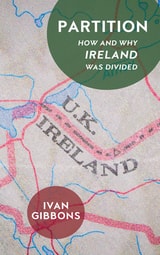
Partition
How and Why Ireland was DividedIvan Gibbons
Haus Publishing, 2022
The Partition of Ireland in 1921, which established Northern Ireland and saw it incorporated into the United Kingdom, sparked immediate civil war and a century of unrest. Today, the Partition remains the single most contentious issue in Irish politics, but its origins—how and why the British divided the island—remain obscured by decades of ensuing struggle.
Cutting through the partisan divide, Partition takes readers back to the first days of the twentieth century to uncover the concerns at the heart of the original conflict. Drawing on extensive primary research, Ivan Gibbons reveals how the idea to divide Ireland came about and gained popular support as well as why its implementation proved so controversial and left a century of troubles in its wake.

Performance Art in Ireland
A HistoryEdited by Áine Phillips
Intellect Books, 2015
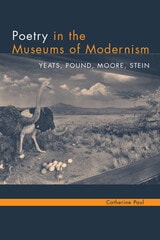
Poetry in the Museums of Modernism
Yeats, Pound, Moore, SteinCatherine Paul
University of Michigan Press, 2002
Although critics have attested to the importance of the visual arts to literary modernists and have begun to explore the relationships between literary production and social institutions, before now no one has examined the particular institutions in which modernist poets found the artworks, specimens, and other artifacts that inspired their literary innovations. Catherine Paul's book offers the reader a fresh encounter with modernism that will interest literary and art historians, literary theorists, critics, and scholars in cultural studies and museum studies.
Catherine Paul is Associate Professor of English, Clemson University.

Politics of James Connolly
Kieran Allen
Pluto Press, 1990
Kieran Allen breaks this mould, assessing the founder of the Irish Marxist movement ideas from a revolutionary socialist perspective. Allen considers the strengths and weaknesses of Connolly’s revolutionary strategy, the effect of his commitment to international socialism on his nationalist loyalties and arguing that, ultimately, Connolly's enduring relevance derives from his anti-imperialism. Any socialist movement today ignores this book at its peril.
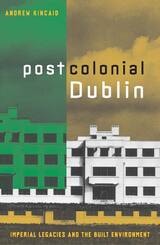
Postcolonial Dublin
Imperial Legacies And The Built EnvironmentAndrew Kincaid
University of Minnesota Press, 2006
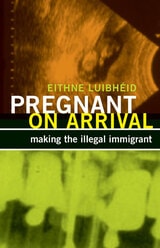
Pregnant on Arrival
Making the Illegal ImmigrantEithne Luibhéid
University of Minnesota Press, 2013
“State alert as pregnant asylum seekers aim for Ireland.” “Country Being Held Hostage by Con Men, Spongers, and Those Taking Advantage of the Maternity Residency Policy.” From 1997 to 2004, headlines such as these dominated Ireland’s mainstream media as pregnant immigrants were recast as “illegals” entering the country to gain legal residency through childbirth. As immigration soared, Irish media and politicians began to equate this phenomenon with illegal immigration that threatened to destroy the country’s social, cultural, and economic fabric.
Pregnant on Arrival explores how pregnant immigrants were made into paradigmatic figures of illegal immigration, as well as the measures this characterization set into motion and the consequences for immigrants and citizens. While focusing on Ireland, Eithne Luibhéid’s analysis illuminates global struggles over the citizenship status of children born to immigrant parents in countries as diverse as the United States, Hong Kong, and elsewhere. Scholarship on the social construction of the illegal immigrant calls on histories of colonialism, global capitalism, racism, and exclusionary nation building but has been largely silent on the role of nationalist sexual regimes in determining legal status. Eithne Luibhéid turns to queer theory to understand how pregnancy, sexuality, and immigrants’ relationships to prevailing sexual norms affect their chances of being designated as legal or illegal.
Pregnant on Arrival offers unvarnished insight into how categories of immigrant legal status emerge and change, how sexual regimes figure prominently in these processes, and how efforts to prevent illegal immigration ultimately redefine nationalist sexual norms and associated racial, gender, economic, and geopolitical hierarchies.
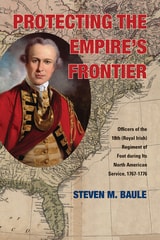
Protecting the Empire’s Frontier
Officers of the 18th (Royal Irish) Regiment of Foot during Its North American Service, 1767–1776Steven M. Baule
Ohio University Press, 2013
Protecting the Empire’s Frontier tells stories of the roughly eighty officers who served in the 18th (Royal Irish) Regiment of Foot, which served British interests in America during the crucial period from 1767 through 1776. The Royal Irish was one of the most wide-ranging regiments in America, with companies serving on the Illinois frontier, at Fort Pitt, and in Boston, New York, and Philadelphia, with some companies taken as far afield as Florida, Spanish Louisiana, and present-day Maine. When the regiment was returned to England in 1776, some of the officers remained in America on staff assignments. Others joined provincial regiments, and a few joined the American revolutionary army, taking up arms against their king and former colleagues.
Using a wide range of archival resources previously untapped by scholars, the text goes beyond just these officers’ service in the regiment and tells the story of the men who included governors, a college president, land speculators, physicians, and officers in many other British regular and provincial regiments. Included in these ranks were an Irishman who would serve in the U.S. Congress and as an American general at Yorktown; a landed aristocrat who represented Bath as a member of Parliament; and a naval surgeon on the ship transporting Benjamin Franklin to France. This is the history of the American Revolutionary period from a most gripping and everyday perspective.
An epilogue covers the Royal Irish’s history after returning to England and its part in defending against both the Franco-Spanish invasion attempt and the Gordon Rioters. With an essay on sources and a complete bibliography, this is a treat for professional and amateur historians alike.