Results by title
220 books match the query 'Israel' and 13 start with p
Palestine and Israel
A Challenge to JusticeJohn Quigley
Duke University Press, 1990
Beginning with the early Zionist settlement in Palestine that rose from the effort by Jews to escape long-standing discrimination in Europe, Qigley investigates the origins of the dispute, including the British occupation of Palestine, the British Mandate, and the involvement of the United Nations. He examines the 1948 War, the establishment of Israel, and explores the legal and political status of Jews there. After a detailed analysis of the 1967 War and Israel’s occupation of the West Bank and Gaza Strip, he concludes with recommendations for resolving the conflict, including discussions of the responsibility of other states for the persisting injustice, the role of other states in settling the dispute, and steps to a possible solution.

Palestine and Jewish History
Criticism at the Borders of EthnographyJonathan Boyarin
University of Minnesota Press, 1996
Palestine and Jewish History was first published in 1996. Minnesota Archive Editions uses digital technology to make long-unavailable books once again accessible, and are published unaltered from the original University of Minnesota Press editions.
This provocative and personal series of meditations on the Israeli-Palestinian conflict argues that it represents a struggle not as much about land and history as about space, time, and memory. Juxtaposing entries from Jonathan Boyarin's field diary with critical and theoretical articulations, Palestine and Jewish History shows not only the unfinished nature of anthropological endeavor, but also the author's personal stake in the ethical predicament of being a Jew at this point in history.
Boyarin comes to Israel as a specialist in modern Jewish studies, an individual who has kin, friends, and colleagues there, a scholar with a long history of peace activism. He interweaves fascinating descriptions of ordinary life-parties, walks, classes, visits to homes-with a selection of his related writings on cultural studies and anthropology. Some sections are polemical; others are witty analyses of bumper stickers, slogans, the ambiguities in conversations. Boyarin foregrounds the messiness and lack of closure inherent in this process, presenting "raw materials" (field notes) in some sections of the book that reappear in other sections as various kinds of "finished" products (conference papers, published articles).
In the process, we learn a good deal about the Middle East and its debates and connections to other places. Boyarin addresses two fundamental issues: the difficulty of linking different sorts of memories and memorializations, and the importance of moving beyond objectivity and multiculturalism into a situated, engaged, and nontotalizing framework for fieldwork and ethnography.
Palestine and Jewish History enacts rather than reports on Boyarin's process of error, pain, impatience, uncertainty, discovery, embarrassment, self-criticism, intellectual struggle, and dawning awareness, challenging and engaging us in the process of discovery. Ultimately, it gives the lie, as the Palestinian presence does in Israel, to any concept of a "finishedness" that successfully conceals its unruly and painful multiple processes.
Jonathan Boyarin is the Leonard and Tobee Kaplan Distinguished Professor of Modern Jewish Thought in the Department of Religious Studies at the University of North Carolina at Chapel Hill. He is the author of Storm from Paradise, co-author of Powers of Diaspora, and the co-editor of Remapping Memory and Jews and Other Differences, all available from Minnesota.
Palestine on the Air
Karma R. Chavez
University of Illinois Press, 2019
Palestine, Israel, and the Politics of Popular Culture
Rebecca L. Stein and Ted Swedenburg, eds.
Duke University Press, 2005
The volume is interdisciplinary, including the work of anthropologists, historians, sociologists, political scientists, ethnomusicologists, and Americanist and literary studies scholars. Contributors examine popular music of the Palestinian resistance, ethno-racial “passing” in Israeli cinema, Arab-Jewish rock, Euro-Israeli tourism to the Arab Middle East, Internet communities in the Palestinian diaspora, café culture in early-twentieth-century Jerusalem, and more. Together, they suggest new ways of conceptualizing Palestinian and Israeli political culture.
Contributors. Livia Alexander, Carol Bardenstein, Elliott Colla, Amy Horowitz, Laleh Khalili, Mary Layoun, Mark LeVine, Joseph Massad, Melani McAlister, Ilan Pappé, Rebecca L. Stein, Ted Swedenburg, Salim Tamari
Palestinian Arab Music
A Maqam Tradition in PracticeDalia Cohen and Ruth Katz
University of Chicago Press, 2005
Working initially with their own 1957 invention, the Cohen-Katz Melograph, and later with computers, Dalia Cohen and Ruth Katz recorded and digitized several hundred Palestinian music performances. The authors analyzed the musical tradition in light of its main variables. These include musical parameters, modal frameworks, the form and structure of the music, its poetic texts, and aspects of the social functions of the tradition. As a result of their study, the vexed aspect of intonation in practice is revealed to exist in a special relationship with the scale systems or maqamat, which are in turn of great importance to organizing the music and determining its modal systems.
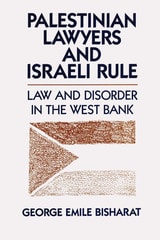
Palestinian Lawyers and Israeli Rule
Law and Disorder in the West BankBy George Emile Bisharat
University of Texas Press, 1989
As frequent intermediaries between Israeli military authorities and Palestinian citizens, Palestinian lawyers stand close to the fault line dividing Israeli and Palestinian societies. The conflicts and tensions they experience in their profession mirror the larger conflicts between the two societies. Thus, as George Bisharat reveals in Palestinian Lawyers and Israeli Rule, a careful study of the work and lives of Palestinian lawyers ultimately helps to illuminate the causes of the intifada, or uprising, that began in December 1987.
The study revolves around the central question of why the Palestinian legal profession declined during twenty years of Israeli occupation when, in other Third World countries, the legal profession has often reached its peak during a period of Western colonization. Bisharat answers this question with a wide-ranging inquiry into the historical origins of the legal profession and court system in Palestine, the tenuous grounding of these institutions in Palestinian society and culture, and the structure, style, and policies of the late-twentieth-century Israeli military government in the West Bank.
For general readers interested in the Palestinian-Israeli conflict, as well as specialists in such fields as legal anthropology, sociology of the professions, Third World law and development, and Middle Eastern studies, Palestinian Lawyers and Israeli Rule will be required reading.

Palestinian Refugees
The Right of ReturnEdited by Naseer Aruri
Pluto Press, 2001
With renewed conflict in the Middle East, the prospect of a peaceful resolution looks more unlikely than ever. The Palestinian right of return to their homes has been upheld in international law and through United Nations' resolutions for fifty years. Equally the right of return has been denied by Israel and deferred to a "final status" issue in the Oslo Accords. It is on this right of return that the Palestinians are united. And it is this issue which is so frequently ignored by the international media.
With major contributions from a range of international experts, including Edward W. Said, Noam Chomsky, Ilan Pappe, Alain Gresh and Norman Finkelstein, this volume examines the Palestinians’ right of return. Chapters cover the historical roots of the Palestinian refugee question; the rights of the refugees under international law; the special case of Lebanon; Israeli perceptions of the refugee question; the practical feasibility of the return; the role of the United States and the European Union and the Refugee Question; the value of the refugee property; the principles of compensation; and a programme for an Independent Rights Campaign.
Palestinians in Israel
Segregation, Discrimination and DemocracyBen White
Pluto Press, 2012
Palestinians in Israel considers a key issue ignored by the official 'peace process' and most mainstream commentators: that of the growing Palestinian minority within Israel itself.
What the Israeli right-wing calls 'the demographic problem' Ben White identifies as 'the democratic problem' which goes to the heart of the conflict. Israel defines itself not as a state of its citizens, but as a Jewish state, despite the substantial and increasing Palestinian population. White demonstrates how the consistent emphasis on privileging one ethno-religious group over another cannot be seen as compatible with democratic values and that, unless addressed, will undermine any attempts to find a lasting peace.
Individual case studies are used to complement this deeply informed study into the great, unspoken contradiction of Israeli democracy. It is a pioneering contribution which will spark debate amongst all those concerned with a resolution to the Israel/Palestine conflict.

Passion of Israel
Jacques Maritain, Catholic Conscience, and the HolocaustRichard Francis Crane
University of Scranton Press, 2010
In his lifetime, French philosopher Jacques Maritain (1882–1973) achieved a reputation as both a leading Catholic intellectual and as an outspoken critic of antisemitism. Here historian Richard Francis Crane traces the development of Maritain’s opposition toward antisemitism and analyzes the Catholic appreciation of Judaism that animated his stance. Crane probes the writings and teachings of Maritain—from before, during, and after the Holocaust—and illuminates how his ideas altered Christian perceptions of Jews and Judaism during his lifetime and continue to do so today.
Peaceful Resistance
Building a Palestinian University Under OccupationGabi Baramki
Pluto Press, 2009
This book tells the remarkable story of Birzeit University, Palestine’s oldest university in the Occupied Territories.
Founded against the backdrop of occupation, it is open to all students, irrespective of income. Putting the study of democracy and tolerance at the heart of its curriculum, Birzeit continues to produce idealistic young people who can work to bring about a peaceful future. Gabi Baramki explains how the University has survived against shocking odds, including direct attacks where Israeli soldiers have shot unarmed students. Baramki himself has been dragged from his home at night, beaten and arrested. Yet Birzeit continues to thrive, putting peace at the heart of its teaching, and offering Palestinians the opportunities that only education can bring.
Plant Metaphors in Prophetic Condemnations of Israel and Judah
Tina M. Sherman
SBL Press, 2023
Tina M. Sherman offers a first-of-its-kind, detailed analysis of prophetic passages that depict people as plants—from grasses and grains to fruit trees and grapevines—examining how the biblical authors exploited these metaphors to portray the condemnation and punishment of Israel and Judah in terms of the everyday work of crop farming and plant husbandry. Additionally, she explores how the prophetic authors employed plant imagery to construct national identities that emphasize the people’s collective responsibility for the kingdoms’ fate. Plant Metaphors in Prophetic Condemnations of Israel and Judah demonstrates the usefulness of combining conceptual metaphor theory with aspects of frame semantics in the analysis of patterns of thought and expression in biblical metaphor.
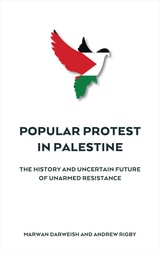
Popular Protest in Palestine
The History and Uncertain Future of Unarmed ResistanceMarwan Darweish and Andrew Rigby
Pluto Press, 2015
Projecting the Nation
History and Ideology on the Israeli ScreenEran Kaplan
Rutgers University Press, 2020