Results by title
110 books match the query 'Italian' and 8 start with p
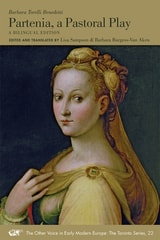
Partenia, A Pastoral Play
A Bilingual EditionBarbara Torelli Benedetti
Iter Press, 2013

Pasolini Requiem
Second EditionBarth David Schwartz
University of Chicago Press, 2017
Based on extensive interviews with those who knew Pasolini, both friends and enemies, admirers and detractors, Pasolini Requiem chronicles his growth from poet in the provinces to Italy’s leading “civil poet”; his flight to Rome in 1950; the scandalous success of his two novels and political writing; and his transition to film, where he started as a contributor to the golden age of Italian cinema and ended with the shocking Salò, or the 120 Days of Sodom. Pasolini’s tragic and still unsolved murder has remained a subject of contentious debate for four decades. The enduring fascination with who committed the crime—and why—reflects his vital stature in Italy’s political and social history.
Updated throughout and with a new afterword covering the efforts to reopen the investigation—and the legal maelstrom surrounding Pasolini’s demise—this edition of Pasolini Requiem is a riveting account of one of the twentieth century’s most controversial, ever-present iconoclasts.
Petrarch and His Legacies
Edited by Ernesto Livorni and Jelena Todorovic
Arizona Center for Medieval and Renaissance Studies, 2021
This book gathers cutting-edge articles by prominent scholars reflecting on Petrarch’s poetry and his long legacy, from the Renaissance to the present day. The scholars engaged in this volume read Petrarch in the context of his own world and with a variety of theoretical and critical approaches, never overlooking the opportunity for an interdisciplinary reading that combines poetry and visual arts. The volume includes scholars from the United States and Europe (Italy, in particular), thus offering the opportunity to compare different theoretical approaches.
The articles in the second half of the volume celebrate Petrarch’s legacies beyond the historically fundamental Renaissance Petrarchism, while exploring the presence of Petrarch’s poetry in several cultural realities. The scholars also read Petrarch with necessary attention to new disciplines such as digital humanities. The richness of the volume lies in these innovative perusals of Petrarch’s works not only through the critical lens of dedicated scholars, but also through their readings of artists who throughout the centuries appreciated and revived Petrarch’s poetry in their own literary endeavors.
Petrarch
A Critical Guide to the Complete WorksEdited by Victoria Kirkham and Armando Maggi
University of Chicago Press, 2009

Phonetics and Diction in Singing
Italian, French, Spanish, GermanKurt Adler
University of Minnesota Press, 1967
Phonetics and Diction in Singing was first published in 1967. Minnesota Archive Editions uses digital technology to make long-unavailable books once again accessible, and are published unaltered from the original University of Minnesota Press editions.
This book provides rules and illustrative examples for the study of songs and operas in the leading foreign languages of musical literature. The author is conductor and chorus master of the Metropolitan Opera. He has drawn the material from his larger book, The Art of Accompanying and Coaching,to provide a handbook or textbook especially suitable for use by voice teachers, singers, students in high schools, colleges, and schools of music, and members of choruses, church choirs, and opera workshops and their directors. Following a general discussion of phonetics and diction in singing there are separate chapters on Italian, French, Spanish, and German phonetics and diction. The text is illustrated with drawings and diagrams of vocal techniques and musical examples.
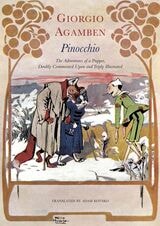
Pinocchio
The Adventures of a Puppet, Doubly Commented Upon and Triply IllustratedGiorgio Agamben
Seagull Books, 2023
In Pinocchio, Giorgio Agamben turns his keen philosopher’s eye to the famous nineteenth-century novel by Carlo Collodi. To Agamben, Pinocchio’s adventures are a kind of initiation into life itself. Like us, the mischievous puppet is caught between two worlds. He is faced with the alternatives of submitting to authority or of carrying on, stubbornly indulging his way of being. From Agamben’s virtuoso interpretation of this classic story, we learn that we can harbor the mystery of existence only if we are not aware of it, only if we manage to cohabit with an area of non-knowledge, immemorial and very near. Richly illustrated with images from three early editions of Collodi’s novel, this new volume will delight enthusiasts of both literature and philosophy.
Posterity
Inventing Tradition from Petrarch to GramsciRocco Rubini
University of Chicago Press, 2022
Rocco Rubini studies the motives and literary forms in the making of a “tradition,” not understood narrowly, as the conservative, stubborn preservation of received conventions, values, and institutions, but instead as the deliberate effort on the part of writers to transmit a reformulated past across generations. Leveraging Italian thinkers from Petrarch to Gramsci, with stops at prominent humanists in between—including Giambattista Vico, Carlo Goldoni, Francesco De Sanctis, and Benedetto Croce—Rubini gives us an innovative lens through which to view an Italian intellectual tradition that is at once premodern and modern, a legacy that does not depend on a date or a single masterpiece, but instead requires the reader to parse an expanse of writings to uncover deeper transhistorical continuities that span six hundred years. Whether reading work from the fourteenth century, or from the 1930s, Rubini elucidates the interplay of creation and the reception underlying the enactment of tradition, the practice of retrieving and conserving, and the revivification of shared themes and intentions that connect thinkers across time. Building on his award-winning book, The Other Renaissance, this will prove a valuable contribution for intellectual historians, literary scholars, and those invested in the continuing humanist legacy.
Preserving the Spell
Basile's "The Tale of Tales" and Its Afterlife in the Fairy-Tale TraditionArmando Maggi
University of Chicago Press, 2015
If we want to rediscover the power of fairy tales—as Armando Maggi thinks we should—we need to discover a new mythic lens, a new way of approaching and understanding, and thus re-creating, the transformative potential of these stories. In Preserving the Spell, Maggi argues that the first step is to understand the history of the various traditions of oral and written narrative that together created the fairy tales we know today. He begins his exploration with the ur-text of European fairy tales, Giambattista Basile’s The Tale of Tales, then traces its path through later Italian, French, English, and German traditions, with particular emphasis on the Grimm Brothers’ adaptations of the tales, which are included in the first-ever English translation in an appendix. Carrying his story into the twentieth century, Maggi mounts a powerful argument for freeing fairy tales from their bland contemporary forms, and reinvigorating our belief that we still can find new, powerfully transformative ways of telling these stories.