Results by title
82 books match the query 'Japanese Americans' and 6 start with p
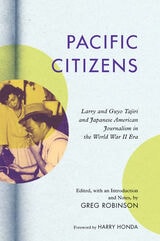
Pacific Citizens
Larry and Guyo Tajiri and Japanese American Journalism in the World War II EraEdited, with and Introduction and Notes, by Greg Robinson: Foreword by Harry Honda
University of Illinois Press, 2012
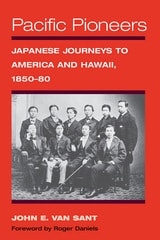
Pacific Pioneers
Japanese Journeys to America and Hawaii, 1850-80John E. Van Sant
University of Illinois Press, 2019
Although Japanese immigrants did not start arriving in substantial numbers in the West until after 1880, in the previous thirty years a handful of key encounters helped shape relations between Japan and the United States. John E. Van Sant explores the motivations and accomplishments of these resourceful, sometimes visionary individuals who made important inroads into a culture quite different from their own and paved the way for the Issei and Nisei.
Pacific Pioneers presents detailed biographical sketches of Japanese such as Joseph Heco, Niijima Jo, and the converts to the Brotherhood of the New Life and introduces the American benefactors, such as William Griffis, David Murray, and Thomas Lake Harris, who built relationships with their foreign visitors. Van Sant also examines the uneasy relations between Japanese laborers and sugar cane plantation magnates in Hawaii during this period and the shortlived Wakamatsu colony of Japanese tea and silk producers in California.
A valuable addition to the literature, Pacific Pioneers brings to life a cast of colorful, long-forgotten characters while forging a critical link between Asian and Asian American studies.
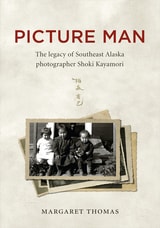
Picture Man
The Legacy of Southeast Alaska Photographer Shoki KayamoriMargaret Thomas
University of Alaska Press, 2015
In Picture Man, Margaret Thomas views Kayamori’s life through multiple lenses. Using Kayamori’s original photos, she explores the economic and political realities that sent Kayamori and thousands like him out of Japan toward opportunity and adventure in the United States, especially the Pacific Northwest. She reveals the tensions around Asian immigrants on the West Coast and the racism that sent many young men north to work in the canneries of Alaska. And she illuminates the intersecting—and at times conflicting—lives of villagers and migrants in a time of enormous change. Part history, part biography, part photographic showcase, Picture Man offers a fascinating new view of Alaska history.
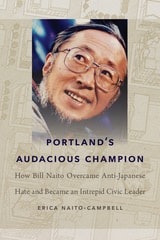
Portland's Audacious Champion
How Bill Naito Overcame Anti-Japanese Hate and Became an Intrepid Civic LeaderErica Naito-Campbell
Oregon State University Press, 2024
William “Bill” Sumio Naito (1925–1996) was a remarkable and visionary individual—the Portland-born son of Japanese immigrants who became one of the city’s most significant business and civic leaders. Every day thousands of people drive on Naito Parkway alongside Portland’s Waterfront Park, yet little has been written about the man for whom it was named.
In this first biography, Erica Naito-Campbell, Bill’s granddaughter, shows how his story is also the story of Portland, the city he loved. Naito’s life, from the Great Depression and World War II through Portland’s rebirth in the 1970s and its profound growth, tracked most of the major events in the city and was the catalyst for many of them. Through hard-earned success in importing and real estate with his brother Sam, Naito came to wield considerable power in the city, and his leadership led to much of what we consider iconic Portland today: the “Portland Oregon” sign near the Burnside Bridge, the annual Christmas tree in Pioneer Courthouse Square, and Harbor Drive’s conversion to Waterfront Park.
Naito’s name became synonymous with civic leadership, whether it was growing Portland’s urban tree canopy, revitalizing its downtown, or preserving historic buildings. But less is known about his difficult childhood—with a father who worked twelve-hour days and a mother whose treatment of him was harsh at best—and the racism he endured during World War II. After the expulsion of Japanese Americans following Pearl Harbor and his military service in Occupied Japan, Naito overcame great emotional turmoil to return to Portland and become one of its greatest change-makers.
Erica Naito-Campbell uses anecdotes, rich details, and previously unknown stories about Bill Naito to bring Portland’s history to life—while acknowledging that the cost of his success was a family rife with resentments and envy. Her book reveals the emotional wounds that drove Naito to become one of Portland’s most inspiring civic leaders, a pivotal player in the city’s journey from a moribund downtown to a national model for livability, urban renewal, and historic preservation.
Prisons and Patriots
Japanese American Wartime Citizenship, Civil Disobedience, and Historical MemoryCherstin Lyon
Temple University Press, 2011
Prisons and Patriots provides a detailed account of forty-one Nisei (second-generation Japanese Americans), known as the Tucsonians, who were imprisoned for resisting the draft during WWII. Cherstin Lyon parallels their courage as resisters with that of civil rights hero Gordon Hirabayashi, well known for his legal battle against curfew and internment, who also resisted the draft. These dual stories highlight the intrinsic relationship between the rights and the obligations of citizenship, particularly salient in times of war.
Lyon considers how wartime civil disobedience has been remembered through history—how soldiers have been celebrated for their valor while resisters have been demonized as unpatriotic. Using archival research and interviews, she presents a complex picture of loyalty and conflict among first-generation Issei and Nisei. Lyon contends that the success of the redress movement has made room for a narrative that neither reduces the wartime confinement to a source of shame nor proffers an uncritical account of heroic individuals.

Pure Beauty
Judging Race in Japanese American Beauty PageantsRebecca Chiyoko King-O’Riain
University of Minnesota Press, 2006