Results by title
645 books match the query 'Judaism' and 15 start with p

Passion of Israel
Jacques Maritain, Catholic Conscience, and the HolocaustRichard Francis Crane
University of Scranton Press, 2010
In his lifetime, French philosopher Jacques Maritain (1882–1973) achieved a reputation as both a leading Catholic intellectual and as an outspoken critic of antisemitism. Here historian Richard Francis Crane traces the development of Maritain’s opposition toward antisemitism and analyzes the Catholic appreciation of Judaism that animated his stance. Crane probes the writings and teachings of Maritain—from before, during, and after the Holocaust—and illuminates how his ideas altered Christian perceptions of Jews and Judaism during his lifetime and continue to do so today.
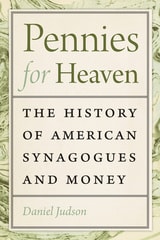
Pennies for Heaven
The History of American Synagogues and MoneyDaniel Judson
Brandeis University Press, 2018
Philo's Influence on Valentinian Tradition
Risto Auvinen
SBL Press, 2024
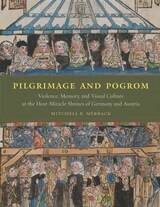
Pilgrimage and Pogrom
Violence, Memory, and Visual Culture at the Host-Miracle Shrines of Germany and AustriaMitchell B. Merback
University of Chicago Press, 2013
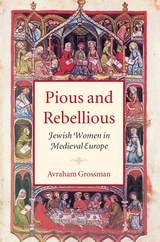
Pious and Rebellious
Jewish Women in Medieval EuropeAvraham Grossman
Brandeis University Press, 2004
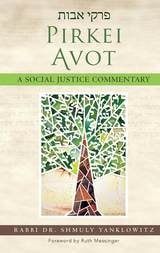
Pirkei Avot
A Social Justice CommentaryRabbi Dr. Shmuly Yanklowitz
Central Conference of American Rabbis, 2018
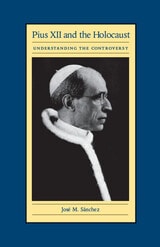
Pius XII and the Holocaust
Understanding the ControversyJosé M. Sánchez
Catholic University of America Press, 2002
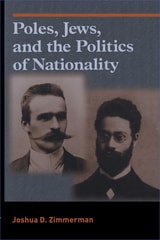
Poles, Jews, and the Politics of Nationality
The Bund and the Polish Socialist Party in Late Tsarist Russia, 1892–1914Joshua D. Zimmerman
University of Wisconsin Press, 2004
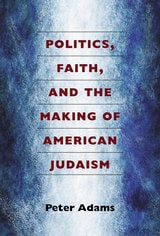
Politics, Faith, and the Making of American Judaism
Peter Adams
University of Michigan Press, 2014
In 1862, in the only instance of a Jewish expulsion in America, General Ulysses S. Grant banished Jewish citizens from the region under his military command. Although the order was quickly revoked by President Lincoln, it represented growing anti-Semitism in America. Convinced that assimilation was their best defense, Jews sought to Americanize by shedding distinctive dress, occupations, and religious rituals.
American Jews recognized the benefit and urgency of bridging the divide between Reform and Orthodox Judaism to create a stronger alliance to face the challenges ahead. With Grant’s 1868 presidential campaign, they also realized they could no longer remain aloof from partisan politics. As they became a growing influence in American politics, both political parties courted the new Jewish vote.
Once in office, Grant took notice of the persecution of Jews in Romania and Russia, and he appointed more Jews to office than any president before him. Indeed, Simon Wolf, a Washington lawyer who became one of Grant’s closest advisers, was part of a new generation of Jewish leaders to emerge in the post–Civil War era—thoroughly Americanized, politically mature, and committed to the modernized Judaism of the Reform movement.
In Politics, Faith, and the Making of American Judaism, Peter Adams recounts the history of the American Jewish Community’s assimilation efforts, organization, and political mobilization in the late 19th century, as political and cultural imperatives crafted a new, American brand of Judaism.
Powers Of Diaspora
Two Essays On The Relevance Of Jewish CultureJonathan Boyarin
University of Minnesota Press, 2002
Reasserts the centrality of Jewish culture to contemporary discussions of diaspora
Diaspora: the scattering of a people, often described as a condition of helplessness and a pathology to be overcome. It can also be, as Jonathan Boyarin and Daniel Boyarin assert in this provocative work, a unique source of power and strength. Focusing on Jewish experience, Powers of Diaspora forcefully argues that diasporic communities exercise a distinct form of cultural power in order to maintain themselves.
With reference to rabbinic culture and contemporary Jewish ethnography, the authors evoke the cultural strategies of Jewish diaspora—of regeneration through statelessness—that should prove increasingly relevant to the dilemmas and possibilities of the "new diasporas" born in the midst and in the aftermath of the modern world-system. Their work exposes the various methods by which peoples in diaspora "legislate" distinctive ways of life and establish formal communal structures, thus creating fluid yet effective boundaries between themselves and the others who surround them, and critiques the internal power dynamics that can sometimes result.Powers of Diaspora strongly reasserts the place of Jewish culture in contemporary discussions of diaspora, where the cultural politics of postcolonialism have remarginalized Jewish experience; at the same time, it brings insights from studies of other diasporas to bear on the study of Jews. In challenging the equation of diaspora with powerlessness, the book questions the modern nation-state ideal and suggests that diasporic cultural formations offer important clues toward an alternative means of relating culture to polity.
Priests and Cults in the Book of the Twelve
Lena-Sofia Tiemeyer
SBL Press, 2016
Key essays that explore a range of attitudes toward clergy and ritual
This book discusses the depictions of the cult and its personnel in the twelve prophetic books commonly referred to as the Book of the Twelve or the Minor Prophets. The articles in the volume explore the following questions: How did these prophetic writers envision the priests and the Levites? What did they think about the ritual aspects of ancient Israelite faith, including not only the official temple cult in Jerusalem but also cultic expressions outside the capital? What, in their views, characterized a faithful priest and what should the relationship be between his cultic performance and the ways in which he lived his life? How does the message of each individual author fit in with the wider Israelite traditions? Finally, who were these prophetic authors, in which historical contexts did they live and work, and what stylistic tools did they use to communicate their message?
Features:
Primacies
Experience, Expression, and the Jewish ImaginationMichael Fishbane
University of Chicago Press, 2025
Primacies begins with the assertion that our earliest preverbal experiences are accompanied by a primary language—a universal expression of tears, cries, and laughter offered long before we learn our distinctive, ordinary languages. For Michael Fishbane, these “primacies” release the raw feelings of our existential condition and catalyze our most powerful literary expressions of sorrow, joy, and fulfillment.
In this book, Fishbane explores how ancient, medieval, and modern literature and poetry express and transform these primal sensations. Building on his theological project begun in Sacred Attunement and Fragile Finitude, Fishbane offers here a radically new lived hermeneutics that seeks to do nothing less than redefine the relationship between experience and language.
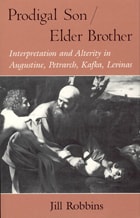
Prodigal Son/Elder Brother
Interpretation and Alterity in Augustine, Petrarch, Kafka, LevinasJill Robbins
University of Chicago Press, 1991
"Through a creative reading of the prodigal son parable, Jill Robbins demonstrates the hermeneutical impasse of the Christian exegete who must and yet cannot incorporate the Old Testament. Having disclosed the aporia at the heart of Christian hermeneutics, she proposes an alternative approach to the Hebrew Bible and new interpretations of Augustine, Petrarch, Kafka, and Levinas. Robbins brilliantly integrates the discourses of biblical texts, literary works, and critical analysis."—Mark C. Taylor, Williams College
Psalm Studies, Volume 1
Sigmund Mowinckel
SBL Press, 2014
Sigmund Mowinckel is widely recognized as one of the leading forces in Psalms research during the twentieth century. Indeed, the culmination of Mowinckel’s thought and work, The Psalms in Israel’s Worship, continues to play a significant role in Psalms scholarship today. Not as well known are the seminal studies that prepared the ground for Mowinckel’s later work, the six Psalmenstudien that are translated here into English for the first time. In these studies Mowinckel explores with care and in detail such topics as: “'Awen and the Psalms of Individual Lament”; “YHWH’s Enthronement Festival and the Origin of Eschatology”; “Cultic Prophecy and Prophetic Psalms”; “The Technical Terms in the Psalm Superscriptions”; “Blessing and Curse in Israel’s Cult and Psalmody”; and “The Psalmists.” Anyone interested in Psalms study, especially the possible role of the New Year’s enthronement festival within Israel’s cult and its relation to the Psalter, will find much to consider in these classic works.
Psalm Studies, Volume 2
Sigmund Mowinckel
SBL Press, 2014
Sigmund Mowinckel is widely recognized as one of the leading forces in Psalms research during the twentieth century. Indeed, the culmination of Mowinckel’s thought and work, The Psalms in Israel’s Worship, continues to play a significant role in Psalms scholarship today. Not as well known are the seminal studies that prepared the ground for Mowinckel’s later work, the six Psalmenstudien that are translated here into English for the first time. In these studies Mowinckel explores with care and in detail such topics as: “'Awen and the Psalms of Individual Lament”; “YHWH’s Enthronement Festival and the Origin of Eschatology”; “Cultic Prophecy and Prophetic Psalms”; “The Technical Terms in the Psalm Superscriptions”; “Blessing and Curse in Israel’s Cult and Psalmody”; and “The Psalmists.” Anyone interested in Psalms study, especially the possible role of the New Year’s enthronement festival within Israel’s cult and its relation to the Psalter, will find much to consider in these classic works.