Results by title
74 books match the query 'Kenya' and 4 start with p

Piecing the Puzzle
The Genesis of AIDS Research in AfricaLarry Krotz
University of Manitoba Press, 2012
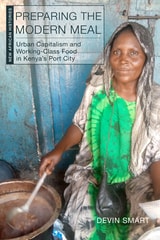
Preparing the Modern Meal
Urban Capitalism and Working-Class Food in Kenya's Port CityDevin Smart
Ohio University Press, 2025
A case study on how urban capitalism created a new working-class food system in the port city of Mombasa during the twentieth century.
In the early twentieth century, East Africans lived primarily in rural areas, cultivating most of the food they consumed. By the start of the twenty-first century, though, millions of people lived in cities, where they purchased their food from markets and eateries. This transformation reflects broader historical shifts in food production, preparation, and consumption throughout the world from a rural subsistence model to a commercial system. Preparing the Modern Meal explores this economic revolution in Mombasa, Kenya, and examines the experiences of those who migrated from rural settings to an Indian Ocean town where they became dependent on the capitalist market for their daily meals.
The change to a commercial food system reshaped the culinary culture of East Africa. In rural communities, diets were diverse and varied with the seasons. Conversely, Mombasa’s commercial supply chains, which steadily delivered staples like maize meal, wheat flour, tea, and meat, led to a more uniform urban cuisine that remained consistent throughout the year.
Urbanization also altered gender roles in cooking. In rural households women prepared the food, but in Mombasa many workers lived in all-male housing and had to cook for themselves. Some even took up cooking as a profession, thus expanding the role of men in the culinary domain. In addition to these themes, Preparing the Modern Meal reviews the emergence of new businesses, particularly those of street food vendors who provided affordable meals in residential neighborhoods and to nearby workplaces. However, these makeshift eateries often clashed with the vision for commerce in a modern city held by municipal officials, who often sought to eliminate these businesses through fines, arrests, and demolition campaigns. Through the lens of food, this book explores the conflicts between elite ideas about urban modernity and the actual ways that poor communities made their lives work in an unequal city.
Primitive Normativity
Race, Sexuality, and Temporality in Colonial KenyaElizabeth W. Williams
Duke University Press, 2024
Pronouncing and Persevering
Gender and the Discourses of Disputing in an African Islamic CourtSusan F. Hirsch
University of Chicago Press, 1998
Pronouncing and Persevering focuses closely on the language used in disputes, particularly how men and women narrate their claims and how their speech shapes and is shaped by gender hierarchy in postcolonial Swahili society. Based on field research and court testimony, Hirsch's book debunks the conventional view that women are powerless under Islamic law and challenges the dichotomies through which Islam and gender relations are currently understood.