Results by title
527 books match the query 'Labor' and 24 start with p
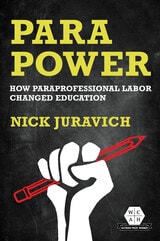
Para Power
How Paraprofessional Labor Changed EducationNick Juravich
University of Illinois Press, 2024
Understanding paras as key players in Black and Latino struggles for jobs and freedom, Nick Juravich details how the first generation of paras in New York City transformed work in public schools and the relationships between schools and the communities they served. Paraprofessional programs created hundreds of thousands of jobs in working-class Black and Latino neighborhoods. These programs became an important pipeline for the training of Black and Latino teachers in the1970s and early 1980s while paras’ organizing helped drive the expansion and integration of public sector unions.
An engaging portrait of an invisible profession, Para Power examines the lives and practices of the first generation of paraprofessional educators against the backdrop of struggles for justice, equality, and self-determination.
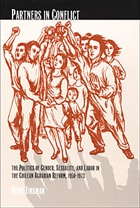
Partners in Conflict
The Politics of Gender, Sexuality, and Labor in the Chilean Agrarian Reform, 1950–1973Heidi Tinsman
Duke University Press, 2002
Tinsman restores women to a scholarly narrative that has been almost exclusively about men, recounting the centrality of women’s labor to the pre-Agrarian Reform world of the hacienda during the 1950s and recovering women’s critical roles in union struggles and land occupations during the Agrarian Reform itself. Providing a theoretical framework for understanding why the Agrarian Reform ultimately empowered men more than women, Tinsman argues that women were marginalized not because the Agrarian Reform ignored women but because, under both the Frei and Allende governments, it promoted the male-headed household as the cornerstone of a new society. Although this emphasis on gender cooperation stressed that men should have more respect for their wives and funneled unprecedented amounts of resources into women’s hands, the reform defined men as its protagonists and affirmed their authority over women.
This is the first monographic social history of Chile’s Agrarian Reform in either English or Spanish, and the first historical work to make sexuality and gender central to the analysis of the reforms.

Patriarchy on the Line
Labor, Gender, and Ideology in the Mexican Maquila IndustrySusan Tiano
Temple University Press, 1994
Peasants on Plantations
Subaltern Strategies of Labor and Resistance in the Pisco Valley, PeruVincent Peloso
Duke University Press, 1999
Grounded in the theoretical perspectives of subaltern studies and drawing on an extremely complete archive of landed estates that includes detailed regular reports by plantation managers on all aspects of farming life, Peasants on Plantations reveals the intricate ways peasants, managers, and owners manipulated each other to benefit their own interests. As Peloso demonstrates, rather than a simple case of domination of the peasants by the owners, both parties realized that negotiation was the key to successful growth, often with the result that peasants cooperated with plantation growth strategies in order to participate in a market economy. Long-term contracts gave tenants and sharecroppers many opportunities to make farming choices, to assert claims on the land, compete among themselves, and participate in plantation expansion. At the same time, owners strove to keep the peasants in debt and well aware of who maintained ultimate control.
Peasants on Plantations offers a largely untold view of the monumental struggle between planters and peasants that was fundamental in shaping the agrarian history of Peru. It will interest those engaged in Latin American studies, anthropology, and peasant and agrarian studies.
Pedal To The Metal
The Work Life of TruckersLawrence J. Ouellet
Temple University Press, 1994
Pensions, Labor, and Individual Choice
David A. Wise
University of Chicago Press, 1985
Previous books on private pensions have largely neglected behavioral implications of the features of pension plans. The papers in this volume, developed from material presented at a recent National Bureau of Economic Research conference, address two aspects of the relation between varieties of labor coverage and participation in the labor force. First, age at retirement may be correlated with kind of pension coverage. The papers, in fact, provide strong evidence that individual decisions about when to retire are directly influenced by pension options. Second, pension plans usually impose a high cost on workers who change jobs, which suggests that pension coverage reduces instances of job change. Pensions, Labor, and Individual Choice quantifies these correlations and proposes a conceptual framework within which to view them.

People of Prowess
Sport, Leisure, and Labor in Early Anglo-AmericaNancy L. Struna
University of Illinois Press, 1996
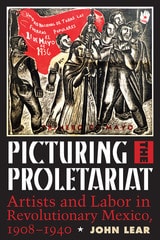
Picturing the Proletariat
Artists and Labor in Revolutionary Mexico, 1908–1940By John Lear
University of Texas Press, 2017
Thomas McGann Memorial Prize, Rocky Mountain Council on Latin American Studies, 2017
Runner-up, Humanities Book Prize, Mexico Section of the Latin American Studies Association, 2018
In the wake of Mexico’s revolution, artists played a fundamental role in constructing a national identity centered on working people and were hailed for their contributions to modern art. Picturing the Proletariat examines three aspects of this artistic legacy: the parallel paths of organized labor and artists’ collectives, the relations among these groups and the state, and visual narratives of the worker. Showcasing forgotten works and neglected media, John Lear explores how artists and labor unions participated in a cycle of revolutionary transformation from 1908 through the presidency of Lázaro Cárdenas (1934–1940). Lear shows how middle-class artists, radicalized by the revolution and the Communist Party, fortified the legacy of the prerevolutionary print artisan José Guadalupe Posada by incorporating modernist, avant-garde, and nationalist elements in ways that supported and challenged unions and the state. By 1940, the state undermined the autonomy of radical artists and unions, while preserving the image of both as partners of the “institutionalized revolution.”
This interdisciplinary book explores the gendered representations of workers; the interplay of prints, photographs, and murals in journals, in posters, and on walls; the role of labor leaders; and the discursive impact of the Spanish Civil War. It considers “los tres grandes”—Rivera, Siquieros, and Orozco—while featuring lesser-known artists and their collectives, including Saturnino Herrán, Leopoldo Méndez, Santos Balmori, and the League of Revolutionary Writers and Artists (LEAR). The result is a new perspective on the art and politics of the revolution.

Places/Everyone
Jim Daniels
University of Wisconsin Press, 1985
Jim Daniels, in his first book of poems, draws upon his experiences in living and working in his native Detroit to present a start, realistic picture of urban, blue-collar life. Daniels, his brothers, his father, and his grandfather have all worked in the auto industry, and that background seeps into nearly all these poems.
The first of the book’s three sections sketches out this background, then moves into a neighborhood full of people whose lives are so linked to the ups and downs of the auto industry that they have to struggle to find their own lives; in "Still Lives in Detroit, #2," Daniels writes, "There’s a man in this picture. / No one can find him." The second section contains the "Digger" poems, a series on the lives of a Detroit auto worker and his family which tries to capture the effects of the work on life outside the factory. Here, we listen to Digger think, dream, wander on psychological journeys while he moves through his routines, shoveling the snow, mowing the lawn, and so forth. In section three, the poems move into the workplace, whether that be a liquor store, a hamburger joint, or a factory.
These poems, sometimes dark, sometimes humorous, concentrate on the efforts of workers to rise above the often depressing work of blue-collar or minimum-wage jobs, to salvage some pride and dignity. The poems in this book try to give a voice to those who are often shut out of poetry. They are important. These lives are important, and the poems, more than anything, say that.
Planet Work
Rethinking Labor and Leisure in the AnthropoceneRyan Hediger
Bucknell University Press, 2023

Play to Submission
Gaming Capitalism in a Tech FirmTongyu Wu
Temple University Press, 2024
Play to Submission shows how Behemoth’s games undermined and manipulated workers. They lost their work-life balance and the constant competition made labor organizing difficult. Nonetheless, many workers embraced management’s games as a chance to show off their “gamer” identities and create a workplace culture with privileged insiders and exiled outsiders, with female and migrant workers usually in the latter group. Moreover, Wu indicates this may be the future of work for high- and low-skilled and, creative workers in an environment where capitalists have heightened demands for technology and creativity.
Drawing from 13 months of ethnographic work, Wu presents a persistent reality in which the company reaps the reward of surplus productivity, leaving employees themselves in a highly competitive and sometimes precarious work position.
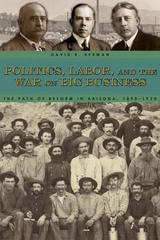
Politics, Labor, and the War on Big Business
The Path of Reform in Arizona, 1890-1920David R. Berman
University Press of Colorado, 2012
In the 1890s, once-heavily courted corporations had become, in the eyes of many, outside "money interests" or "beasts" that exploited the wealth of the sparsely settled area. Arizona's anticorporate reformers condemned the giant corporations for mistreating workers, farmers, ranchers, and small-business people and for corrupting the political system. During a thirty-year struggle, Arizona reformers called for changes to ward off corporate control of the political system, increase corporate taxation and regulation, and protect and promote the interests of working people.
Led by George W.P. Hunt and progressive Democrats, Arizona's brand of Progressivism was heavily influenced by organized labor, third parties, and Socialist activists. As highly powerful railroad and mining corporations retaliated, conflict took place on both political levels and industrial backgrounds, sometimes in violent form.
Politics, Labor and the War on Big Business places Arizona's experience in the larger historical discussion of reform activity of the period, considering issues involving the role of government in the economy and the possibility of reform, topics highly relevant to current debates.

Power Despite Precarity
Strategies for the Contingent Faculty Movement in Higher EducationJoe Berry
Pluto Press, 2021
Higher education is the site of an ongoing conflict. At the heart of this struggle are the precariously employed faculty 'contingents' who work without basic job security, living wages or benefits. Yet they have the incentive and, if organized, the power to shape the future of higher education.
Power Despite Precarity is part history, part handbook and a wholly indispensable resource in this fight. Joe Berry and Helena Worthen outline the four historical periods that led to major transitions in the worklives of faculty of this sector. They then take a deep dive into the 30-year-long struggle by California State University lecturers to negotiate what is recognized as the best contract for contingents in the US.
The authors ask: what is the role of universities in society? Whose interests should they serve? What are the necessary conditions for the exercise of academic freedom? Providing strategic insight for activists at every organizing level, they also tackle 'troublesome questions' around legality, union politics, academic freedom and how to recognize friends (and foes) in the struggle.

Power Despite Precarity
Strategies for the Contingent Faculty Movement in Higher EducationJoe Berry
Pluto Press, 2021
Higher education is the site of an ongoing conflict. At the heart of this struggle are the precariously employed faculty 'contingents' who work without basic job security, living wages or benefits. Yet they have the incentive and, if organized, the power to shape the future of higher education.
Power Despite Precarity is part history, part handbook and a wholly indispensable resource in this fight. Joe Berry and Helena Worthen outline the four historical periods that led to major transitions in the worklives of faculty of this sector. They then take a deep dive into the 30-year-long struggle by California State University lecturers to negotiate what is recognized as the best contract for contingents in the US.
The authors ask: what is the role of universities in society? Whose interests should they serve? What are the necessary conditions for the exercise of academic freedom? Providing strategic insight for activists at every organizing level, they also tackle 'troublesome questions' around legality, union politics, academic freedom and how to recognize friends (and foes) in the struggle.
Precarity and Belonging
Labor, Migration, and NoncitizenshipCatherine S. Ramírez
Rutgers University Press, 2021

Premier Issue
Studies in Working-Class History of the Americas, Volume 1Leon Fink
Duke University Press, 0
Contributors. James R. Barrett, Joshua Brown, Leon Fink, Dana Frank, John French, James Green, Julie Greene, Gregory Kealey, Kristen Hill Maher, Steve Meyer
Producer Dynamics
New Evidence from Micro DataEdited by Timothy Dunne, J. Bradford Jensen, and Mark J. Roberts
University of Chicago Press, 2009
The Census Bureau has recently begun releasing official statistics that measure the movements of firms in and out of business and workers in and out of jobs. The economic analyses in Producer Dynamics exploit this newly available data on establishments, firms, and workers, to address issues in industrial organization, labor, growth, macroeconomics, and international trade.
This innovative volume brings together a group of renowned economists to probe topics such as firm dynamics across countries; patterns of employment dynamics; firm dynamics in nonmanufacturing industries such as retail, health services, and agriculture; employer-employee turnover from matched worker/firm data sets; and turnover in international markets. Producer Dynamics will serve as an invaluable reference to economists and policy makers seeking to understand the links between firms and workers, and the sources of economic dynamics, in the age of globalization.
Prosperity For All?
The Economic Boom and African AmericansRobert Cherry
Russell Sage Foundation, 2000
Psychodynamics Organization
Larry Hirschorn
Temple University Press, 1993
Public Education and Social Reform
A History of the Illinois Education AssociationThomas J. Suhrbur
University of Illinois Press, 2025
Suhrbur pays particular attention to the impact of race, gender, religion, and tax policy on the IEA and public schools. He also examines the IEA’s evolution from a professional organization controlled by administrations and officials through its radical transformation into a teacher-led independent labor union. As a workers’ organization, the IEA successfully fought for collective bargaining and organized K–12 and higher education while continually standing against right-wing efforts to privatize education and undermine public schools with vouchers, for-profit institutions, and tax credits.
Multifaceted and up to date, Public Education and Social Reform tells the story of the organization and figures dedicated to sustaining and advancing Illinois public education.
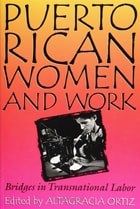
Puerto Rican Women and Work
Bridges in Transnational Laboredited by Altagracia Ortiz
Temple University Press, 1996
Puerto Rican Women and Work: Bridges in Transnational Labor is the only comprehensive study of the role of Puerto Rican women workers in the evolution of a transnational labor force in the twentieth century.
This book examines Puerto Rican women workers, both in Puerto Rico and on the U.S. mainland. It contains a range of information--historical, ethnographic, and statistical. The contributors provide insights into the effects of migration and unionization on women's work, taking into account U.S. colonialism and globalization of capitalism throughout the century as well as the impact of Operation Bootstrap. The essays are arranged in chronological order to reveal the evolutionary nature of women's work and the fluctuations in migration, technology, and the economy. This one-of-a-kind collection will be a valuable resource for those interested in women's studies, ethnic studies, and Puerto Rican and Latino studies, as well as labor studies.
Putting Faith in Partnerships
Welfare-to-Work in Four CitiesStephen V. Monsma
University of Michigan Press, 2004
In this groundbreaking study of a politically controversial topic---the debut offering in Alan Wolfe's Contemporary Political and Social Issues series---author Stephen Monsma avoids overheated rhetoric in favor of a careful, critical analysis of the hard evidence on whether public-private partnerships really work.
The book is based on in-depth studies of social service programs in Los Angeles, Chicago, Philadelphia, and Dallas. By examining public-private partnerships between government offices and nonprofit organizations, Monsma seeks to understand how these partnerships affect the balance between government's efforts to deal with social problems and the rights of individual citizens to control their own lives.
Putting Faith in Partnerships answers many previously unanswered questions in what may be the most controversial public policy debate today: about the feasibility and wisdom of government agencies forming partnerships with private organizations to provide essential public social services.
Stephen V. Monsma is Professor of Political Science at Pepperdine University. He has served as director of the Office of Quality Review in Michigan's Department of Social Services and is a widely recognized expert on the role of faith-based organizations in social service programs.
Putting Poor People to Work
How the Work-First Idea Eroded College Access for the PoorKathleen M. Shaw
Russell Sage Foundation, 2006
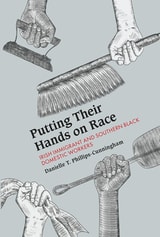
Putting Their Hands on Race
Irish Immigrant and Southern Black Domestic WorkersDanielle T. Phillips-Cunningham
Rutgers University Press, 2020
Putting Their Hands on Race offers an important labor history of 19th and early 20th century Irish immigrant and US southern Black migrant domestic workers. Drawing on a range of archival sources, this intersectional study explores how these women were significant to the racial labor and citizenship politics of their time. Their migrations to northeastern cities challenged racial hierarchies and formations. Southern Black migrant women resisted the gendered racism of domestic service, and Irish immigrant women strove to expand whiteness to position themselves as deserving of labor rights. On the racially fractious terrain of labor, Black women and Irish immigrant women, including Victoria Earle Matthews, the “Irish Rambler”, Leonora Barry, and Anna Julia Cooper, gathered data, wrote letters and speeches, marched, protested, engaged in private acts of resistance in the workplace, and created women’s institutions and organizations to assert domestic workers’ right to living wages and protection.