Results by title
716 books match the query 'Literary Figures' and 17 start with p
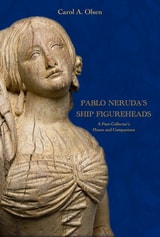
Pablo Neruda's Ship Figureheads
A Poet-Collector's Muses and CompanionsCarol A. Olsen, Foreword by Fernando Sáez Garcia
University of Alabama Press, 2025
Unlock the stories of Pablo Neruda’s rare nineteenth-century carved-wood ship figurehead collection in Chile, why they mattered in his tumultuous life, and how we benefit from them now.
Poet Pablo Neruda’s nineteenth-century ship figurehead collection in Chile is one of the most significant in the world. Containing carved wood images of dramatically postured men and women, these figures are now better understood due to years of research, a willingness to challenge Neruda’s ever-changing stories about them, and a realization that the names Neruda chose for his figureheads perhaps had more to do with his life than theirs. The rhythm and beauty of Neruda’s worn wood figures is counterpoint to his own tumultuous life as an author, politician, and communist dissident.
Collecting ship figureheads was central to Neruda’s passion for owning things made of wood, a material he said was his best friend, and for standing out among others as he gradually built the public persona that helped move him toward winning the Nobel Prize in Literature. With his choir of immobilized figureheads stationed upright in his living room and facing the Pacific Ocean, Neruda was surrounded by dramatic images from the sea that ignited his most powerful feelings.
The nineteenth century saw figureheads on the bows of ships of sail and steam, yet when a figurehead was lost or removed, its history soon disappeared. The significant ship figureheads that Neruda avidly collected preserve that history and reveal new dimensions concerning his life and work. Each year, his collection is viewed by thousands of visitors to the Pablo Neruda Foundation’s house museum at Isla Negra.
Palace of Books
Roger Grenier
University of Chicago Press, 2014
With Palace of Books, he invites us to explore the domain of literature, its sweeping vistas and hidden recesses. Engaging such fundamental questions as why people feel the need to write, or what is involved in putting one’s self on the page, or how a writer knows she’s written her last sentence, Grenier marshals apposite passages from his favorite writers: Chekhov, Baudelaire, Proust, James, Kafka, Mansfield and many others. Those writers mingle companionably with tales from Grenier’s half-century as an editor and friend to countless legendary figures, including Albert Camus, Romain Gary, Milan Kundera, and Brassai,.
Grenier offers here a series of observations and quotations that feel as spontaneous as good conversation, yet carry the lasting insights of a lifetime of reading and thinking. Palace of Books is rich with pleasures and surprises, the perfect accompaniment to old literary favorites, and the perfect introduction to new ones.
Pandemonium Logs
Sioux Falls, South Dakota, 2020–2022Ben Miller
Rutgers University Press, 2025
Balcones Prize Winner in Nonfiction
In 2015, Ben Miller and the poet Anne Pierson Wiese moved from New York City to Sioux Falls, South Dakota, to explore their midwestern roots and to focus on their writing careers. Working a day job in a hospital, Miller had a front-row seat to the COVID-19 pandemic as it moved from the coasts to the urban Midwest. Pandemonium Logs casts an unflinching eye on the state of the worker in the US health-care system during a global pandemic, giving voice to the doctors, nurses, support staff, patients, and families caught in the complex swirl of daily dilemmas and crucial choices.
In unsparing yet sympathetic prose, Ben Miller creates an intimate portrait of the impact of COVID on the diverse people of South Dakota. Through a wide range of characters—from understandably confused patients to quietly competent nurses—he explores the human complexities of the crisis: a doctor based in Mumbai who treats critically ill patients in the Dakotas via a tenuous hodgepodge of telehealth apparatus, a Hydra of six workplace trainers who together cannot train one employee to do one job, a vice president of corporate hospitality who lives to rip down safety signs as fast as nurses post them, a ninety-year-old hospital volunteer who pushes wheelchairs containing patients half his age.
In Pandemonium Logs, Miller provides precise and moving observations of ordinary people doing extraordinary things.
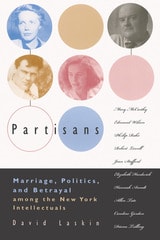
Partisans
Marriage, Politics, and Betrayal Among the New York IntellectualsDavid Laskin
University of Chicago Press, 2001
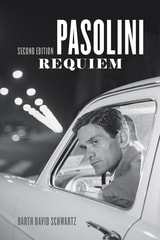
Pasolini Requiem
Second EditionBarth David Schwartz
University of Chicago Press, 2017
Based on extensive interviews with those who knew Pasolini, both friends and enemies, admirers and detractors, Pasolini Requiem chronicles his growth from poet in the provinces to Italy’s leading “civil poet”; his flight to Rome in 1950; the scandalous success of his two novels and political writing; and his transition to film, where he started as a contributor to the golden age of Italian cinema and ended with the shocking Salò, or the 120 Days of Sodom. Pasolini’s tragic and still unsolved murder has remained a subject of contentious debate for four decades. The enduring fascination with who committed the crime—and why—reflects his vital stature in Italy’s political and social history.
Updated throughout and with a new afterword covering the efforts to reopen the investigation—and the legal maelstrom surrounding Pasolini’s demise—this edition of Pasolini Requiem is a riveting account of one of the twentieth century’s most controversial, ever-present iconoclasts.
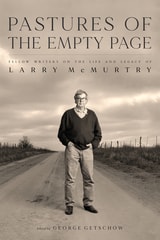
Pastures of the Empty Page
Fellow Writers on the Life and Legacy of Larry McMurtryGeorge Getschow, editor
University of Texas Press, 2023
A collection of essays that offers an intimate view of Larry McMurtry, America’s preeminent western novelist, through the eyes of a pantheon of writers he helped shape through his work over the course of his unparalleled literary life.
When he died in 2021, Larry McMurtry was one of America’s most revered writers. The author of treasured novels such as Lonesome Dove and The Last Picture Show, and coauthor of the screenplays for Brokeback Mountain and Streets of Laredo, McMurtry created unforgettable characters and landscapes largely drawn from his life growing up on the family’s hardscrabble ranch outside his hometown of Archer City, Texas. Pastures of the Empty Page brings together fellow writers to honor the man and his impact on American letters.
Paulette Jiles, Stephen Harrigan, Stephanie Elizondo Griest, and Lawrence Wright take up McMurtry’s piercing and poetic vision—an elegiac literature of place that demolished old myths of cowboy culture and created new ones. Screenwriting partner Diana Ossana reflects on their thirty-year book and screenwriting partnership; other contributors explore McMurtry’s reading habits and his passion for bookselling. And brother Charlie McMurtry shares memories of their childhood on the ranch. In contrast to his curmudgeonly persona, Larry McMurtry emerges as a trustworthy friend and supportive mentor. McMurtry was famously self-deprecating, but as his admirers attest, this self-described “minor regional writer” was an artist for the ages.
Percy Bysshe Shelley
Poet and RevolutionaryJaqueline Mulhallen
Pluto Press, 2015
An engaging look at one of English history and literature’s most compelling, complicated, and talented figures, Percy Bysshe Shelley will be a valuable contribution to our understanding of the man and his work.
Period Piece
Gwen Raverat
University of Michigan Press, 1991
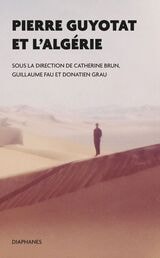
Pierre Guyotat et l’Algérie
Edited by Catherine Brun, Guillaume Fau, and Donatien Grau
Diaphanes, 2024
Pierre Guyotat est une figure majeure, avant même Tombeau pour cinq cent mille soldats et bien au-delà, de la mémoire de la guerre d’indépendance algérienne. Idiotie est l’une des œuvres récentes les plus importantes sur ce sujet. C’est le fait de la guerre, vécue en appelé jugé récalcitrant et mis au cachot, mais aussi des voyages post-indépendance, de la rencontre avec la langue, la géologie, la faune et la flore algériennes, de la défense publique de Mohamed Laïd Moussa. Les fictions, les carnets sont marqués par l’empreinte de la terre, des langues, des corps algériens.
Guyotat contribua aussi à établir, dans la création et l’action publique, des relations nouvelles avec l'Algérie, ses auteurs, comme avec celles et ceux qui, en France, venaient de ce pays.
Cet ouvrage offre la parole à des figures de la recherche et de la création issues d’Algérie, de France et d’ailleurs. Il permet de découvrir un regard unique sur l’Algérie, affectueux et savant, celui d’un des plus grands auteurs de langue française.
Contributions de Ferroudja Allouache, Amina Azza Bekkat, Catherine Brun, Donatien Grau, Denis Hollier, Karima Lazali, Gérard Nguyen Van Khan, Philippe Roger, Tiphaine Samoyault, Nadia Sebkhi, Todd Shepard, Noura Wedell.
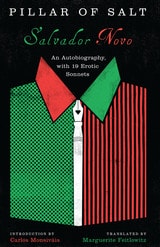
Pillar of Salt
An Autobiography, with 19 Erotic SonnetsBy Salvador Novo, Translated by Marguerite Feitlowitz, Introduction by Carlos Monsiváis
University of Texas Press, 2014
Written with exquisite sensitivity and wit, this memoir by one of Mexico’s foremost men of letters describes coming of age during the violence of the Mexican Revolution and “living dangerously” as an openly homosexual man in a brutally machista society.
Salvador Novo (1904–1974) was a provocative and prolific cultural presence in Mexico City through much of the twentieth century. With his friend and fellow poet Xavier Villaurrutia, he cofounded Ulises and Contemporáneos, landmark avant-garde journals of the late 1920s and 1930s. At once “outsider” and “insider,” Novo held high posts at the Ministries of Culture and Public Education and wrote volumes about Mexican history, politics, literature, and culture. The author of numerous collections of poems, including XX poemas, Nuevo amor, Espejo, Dueño mío, and Poesía 1915–1955, Novo is also considered one of the finest, most original prose stylists of his generation.
Pillar of Salt is Novo’s incomparable memoir of growing up during and after the Mexican Revolution; shuttling north to escape the Zapatistas, only to see his uncle murdered at home by the troops of Pancho Villa; and his initiations into literature and love with colorful, poignant, complicated men of usually mutually exclusive social classes. Pillar of Salt portrays the codes, intrigues, and dynamics of what, decades later, would be called “a gay ghetto.” But in Novo’s Mexico City, there was no name for this parallel universe, as full of fear as it was canny and vibrant. Novo’s memoir plumbs the intricate subtleties of this world with startling frankness, sensitivity, and potential for hilarity. Also included in this volume are nineteen erotic sonnets, one of which was long thought to have been lost.
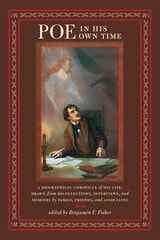
Poe in His Own Time
A Biographical Chronicle of His Life, Drawn from Recollections, Interviews, and Memoirs by Family, Friends, and AssociatesBenjamin F. Fisher
University of Iowa Press, 2010
An image of Edgar Allan Poe (1809–1849) as a man of gloom and mystery continues to hold great popular appeal. Long recognized as one of the greats of American literature, he elicited either highly commendatory or absolutely hostile reactions from many who knew him, from others who claimed to comprehend him as person or as writer, and from still others who circulated as fact opinions intuited from his writings. Whether promoting him as angel or demon, “a man of great and original genius” or “extraordinarily wicked,” the viewpoints in this dramatic collection of primary materials provide vigorous testimony to support the contradictory images of the man and the writer that have prevailed for a century and a half.
Noted Poe scholar Benjamin Fisher includes a comprehensive introduction and a detailed chronology of Poe’s sadly short life; each entry is introduced by a short headnote that places the selection in historical and cultural context, and explanatory notes provide information about people and places. From John Allan’s letter to Secretary of War John Eaton about Poe’s West Point life to John Frankenstein’s hostile verse casting him as an alcoholic, from Rufus Griswold’s first and second posthumous vilifications to James Russell Lowell’s more sensible outline of his life and career, from scornful to commendable reviews to scathing attacks on his morals to recognition of his comic achievements, Fisher has gathered a lively array of materials that read like the most far-fetched of gothic tales.
Poe himself was creative when he supplied information to others about his life and literary career, and the speculative content of many of the portrayals presented in this collection read as if their authors had set out to be equally creative. The sixty-nine recollections gathered in Poe in His Own Time form a dramatic, real-time biographical narrative designed to provide a multitude of perspectives on the famous author, sometimes in conflict with each other and sometimes in agreement but always arresting.
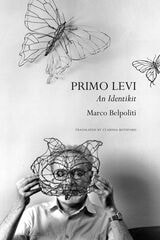
Primo Levi
An IdentikitMarco Belpoliti
Seagull Books, 2022
Over the last seventy years, Primo Levi (1919–87) has been recognized as the foremost literary witness of the extermination of the European Jews. In Primo Levi: An Identikit, a product of twenty years of research, Marco Belpoliti explores Levi’s tormented life, his trajectory as a writer and intellectual, and, above all, his multifaceted and complex oeuvre.
Organized in a mosaic format, this volume devotes a different chapter to each of Levi’s books. In addition to tracing the history of each book’s composition, publication, and literary influences, Belpoliti explores their contents across the many worlds of Primo Levi: from chemistry to anthropology, biology to ethology, space flights to linguistics. If This Is a Man, his initially rejected masterpiece, is also reread with a fresh perspective. We learn of dreams, animals, and travel; of literary writing, comedy, and tragedy; of shame, memory, and the relationship with other writers such as Franz Kafka and Georges Perec, Jean Améry and Varlam Shalamov. Fundamental themes such as Judaism, the camp, and testimony innervate the book, which is complemented by photographs and letters found by the author in hitherto unexplored archives.
This will be the definitive book on Primo Levi, a treasure trove of stories and reflections that paint a rich, nuanced composite portrait of one of the twentieth century’s most unique and urgent voices.
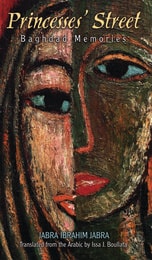
Princesses' Street
Baghdad MemoriesJabra Ibrahim Jabra
University of Arkansas Press, 2005
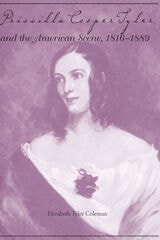
Priscilla Cooper Tyler and the American Scene, 1816-1889
Elizabeth Tyler Coleman
University of Alabama Press, 2006
A study illuminating the cultural intersections of gender, performance, and national identity in nineteenth-century America.
Priscilla Cooper Tyler and the American Scene, 1816–1889 by Elizabeth T. Coleman is a historical and cultural study that brings renewed attention to a remarkable yet often overlooked figure in nineteenth-century American life. The daughter of renowned actor Thomas Cooper, Priscilla Tyler occupied a unique position at the intersection of theatrical culture, literary expression, and political society during a period of profound national transformation.
Tracing Tyler’s life from her early involvement in the stage to her later roles within influential social and political circles, Coleman situates her subject within the broader cultural landscapes of antebellum America, the Civil War, and Reconstruction. Through letters, performances, and social connections, Tyler emerges as an astute observer and participant in the evolving American scene, offering insight into the roles women played in shaping artistic, intellectual, and public life.
The book explores themes of identity, performance, gender, and cultural change, revealing how Tyler’s experiences illuminate the complex interplay between private life and public history. Coleman’s study not only reconstructs the biography of a significant historical figure but also contributes to a deeper understanding of nineteenth-century American theater, literature, and society.
This volume is an important resource for scholars and readers interested in American studies, women’s history, and the cultural history of the nineteenth century.
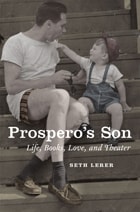
Prospero's Son
Life, Books, Love, and TheaterSeth Lerer
University of Chicago Press, 2013
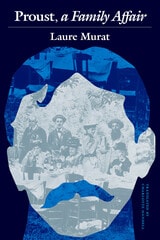
Proust, a Family Affair
Laure Murat
University of Chicago Press, 0
A personal take on Proust’s In Search of Lost Time, written by a woman born into the aristocratic world it describes.
Proust’s In Search of Lost Time is many things: a staggering literary achievement, an evocation of an elite milieu, a complex reckoning with memory. For Laure Murat, it was also a map of the world into which she was born—the world of the French Aristocracy. Descended from French nobility on both sides, Murat saw the châteaux and balls of In Search of Lost Time as the backdrop to her own family story, understood anew through Proust’s eyes.
In this beautiful book, Murat explores both the oppressive constraints of the aristocratic life and the fluidity and linguistic virtuosity of Proust’s astonishing seven-volume novel, which shifts focus from codes of behavior to the experience of living. In Proust, a Family Affair, Murat celebrates the emancipating power of literature and the rewards of paying close attention to a text that may, in turn, provoke a close and loving attendance to the self.
Originally published in French, Proust, a Family Affair has won the Prix Médicis and was shortlisted for France’s most coveted literary award, the Prix Goncourt. This readable, moving translation into English by Charlotte Mandell will appeal to lovers of Proust and to all readers who appreciate personal explorations of literary masterpieces.

Pushkin's Button
Serena Vitale
University of Chicago Press, 2000
"Pushkin's Button will keep all constituencies of reader fastened to their seats, as they watch Petersburg's lofty denizens leave no moment of the hurtling Pushkin scandal unrecorded or not speculated on."—Monika Greenleaf,Los Angeles Times
"[A] deliciously entertaining whydunit, a book in which every page seduces with a riddle. . . . Vivacious, seductive, original."—Michael Dirda, Washington Post
"A delightful combination of retrograde pleasures (court balls, the demise of a doomed genius) and primary sources. . . . Illuminating."—Richard Lamb, New York Times Book Review
"A book almost impossible to put down."—George Steiner, New Yorker