98 books match the query 'Marginality, Social' and 7 start with p

cover of Patients of the State: The Politics of Waiting in Argentina

Patients of the State

The Politics of Waiting in Argentina

Javier Auyero

Duke University Press, 2012
Patients of the State is a sociological account of the extended waiting that poor people seeking state social and administrative services must endure. It is based on ethnographic research in the waiting area of the main welfare office in Buenos Aires, in the line leading into the Argentine registration office where legal aliens apply for identification cards, and among people who live in a polluted shantytown on the capital’s outskirts, while waiting to be allocated better housing. Scrutinizing the mundane interactions between the poor and the state, as well as underprivileged people’s confusion and uncertainty about the administrative processes that affect them, Javier Auyero argues that while waiting, the poor learn the opposite of citizenship. They learn to be patients of the state. They absorb the message that they should be patient and keep waiting, because there is nothing else that they can do. Drawing attention to a significant everyday dynamic that has received little scholarly attention until now, Auyero considers not only how the poor experience these lengthy waits but also how making poor people wait works as a strategy of state control.
[more]
cover of Playing With Fire: Feminist Thought And Activism Through Seven Lives In India

Playing With Fire

Feminist Thought And Activism Through Seven Lives In India

Sangtin Sangtin Writers

University of Minnesota Press, 2006
Seven voices contribute to this rare glimpse of the work being done on the front lines of the fight for social change in India. Playing with Fire is written in the collective voice of women employed by a large NGO as activists in their communities and is based on diaries, interviews, and conversations among them. Together their personal stories reveal larger themes and questions of sexism, casteism, and communalism, and a startling picture emerges of how NGOs both nourish and stifle local struggles for solidarity. The Hindi edition of the book, Sangtin Yatra, published in 2004, created controversy that resulted in backlash against the authors by their employer. The publication also drew support for the women and instigated a public conversation about the issues exposed in the book. Here, Richa Nagar addresses the dispute in the context of the politics of NGOs and feminist theory, articulating how development ideology employed by aid organizations serves to reinforce the domination of those it claims to help. The Sangtin Writers, Anupamlata, Ramsheela, Reshma Ansari, Richa Singh, Shashibala, Shashi Vaish, Surbala, and Vibha Bajpayee, are grassroots activists and members of a small organization called Sangtin in Uttar Pradesh, India. Richa Nagar teaches women’s studies at the University of Minnesota.
[more]
cover of Poverty of the Imagination: The Cold War and the Social Science of Development in Latin America

Poverty of the Imagination

The Cold War and the Social Science of Development in Latin America

Patrick Iber

University of Chicago Press, 2026

Explores the history of the “science of development” during the Cold War and how experts across the social sciences tried to create the tools to address the problem of poverty across Latin America.

In the mid-twentieth century, Latin America had the world’s starkest internal inequality. In Brazil in 1960, for example, the top 10 percent took upward of 60 percent of the country’s total income, while its entire bottom half took only 10 percent. As Patrick Iber shows in Poverty of the Imagination, this problem of poverty and social inequality focused the attention of social scientists on the task of articulating a “science of development.” In the context of the Cold War, this project drew the attention of the US government and the Ford Foundation, which hoped that peaceful development would prevent revolutions.

This book examines the five central frameworks that emerged to explain poverty: from dependency theory on the Marxist left; to theories of modernization, the culture of poverty, and marginality in the center; to neoliberalism on the right. Iber shows how each rose (and fell) by connecting them to political projects such as the War on Poverty in the United States and the dictatorship of Augusto Pinochet in Chile. Through vivid portraits of key thinkers, he shows how each was shaped by the environment of the Cold War and the presence of the Ford Foundation. It is a story with surprising turns: What began for Ford as a Cold War project to support university “modernization” changed as dictatorships took control of much of the region. Then, Ford took the side of the dissidents, supporting an antipoverty agenda for the restoration of democracy. A guide to some of the most important ideas in global development and Latin American studies alike, this book also shows how scholars and institutions faced down authoritarian threats—and won.
[more]
cover of Precarity and Belonging: Labor, Migration, and Noncitizenship

Precarity and Belonging

Labor, Migration, and Noncitizenship

Catherine S. Ramírez

Rutgers University Press, 2021
Precarity and Belonging examines how the movement of people and their incorporation, marginalization, and exclusion, under epochal conditions of labor and social precarity affecting both citizens and noncitizens, have challenged older notions of citizenship and alienage. This collection brings mobility, precarity, and citizenship together in order to explore the points of contact and friction, and, thus, the spaces for a possible politics of commonality between citizens and noncitizens.The editors ask: What does modern citizenship mean in a world of citizens, denizens, and noncitizens, such as undocumented migrants, guest workers, permanent residents, refugees, detainees, and stateless people? How is the concept of citizenship, based on assumptions of deservingness, legality, and productivity, challenged when people of various and competing statuses and differential citizenship practices interact with each other, revealing their co-constitutive connections? How is citizenship valued or revalued when labor and social precarity impact those who seemingly have formal rights and those who seemingly or effectively do not? This book interrogates such binaries as citizen/noncitizen, insider/outsider, entitled/unentitled, “legal”/“illegal,” and deserving/undeserving in order to explore the fluidity--that is, the dynamism and malleability--of the spectra of belonging.
 
 
[more]
cover of Prison and Social Death

Prison and Social Death

Price, Joshua M

Rutgers University Press, 2015

The United States imprisons more of its citizens than any other nation in the world. To be sentenced to prison is to face systematic violence, humiliation, and, perhaps worst of all, separation from family and community. It is, to borrow Orlando Patterson’s term for the utter isolation of slavery, to suffer “social death.” In Prison and Social Death, Joshua Price exposes the unexamined cost that prisoners pay while incarcerated and after release, drawing upon hundreds of often harrowing interviews conducted with people in prison, parolees, and their families.

 
Price argues that the prison separates prisoners from desperately needed communities of support from parents, spouses, and children. Moreover, this isolation of people in prison renders them highly vulnerable to other forms of violence, including sexual violence. Price stresses that the violence they face goes beyond physical abuse by prison guards and it involves institutionalized forms of mistreatment, ranging from abysmally poor health care to routine practices that are arguably abusive, such as pat-downs, cavity searches, and the shackling of pregnant women. And social death does not end with prison. The condition is permanent, following people after they are released from prison. Finding housing, employment, receiving social welfare benefits, and regaining voting rights are all hindered by various legal and other hurdles. The mechanisms of social death, Price shows, are also informal and cultural. Ex-prisoners face numerous forms of distrust and are permanently stigmatized by other citizens around them.

 
A compelling blend of solidarity, civil rights activism, and social research, Prison and Social Death offers a unique look at the American prison and the excessive and unnecessary damage it inflicts on prisoners and parolees.
[more]
cover of Prisoners after War: Veterans in the Age of Mass Incarceration

Prisoners after War

Veterans in the Age of Mass Incarceration

Jason A. Higgins

University of Massachusetts Press, 2024

Winner of the 2025 Oral History Association Book Award • Winner of Virginia Tech's Albert Lee Sturm Award for Faculty Excellence • Finalist for the 2026 Veterans Studies Association Distinguished Book Award • Honorable Mention, National Council on Public History Book Award

The United States has both the largest, most expensive, and most powerful military and the largest, most expensive, and most punitive carceral system in the history of the world. Since the American War in Vietnam, hundreds of thousands of veterans have been incarcerated after their military service.

Identifying the previously unrecognized connections between American wars and mass incarceration, Prisoners after War reaches across lines of race, class, and gender to record the untold history of incarcerated veterans over the past six decades. Having conducted dozens of oral history interviews, Jason A. Higgins traces the lifelong effects of war, inequality, disability, and mental illness, and explores why hundreds of thousands of veterans, from Vietnam to Afghanistan, were caught up in the carceral system. This original study tells an intergenerational history of state-sanctioned violence, punishment, and inequality, but its pages also resonate with stories of survival and redemption, revealing future possibilities for reform and reparative justice.
[more]
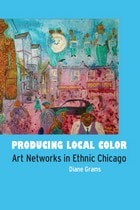
cover of Producing Local Color: Art Networks in Ethnic Chicago

Producing Local Color

Art Networks in Ethnic Chicago

Diane Grams

University of Chicago Press, 2010

In big cities, major museums and elite galleries tend to dominate our idea of the art world. But beyond the cultural core ruled by these moneyed institutions and their patrons are vibrant, local communities of artists and art lovers operating beneath the high-culture radar. Producing Local Color is a guided tour of three such alternative worlds that thrive in the Chicago neighborhoods of Bronzeville, Pilsen, and Rogers Park.

These three neighborhoods are, respectively, historically African American, predominantly Mexican American, and proudly ethnically mixed. Drawing on her ethnographic research in each place, Diane Grams presents and analyzes the different kinds of networks of interest and support that sustain the making of art outside of the limelight. And she introduces us to the various individuals—from cutting-edge artists to collectors to municipal planners—who work together to develop their communities, honor their history, and enrich the experiences of their neighbors through art. Along with its novel insights into these little examined art worlds, Producing Local Color also provides a thought-provoking account of how urban neighborhoods change and grow.

[more]