Results by title
308 books match the query 'Memory' and 12 start with p
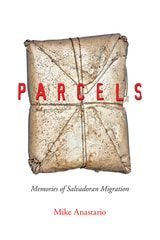
Parcels
Memories of Salvadoran MigrationMike Anastario
Rutgers University Press, 2019
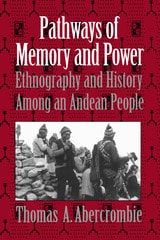
Pathways of Memory and Power
Ethnography and History among an Andean PeopleThomas A. Abercrombie
University of Wisconsin Press, 1998
Making clear the early and deep intermingling of practices and world views among Spaniards and Andeans, Christians and non-Christians, Abercrombie critiques both the romanticist tendency to regard Andean culture as still separate from and resistant to European influences, and the melodramatic view that all indigenous practices have been obliterated by colonial and national elites. He challenges prejudices that, from colonial days to the present, have seen Andean historical knowledge only in mythic narratives or narratives of personal experience. Bringing an ethnographer’s approach to historiography, he shows how complex Andean rituals that hybridize European and indigenous traditions—such as libation dedications and llama sacrifices held on saints’ day festivals—are in fact potent evidence of social memory in the community.
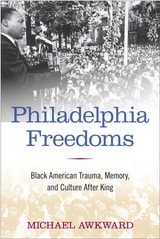
Philadelphia Freedoms
Black American Trauma, Memory, and Culture after KingMichael Awkward
Temple University Press, 2013
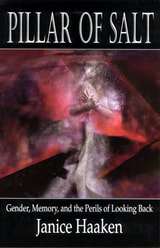
Pillar of Salt
Gender, Memory, and the Perils of Looking BackHaaken, Janice
Rutgers University Press, 2000
Pillar of Salt
Gender, Memory, and the Perils of Looking BackHaaken, Janice
Rutgers University Press, 1998
Places of Public Memory
The Rhetoric of Museums and MemorialsEdited by Greg Dickinson, Carole Blair, and Brian L. Ott
University of Alabama Press, 2010
A sustained and rigorous consideration of the intersections of memory, place, and rhetoric
Though we live in a time when memory seems to be losing its hold on communities, memory remains central to personal, communal, and national identities. And although popular and public discourses from speeches to films invite a shared sense of the past, official sites of memory such as memorials, museums, and battlefields embody unique rhetorical principles.
Places of Public Memory: The Rhetoric of Museums and Memorials is a sustained and rigorous consideration of the intersections of memory, place, and rhetoric. From the mnemonic systems inscribed upon ancient architecture to the roadside accident memorials that line America’s highways, memory and place have always been deeply interconnected. This book investigates the intersections of memory and place through nine original essays written by leading memory studies scholars from the fields of rhetoric, media studies, organizational communication, history, performance studies, and English. The essays address, among other subjects, the rhetorical strategies of those vying for competing visions of a 9/11 memorial at New York City’s Ground Zero; rhetorics of resistance embedded in the plans for an expansion of the National Civil Rights Museum; representations of nuclear energy—both as power source and weapon—in Cold War and post–Cold War museums; and tours and tourism as acts of performance.
By focusing on “official” places of memory, the collection causes readers to reflect on how nations and local communities remember history and on how some voices and views are legitimated and others are minimized or erased.
Playing from Memory
David Milofsky
University Press of Colorado, 1999
Ben Seidler, an intense, passionately committed violist, is at the height of his career as a member of the Casa Bella Quartet, one of the foremost string quartets in the nation. His gifts as a concert artist had always been intuitive, but love did not come so easily. It took determination to win the hand of his wife, Dory, who was reluctant to set aside her ambitions of becoming an artist.
Their marriage is at once complex and ordinary, balancing the rigors of long rehearsal sessions against the daily round of family life with their two sons. Then suddenly the rhythm of their lives is shattered when Ben falls victim to multiple sclerosis. Stubbornly independent, Ben refuses to rely on others until necessity forces him to see that there are things beyond his control. Through a new closeness with his aging father, his older son, and, most importantly, Dory, he learns to accept help and to appreciate human frailty and affection.
As Ben's health declines, Dory is forced to resume her career and compete in a world dominated by men, and to re-examine her feelings and commitment to her husband. As their lives change, so does their marriage, and Ben and Dory forge a new kind of love, a fierce love that sustains them through everything.
Portraits of Remembrance
Painting, Memory, and the First World WarEdited by Margaret Hutchison and Steven Trout
University of Alabama Press, 2020
Although photography and moving pictures achieved ubiquity during the First World War as technological means of recording history, the far more traditional medium of painting played a vital role in the visual culture of combatant nations. The public’s appetite for the kind of up-close frontline action that snapshots and film footage could not yet provide resulted in a robust market for drawn or painted battle scenes.
Painting also figured significantly in the formation of collective war memory after the armistice. Paintings became sites of memory in two ways: first, many governments and communities invested in freestanding panoramas or cycloramas that depicted the war or featured murals as components of even larger commemorative projects, and second, certain paintings, whether created by official artists or simply by those moved to do so, emerged over time as visual touchstones in the public’s understanding of the war.
Portraits of Remembrance: Painting, Memory, and the First World War examines the relationship between war painting and collective memory in Australia, Austria, Belgium, Canada, Croatia, France, Germany, Great Britain, New Zealand, Russia, Serbia, Turkey, and the United States. The paintings discussed vary tremendously, ranging from public murals and panoramas to works on a far more intimate scale, including modernist masterpieces and crowd-pleasing expressions of sentimentality or spiritualism. Contributors raise a host of topics in connection with the volume’s overarching focus on memory, including national identity, constructions of gender, historical accuracy, issues of aesthetic taste, and connections between painting and literature, as well as other cultural forms.
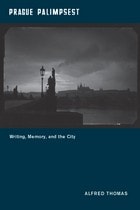
Prague Palimpsest
Writing, Memory, and the CityAlfred Thomas
University of Chicago Press, 2010
A city of immense literary mystique, Prague has inspired writers across the centuries with its beauty, cosmopolitanism, and tragic history. Envisioning the ancient city in central Europe as a multilayered text, or palimpsest, that has been constantly revised and rewritten—from the medieval and Renaissance chroniclers who legitimized the city’s foundational origins to the modernists of the early twentieth century who established its reputation as the new capital of the avant-garde—Alfred Thomas argues that Prague has become a paradoxical site of inscription and effacement, of memory and forgetting, a utopian link to the prewar and pre-Holocaust European past and a dystopia of totalitarian amnesia.
Considering a wide range of writers, including the city’s most famous son, Franz Kafka, Prague Palimpsest reassesses the work of poets and novelists such as Bohumil Hrabal, Milan Kundera, Gustav Meyrink, Jan Neruda, Vítĕzslav Nezval, and Rainer Maria Rilke and engages with other famous authors who “wrote” Prague, including Guillaume Apollinaire, Ingeborg Bachmann, Albert Camus, Paul Celan, and W. G. Sebald. The result is a comparative, interdisciplinary study that helps to explain why Prague—more than any other major European city—has haunted the cultural and political imagination of the West.
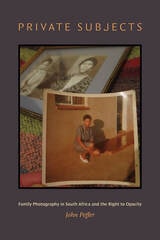
Private Subjects
Family Photography in South Africa and the Right to OpacityJohn Peffer
Duke University Press, 2026
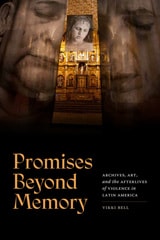
Promises Beyond Memory
Archives, Art, and the Afterlives of Violence in Latin AmericaVikki Bell
Duke University Press, 2026
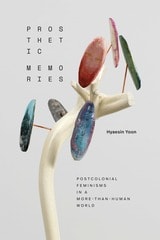
Prosthetic Memories
Postcolonial Feminisms in a More-Than-Human WorldHyaesin Yoon
Duke University Press, 2025