Results by title
140 books match the query 'Mental Health' and 11 start with p

Pandemic Minds
COVID-19 and Mental Health in Hong KongKate Whitehead
Hong Kong University Press, 2024
The COVID-19 pandemic was a global crisis that affected millions of lives and brought mental health challenges to the forefront. In Hong Kong, the situation was worsened by uniquely strict COVID-19 regulations, quarantine measures, and travel restrictions. The mental health issues associated with the pandemic did not end with the lifting of the mask mandate. On the contrary, the repercussions are only just beginning to surface and their impact will be felt for years to come.
This eye-opening book shares the stories of ordinary Hongkongers who faced extraordinary challenges during the pandemic. Through a blend of first-person accounts, psychological insights, and hard data, it offers a compelling and accessible exploration of the toll that the COVID-19 pandemic has taken on mental health in Hong Kong.
However, Pandemic Minds is not only a chronicle of suffering—it is also a guide to healing and hope. It offers practical advice on how to overcome the mental health issues caused by the pandemic, and how to build resilience and well-being. It reveals the lessons that can be learned from Hong Kong’s experience, and how they can help individuals and policymakers around the world.

Persevered
A Maternal Mental Health MemoirKara Zivin
Ohio University Press, 0
If you think you know what mental health during and after pregnancy looks like, Persevered: A Maternal Mental Health Memoir will make you reconsider. Dr. Kara Zivin offers a rare, unfiltered look at what happened when a respected mental health researcher faced her own grave battle with depression and anxiety during and after pregnancy. This book is a raw personal account of surviving the darkest moments of new motherhood while juggling high expectations at home and at work.
Zivin takes the reader on an intimate and eye-opening journey that weaves together her perinatal medical records, journal entries, research, and imperfect memories. The story unfolds across hospital rooms, the author’s home, and the university where she works, highlighting the complexity of holding on to one’s identity when everything feels uncertain. Zivin writes with striking honesty about the confusion, guilt, and isolation that so many mothers experience alone but rarely admit to others. Her willingness to lay bare her struggles and her gradual journey toward hope and recovery makes every page feel authentic and deeply relatable.
Persevered moves beyond one woman’s survival, breaking the silence that still surrounds maternal mental health. Zivin’s story reminds us that reaching out, sharing our experiences, and demanding better support can make a difference, not just for mothers but for families and communities. This memoir is for anyone who has ever felt overwhelmed, anyone who has supported a loved one through challenging times, or anyone who believes that honest storytelling can spark real change.

Perversion of Power
Sexual Abuse in the Catholic ChurchMary Gail Frawley-O'Dea
Vanderbilt University Press, 2007
Celibacy, homosexuality in the priesthood, the infiltration into the priesthood of secular moral relativism, too much liberalism in the Church since Vatican II, damaging rollback of Vatican II reforms by conservative prelates--all have been suggested as causes for the crisis. This book, however, begins with the premise that, because the pattern of abuse and cover-up was so similar across the world, there is something fundamentally awry with Church traditions and power structures in relationship to sexuality and sexual abuse.
Specifically, in chapters on suffering and sadomasochism, bodies and gender, desire and sexuality, celibacy and homosexuality, the author concludes that aspects of the Catholic theology of sexuality set the stage for the abuse of minors and its cover-up. Frawley-O'Dea also analyzes the American bishops' lack of pastoral care and tendency towards clerical narcissism--the belief that the needs of the hierarchy represent the needs of the wider Church--as central factors in the scandal. She balances this criticism with a discussion of the backgrounds of the bishops presiding over the crisis and the challenges they faced in their relationships with the Pope and Vatican officials.
Drawing on twenty years of clinical experience, she imagines the dynamics of sexual abuse both from the victim's point of view and from the priest's, and she probes why the Church hierarchy, fellow priests, and lay people were silent for so long. Finally, Frawley-O'Dea examines factors internal to the Church and outside of it that drew this scandal into the public square and kept it there.

Petty Tyranny and Soulless Discipline?
Patients, Policy and Practice in Public Mental Hospitals in England, 1918–1930Claire Hilton
University College London, 2025
Petty Tyranny and Soulless Discipline? examines England’s public mental hospitals for the working class after World War I. Claire Hilton combines narratives of patients’ difficult daily lives with an analysis of competing agendas from campaigners, the government, and new medical knowledge to build a complex picture of mental health provision. Patient experiences, including their admission, care, treatment, discharge, and sometimes death, are illuminated in previously unexplored primary sources and situated within the broader context of reform and change (or lack thereof). While offering a comprehensive history of psychiatric care in early twentieth-century England, the book also draws on historical insights to reflect on contemporary mental health practices, making it relevant to historians, mental health professionals, and patients alike.
Police Burnout
Signs, Symptoms and SOLUTIONSGerald Loren Fishkin, PH.D.
Parkhurst Brothers, Inc., 0
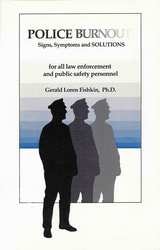
Police Burnout is the synthesis of Dr. Fishkin’s sixteen years experience as a police psychologist, and is a must read for all police officers, family members, police and public safety administrators, as well as mental health specialists who work in the area of law enforcement. It is a modern classic in the field of police psychology.

Prisoner of Her Past
A Son's MemoirHoward Reich
Northwestern University Press, 2011
Until February 15, 2001, Howard Reich’s mother, Sonia, had managed to keep almost everything about her experience of the Holocaust from her son. That night, she packed some clothes and fled her house in Skokie, Illinois, convinced that someone was trying to kill her. This was the first indication that she was suffering from late-onset post traumatic stress disorder, a little-known condition that can emerge decades after the initial trauma. For Howard, it was also the opening of a window onto his mother’s past.
In Prisoner of Her Past, Howard Reich has written a moving memoir about growing up as the child of Holocaust survivors and finding refuge from silence and fear in the world of jazz. It is only when Sonia’s memories overwhelm her and Howard begins to piece together her story that he comes to understand how his parents’ lives shaped his own. The paperback edition includes an epilogue by the author that relates developments since the publication of the cloth edition.

Prisoners after War
Veterans in the Age of Mass IncarcerationJason A. Higgins
University of Massachusetts Press, 2024
Winner of the 2025 Oral History Association Book Award • Winner of Virginia Tech's Albert Lee Sturm Award for Faculty Excellence • Finalist for the 2026 Veterans Studies Association Distinguished Book Award • Honorable Mention, National Council on Public History Book Award
The United States has both the largest, most expensive, and most powerful military and the largest, most expensive, and most punitive carceral system in the history of the world. Since the American War in Vietnam, hundreds of thousands of veterans have been incarcerated after their military service.
Identifying the previously unrecognized connections between American wars and mass incarceration, Prisoners after War reaches across lines of race, class, and gender to record the untold history of incarcerated veterans over the past six decades. Having conducted dozens of oral history interviews, Jason A. Higgins traces the lifelong effects of war, inequality, disability, and mental illness, and explores why hundreds of thousands of veterans, from Vietnam to Afghanistan, were caught up in the carceral system. This original study tells an intergenerational history of state-sanctioned violence, punishment, and inequality, but its pages also resonate with stories of survival and redemption, revealing future possibilities for reform and reparative justice.

Prozac on the Couch
Prescribing Gender in the Era of Wonder DrugsJonathan Michel Metzl
Duke University Press, 2003
Prozac on the Couch traces the notion of “pills for everyday worries” from the 1950s to the early twenty-first century, through psychiatric and medical journals, popular magazine articles, pharmaceutical advertisements, and popular autobiographical "Prozac narratives.” Metzl shows how clinical and popular talk about these medications often reproduces all the cultural and social baggage associated with psychoanalytic paradigms—whether in a 1956 Cosmopolitan article about research into tranquilizers to “cure” frigid women; a 1970s American Journal of Psychiatry ad introducing Jan, a lesbian who “needs” Valium to find a man; or Peter Kramer’s description of how his patient “Mrs. Prozac” meets her husband after beginning treatment.
Prozac on the Couch locates the origins of psychiatry’s “biological revolution” not in the Valiumania of the 1970s but in American popular culture of the 1950s. It was in the 1950s, Metzl points out, that traditional psychoanalysis had the most sway over the American imagination. As the number of Miltown prescriptions soared (reaching 35 million, or nearly one per second, in 1957), advertisements featuring uncertain brides and unfaithful wives miraculously cured by the “new” psychiatric medicines filled popular magazines. Metzl writes without nostalgia for the bygone days of Freudian psychoanalysis and without contempt for psychotropic drugs, which he himself regularly prescribes to his patients. What he urges is an increased self-awareness within the psychiatric community of the ways that Freudian ideas about gender are entangled in Prozac and each new generation of wonder drugs. He encourages, too, an understanding of how ideas about psychotropic medications have suffused popular culture and profoundly altered the relationship between doctors and patients.
Psychiatric Encounters
Madness and Modernity in Yucatan, MexicoReyes-Foster, Beatriz M.
Rutgers University Press, 2019

Psychotherapy with Deaf Clients from Diverse Groups
Irene W. Leigh
Gallaudet University Press, 1999
The second edition of Psychotherapy with Deaf Clients from Diverse Groups features the introduction of six new chapters that complement full revisions of original chapters with advances in the field since its initial publication. The first part begins with a new chapter on the current ethical issues relevant to working with deaf clients. In subsequent chapters it provides updated information on the diversity of consumer knowledge, attitudes, beliefs, and experiences. Deaf therapists and their involvement in the Deaf community also are scrutinized in this context.
The revised second part examines psychotherapy for various constituencies, including deaf women; lesbian, gay, and bisexual deaf populations; children of deaf parents; and people with Usher syndrome. Part Three chapters consider interventions with African American deaf clients, American Indians who are deaf, and Asians who are American and deaf. A new chapter expands information on therapy for Latino deaf clients.
The final section incorporates three new chapters on other deaf populations — deaf college students, recipients of cochlear implants, and deaf elderly clients. Also, new information has been added to chapters on the treatment of deaf survivors of sexual abuse and deaf clients with chemical dependency. The last addition to the second edition outlines dialectical behavior therapy for deaf clients, a valuable option for clinicians.
Psychotherapy with Deaf Clients from Diverse Groups
Irene W. Leigh
Gallaudet University Press, 2010
The second edition of Psychotherapy with Deaf Clients from Diverse Groups features the introduction of six new chapters that complement full revisions of original chapters with advances in the field since its initial publication. The first part begins with a new chapter on the current ethical issues relevant to working with deaf clients. In subsequent chapters it provides updated information on the diversity of consumer knowledge, attitudes, beliefs, and experiences. Deaf therapists and their involvement in the Deaf community also are scrutinized in this context.
The revised second part examines psychotherapy for various constituencies, including deaf women; lesbian, gay, and bisexual deaf populations; children of deaf parents; and people with Usher syndrome. Part Three chapters consider interventions with African American deaf clients, American Indians who are deaf, and Asians who are American and deaf. A new chapter expands information on therapy for Latino deaf clients.
The final section incorporates three new chapters on other deaf populations — deaf college students, recipients of cochlear implants, and deaf elderly clients. Also, new information has been added to chapters on the treatment of deaf survivors of sexual abuse and deaf clients with chemical dependency. The last addition to the second edition outlines dialectical behavior therapy for deaf clients, a valuable option for clinicians.