Results by title
60 books match the query 'Middle Eastern Studies' and 4 start with p

Palestinians Born in Exile
Diaspora and the Search for a HomelandBy Juliane Hammer
University of Texas Press, 2005
In the decade following the 1993 Oslo Peace Accords, some 100,000 diasporic Palestinians returned to the West Bank and Gaza. Among them were children and young adults who were born in exile and whose sense of Palestinian identity was shaped not by lived experience but rather through the transmission and re-creation of memories, images, and history. As a result, "returning" to the homeland that had never actually been their home presented challenges and disappointments for these young Palestinians, who found their lifeways and values sometimes at odds with those of their new neighbors in the West Bank and Gaza.
This original ethnography records the experiences of Palestinians born in exile who have emigrated to the Palestinian homeland. Juliane Hammer interviews young adults between the ages of 16 and 35 to learn how their Palestinian identity has been affected by living in various Arab countries or the United States and then moving to the West Bank and Gaza. Their responses underscore how much the experience of living outside of Palestine has become integral to the Palestinian national character, even as Palestinians maintain an overwhelming sense of belonging to one another as a people.
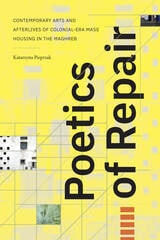
Poetics of Repair
Contemporary Arts and Afterlives of Colonial-Era Mass Housing in the MaghrebKatarzyna Pieprzak
Duke University Press, 2025
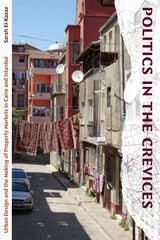
Politics in the Crevices
Urban Design and the Making of Property Markets in Cairo and IstanbulSarah El-Kazaz
Duke University Press, 2023
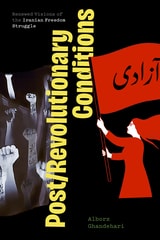
Post/Revolutionary Conditions
Renewed Visions of the Iranian Freedom StruggleAlborz Ghandehari
Northwestern University Press, 2025
An exploration of how the Iranian people have renewed their longtime struggle for freedom
The Woman, Life, Freedom uprising is only the latest manifestation of a century-long struggle for liberation in Iran. This ongoing movement for justice has encompassed two revolutions against domestic dictatorship and foreign imperialism, as well as a series of uprisings since the 1979 Iranian Revolution, which was followed by a new era of repression. Post/Revolutionary Conditions: Renewed Visions of the Iranian Freedom Struggle offers an intersectional analysis of how progressive and radical movement builders have reenvisioned liberation in the post-’79 era, despite new forms of oppression under the Islamic Republic and from US and other foreign imperial powers. Bringing together a diverse array of sources, including oral histories with Iranian labor, student, and gender justice organizers, as well as resistance literature and art, Alborz Ghandehari challenges narratives that treat working-class, feminist, queer, and oppressed ethnic minorities’ movements as separate from one another. Post/Revolutionary Conditions demonstrates how such potent reimaginings of collective liberation and a radically democratic future have been shaped by multiple generations of protest and kindred struggles globally.