Results by title
95 books match the query 'Money' and 5 start with p
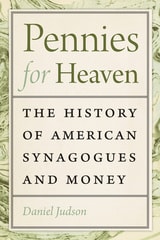
Pennies for Heaven
The History of American Synagogues and MoneyDaniel Judson
Brandeis University Press, 2018
In the annals of American Jewish history, synagogue financial records have been largely overlooked. But as Daniel Judson shows in his examination of synagogue ledgers from 1728 to the present, these records provide an array of new insights into the development of American synagogues and the values of the Jews who worshipped in them. Looking at the history of American synagogues through an economic lens, Judson examines how synagogues raised funds, financed buildings, and paid clergy. By “following the money,” he reveals the priorities of the Jewish community at a given time. Throughout the book, Judson traces the history of capital campaigns and expenditures for buildings. He also explores synagogue competition and debates over previously sold seats, what to do about wealthy widows, the breaking down of gender norms, the hazan “bubble” (which saw dozens of overpaid cantors come to the United States from Europe), the successful move to outlaw “mushroom synagogues,” and the nascent synagogue-sharing economy of the twenty-first century. Judson shows as well the ongoing relationship of synagogue and church financing as well as the ways in which the American embrace of the free market in all things meant that the basic rules of supply and demand ultimately prevailed in the religious as well as the commercial realm.
[more]

Political Business Cycles
The Political Economy of Money, Inflation, and UnemploymentThomas D. Willett, ed.
Duke University Press, 1988
The "political business cycle", according to economist William Nordhaus, creates a situation in which political and bureaucratic incentives create artificial economic booms just before elections, with consequent and deleterious side effects after the ballots are counted. This work examines the issue of whether federal governmental structure inevitably leaves the U.S. economy exposed to unhealthy political influences.
[more]
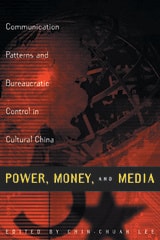
Power, Money, and Media
Communication Patterns and Bureaucratic Control in Cultural ChinaChin-Chuan Lee
Northwestern University Press, 2000
This book addresses, as few books in English have, a broad range of topics pertaining to China's expanding media and telecommunications systems. American and Chinese experts in journalism, communication, government, and political science use fieldwork, including participant observations, surveys, and in-depth interviews conducted within media organizations, to provide richly detailed analyses of the issues and of the changing face of media in China.
[more]
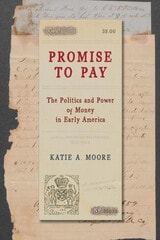
Promise to Pay
The Politics and Power of Money in Early AmericaKatie A. Moore
University of Chicago Press, 2024
An incisive account of the crucial role money played in the formation and development of British North America.
Promise to Pay follows America’s first paper money—the “bills of credit” of British North America—from its seventeenth-century origins as a means of war finance to its pivotal role in catalyzing the American Revolution. Katie A. Moore combs through treasury records, account books, and the bills themselves to tell a new story of money’s origins that challenges economic orthodoxy and mainstream histories. Promise to Pay shows how colonial governments imposed paper bills on settler communities through existing labor and kinship relations, their value secured by thousands of individual claims on the public purse—debts—and the state’s promise to take them back as payment for taxes owed. Born into a world of hierarchy and deference, early American money eroded old social ties and created new asymmetries of power, functioning simultaneously as a ticket to the world of goods, a lifeline for those on the margins, and a tool of imperial domination.
Grounded in sustained engagement with scholarship from multiple disciplines, Promise to Pay breathes new life into old debates and offers an incisive account of the centrality of money in the politics and conflicts of empire, community, and everyday life.
[more]
Promise to Pay
The Politics and Power of Money in Early AmericaKatie A. Moore
University of Chicago Press, 2024
This is an auto-narrated audiobook version of this book.
An incisive account of the crucial role money played in the formation and development of British North America.
Promise to Pay follows America’s first paper money—the “bills of credit” of British North America—from its seventeenth-century origins as a means of war finance to its pivotal role in catalyzing the American Revolution. Katie A. Moore combs through treasury records, account books, and the bills themselves to tell a new story of money’s origins that challenges economic orthodoxy and mainstream histories. Promise to Pay shows how colonial governments imposed paper bills on settler communities through existing labor and kinship relations, their value secured by thousands of individual claims on the public purse—debts—and the state’s promise to take them back as payment for taxes owed. Born into a world of hierarchy and deference, early American money eroded old social ties and created new asymmetries of power, functioning simultaneously as a ticket to the world of goods, a lifeline for those on the margins, and a tool of imperial domination.
Grounded in sustained engagement with scholarship from multiple disciplines, Promise to Pay breathes new life into old debates and offers an incisive account of the centrality of money in the politics and conflicts of empire, community, and everyday life.
[more]