Results by title
132 books match the query 'Myth' and 6 start with p
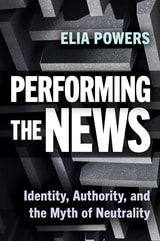
Performing the News
Identity, Authority, and the Myth of NeutralityElia Powers
Rutgers University Press, 2024
Performing the News: Identity, Authority, and the Myth of Neutrality explores how journalists from historically marginalized groups have long felt pressure to conform when performing for audiences. Many speak with a flat, “neutral” accent, modify their delivery to hide distinctive vocal attributes, dress conventionally to appeal to the “average” viewer, and maintain a consistent appearance to avoid unwanted attention. Their aim is what author Elia Powers refers to as performance neutrality—presentation that is deemed unobjectionable, reveals little about journalists’ social identity, and supposedly does not detract from their message. Increasingly, journalists are challenging restrictive, purportedly neutral forms of self-presentation. This book argues that performance neutrality is a myth that reinforces the status quo, limits on-air diversity, and hinders efforts to make newsrooms more inclusive. Through in-depth interviews with journalists in broadcasting and podcasting, and those who shape their performance, the author suggests ways to make journalism more inclusive and representative of diverse audiences.

Person and Myth
Maurice Leenhardt in the Melanesian WorldJames Clifford
Duke University Press, 1992
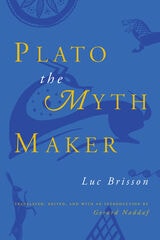
Plato the Myth Maker
Luc Brisson
University of Chicago Press, 1999
Gerard Naddaf's substantial introduction shows the originality and importance both of Brisson's method and of Plato's analysis and places it in the context of contemporary debates over the origin and evolution of the oral tradition.
"[Brisson] contrasts muthos with the logos found at the heart of the philosophical reading. [He] does an excellent job of analyzing Plato's use of the two speech forms, and the translator's introduction does considerable service in setting the tone."—Library Journal
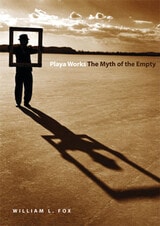
Playa Works
The Myth of the EmptyWilliam L. Fox
University of Nevada Press, 2024
In eight brilliant essays, Fox explores many of the major playas of the American West , examining locations as diverse as Nellis Air Force Base and Frenchman Flat, where the federal government has tested experimental aircraft and atomic weaponry; the Great Salt Lake Desert, where land-speed records have been broken; and the Black Rock Desert of Northern Nevada, site of the colorful Burning Man arts festival. He analyzes the geological and climatological conditions that created the playas and the historical role that playas played in the exploration and settlement of the West. And he offers lucid and keenly perceptive discussions of the ways that artists have responded to the playas, from the ancient makers of geoglyphs to the work of contemporary artists who have found inspiration in these enigmatic spaces, including earthworks builder Michael Heizer, photographer Richard Misrach, and painter Michael Moore. The ensemble is a compelling combination of natural history, philosophy, and art criticism, a thoughtful meditation on humankind's aversion to and fascination with the void.
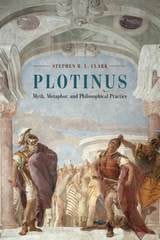
Plotinus
Myth, Metaphor, and Philosophical PracticeStephen R. L. Clark
University of Chicago Press, 2016
Clark examines a variety of Plotinus’s myths and metaphors within the cultural and philosophical context of his time, asking probing questions about their contemplative effects. What is it, for example, to “think away the spatiality” of material things? What state of mind is Plotinus recommending when he speaks of love, or drunkenness, or nakedness? What star-like consciousness is intended when he declares that we were once stars or are stars eternally? What does it mean to say that the soul goes around God? And how are we supposed to “bring the god in us back to the god in all”? Through these rich images and structures, Clark casts Plotinus as a philosopher deeply concerned with philosophy as a way of life.
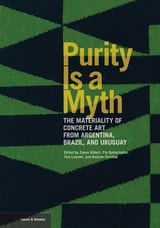
Purity Is a Myth
The Materiality of Concrete Art from Argentina, Brazil, and UruguayZanna Gilbert
J. Paul Getty Trust, The, 2021
Purity Is a Myth presents new scholarship on Concrete art in Argentina, Brazil, and Uruguay from the 1940s to the 1960s. Originally coined by the Dutch artist Theo van Doesburg in 1930, the term concrete denotes abstract painting with no reference to external reality. Van Doesburg argued that there was nothing more real than a line, color, or plane. Artists such as Willys de Castro, Lygia Clark, Waldemar Cordeiro, Hermelindo Fiaminghi, Judith Lauand, Raúl Lozza, Tomás Maldonado, Hélio Oiticica, and Rhod Rothfuss would reinvent this concept in postwar Latin America.
Drawing on research conducted by Getty and international partners, the essays in this volume address a variety of topics, including the general history, emergence, and reception of Concrete art; processes and color; scientific analysis of works; illustrated chronologies of the paint industry in Brazil and Argentina; and Concrete design on paper. An innovative technical study of the Concrete art movement in Latin America, this volume will be indispensable to scholars, practitioners, and students of Latin American art.