Results by title
175 books match the query 'Narration (Rhetoric)' and 9 start with p
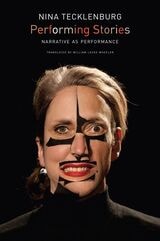
Performing Stories
Narrative as PerformanceNina Tecklenburg
Seagull Books, 2020
Nina Tecklenburg’s focus lies on narration less as literary composition than as sensate, embodied cultural practice—a participatory and open process that fosters social relationships. She gives central importance to the forces of narration that create and undo culture and politics. A foundational new book, Performing Stories presents a groundbreaking transdisciplinary perspective through new approaches that are stimulating to performance studies, narrative and cultural theory, literary criticism, and game and video studies.
Permissible Narratives
The Promise of Latino/a LiteratureChristopher González
The Ohio State University Press, 2017
Bringing together cultural critique, memory, narratology, cognition, and comprehension, González examines Latina/o authors—such as Oscar “Zeta” Acosta, Gloria Anzaldúa, Piri Thomas, Giannina Braschi, Gilbert Hernandez, Sandra Cisneros, and Junot Díaz—investigating how they successfully, and sometimes unsuccessfully, use the expansive canvas of narrative form to capture the imaginations of an open-minded readership. Permissible Narratives highlights both the inequitable accessibility of narrative devices and, crucially, the daring of Latina/o authors to nurture a readership to afford the same literary deference to them that is so often afforded to white, male, straight authors.
Persona and Humor in Mark Twain's Early Writings
Don Florence
University of Missouri Press, 1995
In Persona and Humor in Mark Twain's Early Writings, Don Florence explains that Samuel Clemens did more than use the borrowed name of Mark Twain to sign his writings. He also developed a separate identity, or persona, becoming "a literary personality in his own right."
Challenging mainstream Twain criticism on many fronts, Florence focuses exclusively on Twain's early writings. He demonstrates how Twain evolved in his early narratives into the "Mark Twain" we now recognize. Florence maintains that this process was evolutionary: Although Twain might have been dependent on Clemens for the initial experiences, they become Twain's experiences, necessary for his development as a persona. Traditionally, critics of Twain have been preoccupied with dualities, but Florence sees this emphasis upon polarities as an oversimplification. He argues that much of Twain's humor strives to shape more and more of the world, giving Twain multiple narrative voices and letting him be inclusive, not exclusive.
Finally, this study asserts that there is more continuity to Mark Twain's career than has been generally recognized. Many Twain scholars have argued that Twain's later writings are radically different from his earlier writings because of their emphasis upon illusion and dream. Florence argues that the preoccupation with illusion and fantasy is scarcely new. Whether Twain's mood is exuberant or dark, he emphasizes subjectivity over objectivity, the dominance of fantasy, the creative powers of humor, and his ability as persona to determine what we consider "reality." Florence contends that Twain's early writings show Mark Twain gradually evolving into a masterfully comic persona.
Jargon-free and eloquently written, Persona and Humor in Mark Twain's Early Writings provides a fascinating look at Mark Twain's developing genius and will be a welcome addition to Twain literature.
Playing at Narratology
Digital Media as Narrative TheoryDaniel Punday
The Ohio State University Press, 2019
Returning to terms such as narrator, setting, event, character, and world, Playing at Narratology reveals new ways of thinking about these basic narrative concepts—concepts that are not so basic when applied to games and web-based narratives. What are thought of as narrative innovations in these digital forms are a product of technological ability and tied to how we physically interact with a medium, creating new and complicated questions: Is the game designer the implied author or the narrator? Is the space on the screen simply the story’s setting? Playing at Narratology guides us through the evolution of narrative in new media without abandoning the field’s theoretical foundations.

Politicizing Gender
Narrative Strategies in the Aftermath of the French RevolutionKadish, Doris Y
Rutgers University Press, 1991
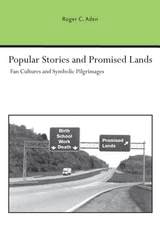
Popular Stories and Promised Lands
Fan Cultures and Symbolic PilgrimagesRoger C. Aden
University of Alabama Press, 2007
A conversation about who we are, where we’ve been, and where we might be going.
Popular Stories and Promised Lands enters a conversation about who we are, where we’ve been, and where we might be going by suggesting that possible answers to those questions can be found in the popular stories we encounter at the movies, on television, in popular magazines, and even on the funny pages.
As countless scholars and popular writers have noted, those of us living in the United States find ourselves at a cultural crossroads. We are increasingly aware that the stories that once permeated life in these United States, stories that tell us that social and economic progress comes from working hard, that everyone has an equal opportunity to experience such progress, do not resonate to the degree they once did. Because many Americans have traditionally defined themselves, others, and their unique sense of place through these stories, we find ourselves displaced socially, economically, politically, and/or culturally.
So, Roger Aden says, we go to places of our own making. Fans of the television series The X-Files return to the Funhouse each week for a dose of frightening fun. Fans of the weekly magazine Sports Illustrated play in the American Elysian Fields where democratic efforts at balancing work and play are valued. Fans of the movie Field of Dreams work as altruistic producers in an alternative garden spot.
Grounded in the author’s own experiences and reinforced by the voices of approximately two hundred additional fans of the four popular stories, this book offers a compelling case for understanding the alleged wasteland of popular culture as a fertile site of individually and communally created sacred places.
Post-Postmodernist Fiction and the Rise of Digital Epitexts
Virginia Pignagnoli
The Ohio State University Press, 2023
Postclassical Narratology
Approaches and AnalysesJan Alber
The Ohio State University Press, 2010
In this volume, an international group of contributors presents new perspectives on narrative. Using David Herman’s 1999 definition of "postclassical narratology" from Narratologies: New Perspectives on Narrative Analysis (OSUP) as their launching point, these eleven essayists explore the various ways in which new approaches overlap and interrelate to form new ways of understanding narrative texts.
Postclassical narratology has reached a new phase of consolidation but also continued diversification. This collection therefore discriminates between what one could call a critical but frame-abiding and a more radical frame-transcending or frame-shattering handling of the structuralist paradigm. Postclassical Narratology: Approaches and Analyses discusses a large variety of different aspects of narrative, such as extensions of classical narratology, new generic applications (autobiography, oral narratives, poetry, painting, and film), the history of narratology, the issue of fictionality, the role of cognition, and questions of authorship and authority, as well as thematic matters related to ethics, gender, and queering. Additionally, it uses a wide spectrum of critical approaches, including feminism, psychoanalysis, media studies, the rhetorical theory of narrative, unnatural narratology, and cognitive studies. In this manner the essays manage to produce new insights into many key issues in narratology.The contributors also demonstrate that narratologists nowadays see the object of their research as more variegated than was the case twenty years ago: they resort to a number of different methods in combination when approaching a problem, and they tend to ground their analyses in a rich contextual framework.
Postethnic Narrative Criticism
Magicorealism in Oscar "Zeta" Acosta, Ana Castillo, Julie Dash, Hanif Kureishi, and Salman RushdieBy Frederick Luis Aldama
University of Texas Press, 2003
Magical realism has become almost synonymous with Latin American fiction, but this way of representing the layered and often contradictory reality of the topsy-turvy, late-capitalist, globalizing world finds equally vivid expression in U.S. multiethnic and British postcolonial literature and film. Writers and filmmakers such as Oscar "Zeta" Acosta, Ana Castillo, Julie Dash, Hanif Kureishi, and Salman Rushdie have made brilliant use of magical realism to articulate the trauma of dislocation and the legacies of colonialism that people of color experience in the postcolonial, multiethnic world.
This book seeks to redeem and refine the theory of magical realism in U.S. multiethnic and British postcolonial literature and film. Frederick Aldama engages in theoretically sophisticated readings of Ana Castillo's So Far from God, Oscar "Zeta" Acosta's Autobiography of a Brown Buffalo, Salman Rushdie's Midnight's Children, Shame, The Satanic Verses, and The Moor's Last Sigh, Julie Dash's Daughters of the Dust, and Stephen Frears and Hanif Kureishi's Sammy and Rosie Get Laid. Coining the term "magicorealism" to characterize these works, Aldama not only creates a postethnic critical methodology for enlarging the contact zone between the genres of novel, film, and autobiography, but also shatters the interpretive lens that traditionally confuses the transcription of the real world, where truth and falsity apply, with narrative modes governed by other criteria.