Results by title
152 books match the query 'New York (N.Y.)' and 8 start with p
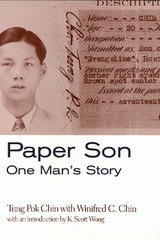
Paper Son
One Man's StoryTung Chin
Temple University Press, 2000
In this remarkable memoir, Tung Pok Chin casts light on the largely hidden experience of those Chinese who immigrated to this country with false documents during the exclusion era. Although scholars have pieced together their history, first-person accounts are rare and fragmented; many of the so-called "Paper Sons" lived out their lives in silent fear of discovery. Chin's story speaks for the many Chinese who worked in urban laundries and restaurants, but it also introduces an unusually articulate man's perspective on becoming Chinese American.
Chin's story begins in the early 1930s, when he followed the example of his father and countless other Chinese who bought documents that falsely identified them as children of Chinese Americans. Arriving in Boston and later moving to New York City, he worked and lived in laundries. Chin was determined to fit into American life and dedicated himself to learning English. But he also became an active member of key organizations -- a church, the Chinese Hand Laundrymen's Alliance, and the Chinese Consolidated Benevolent Association -- that anchored him in the community. A self-reflective and expressive man, Chin wrote poetry commenting on life in China and the hardships of being an immigrant in the United States. His work was regularly published in the China Daily News and brought him to the attention of the FBI, then intent on ferreting out communists and illegal immigrants. His vigorous narrative speaks to the day-to-day anxieties of living as a Paper Son as well as the more universal immigrant experiences of raising a family in modest circumstances and bridging cultures.
Historian K. Scott Wong introduces Chin's memoir, discussing the limitations on immigration from China and what is known about Exclusion-era Chinese American communities. Set in historical context, Tung Pok Chin's unique story offers and engaging account of a twentieth-century Paper Son.
[more]
Parts of a World
A NovelA. G. Mojtabai
Northwestern University Press, 2011
Two decades into his career, Tom Limbeck, a New York City social worker, is leading an orderly, utterly prosaic life. He is, by self-description, “a poor man’s psychiatrist,” dedicated to helping his clients see things rationally, the better to confront the real world. He works in an office beset by budgetary difficulties and driven to solutions suited only to the bureaucracy.
Tom’s life changes when he takes on the case of Michael, who is known as “Saint Francis of the Dumpster” for his peaceful disposition and practice of eating from garbage cans. Tom is at first haunted by, then obsessed with, this uncommunicative young man who holds a precious secret which causes him to risk his survival by living on the street. Tom is determined to discover and expose Michael’s secret (“his faith/his delusion”) as a necessary first step before any treatment can begin. Tom cannot reason his way out of his own obsession when he finds himself bending the rules, abandoning therapeutic norms and, before long, stalking his client. Parts of a World is a book about doubt—doubt, faith, and delusion.
Tom’s life changes when he takes on the case of Michael, who is known as “Saint Francis of the Dumpster” for his peaceful disposition and practice of eating from garbage cans. Tom is at first haunted by, then obsessed with, this uncommunicative young man who holds a precious secret which causes him to risk his survival by living on the street. Tom is determined to discover and expose Michael’s secret (“his faith/his delusion”) as a necessary first step before any treatment can begin. Tom cannot reason his way out of his own obsession when he finds himself bending the rules, abandoning therapeutic norms and, before long, stalking his client. Parts of a World is a book about doubt—doubt, faith, and delusion.
[more]
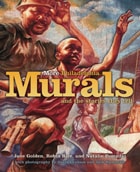
Philadelphia Murals & Stories They Tell
Jane Golden
Temple University Press, 2002
In June 1984, Jane Golden, a young muralist from Margate, New Jersey, headed up a project that was originally planned as a six-week youth program in the fledgling Philadelphia Anti-Graffiti Network. This small exercise in fighting graffiti grew into the most vibrant public art project in the United States. Led by Golden and dozens of artists, neighborhood residents, and volunteers, the Philadelphia Mural Arts Program has adorned the city with over two thousand murals. In the process, this vibrant art, painted mostly on city walls, helped to change the look of the city, creating an enduring legacy in all of the neighborhoods in which the murals were added.In this lavishly illustrated chronicle of the Mural Arts Program, you will see the murals in all of their beauty and learn about their inspiring legacies in neighborhoods throughout the city. Go behind the scenes to find out how murals are made and why the process is as much an art of diplomacy and consensus building as paint and perspective. Discover through pictures and text how murals give communities a new way to define themselves, not in terms of the streets and intersections that border them, but in terms of the people who came together to create something of dramatic beauty.
[more]
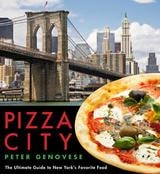
Pizza City
The Ultimate Guide to New York's Favorite FoodGenovese, Peter
Rutgers University Press, 2013
Pizza is a $35 billion a year business, and nowhere is it taken more seriously than New York City. Journalist Peter Genovese surveys the city’s pizza scene—the food, the business, the culture—by profiling pizza landmarks and personalities and rating pizzerias in all five boroughs.
In this funny, fascinating book, Genovese explores the bloggers who write about New York pizza, the obsessive city dwellers who collect and analyze the delivery boxes, Mark Bello’s school where students spend a day making pies from scratch, and Scott Wiener’s pizza bus tours.
Along the way, readers learn the history of legendary Totonno’s on Coney Island (Zagat’s number-one pizzeria for 2012), along with behind-the-scenes stories about John’s on Bleecker Street, Joe’s on Carmine, Lombardi’s, Paulie Gee’s, Motorino, and more than a dozen other favorite spots and their owners. Throughout these profiles, Genovese presents a brief history of how pizza came to the city in 1905 and developed into a major attraction in Little Italy, a neighborhood that became a training ground for many of the city’s best-loved pizzerias. Enjoyable facts and figures abound. Did you know that Americans put 250 million pounds of pepperoni on their pies every year? Or that Domino’s has more outlets per capita in Iceland than in any other country?
Beyond the stories and tidbits, Genovese provides detailed, borough-by-borough reviews of 250 pizzerias, from simple “slice shops” with scant atmosphere to gourmet pizzerias, including shops that use organic ingredients and experiment with new variations of crusts and toppings. Complemented by hundreds of current and never-before-seen archival photos, the book gives the humble slice its proper due and will leave readers overwhelmed by a sudden desire for New York pizza.
[more]
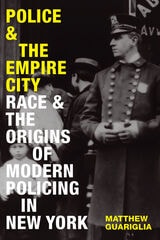
Police and the Empire City
Race and the Origins of Modern Policing in New YorkMatthew Guariglia
Duke University Press, 2023
During the years between the Civil War and World War II, police in New York City struggled with how to control a diverse metropolis. In Police and the Empire City Matthew Guariglia tells the history of the New York Police Department to show how its origins were built upon and inseparably entwined with the history of race, ethnicity, and whiteness in the United States. Guariglia explores the New York City Police Department through its periods of experimentation and violence as police experts imported tactics from the US occupation of the Philippines and Cuba, devised modern bureaucratic techniques to better suppress Black communities, and infiltrated supposedly unknowable immigrant neighborhoods. Innovations ranging from recruiting Chinese, Italian, and German police to form “ethnic squads” to the use of deportation and federal immigration restrictions to control local crime—even the introduction of fingerprinting—were motivated by attempts to govern a multiracial city. Campaigns to remake the police department created an urban landscape where power, gender, sexuality, race, ethnicity, crime, and bodies collided and provided a foundation for the supposedly color-blind, technocratic, federally backed, and surveillance-based policing of today.
[more]
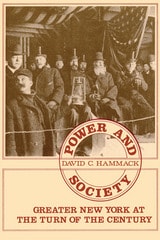
Power and Society in Greater NY
David C. Hammack
Russell Sage Foundation, 1982
Who has ruled New York? Has power become more concentrated—or more widely and democratically dispersed—in American cities over the past one hundred years? How did New York come to have its modern physical and institutional shape? Focusing on the period when New York City was transformed from a nineteenth-century mercantile center to a modern metropolis, David C. Hammack offers an entirely new view of the history of power and public policy in the nation's largest urban community. Opening with a fresh and original interpretation of the metropolitan region's economic and social history between 1890 and 1910, Hammack goes on to show how various population groups used their economic, social, cultural, and political resources to shape the decisions that created the modern city. As New York grew in size and complexity, its economic and social interests were forced to compete and form alliances. No single group—not even the wealthy—was able to exercise continuing control of urban policy. Building on his account of this interplay among numerous elites, Hammack concludes with a new interpretation of the history of power in New York and other American cities between 1890 and 1950. This book makes a major contribution to the study of community power, of urban and regional history, and of public policy. And by taking the meaning and distribution of power as his theme, Hammack is able to reintegrate economic, social, and political history in a rich and comprehensive work. "Lucid, instructive, and discerning....The most commanding analysis of its subject that I know." —John M. Blum, professor of history, Yale University "A powerful and persuasive treatment of a marvelous subject." —Nelson W. Polsby, professor of political science, University of California, Berkeley
[more]
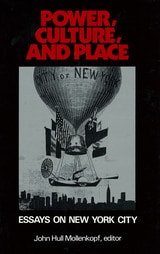
Power, Culture and Place
Essays on New York CityJohn H. Mollenkopf
Russell Sage Foundation, 1988
With a population and budget exceeding that of many nations, a central position in the world's cultural and corporate networks, and enormous concentrations off wealth and poverty, New York City intensifies interactions among social forces that elsewhere may be hidden or safely separated. The essays in Power, Culture, and Place represent the first comprehensive program of research on this city in a quarter century. Focusing on three historical transformations—the mercantile, industrial, and postindustrial—several contributors explore economic growth and change and the social conflicts that accompanied them. Other papers suggest how popular culture, public space, and street life served as sources of order amidst conflict and disorder. Essays on politics and pluralism offer further reflections on how social tensions are harnessed in the framework of political participation. By examining the intersection of economics, culture, and politics in a shared spatial context, these multidisciplinary essays not only illuminate the City's fascinating and complex development, but also highlight the significance of a sense of "place" for social research. It has been said that cities gave birth to the social sciences, exemplifying and propagating dramatic social changes and proving ideal laboratories for the study of social patterns and their evolution. As John Mollenkopf and his colleagues argue, New York City remains the quintessential case in point.
[more]
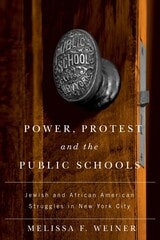
Power, Protest, and the Public Schools
Jewish and African American Struggles in New York CityMelissa F. Weiner
Rutgers University Press, 2012
Accounts of Jewish immigrants usually describe the role of education in helping youngsters earn a higher social position than their parents. Melissa F. Weiner argues that New York City schools did not serve as pathways to mobility for Jewish or African American students. Instead, at different points in the city's history, politicians and administrators erected similar racial barriers to social advancement by marginalizing and denying resources that other students enjoyed. Power, Protest, and the Public Schools explores how activists, particularly parents and children, responded to inequality; the short-term effects of their involvement; and the long-term benefits that would spearhead future activism. Weiner concludes by considering how today's Hispanic and Arab children face similar inequalities within public schools.
[more]