Results by title
337 books match the query 'North America' and 17 start with p

Pandora's Locks
The Opening of the Great Lakes-St. Lawrence SeawayJeff Alexander
Michigan State University Press, 2009
The St. Lawrence Seaway was considered one of the world's greatest engineering achievements when it opened in 1959. The $1 billion project-a series of locks, canals, and dams that tamed the ferocious St. Lawrence River-opened the Great Lakes to the global shipping industry.
Linking ports on lakes Superior, Michigan, Huron, Erie, and Ontario to shipping hubs on the world's seven seas increased global trade in the Great Lakes region. But it came at an extraordinarily high price. Foreign species that immigrated into the lakes in ocean freighters' ballast water tanks unleashed a biological shift that reconfigured the world's largest freshwater ecosystems.
Pandora's Locks is the story of politicians and engineers who, driven by hubris and handicapped by ignorance, demanded that the Seaway be built at any cost. It is the tragic tale of government agencies that could have prevented ocean freighters from laying waste to the Great Lakes ecosystems, but failed to act until it was too late. Blending science with compelling personal accounts, this book is the first comprehensive account of how inviting transoceanic freighters into North America's freshwater seas transformed these wondrous lakes.
Papist Devils
Robert Emmett Curran
Catholic University of America Press, 2014
Paradise Found
Nature in America at the Time of DiscoverySteve Nicholls
University of Chicago Press, 2009
The first Europeans to set foot on North America stood in awe of the natural abundance before them. The skies were filled with birds, seas and rivers teemed with fish, and the forests and grasslands were a hunter’s dream, with populations of game too abundant and diverse to even fathom. It’s no wonder these first settlers thought they had discovered a paradise of sorts. Fortunately for us, they left a legacy of copious records documenting what they saw, and these observations make it possible to craft a far more detailed evocation of North America before its settlement than any other place on the planet.
Here Steve Nicholls brings this spectacular environment back to vivid life, demonstrating with both historical narrative and scientific inquiry just what an amazing place North America was and how it looked when the explorers first found it. The story of the continent’s colonization forms a backdrop to its natural history, which Nicholls explores in chapters on the North Atlantic, the East Coast, the Subtropical Caribbean, the West Coast, Baja California, and the Great Plains. Seamlessly blending firsthand accounts from centuries past with the findings of scientists today, Nicholls also introduces us to a myriad cast of characters who have chronicled the changing landscape, from pre–Revolutionary era settlers to researchers whom he has met in the field.
A director and writer of Emmy Award–winning wildlife documentaries for the Smithsonian Channel, Animal Planet, National Geographic, and PBS, Nicholls deploys a cinematic flair for capturing nature at its most mesmerizing throughout. But Paradise Found is much more than a celebration of what once was: it is also a reminder of how much we have lost along the way and an urgent call to action so future generations are more responsible stewards of the world around them. The result is popular science of the highest order: a book as remarkable as the landscape it recreates and as inspired as the men and women who discovered it.
Patient Zero and the Making of the AIDS Epidemic
Richard A. McKay
University of Chicago Press, 2017
The search for a “patient zero”—popularly understood to be the first person infected in an epidemic—has been key to media coverage of major infectious disease outbreaks for more than three decades. Yet the term itself did not exist before the emergence of the HIV/AIDS epidemic in the 1980s. How did this idea so swiftly come to exert such a strong grip on the scientific, media, and popular consciousness? In Patient Zero, Richard A. McKay interprets a wealth of archival sources and interviews to demonstrate how this seemingly new concept drew upon centuries-old ideas—and fears—about contagion and social disorder.
McKay presents a carefully documented and sensitively written account of the life of Gaétan Dugas, a gay man whose skin cancer diagnosis in 1980 took on very different meanings as the HIV/AIDS epidemic developed—and who received widespread posthumous infamy when he was incorrectly identified as patient zero of the North American outbreak. McKay shows how investigators from the US Centers for Disease Control inadvertently created the term amid their early research into the emerging health crisis; how an ambitious journalist dramatically amplified the idea in his determination to reframe national debates about AIDS; and how many individuals grappled with the notion of patient zero—adopting, challenging and redirecting its powerful meanings—as they tried to make sense of and respond to the first fifteen years of an unfolding epidemic. With important insights for our interconnected age, Patient Zero untangles the complex process by which individuals and groups create meaning and allocate blame when faced with new disease threats. What McKay gives us here is myth-smashing revisionist history at its best.
Petroglyphs, Pictographs, and Projections
Native American Rock Art in the Contemporary Cultural LandscapeRichard A. Rogers
University of Utah Press, 2018
Neither archaeological interpretations nor commercial reproductions of rock art operate in a cultural vacuum. Both the motivation to seek out rock art and the specific meanings attached to it are deeply embedded in narratives about Native Americans already created by anthropologists, archaeologists, photographers, novelists, film and television producers, the tourism industry, and New Age discourse. For those interested in rock art as a window into indigenous cultures of the past, our contemporary projections of meanings are of great concern. Applying the tools of critical/cultural studies to both academic and popular discourse, Rogers explores the implications of such projections for rock art studies, contemporary gender dynamics, and the neocolonial relationship between Euro-Americans and Native Americans.
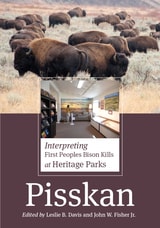
Pisskan
Interpreting First Peoples Bison Kills at Heritage ParksEdited by Leslie B. Davis and John W. Fisher, Jr.
University of Utah Press, 2016
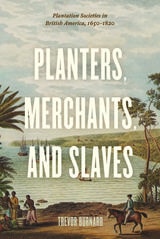
Planters, Merchants, and Slaves
Plantation Societies in British America, 1650-1820Trevor Burnard
University of Chicago Press, 2015
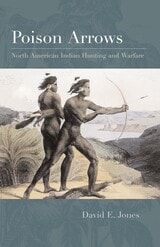
Poison Arrows
North American Indian Hunting and WarfareBy David E. Jones
University of Texas Press, 2007
Biological warfare is a menacing twenty-first-century issue, but its origins extend to antiquity. While the recorded use of toxins in warfare in some ancient populations is rarely disputed (the use of arsenical smoke in China, which dates to at least 1000 BC, for example) the use of "poison arrows" and other deadly substances by Native American groups has been fraught with contradiction. At last revealing clear documentation to support these theories, anthropologist David Jones transforms the realm of ethnobotany in Poison Arrows.
Examining evidence within the few extant descriptive accounts of Native American warfare, along with grooved arrowheads and clues from botanical knowledge, Jones builds a solid case to indicate widespread and very effective use of many types of toxins. He argues that various groups applied them to not only warfare but also to hunting, and even as an early form of insect extermination. Culling extensive ethnological, historical, and archaeological data, Jones provides a thoroughly comprehensive survey of the use of ethnobotanical and entomological compounds applied in wide-ranging ways, including homicide and suicide. Although many narratives from the contact period in North America deny such uses, Jones now offers conclusive documentation to prove otherwise.
A groundbreaking study of a subject that has been long overlooked, Poison Arrows imparts an extraordinary new perspective to the history of warfare, weaponry, and deadly human ingenuity.
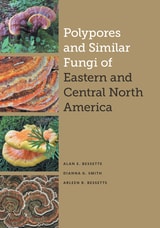
Polypores and Similar Fungi of Eastern and Central North America
Alan E. Bessette, Dianna Smith, and Arleen R. Bessette
University of Texas Press, 2021

Porches of North America
Thomas Durant Visser
University Press of New England, 2012
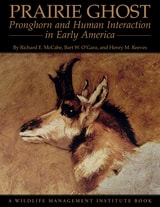
Prairie Ghost
Pronghorn and Human Interaction in Early AmericaRichard E. McCabe
University Press of Colorado, 2010
A Wildlife Management Institute Book
In this lavishly illustrated volume Richard E. McCabe, Bart W. O'Gara and Henry M. Reeves explore the fascinating relationship of pronghorn with people in early America, from prehistoric evidence through the Battle of Little Bighorn in 1876. The only one of fourteen pronghorn-like genera to survive the great extinction brought on by human migration into North America, the pronghorn has a long and unique history of interaction with humans on the continent, a history that until now has largely remained unwritten.With nearly 150 black-and-white photographs, 16 pages of color illustrations, plus original artwork by Daniel P. Metz, Prairie Ghost: Pronghorn and Human Interaction in Early America tells the intriguing story of humans and these elusive big game mammals in an informative and entertaining fashion that will appeal to historians, biologists, sportsmen and the general reader alike.
Winner of the Wildlife Society's Outstanding Book Award for 2005
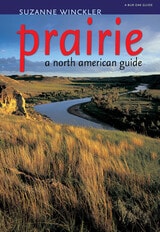
Prairie
A North American GuideSuzanne Winckler
University of Iowa Press, 2004
North America’s grasslands once stretched from southern Canada to northern Mexico, and across this considerable space different prairie types evolved to express the sum of their particular longitude and latitude, soils, landforms, and aspect. This prairie guide is your roadmap to what remains of this varied and majestic landscape.
Suzanne Winckler’s goal is to encourage travelers to get off the highways, out of their cars, and onto North America’s last remaining prairies. She makes this adventure as easy as possible by providing exact driving directions to the more than three hundred sites in her guide. She also includes information about size, management, phone numbers, and outstanding characteristics for every prairie site and provides readers with a thorough list of recommended readings and Web sites.
The scope of the guide is impressive. It encompasses prairies found within national grasslands, parks, forests, recreation areas, wildlife refuges, state parks, preserves, and natural areas and on numerous working ranches in Saskatchewan and Manitoba, the Dakotas, Minnesota, Illinois, Iowa, Kansas, Missouri, Nebraska, Oklahoma, and Texas. A series of maps locate the prairies both geographically and by name.
From “the largest restoration project within the historic range of tallgrass prairie” at Neal Smith National Wildlife Refuge in Iowa to Big Bend National Park in Texas, where “the Chisos Mountains, completely surrounded by the park, rise up majestically from the Chihuahuan Desert floor,” Winckler celebrates the dramatic expanses of untouched prairie, the crown jewels of prairie reconstruction and restoration, and the neglected remnants that deserve to be treasured.
Prehistoric Food Production in North America
Edited by Richard I. Ford
University of Michigan Press, 1985
Principles of Geoarchaeology
A North American PerspectiveMichael R. Waters
University of Arizona Press, 1992
CONTENTS
1. Research Objectives of Geoarchaeology
2. Geoarchaeological Foundations: The Archaeological Site Matrix: Sediments and Soils / Stratigraphy / The Geoarchaeological Interpretation of Sediments, Soils, and Stratigraphy
3. Alluvial Environments: Streamflow / Sediment Erosion, Transport, and Deposition / Alluvial Environments: Rivers, Arroyos, Terraces, and Fans / Alluvial Landscapes Evolution and the Archaeological Record / Alluvial Landscape Reconstruction
4. Eolian Environments: Sediment Erosion, Transport, and Deposition / Sand Dunes / Loess and Dust / Stone Pavements / Eolian Erosion / Volcanic Ash (Tephra)
5. Springs, Lakes, Rockshelters, and Other Terrestrial Environments: Springs / Lakes / Slopes / Glaciers / Rockshelters and Caves
6. Coastal Environments: Coastal Processes / Late Quaternary Sea Level Changes / Coastal Environments / Coastal Landscape Evolution and the Archaeological Record / Coastal Landscape Reconstruction
7. The Postburial Disturbance af Archaeological Site Contexts: Cryoturbation / Argilliturbation / Graviturbation / Deformation / Other Physical Disturbances / Floralturbation / Faunalturbation
8. Geoarchaeological Research
Appendix A: Geoarchaeological Studies Illustrating the Effects of Fluvial Landscape Evolution on the Archaeological Record
Appendix B: Geoarchaeological Studies Illustrating Site-Specific Synchronic and Diachronic Alluvial Landscape Reconstructions
Appendix C: Geoarchaeological Studies Illustrating Regional Synchronic and Diachronic Alluvial Landscape Reconstructions
Prior to Meaning
The Protosemantic and PoeticsSteve McCaffery
Northwestern University Press, 2000
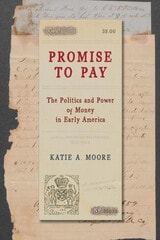
Promise to Pay
The Politics and Power of Money in Early AmericaKatie A. Moore
University of Chicago Press, 2024
Promise to Pay follows America’s first paper money—the “bills of credit” of British North America—from its seventeenth-century origins as a means of war finance to its pivotal role in catalyzing the American Revolution. Katie A. Moore combs through treasury records, account books, and the bills themselves to tell a new story of money’s origins that challenges economic orthodoxy and mainstream histories. Promise to Pay shows how colonial governments imposed paper bills on settler communities through existing labor and kinship relations, their value secured by thousands of individual claims on the public purse—debts—and the state’s promise to take them back as payment for taxes owed. Born into a world of hierarchy and deference, early American money eroded old social ties and created new asymmetries of power, functioning simultaneously as a ticket to the world of goods, a lifeline for those on the margins, and a tool of imperial domination.
Grounded in sustained engagement with scholarship from multiple disciplines, Promise to Pay breathes new life into old debates and offers an incisive account of the centrality of money in the politics and conflicts of empire, community, and everyday life.
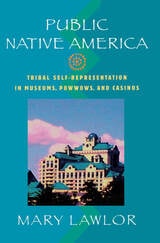
Public Native America
Tribal Self-Representations in Museums, Powwows, and CasinosLawlor, Mary
Rutgers University Press, 2006
The Native American casino and gaming industry has attracted unprecedented American public attention to life on reservations. Other tribal public venues, such as museums and powwows, have also gained in popularity among non-Native audiences and become sites of education and performance.
In PublicNative America, Mary Lawlor explores the process of tribal self-definition that the communities in her study make available to off-reservation audiences. Focusing on architectural and interior designs as well as performance styles, she reveals how a complex and often surprising cultural dynamic is created when Native Americans create lavish displays for the public’s participation and consumption.
Drawing on postcolonial and cultural studies, Lawlor argues that these venues serve as a stage where indigenous communities play out delicate negotiations—on the one hand retaining traditional beliefs and rituals, while on the other, using what they have learned about U.S. politics, corporate culture, tourism, and public relations to advance their economic positions.