Results by title
527 books match the query 'Novel' and 15 start with p
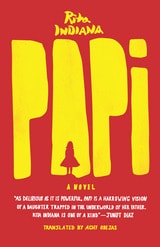
Papi
A NovelRita Indiana
University of Chicago Press, 2016
Drawing on her memories of a childhood split between Santo Domingo and visits with her father amid the luxuries of the United States, Rita Indiana mixes satire with a child’s imagination, horror with science fiction, in a swirling tale of a daughter’s love, the lure of crime and machismo, and the violence of the adult world. Expertly translated into English for the first time by Achy Obejas, who renders the rhythmic lyricism of Indiana’s Dominican Spanish in language that propels the book forward with the relentless beat of a merengue, Papi is furious, musical, and full of wit—a passionate, overwhelming, and very human explosion of artistic virtuosity.
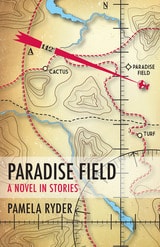
Paradise Field
A Novel in StoriesPamela Ryder
University of Alabama Press, 2017
When life dwindles to its irrevocable conclusion, recollections are illuminated, even unto the grave. Such is the narrative of Paradise Field: A Novel in Stories, whose title is taken from a remote airfield in the American Southwest, and while the father recalls his flying days, his daughter—who nurses the old man—reflects as well.
Pamela Ryder’s stories vary in style and perspective, and time lines overlap as death advances and retreats. This unique and shifting narrative explores the complexities of a relationship in which the father—who has been a high-flying outsider—descends into frailty and becomes dependent upon the daughter he has never really known.
The opening story, “Interment for Yard and Garden,” begins as a simple handbook for Jewish burial and bereavement, although the narrator cannot help but reveal herself and her motives. From there, the telling begins anew and unfolds chronologically, returning to the adult daughter’s childhood: a family vacation in France, the grotesqueries of the dinner table, the shadowy sightings of a father who has flown away.
A final journey takes father and daughter back to the Southwest in search of Paradise Field. Their travels through that desolate landscape foreshadow the father’s ultimate decline, as portrayed in the concluding stories that tell of the uneasy transformation in the bond between them and in the transcendence of his demise. Taken together, the stories in Paradise Field are an eloquent but unsparing depiction of infirmity and death, as well as solace and provocation for anyone who has been left to stand graveside and confront eternity.
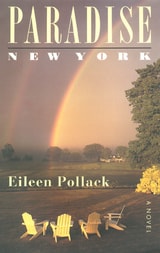
Paradise, New York
A NovelEileen Pollack
Temple University Press, 2000
In the course of that season, Lucy comes to realize her love for the hotel's black handyman, Mr. Jefferson -- and the difficulties she faces in overcoming the barriers between them. She battles her grandmother's not-so-subtle attempts to sabotage her success, her parents' superstitious fear of anything that attracts attention to the Jews, and her brother's contention that what Lucy is doing is more a matter of ego than authentic religious feeling.
On top of all this, Lucy must contend with the Hasid who buys the chicken farm next door, a cell of ancient Jewish Communist who foment a strike among Eden's overworked young staff, and a gay chef and a gay baker who want to prove to the world that kosher cuisine can satisfy the most sophisticated gourmet.
Among the novel's characters are Shirley and Nat Feidel, who barely survived the Holocaust but refuse to allow bitterness to rule their lives; Mami Goshgarian, the Eden's tumeler; and Jimmy Kilcoin, and Irish Catholic insurance adjustor who has earned a reputation as "the Don Juan of the Catskills" and is determined to seduce Lucy before summer's end.
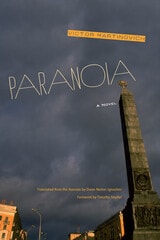
Paranoia
A NovelVictor Martinovich
Northwestern University Press, 2013
Immediately banned after it was published, Paranoia is a novel about how dictatorships survive by burrowing into the minds of those they rule, sowing distrust and blurring the boundaries between the state’s and the individual’s autonomy. Although Minsk and Belarus are never mentioned, they are clearly the author’s inspiration for the novel’s setting. The plot focuses on a doomed romance between a young man whose former lover has disappeared and a young woman whose other lover is the minister of state security. The novel evokes classic dissident literature while artfully depicting the post-Soviet, globalized world.
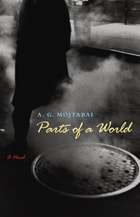
Parts of a World
A NovelA. G. Mojtabai
Northwestern University Press, 2011
Tom’s life changes when he takes on the case of Michael, who is known as “Saint Francis of the Dumpster” for his peaceful disposition and practice of eating from garbage cans. Tom is at first haunted by, then obsessed with, this uncommunicative young man who holds a precious secret which causes him to risk his survival by living on the street. Tom is determined to discover and expose Michael’s secret (“his faith/his delusion”) as a necessary first step before any treatment can begin. Tom cannot reason his way out of his own obsession when he finds himself bending the rules, abandoning therapeutic norms and, before long, stalking his client. Parts of a World is a book about doubt—doubt, faith, and delusion.
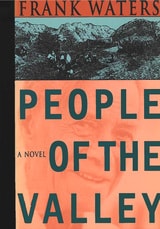
People Of The Valley
A NovelFrank Waters
Ohio University Press, 1941
One of Frank Waters’s most popular novels, People of the Valley takes place high in the Sangre de Cristo Mountains where an isolated Spanish-speaking people confront a threatening world of change.
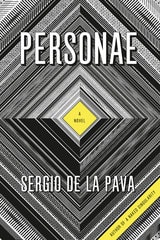
Personae
A NovelSergio De La Pava
University of Chicago Press, 2013
This book is nothing like that one. Just look at it: A Naked Singularity was a brick of a book, 678 pages, and this one’s slim--lean and focused. A Naked Singularity locked us into the unforgettable voice of its protagonist, Casi, while Personae shimmers and shifts among different perspectives, locations, and narrative techniques.
But sharp readers will quickly see that the two books are the work of the same hand. The sheer energy of De La Pava’s sentences, his eye for absurd humor, his commitment to the idea of justice--all will be familiar here as they carry us from the tale of an obsessive, damaged psychic detective consumed by a murder case, into a Sartrean drama that raises questions (and jokes) about responsibility, fate, death, and more. And when De La Pava eventually returns us to the investigation, this time seen from the other side, the lives and deaths bound up in it feel all the more real, and moving, even as solid answers slip away into mist.
Shelf Awareness declared that A Naked Singularity "heralded the arrival of a tremendous talent." In some ways, despite its brevity, Personae is even more surprising and challenging--and, in its ambition and fierce intelligence, it’s proof that Sergio De La Pava is here to stay.
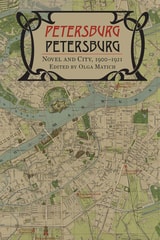
Petersburg/Petersburg
Novel and City, 1900–1921Olga Matich
University of Wisconsin Press, 2010
Since its founding three hundred years ago, the city of Saint Petersburg has captured the imaginations of the most celebrated Russian writers, whose characters map the city by navigating its streets from the aristocratic center to the gritty outskirts. While Tsar Peter the Great planned the streetscapes of Russia’s northern capital as a contrast to the muddy and crooked streets of Moscow, Andrei Bely’s novel Petersburg (1916), a cornerstone of Russian modernism and the culmination of the “Petersburg myth” in Russian culture, takes issue with the city’s premeditated and supposedly rational character in the early twentieth century.
“Petersburg”/Petersburg studies the book and the city against and through each other. It begins with new readings of the novel—as a detective story inspired by bomb-throwing terrorists, as a representation of the aversive emotion of disgust, and as a painterly avant-garde text—stressing the novel’s phantasmagoric and apocalyptic vision of the city. Taking a cue from Petersburg’s narrator, the rest of this volume (and the companion Web site, stpetersburg.berkeley.edu/) explores the city from vantage points that have not been considered before—from its streetcars and iconic art-nouveau office buildings to the slaughterhouse on the city fringes. From poetry and terrorist memoirs, photographs and artwork, maps and guidebooks of that period, the city emerges as a living organism, a dreamworld in flux, and a junction of modernity and modernism.
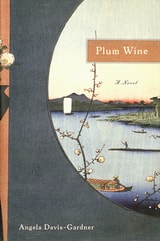
Plum Wine
A NovelAngela Davis-Gardner
University of Wisconsin Press, 2006
Barbara Jefferson, a young American teaching in Tokyo in the 1960s, is set on a life-changing quest when her Japanese surrogate mother, Michi, dies, leaving her a tansu of homemade plum wines wrapped in rice paper. Within the papers Barbara discovers writings in Japanese calligraphy that comprise a startling personal narrative. With the help of her translator, Seiji Okada, Barbara begins to unravel the mysteries of Michi's life, a story that begins in the early twentieth century and continues through World War II and its aftermath.
As Barbara and Seiji translate the plum wine papers they form an intimate bond, with Michi a ghostly third in what becomes an increasingly uneasy triangle. Barbara is deeply affected by the revelation that Michi and Seiji are hibakusha, survivors of the atomic bombing in Hiroshima, and even harder for her to understand are the devastating psychological effects wrought by war. Plum Wine examines human relationships, cultural differences, and the irreparable consequences of war in a story that is both original and timeless.
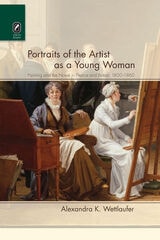
Portraits of the Artist as a Young Woman
Painting and the Novel in France and Britain, 1800–1860Alexandra K. Wettlaufer
The Ohio State University Press, 2011
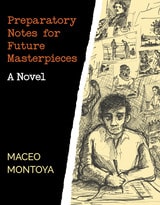
Preparatory Notes for Future Masterpieces
A NovelMaceo Montoya
University of Nevada Press, 2021
From critically acclaimed author Maceo Montoya comes an inventive and adventurous satirical novel about a Mexican-American artist’s efforts to fulfill his vision: to paint masterful works of art. His plans include a move to Paris to join the ranks of his artistic hero, Gustave Courbet—except it’s 1943, and he’s stuck in the backwoods of New Mexico. Penniless and prone to epileptic fits, even his mother thinks he’s crazy.
Ernie Lobato has just inherited his deceased uncle’s manuscript and drawings. At the urging of his colleague, an activist and history buff (Lorraine Rios), Ernie sends the materials to a professor of Chicanx literature (Dr. Samuel Pizarro). Throughout the novel, Dr. Pizarro shares his insights and comments on the uncle’s legacy in a series of annotations to his text and illustrations.
As Ernie’s uncle battles a world that is unkind to “starving artists,” he runs into other tormented twentieth-century artists, writers, and activists with ambitions to match his own: a young itinerant preacher (Reies López Tijerina); the “greatest insane artist” (Martín Ramirez); and Oscar Zeta Acosta who is hellbent on self-destruction. Will the fortuitous encounters with these prophetic figures result in his own genius being recognized? Or will his
uncompromising nature consign him to what he fears most?
Told through a combination of words and images in the tradition of classic works such as Don Quixote and Alice in Wonderland, Preparatory Notes for Future Masterpieces features fifty-one vivid black-and-white pen drawings. This complex and engaging story also doubles as literary criticism, commenting on how outsiders’ stories fit into the larger context of the Chicanx literary canon. A unique and multilayered story that embraces both contradiction and possibility, it also sheds new light on the current state of Chicanx literature while, at the same time, contributing to it.
Propulsive, humorous, and full of life, this candid novel will be loved not only by Beat fiction fans but by contemporary fiction lovers as well.
Pressing Freedom
A NovelRoger Armbrust
Parkhurst Brothers, Inc., 2017
An investigative reporter for a statewide newspaper connects the dots on an interstate jewel fencing scheme which leads to the capitol city mayor’s door, and implicates a would-be governor. The reporter, a Vietnam vet whose keeps his black ops background under wraps, is attacked by rogue cops, who also threaten his daughter and his girlfriend. His USMC training, unknown to his assailants, saves him from serious injury, but danger on the national scene draws his attention. With a former United States Senator who shares his concern for the unstable new administration in Washington, the reporter finds himself in the midst of a plot to return the federal government to stability, but by means that shock him to the core. A political thriller born of our current national turmoil, this first novel by a seasoned journalist will leave the reader with wide eyes and a quickened heartbeat.
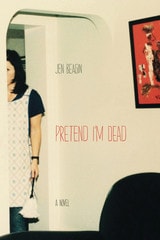
Pretend I'm Dead
A NovelJen Beagin
Northwestern University Press, 2015
Jen Beagin’s funny, moving, fearless debut novel introduces an unforgettable character, Mona—almost 24, cleaning houses to get by, emotionally adrift. Handing out clean needles to drug addicts, she falls for a recipient who proceeds to break her heart in unimaginable ways. She decamps to Taos, New Mexico, for a fresh start, where she finds a community of seekers and cast-offs. But they all have one or two things to teach her—the pajama-wearing, blissed-out New Agers, the slightly creepy client with peculiar tastes in controlled substances, the psychic who might really be psychic. Always just under the surface are her memories of growing up in a chaotic, destructive family from which she’s trying to disentangle herself. The story of her journey toward a comfortable place in the world and a measure of self-acceptance is psychologically acute, often surprising, and entirely human.
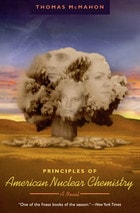
Principles of American Nuclear Chemistry
A NovelThomas McMahon
University of Chicago Press, 1970
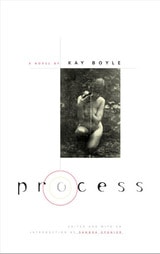
Process
A NovelKay Boyle. Edited and with an Introduction by Sandra Spanier
University of Illinois Press, 2006
Three quarters of a century after the manuscript of Kay Boyle’s first novel disappeared, a carbon copy of it was discovered by Sandra Spanier, the preeminent Boyle authority. Set off by Spanier’s substantial introduction, Process is published here for the first time in paperback.
A classic bildungsroman, Process tells the story of Kerith Day, who is in search of her own identity and place in the world. A keenly critical observer of the dreary industrial landscape and the beaten-down inhabitants of her native Cincinnati, Ohio, Kerith is determined to discover something better. She places her faith in art and politics and sets off for France, where workers and radicals are on the same side.