69 books match the query 'Nursing' and 2 start with p
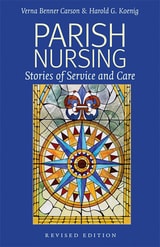
cover of Parish Nursing - 2011 Edition: Stories of Service and Care

Parish Nursing - 2011 Edition

Stories of Service and Care

Verna Benner Carson

Templeton Press, 2011

The engaging stories in Parish Nursing provide accessible and enjoyable accounts of real parish nurses, both paid and volunteer, who attend to the needs of their congregations in a variety of ways—from home, hospice, and hospital visits to community outreach. This revised edition gathers their stories of hearing and heeding God’s call, of their faith that they are doing the “right thing,” of their joys, sorrows, and challenges, and of their quiet dedication as they offer their time and talents to meet the needs of others.

By offering inspiration and encouragement, along with a healthy dose of updated practical advice, this collection will make parish nursing theory come to life. These stories will honor practicing parish nurses, will guide the way for anyone contemplating parish nursing as a career, and will challenge church members and leaders to examine the role that their congregations play in health ministry—especially in meeting the long-term care needs of an aging population.


[more]
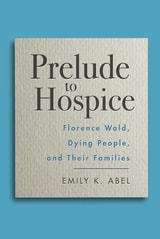
cover of Prelude to Hospice: Florence Wald, Dying People, and their Families

Prelude to Hospice

Florence Wald, Dying People, and their Families

Abel, Emily K.

Rutgers University Press, 2018

Hospices have played a critical role in transforming ideas about death and dying. Viewing death as a natural event, hospices seek to enable people approaching mortality to live as fully and painlessly as possible. Award-winning medical historian Emily K. Abel provides insight into several important issues surrounding the growth of hospice care. Using a unique set of records, Prelude to Hospice expands our understanding of the history of U.S. hospices. Compiled largely by Florence Wald, the founder of the first U.S. hospice, the records provide a detailed account of her experiences studying and caring for dying people and their families in the late 1960s and early 1970s. Although Wald never published a report of her findings, she often presented her material informally. Like many others seeking to found new institutions, she believed she could garner support only by demonstrating that her facility would be superior in every respect to what currently existed. As a result, she generated inflated expectations about what a hospice could accomplish. Wald’s records enable us to glimpse the complexities of the work of tending to dying people. 
[more]