Results by title
85 books match the query 'Pacific Northwest (OR, WA)' and 11 start with p
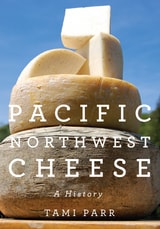
Pacific Northwest Cheese
A HistoryTami Parr
Oregon State University Press, 2013
For years, farmers in the Pacific Northwest made and sold cheese to support themselves, but over time the craft of cheesemaking became a profitable industry and production was consolidated into larger companies and cooperatives. Eventually, few individual cheesemakers were left in the region. In the late sixties and early seventies, influenced by the counterculture and back-to-the-land movements, the number of small farms and cheesemakers began to grow, initiating an artisan cheese renaissance that continues today.
Along with documenting the history of cheese in the region, Parr reveals some of the Pacific Northwest’s untold cheese stories: the fresh cheese made on the Oregon Trail, the region’s thriving blue cheese and regional swiss cheese makers, and the rise of goat’s milk and goat’s milk cheese (not the modern phenomenon many assume it to be).

Pacific Northwest Women, 1815-1925
Lives, Memories, and WritingsJean M. Ward
Oregon State University Press, 1995
Pacific Northwest Women, 1815-1925
Lives, Memories, and WritingsJean M. Ward
Oregon State University Press, 1997
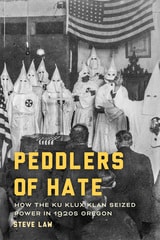
Peddlers of Hate
How the Ku Klux Klan Seized Power in 1920s OregonSteve Law
Oregon State University Press, 2026
The revived Knights of the Ku Klux Klan flourished in Oregon in the early 1920s. With more than sixty chapters established in both large and small communities like Portland, Medford, Astoria, and La Grande, the Klan’s power escalated in the region. Klan salesmen, working on commission, successfully enlisted Oregonians with a message of religious prejudice and racism. At the Klan’s peak, Portland was home to the sixth largest chapter in the country and there were more members per capita in Oregon than in any other state except one.
In Peddlers of Hate, journalist Steve Law draws on published and unpublished sources, new research, and interviews with leading scholars to provide a comprehensive account of how Oregon became one of the Klan’s strongest outposts. Representing the Klan as merely a fraternal lodge, Klan recruiters were trained to vilify Catholics, immigrants, Blacks, and Jews. They gained wide support, toppling an incumbent governor and congressman, persuading voters to ban Catholic schools, and winning control of the legislature and several local governments. From stories of “escaped nuns” to fiery crosses at mass Klan rallies at Salem’s state fairgrounds and Portland’s Mount Tabor Park, Law examines this divisive and forgotten time in Oregon’s history. He shows how it was finally greed, hypocrisy, and corruption that spurred the hate group’s demise—providing historical lessons that will resonate today.
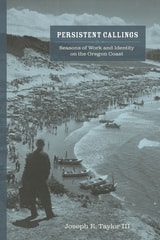
Persistent Callings
Seasons of Work and Identity on the Oregon CoastJoseph E. Taylor
Oregon State University Press, 2019
The Nestucca Valley is a small watershed, tucked away in one corner of a county in far western Oregon. There are no incorporated towns, and cows outnumber humans. It has long been a place without a written history, yet its past offers many surprising twists on received wisdom about rural economies. In crisp prose and succinct chapters, Persistent Callings carries readers from aboriginal times to the present, illustrating the wisdom of seasonal labor, the complex relationships between work and identity, and the resilience of rural economics across more than a century of almost continual change.
Life in this watershed, known to locals as “South County,” has always been demanding. Farming, fishing, and logging were difficult occupations, but work had deeper meanings. Challenges arrived in many forms, including climate shifts, market crashes, regulatory changes, and industry consolidations. Residents’ ability to innovate was their greatest resource, and their persistence helps us to recognize the callings they pursued.
During the late twentieth and early twenty-first centuries, disruptions came more quickly, and they coincided with infusions of capital that dramatically altered the structure of employment, with devastating results for the valley’s hardest working residents. Unemployment and poverty skyrocketed while health and life expectancy dropped to alarming levels. Moreover, the arrival of retirees and rise of environmental amenities actually exacerbated some ecological problems. Little in this history plays out as expected, and much of it will make readers reconsider how they think about the social, economic, and environmental contours of rural life in the American West.
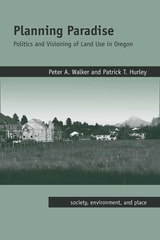
Planning Paradise
Politics and Visioning of Land Use in OregonBy Peter A. Walker and Patrick T. Hurley
University of Arizona Press, 2011
Oregon is one of the nation’s most celebrated exceptions. In the early 1970s Oregon established the nation’s first and only comprehensive statewide system of land-use planning and largely succeeded in confining residential and commercial growth to urban areas while preserving the state’s rural farmland, forests, and natural areas. Despite repeated political attacks, the state’s planning system remained essentially politically unscathed for three decades. In the early- and mid-2000s, however, the Oregon public appeared disenchanted, voting repeatedly in favor of statewide ballot initiatives that undermined the ability of the state to regulate growth. One of America’s most celebrated “success stories” in the war against sprawl appeared to crumble, inspiring property rights activists in numerous other western states to launch copycat ballot initiatives against land-use regulation.
This is the first book to tell the story of Oregon’s unique land-use planning system from its rise in the early 1970s to its near-death experience in the first decade of the 2000s. Using participant observation and extensive original interviews with key figures on both sides of the state’s land use wars past and present, this book examines the question of how and why a planning system that was once the nation’s most visible and successful example of a comprehensive regulatory approach to preventing runaway sprawl nearly collapsed.
Planning Paradise is tough love for Oregon planning. While admiring much of what the state’s planning system has accomplished, Walker and Hurley believe that scholars, professionals, activists, and citizens engaged in the battle against sprawl would be well advised to think long and deeply about the lessons that the recent struggles of one of America’s most celebrated planning systems may hold for the future of land-use planning in Oregon and beyond.
Portland in Three Centuries
The Place and the PeopleCarl Abbott
Oregon State University Press, 2011
Portland in Three Centuries
The Place and the PeopleCarl Abbott
Oregon State University Press, 2022
Incorporating social history and contemporary scholarship in his narrative, Abbott examines current metropolitan character and issues, giving close attention to historical background. He explores the context of opportunities and problems that have helped to shape the rich mosaic that is Portland.
This revised and updated second edition includes greater attention to the Indigenous peoples of the Portland region, Portland’s communities of color, and the challenges of recent years that have thrust Portland into the national spotlight.
A highly readable character study of a city, and enhanced by more than sixty historic and contemporary images, Portland in Three Centuries will appeal to readers interested in Portland, in Oregon, and in Pacific Northwest history.

Portland's Audacious Champion
How Bill Naito Overcame Anti-Japanese Hate and Became an Intrepid Civic LeaderErica Naito-Campbell
Oregon State University Press, 2024
William “Bill” Sumio Naito (1925–1996) was a remarkable and visionary individual—the Portland-born son of Japanese immigrants who became one of the city’s most significant business and civic leaders. Every day thousands of people drive on Naito Parkway alongside Portland’s Waterfront Park, yet little has been written about the man for whom it was named.
In this first biography, Erica Naito-Campbell, Bill’s granddaughter, shows how his story is also the story of Portland, the city he loved. Naito’s life, from the Great Depression and World War II through Portland’s rebirth in the 1970s and its profound growth, tracked most of the major events in the city and was the catalyst for many of them. Through hard-earned success in importing and real estate with his brother Sam, Naito came to wield considerable power in the city, and his leadership led to much of what we consider iconic Portland today: the “Portland Oregon” sign near the Burnside Bridge, the annual Christmas tree in Pioneer Courthouse Square, and Harbor Drive’s conversion to Waterfront Park.
Naito’s name became synonymous with civic leadership, whether it was growing Portland’s urban tree canopy, revitalizing its downtown, or preserving historic buildings. But less is known about his difficult childhood—with a father who worked twelve-hour days and a mother whose treatment of him was harsh at best—and the racism he endured during World War II. After the expulsion of Japanese Americans following Pearl Harbor and his military service in Occupied Japan, Naito overcame great emotional turmoil to return to Portland and become one of its greatest change-makers.
Erica Naito-Campbell uses anecdotes, rich details, and previously unknown stories about Bill Naito to bring Portland’s history to life—while acknowledging that the cost of his success was a family rife with resentments and envy. Her book reveals the emotional wounds that drove Naito to become one of Portland’s most inspiring civic leaders, a pivotal player in the city’s journey from a moribund downtown to a national model for livability, urban renewal, and historic preservation.
Present at the Fermentation
The Moves, Mishaps, and Magic Behind the Pacific Northwest Microbrew RevolutionTom Gauntt
Oregon State University Press, 2027
From ale romantics to hopheads, the Pacific Northwest is a haven for beer lovers. Considered a mecca for beer enthusiasts, the Northwest earned its reputation from a group of emerging brewers in the 1980s who established a demand for craft beer throughout and beyond the region. Brewing guru Fred Eckhardt, the Grateful Dead–loving McMenamin brothers, the effervescent Art Larrance, the determined Widmer brothers, and entrepreneurial pub owner Don Younger were among the open-minded, vibrant crew who founded a microbrewery industry that became a model for a new era.
“For those intimately involved or those who merely had a barstool view of the microbrewing revolution, the first decade of the movement was an intoxicating passage from anonymity to celebrity,” writes Tom Gauntt in the introduction. Present at the Fermentation celebrates the rich history of beermaking and those who transformed the business in the Pacific Northwest. Through press coverage of the time, interviews, oral histories, and personal memory, Gauntt offers an engaging history of one of Oregon’s signature industries.
With more than 9,700 craft brewers now operating in the US, there remains a passion for craft brewing and pride in creating the perfect ale in this evolving market. So, pour a pint and learn how Pacific Northwest microbreweries persevered through risk, hard work, foibles, and a lot of luck to create award-winning beer, connect with their communities, and build thriving businesses.
Punjabi Rebels of the Columbia River
The Global Fight for Indian Independence and CitizenshipJohanna Ogden
Oregon State University Press, 2024
Oregon is commonly perceived to have little, let alone notable, South Asian history. Yet in the early 1900s Oregon was at the center of two entwined quests for Indian independence and civic belonging that rocked the world.
Punjabi Rebels of the Columbia River traces the stories of the radical Indian independence organization known as Ghadar and Bhagat Singh Thind’s era-defining US Supreme Court citizenship case. Ghadar sought the overthrow of India’s British colonizers while Thind utilized sanctioned legal channels to do so. Despite widely differing strategies, both the movement and the man were targeted, often in coordination, by the highest levels of the US and British governments. The empires’ united message: India would not be an independent country and Indians could not be citizens. In the decades that followed, it was a verdict Indians refused to abide.
Johanna Ogden’s detailed history of migrants’ experience expands the time frame, geographic boundaries, and knowledge of the conditions and contributions of Indians in North America. It is the story of a people’s awakening amid a rich community of international workers in an age of nationalist uprisings. To understand why one of the smallest western Indian settlements became a resistance center, Punjabi Rebels mines the colonial underpinnings of labor, race, and place-making and their regional and global connections, rendering a history of whiteness and labor as much as of Indian-ness and migration. The first work to rejoin the lived experience of Thind and Ghadar activists, Punjabi Rebels complicates our understanding not just of the global fight for Indian political rights but of multi-racial democracy.