Results by title
60 books match the query 'Paleo-Indians' and 8 start with p
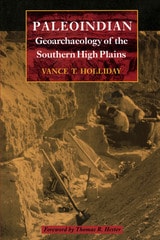
Paleoindian Geoarchaeology of the Southern High Plains
By Vance T. Holliday
University of Texas Press, 1997
The Southern High Plains of northwestern Texas and eastern New Mexico are rich in Paleoindian archaeological sites, including such well-known ones as Clovis, Lubbock Lake, Plainview, and Midland. These sites have been extensively researched over decades, not only by archaeologists but also by geoscientists, whose studies of soils and stratigraphy have yielded important information about cultural chronology and paleoenvironments across the region.
In this book, Vance T. Holliday synthesizes the data from these earlier studies with his own recent research to offer the most current and comprehensive overview of the geoarchaeology of the Southern High Plains during the earliest human occupation. He delves into twenty sites in depth, integrating new and old data on site geomorphology, stratigraphy, soils, geochronology, and paleoenvironments. He also compares the Southern High Plains sites with other sites across the Great Plains, for a broader chronological and paleoenvironmental perspective.
With over ninety photographs, maps, cross sections, diagrams, and artifact drawings, this book will be essential reading for geoarchaeologists, archaeologists, and Quaternary geoscientists, as well as avocational archaeologists who take part in Paleoindian site study throughout the American West.
Paleoindian Lifeways of the Cody Complex
Edward J. Knell
University of Utah Press, 2013
Paleoindian Lifeways of the Cody Complex represents the first synthesis in the more than fifty year history of one of the most important Paleoindian cultural traditions in North America. Research on the Cody complex (~10,000–8,000 radiocarbon yrs B.P.) began in the 1940s; however, until now publications have focused almost exclusively on specific sites, issues of projectile point technology and typology, and bison hunting. This volume provides fresh perspectives and cutting-edge research that significantly increases our understanding of the Cody complex by focusing more squarely on the human behaviors that created the archaeological record, rather than on more strictly technical aspects of the artifacts and faunal remains.
Because the Cody complex extends from the central Canadian plains to the Gulf of Mexico and from Nevada to the eastern Great Lakes—making it second only to Clovis in geographical expanse—this volume will appeal to a wide range of North American archaeologists. Across this broad geographic distribution, the contributors address hunter-gatherer adaptive strategies from diverse ecosystems at the onset of the Holocene, which will also make it of interest to human ecologists and paleoenvironmental researchers. Paleoindian Lifeways of the Cody Complex provides an innovative synthesis of a well-known but little-studied cultural tradition that opens the door for a new generation of exciting research.
Paleoindian or Paleoarchaic?
Great Basin Human Ecology at the Pleistocene-Holocene TransitionKelly E Graf
University of Utah Press, 2008
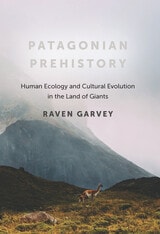
Patagonian Prehistory
Human Ecology and Cultural Evolution in the Land of GiantsRaven Garvey
University of Utah Press, 2021
Garvey’s novel hypotheses question common assumptions regarding Patagonia’s suitability for prehistoric hunter-gatherers. She makes four primary arguments: (1) the surprising lack of clothing in parts of prehistoric Patagonia supports a relatively slow initial colonization of the Americas; (2) the sparse record of human habitation during the middle Holocene may be due to prehistoric behavioral changes and archaeological sampling methods rather than population decline; (3) farming never took root in Patagonia because risks associated with farming likely outweighed potential benefits; and, finally, (4) the broad trajectory of cultural change in Patagonia owes as much to feedback between population size and technology as to conditions in the rugged Patagonian outback itself.
People and Culture in Ice Age Americas
New Dimensions in Paleoamerican ArchaeologyRafael Suarez and Ciprian F. Ardelean
University of Utah Press, 2018
People in a Sea of Grass
Archaeology's Changing Perspective on Indigenous Plains CommunitiesEdited by Matthew E. Hill and Lauren W. Ritterbush
University of Utah Press, 2021
Contributors highlight how Indigenous Plains groups participated in large-scale social networks in which ideas, symbols, artifacts, and people moved across North America over the last 2,000 years. They also discuss cultural transformation, focusing on key demographic, economic, social, and ceremonial factors associated with change, including colonization and integration into the social and political economies of transatlantic societies. Cultural traditions covered include Woodland-era Kansas City Hopewell, late prehistoric Central Plains tradition, and ancestral and early historic Wichita, Pawnee and Arikara, Kanza, Plains Apache, and Puebloan migrants. As the first review of Plains archaeology in more than a decade, this book brings studies of early Indigenous
peoples of the central and southern Plains into a new era.
Plainview
The Enigmatic Paleoindian Artifact Style of the Great PlainsEdited by Vance T. Holliday, Eileen Johnson, and Ruthann Knudson
University of Utah Press, 2017
Prehistory of South America
Ancient Cultural Diversity on the Least Known ContinentJerry D. Moore
University Press of Colorado, 2014
For more than 12,000 years, South American cultures ranged from mobile hunters and gatherers to rulers and residents of colossal cities. In the process, native South American societies made advancements in agriculture and economic systems and created great works of art—in pottery, textiles, precious metals, and stone—that still awe the modern eye. Organized in broad chronological periods, A Prehistory of South America explores these diverse human achievements, emphasizing the many adaptations of peoples from a continent-wide perspective. Moore examines the archaeologies of societies across South America, from the arid deserts of the Pacific coast and the frigid Andean highlands to the humid lowlands of the Amazon Basin and the fjords of Patagonia and beyond.
Illustrated in full color and suitable for an educated general reader interested in the Precolumbian peoples of South America, A Prehistory of South America is a long overdue addition to the literature on South American archaeology.