Results by title
57 books match the query 'Peasants' and 14 start with p

PEASANTS OF LANGUEDOC
Emmanuel Le Roy Ladurie
University of Illinois Press, 1974
"total history" when it was published in France in 1966, Le Roy Ladurie's
volume combines elements of human geography, historical demography, economic
history, and folk culture in a broad depiction of a great agrarian cycle,
lasting from the Renaissance to the Enlightenment. It describes the conflicts
and contradictions of a traditional peasant society in which the rise in
population was not matched by increases in wealth and food production.
"It presents us with a great study of rural history, an analysis of economic change and a description of a society
in movement that has few equals."
-- Washington Post Book World
"It is without any doubt one of the most important, if not the most important, monograph of the French Annales school of socio-economic
historians written in the last decade." -- Canadian Historical Review
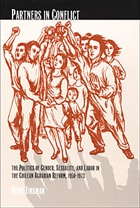
Partners in Conflict
The Politics of Gender, Sexuality, and Labor in the Chilean Agrarian Reform, 1950–1973Heidi Tinsman
Duke University Press, 2002
Tinsman restores women to a scholarly narrative that has been almost exclusively about men, recounting the centrality of women’s labor to the pre-Agrarian Reform world of the hacienda during the 1950s and recovering women’s critical roles in union struggles and land occupations during the Agrarian Reform itself. Providing a theoretical framework for understanding why the Agrarian Reform ultimately empowered men more than women, Tinsman argues that women were marginalized not because the Agrarian Reform ignored women but because, under both the Frei and Allende governments, it promoted the male-headed household as the cornerstone of a new society. Although this emphasis on gender cooperation stressed that men should have more respect for their wives and funneled unprecedented amounts of resources into women’s hands, the reform defined men as its protagonists and affirmed their authority over women.
This is the first monographic social history of Chile’s Agrarian Reform in either English or Spanish, and the first historical work to make sexuality and gender central to the analysis of the reforms.

Peasant Cooperation and Capitalist Expansion in Central Peru
Edited by Norman Long and Bryan R. Roberts
University of Texas Press, 1978
This book brings together the research into regional development and social change carried out in highland Peru by a team of British and Latin American social anthropologists and sociologists. The area studied—the Mantaro Valley of central Peru—is one of the most densely populated and economically differentiated of highland zones; it is also notable for its community-based forms of cooperation and its high level of peasant political activity.
The book presents a series of case studies that examine cooperative forms of organization in relation to developments in the regional economy and to changes in national policy. The analysis attempts to avoid interpreting local processes merely as responses to externally initiated change. It stresses instead the need to consider the interplay of local and national forces, because local groups and processes themselves affect the pattern of regional and national development. The case studies cover a range of political and economic topics, from peasant movements to the achievements and shortcomings of government-sponsored agricultural and manufacturing cooperatives. The concluding chapter, by the editors, explores the theoretical implications of these studies.

Peasant Intellectuals
Anthropology and History in TanzaniaSteven Feierman
University of Wisconsin Press, 1990
Scholars who study peasant society now realize that peasants are not passive, but quite capable of acting in their own interests. But, do coherent political ideas emerge within peasant society or do peasants act in a world where elites define political issues? Peasant Intellectuals is based on ethnographic research begun in 1966 and includes interviews with hundreds of people from all levels of Tanzanian society. Steven Feierman provides the history of the struggles to define the most basic issues of public political discourse in the Shambaa-speaking region of Tanzania. Feierman also shows that peasant society contains a rich body of alternative sources of political language from which future debates will be shaped.

Peasants Against the State
The Politics of Market Control in Bugisu, Uganda, 1900-1983Stephen G. Bunker
University of Chicago Press, 1991
Focusing on peasant struggles for market control over coffee exports in Bugisu from colonial times through the reign and overthrow of Idi Amin, Bunker shows that these freeholding peasants acted collectively and used the state's dependence on coffee export revenues to effectively influence and veto government programs inimical to their interests.
Bunker's work vividly portrays the small victories and great trials of ordinary people struggling to control their own economic destiny while resisting the power of the world economy.
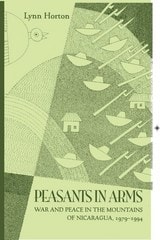
Peasants In Arms
War and Peace in the Mountains of Nicaragua, 1979–1994Lynn Horton
Ohio University Press, 1999
Drawing on testimonies from contra collaborators and ex-combatants, as well as pro-Sandinista peasants, this book presents a dynamic account of the growing divisions between peasants from the area of Quilalí who took up arms in defense of revolutionary programs and ideals such as land reform and equality and those who opposed the FSLN.
Peasants in Arms details the role of local elites in organizing the first anti-Sandinista uprising in 1980 and their subsequent rise to positions of field command in the contras. Lynn Horton explores the internal factors that led a majority of peasants to turn against the revolution and the ways in which the military draft, and family and community pressures reinforced conflict and undermined mid-decade FSLN policy shifts that attempted to win back peasant support.
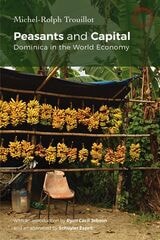
Peasants and Capital
Dominica in the World EconomyMichel-Rolph Trouillot
HAU, 2025
Over thirty-five years ago, Michel-Rolph Trouillot’s debut ethnography, Peasants and Capital: Dominica in the World Economy, dared to regard peasants not as vestiges of premodern economies but as instrumental to, and integrated in, a capitalist world system. Combining historical ethnography with an intimate portrait of a banana-producing eastern Caribbean village, this multi-sited study demonstrates how multinational capital thrives on the surplus production of peasant cultivators. At the same time, it investigates how peasantries generate independent conceptions of value and subsistence in the process of building a new postcolonial state in Dominica. This new edition of Peasants and Capital invites anthropologists to revisit the methodological innovations of this multi-scalar study and readers to meditate on the continued vitality of peasant livelihoods in the Caribbean today.
Ryan Cecil Jobson’s new introduction situates this edition in the context of Trouillot’s remarkable life and career. Jobson reminds us of the book’s enduring theoretical and ethnographic significance and asks us to consider how the entanglement of peasants from Dominica in national and world affairs has been impacted by more recent histories, such as the end of preferential markets for Caribbean bananas, the migration of “banana children” to regional and metropolitan urban centers, and the devastation of Dominica by Hurricane Maria.

Peasants in Revolt
A Chilean Case Study, 1965–1971By James Petras and Hugo Zemelman Merino; translated by Thomas Flory
University of Texas Press, 1973
Based on extended interviews at the Culiprán fundo in Chile with peasants who recount in their own terms their political evolution, this is an in-depth study of peasants in social and political action. It deals with two basic themes: first, the authoritarian structure within a traditional latifundio and its eventual replacement by a peasant-based elected committee, and second, the events shaping the emergence of political consciousness among the peasantry. Petras and Zemelman Merino trace the careers of local peasant leaders, followers, and opponents of the violent illegal land seizure in 1965 and the events that triggered the particular action.
The findings of this study challenge the oft-accepted assumption that peasants represent a passive, traditional, downtrodden group capable only of following urban-based elites. The peasant militants, while differing considerably in their ability to grasp complex political and social problems, show a great deal of political skill, calculate rationally on the possibility of success, and select and manipulate political allies on the basis of their own primary needs. The politicized peasantry lend their allegiance to those forces with whom they anticipate they have the most to gain—and under circumstances that minimize social costs. The authors identify the highly repressive political culture within the latifundio—reinforced by the national political system—as the key factor inhibiting overt expressions of political demands.
The emergence of revolutionary political consciousness is found to be the result of cumulative experiences and the breakdown of traditional institutions of control. The violent illegal seizure of the farm is perceived by the peasantry as a legitimate act based on self-interest as well as general principles of justice—in other words, the seizure is perceived as a “natural act,” suggesting that perhaps two sets of moralities functioned within the traditional system.
The book is divided into two parts: the first part contains a detailed analysis of peasant behavior; the second contains transcriptions of peasant interviews. Combined, they give the texture and flavor of insurgent peasant politics.
Peasants on Plantations
Subaltern Strategies of Labor and Resistance in the Pisco Valley, PeruVincent Peloso
Duke University Press, 1999
Grounded in the theoretical perspectives of subaltern studies and drawing on an extremely complete archive of landed estates that includes detailed regular reports by plantation managers on all aspects of farming life, Peasants on Plantations reveals the intricate ways peasants, managers, and owners manipulated each other to benefit their own interests. As Peloso demonstrates, rather than a simple case of domination of the peasants by the owners, both parties realized that negotiation was the key to successful growth, often with the result that peasants cooperated with plantation growth strategies in order to participate in a market economy. Long-term contracts gave tenants and sharecroppers many opportunities to make farming choices, to assert claims on the land, compete among themselves, and participate in plantation expansion. At the same time, owners strove to keep the peasants in debt and well aware of who maintained ultimate control.
Peasants on Plantations offers a largely untold view of the monumental struggle between planters and peasants that was fundamental in shaping the agrarian history of Peru. It will interest those engaged in Latin American studies, anthropology, and peasant and agrarian studies.
Peasants on the Edge
Crop, Cult, and Crisis in the AndesBy William P. Mitchell
University of Texas Press, 1991
Throughout Latin America and the rest of the Third World, profound social problems are growing in response to burgeoning populations and unstable economic and political systems. In Peru, terrorist acts by the Shining Path guerilla movement are the most visible manifestation of social discontent, but rapid economic and religious changes have touched the lives of almost everyone, radically altering traditional lifeways. In this twenty-year study of the community of Quinua in the Department of Ayacucho, William Mitchell looks at changes provoked by population growth within a severely limited ecological and economic setting, including increasing conversion to a cash economy and out-migration, the decline of the Catholic fiesta system and the rise of Protestantism, and growing poverty and revolution.
When Mitchell first began his field studies in Quinua in 1966, farming was still the Quinueños' principal means of livelihood. But while the population was increasing rapidly, the amount of arable land in the community remained the same, creating increased food shortfalls. At the same time, government controls on food prices and subsidies of cheap food imports drove down the value of rural farm production. These ecological and economic factors forced many people to enter the nonfarm economy to feed themselves.
Using a materialist approach, Mitchell charts the new economic strategies that Quinueños use to confront the harsh pressures of their lives, including ceramic production, wage labor, petty commerce, and migration to cash work on the coat and in the eastern tropical forests. In addition, he shows how the growing conversion from Catholicism to Protestantism is also an economic strategy, since Protestant ideology offers acceptable reasons for redirecting the money that used to be spent on elaborate religious festivals to household needs and education.
The twenty-year span of this study makes it especially valuable for students of social change. Mitchell's unique, interdisciplinary approach, considering ecological, economic, and population factors simultaneously, offers a model that can be widely applied in many Third World areas. Additionally, the inclusion of an entire chapter of family histories reveals how economic and ecological forces are played out at the individual level.

Peasants, Warriors, and Wives
Popular Imagery in the ReformationKeith Moxey
University of Chicago Press, 2004

Physicians, Peasants, and Modern Medicine
Imagining Rurality in Romania, 1860-1910Constantin Barbulescu
Central European University Press, 2019

Popular Movements and State Formation in Revolutionary Mexico
The Agraristas and Cristeros of MichoacanJennie Purnell
Duke University Press, 1999
Rather than viewing the cristeros (supporters of the Church) as victims of false consciousness or as religious fanatics, as others have done, Purnell shows that their motivations—as well as the motivations of the agraristas (supporters of the revolutionary state)—stem from local political conflicts that began decades, and sometimes centuries, before the Revolution. Drawing on rich but underutilized correspondence between peasants and state officials written over the course of the nineteenth and twentieth centuries, Purnell shows how these conflicts shaped the relationships between property rights, religious practice, and political authority in the center-west region of Mexico and provides a nuanced understanding of the stakes and interests involved in subsequent conflicts over Mexican anticlericalism and agrarian reform in the 1920s.

Princes, Peasants, and Other Polish Selves
Ethnicity in American LiteratureThomas Gladsky
University of Massachusetts Press, 0