Results by title
283 books match the query 'Phenomenology' and 25 start with p
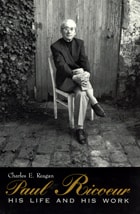
Paul Ricoeur
His Life and His WorkCharles E. Reagan
University of Chicago Press, 1996
"A valuable introduction to Ricoeur; highly recommended."—Library Journal
"[A] lively introduction to the life and thought of one of this century's most notable philosophers."—Norman Wirzba, Christian Century
"Reagan lucidly explains Ricoeur's difficult philosophy while shining overdue light on the personality behind it."—Carlin Romano, Philadelphia Inquirer
"Combines biographical and philosophical essays with a more personal memoir that makes Ricoeur's humane and magnanimous nature abundantly evident. Four revealing interviews, coupled with photographs, and an extensive bibliography of primary and secondary sources, complete this illuminating study."—Choice

Perception, Expression, and History
The Social Phenomenology of Maurice Merleau-PontyJohn O'Neill
Northwestern University Press, 1970

Phenomenological Approaches to Popular Culture
Michael T. Carroll
University of Wisconsin Press, 2000
The fifteen essays in this volume demonstrate the way in which phenomenological approaches can illuminate popular culture studies, and in so doing they take on the entire range of popular culture.
Phenomenology and Deconstruction, Volume Four
SolitudeRobert Denoon Cumming
University of Chicago Press, 2001
After the war Heidegger disavowed Sartre, a move related to Heidegger's renunciation of his association with the phenomenological movement at large, and one that illustrates the dynamics of the history Cumming himself has completed. Serving as convincing punctuation for this remarkable series, this book demonstrates the importance of the history of philosophy in coming to grips with the proclaimed end of philosophy.
Phenomenology and Deconstruction, Volume One
The Dream is OverRobert Denoon Cumming
University of Chicago Press, 1991
In this analysis Cumming deals with how a philosophy can be vulgarized (as Heidegger's was by Nazism but in Heidegger's own view by Sartre), with problems of periodization, with how the history of philosophy can be disinguished as a philosophical discipline from intellectual history. Cumming also elaborates an analogy between a philosophical method and style.
Phenomenology and Deconstruction, Volume Three
Breakdown in CommunicationRobert Denoon Cumming
University of Chicago Press, 2001
history of philosophy demonstrates how frequently one philosopher
misunderstands another. The most notorious such breakdown in
communication in twentieth-century philosophy was between Husserl and
Heidegger. In the third volume of his history of the phenomenological
movement, Robert Denoon Cumming argues that their differences involve
differences in method; whereas Husserl follows a "method of
clarification," with which he eliminates ambiguities by relying on an
intentional analysis that isolates its objects, Heidegger rejects the
criterion of "clarity" and embraces ambiguities as exhibiting
overlapping relations.
Cumming also explores the differences between how
deconstruction—Heidegger's procedure for dealing with other
philosophers—is carried out when Heidegger interprets Husserl versus
when Derrida interprets Husserl. The comparison enables Cumming to
show how deconstruction is associated with Heidegger's arrival at the
end of philosophy, paving the way for the deconstructionist movement.
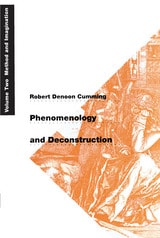
Phenomenology and Deconstruction, Volume Two
Method and ImaginationRobert Denoon Cumming
University of Chicago Press, 1992
Cumming also shows that conversion is not merely a personal predisposition of Sartre's—further manifest in his later conversions to Heidegger and to a version of Marxism. Conversion is also philosophical preoccupation, illustrated by the "conversion to the imaginary" whereby Sartre explains how he himself, as well as Genet and Flaubert, became writers. Finally, Cumming details how Husserl's phenomenological method contributed both to the shaping of Sartre's style as a literary writer and to his theory of style.

Phenomenology and Embodiment
Husserl and the Constitution of SubjectivityJoona Taipale
Northwestern University Press, 2014

Phenomenology and Theory of Science
Aron Gurwitsch
Northwestern University Press, 1974
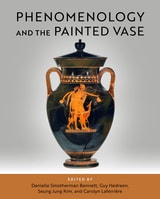
Phenomenology and the Painted Vase
Edited by Danielle Smotherman Bennett, Guy Hedreen, SeungJung Kim, and Carolyn Laferrière
University of Wisconsin Press, 2026
Most people today encounter ancient Greek vases as static, untouchable artifacts safely out of reach behind glass, in the quiet of a museum gallery. Once, however, these vessels were also useful objects, made to be held, filled, and generally used in a variety of settings, from the ritual to the quotidian. This volume considers these ancient vases together with the theoretical frameworks developed by pioneers of phenomenology such as Maurice Merleau-Ponty and Edmund Husserl, helping us encounter Greek vases as they once were. The principles of phenomenology require that we understand objects as active participants in shaping the manner in which humans experience the world. A phenomenological perspective allows us to see how the function and use of Greek vases shaped both their visual appearance and the perceptual experience of them—as well as our continued understanding of them today—while taking into account multisensory perspectives. With this alternative approach to the study of classical pottery, the authors offer new and illuminating insights not just into the objects in question but also into ancient Greek culture and life more broadly.
Phenomenology and the Problem of History
A Study of Husserl's Transcendental PhilosophyDavid Carr
Northwestern University Press, 2009
Phenomenology and the Social Sciences
Maurice Natanson
Northwestern University Press, 1973

Phenomenology in Psychology and Psychiatry
A Historical IntroductionHerbert Spiegelberg
Northwestern University Press, 1972
Phenomenology in Psychology and Psychiatry is a historical introduction to phenomenology in psychology working from the general to the details of the subject.

Phenomenology of Merleau-Ponty
A Search For The Limits Of ConsciousnessGary Brent Madison
Ohio University Press, 1981
The first study of its kind to appear in English, The Phenomenology of Merleau-Ponty is a sustained ontological reading of Merleau-Ponty which traces the evolution of his philosophy of being from his early work to his late, unfinished manuscripts and working notes. Merleau-Ponty, who contributed greatly to the theoretical foundations of hermeneutics, is here approached hermeneutically.
Most commentators are agreed that towards the end Merleau-Ponty’s philosophy underwent a strange and interesting mutation. The exact nature of this mutation or conceptual shift is what this study seeks to disclose. Thus, although Madison proceeds in a generally progressive, chronological fashion, examining Merleau-Ponty’s major works in the order of their composition, his reading is ultmately regressive in that Merleau-Ponty’s earlier works are viewed in the light of the new and enigmatic ontological orientation which makes its appearance in his later work. The merit of this approach is that, as Paul Ricoeur has remarked, it enables the author to expose the “anticipatory, hollowed-out presence” of Merleau-Ponty’s late philosophy “in the difficulties of his early phenomenology,” such that “the unifying intention between his first philosophy of meaning and the body and the late, more ontological philosophy is made manifest.”
This book begins with a detailed study of Merleau-Ponty’s two major early works, The Structure of BehaviorThe Phenomenology of Perception. In the following three chapters, Madison traces the development of Merleau-Ponty’s thought from the beginning to the end of his philosophical career in regard to three topics of special concern to the French phenomenologist: painting, language, philosophy. In the final chapter, he is concerned to articulate, as much as the unfinished state of Merleau-Ponty’s final work allows, the unspoken thought of this work and of The Visible and Invisible in particular. Merleau-Ponty’s notion of “wild being” and his attempt to work out an “indirect” or “negative” ontology are thoroughly analyzed.
In the end the reader will see that through his self-criticism and the development in his own phenomenology Merleau-Ponty has brought phenomenology itself to its limits and to the point where it must transcend itself as a philosophy of consciousness in the Husserlian sense if it is to remain faithful to Husserl’s own goal of bringing “experience to the full expression of its own meaning.” Because Madison submits Merleau-Ponty to the same kind of interpretive retrieval as the latter did with Husserl, Roger Cailloise has said of this “clear and very complete book” that it “goes will beyond a simple exposition and merits being read as an original work.”

Phenomenology of the Alien
Basic ConceptsTranslated from the German by Alexander Kozin and Tanja Stähler
Northwestern University Press, 2011
With impressive erudition Waldenfels weaves in xenological themes from classical philosophy, contemporary phenomenology, literature, linguistics, sociology, and anthropology to address the boundaries of experience that unite and separate human beings, their collectives, their perceptions, and aspirations. While the debate has long raged in German-speaking circles, Waldenfels’s work is largely unavailable to the English-speaking audience, with the only other translation being The Order in the Twilight (1996). Phenomenology of the Alien is a superb introduction to both xenological phenomenology, and the the question of the alien as it has been unfolding in contemporary thought.
Phenomenology of the Social World
Alfred Schutz
Northwestern University Press, 1967
Phenomenology
Between Essentialism and Transcendental PhilosophyJ.N. Mohanty
Northwestern University Press, 1997
This collection of essays traces the themes of essentialism and transcendentalism as they have appeared in the development of phenomenology from Husserl to Derrida. Beginning with Husserl's major phenomenological themes--essence, meaning, transcendental subjectivity, and life-world--Mohanty examines the tensions within phenomenology in general and within Husserl's phenomenology in particular. The accessibility of these essays, coupled with Mohanty's consideration of lesser-known phenomenologists (Ingarden, Scheler, Hartmann, et. al.) mark this as a major updating of phenomenology for a contemporary audience.

Phenomenology
Responses and DevelopmentsEdited by Leonard Lawlor
University of Chicago Press, 2010
From Kant to Kierkegaard, from Hegel to Heidegger, continental philosophers have indelibly shaped the trajectory of Western thought since the eighteenth century. Although much has been written about these monumental thinkers, students and scholars lack a definitive guide to the entire scope of the continental tradition. The most comprehensive reference work to date, this eight-volume History of Continental Philosophy will both encapsulate the subject and reorient our understanding of it. Beginning with an overview of Kant’s philosophy and its initial reception, the History traces the evolution of continental philosophy through major figures as well as movements such as existentialism, phenomenology, hermeneutics, and poststructuralism. The final volume outlines the current state of the field, bringing the work of both historical and modern thinkers to bear on such contemporary topics as feminism, globalization, and the environment. Throughout, the volumes examine important philosophical figures and developments in their historical, political, and cultural contexts.
The first reference of its kind, A History of Continental Philosophy has been written and edited by internationally recognized experts with a commitment to explaining complex thinkers, texts, and movements in rigorous yet jargon-free essays suitable for both undergraduates and seasoned specialists. These volumes also elucidate ongoing debates about the nature of continental and analytic philosophy, surveying the distinctive, sometimes overlapping characteristics and approaches of each tradition. Featuring helpful overviews of major topics and plotting road maps to their underlying contexts, A History of Continental Philosophy is destined to be the resource of first and last resort for students and scholars alike.
Philosophy and Non-Philosophy since Merleau-Ponty
Hugh J. Silverman
Northwestern University Press, 1997
Included in this volume is Silverman's translation of Merleau-Ponty's last course at the Collège de France in 1960-61 and an extensive research bibliography. Originally published in 1988, Philosophy and Non-Philosophy since Merleau-Ponty is a fascinating inquiry into the developments, directions, and ruptures in Continental philosophy since Merleau-Ponty's death in 1961.
Pictures, Quotations, and Distinctions
Fourteen Essays in PhenomenologyRobert Sokolowski
Catholic University of America Press, 2022
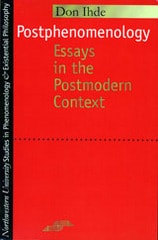
Postphenomenology
Essays in the Postmodern ContextDon Ihde
Northwestern University Press, 1995
Poststructuralism and Critical Theory's Second Generation
Edited by Alan D. Schrift
University of Chicago Press, 2010
From Kant to Kierkegaard, from Hegel to Heidegger, continental philosophers have indelibly shaped the trajectory of Western thought since the eighteenth century. Although much has been written about these monumental thinkers, students and scholars lack a definitive guide to the entire scope of the continental tradition. The most comprehensive reference work to date, this eight-volume History of Continental Philosophy will both encapsulate the subject and reorient our understanding of it. Beginning with an overview of Kant’s philosophy and its initial reception, the History traces the evolution of continental philosophy through major figures as well as movements such as existentialism, phenomenology, hermeneutics, and poststructuralism. The final volume outlines the current state of the field, bringing the work of both historical and modern thinkers to bear on such contemporary topics as feminism, globalization, and the environment. Throughout, the volumes examine important philosophical figures and developments in their historical, political, and cultural contexts.
The first reference of its kind, A History of Continental Philosophy has been written and edited by internationally recognized experts with a commitment to explaining complex thinkers, texts, and movements in rigorous yet jargon-free essays suitable for both undergraduates and seasoned specialists. These volumes also elucidate ongoing debates about the nature of continental and analytic philosophy, surveying the distinctive, sometimes overlapping characteristics and approaches of each tradition. Featuring helpful overviews of major topics and plotting road maps to their underlying contexts, A History of Continental Philosophy is destined to be the resource of first and last resort for students and scholars alike.
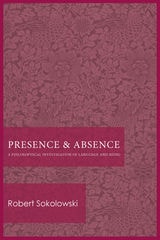
Presence and Absence
A Philosophical Investigation of Language and BeingRobert Sokolowski
Catholic University of America Press, 2017
“A splendid, provocative and profound work, this book explores the manifold ways in which the contrast of presence and absence operate to establish the possibility of human discourse and truthfulness…belongs in every philosophy collection.” – Choice
“Quite simply a superb book, which deserves more than one careful reading. A fresh, unified treatment of a grand philosophical theme, the theme of the connections between thought, truth, and being.” – Man and World
“A thoughtful book about thoughtfulness and truthfulness and their ontological conditions. Simply put, this is a book that will reward its careful reader a hundredfold, for Sokolowski is a speaker who says things in ways that are provocative, exciting, and invariably insightful.” – Journal of the British Society for Phenomenology
“Has few peers in phenomenological literature.” – International Philosophical Quarterly
“[Sokolowski is] an original thinker of the first rank, who has significantly furthered the path of phenomenological philosophy. As well as being an exciting synthesis, a thinking of the previously unthought in predecessors, and a ground-breaking movement, this work is written with a sensitivity to language and its graceful use that one would hope for from one exploring its richness and power.” – Human Studies

Prophetic Politics
Emmanuel Levinas and the Sanctification of SufferingPhilip J. Harold
Ohio University Press, 2009
In Prophetic Politics, Philip J. Harold offers an original interpretation of the political dimension of Emmanuel Levinas’s thought. Harold argues that Levinas’s mature position in Otherwise Than Being breaks radically with the dialogical inclinations of his earlier Totality and Infinity and that transformation manifests itself most clearly in the peculiar nature of Levinas’s relationship to politics.
Levinas’s philosophy is concerned not with the ethical per se, in either its applied or its transcendent forms, but with the source of ethics. Once this source is revealed to be an anarchic interruption of our efforts to think the ethical, Levinas’s political claims cannot be read as straightforward ideological positions or principles for political action. They are instead to be understood “prophetically,” a position that Harold finds comparable to the communitarian critique of liberalism offered by such writers as Alasdair MacIntyre and Charles Taylor. In developing this interpretation, which runs counter to formative influences from the phenomenological tradition, Harold traces Levinas’s debt to phenomenological descriptions of such experiences as empathy and playfulness.
Prophetic Politics will highlight the relevance of the phenomenological tradition to contemporary ethical and political thought—a long-standing goal of the series—while also making a significant and original contribution to Levinas scholarship.

Psychopathology
An Empathic Representational Approach; An Integration of Phenomenology and Cognitive NeuroscienceEric Yu Hai Chen
Hong Kong University Press, 2024
Psychopathology: An Empathic Representational Approach retraces the foundations of classical phenomenological psychopathology and integrates them with modern ideas drawn from anthropology, cognitive neuroscience, computational science, and evolutionary biology to synthesize a comprehensive framework and provide fresh insights. It explores key issues in clinical psychopathology coherently and systematically, illustrates advanced topics in an accessible manner using clinical case examples, metaphors, and clarifying diagrams, and directly links advanced conceptual frameworks with pragmatic skills in the clinical dialogue process.
This volume is aimed at a broad audience of mental health professionals, researchers, and students in psychiatry, psychology, and social work. Its interdisciplinary treatment of the subject will also interest biologists, anthropologists, cognitive psychologists, neuroscientists, and philosophers.