Results by title
58 books match the query 'Photoessays & Documentaries' and 5 start with p
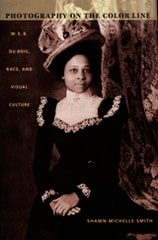
Photography on the Color Line
W. E. B. Du Bois, Race, and Visual CultureShawn Michelle Smith
Duke University Press, 2004
Smith reads Du Bois’s photographs in relation to other turn-of-the-century images such as scientific typologies, criminal mugshots, racist caricatures, and lynching photographs. By juxtaposing these images with reproductions from Du Bois’s exhibition archive, Smith shows how Du Bois deliberately challenged racist representations of African Americans. Emphasizing the importance of comparing multiple visual archives, Photography on the Color Line reinvigorates understandings of the stakes of representation and the fundamental connections between race and visual culture in the United States.
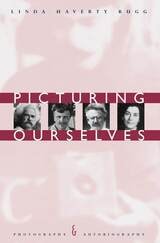
Picturing Ourselves
Photography and AutobiographyLinda Haverty Rugg
University of Chicago Press, 1997
Rugg tracks photography's impact on the formation of self-image through the study of four literary autobiographers concerned with the transformative power of photography. Obsessed with self-image, Mark Twain and August Strindberg both attempted (unsuccessfully) to integrate photographs into their autobiographies. While Twain encouraged photographers, he was wary of fakery and kept a fierce watch on the distribution of his photographic image. Strindberg, believing that photographs had occult power, preferred to photograph himself.
Because of their experiences under National Socialism, Walter Benjamin and Christa Wolf feared the dangerously objectifying power of photographs and omitted them from their autobiographical writings. Yet Benjamin used them in his photographic conception of history, which had its testing ground in his often-ignored Berliner Kindheit um 1900. And Christa Wolf's narrator in Patterns of Childhood attempts to reclaim her childhood from the Nazis by reconstructing mental images of lost family photographs.
Confronted with multiple and conflicting images of themselves, all four of these writers are torn between the knowledge that texts, photographs, and indeed selves are haunted by undecidability and the desire for the returned glance of a single self.

Picturing Utopia
Bertha Shambaugh and the Amana PhotographersAbigail Foerstner
University of Iowa Press, 2005
Private Subjects
Family Photography in South Africa and the Right to OpacityJohn Peffer
Duke University Press, 2026
Protest City
Portland's Summer of RageRian Dundon
Oregon State University Press, 2023
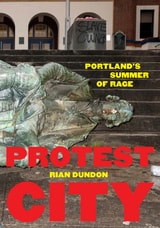
In the months leading up to the 2020 presidential election, Portland made national news with nightly social justice protests, often met with violent response by counter protestors and law enforcement. Though frequently regarded as a progressive hub, Portland has a long history of racial inequality and oppression, and the city’s entrenched divisions gained new attention during the Trump years. The photos in Protest City present a visceral visual record of this significant moment in Portland’s history.
Rian Dundon, who has been photographing the rise of extreme politics on the West Coast since 2016, lived only a short walk from the protests that erupted after the murder of George Floyd. For one hundred days, Dundon enmeshed himself in the demonstrations with an unobtrusive point-and-shoot camera. The result is a graphic portrayal of how social movements become politicized, how spectacle serves as a subtext to change in the digital age, and how modern protests blur distinctions among performance, ritual, and surveillance. As he follows the progress of Portland’s conflicts, Dundon draws connections to Oregon’s legacy as a stronghold of white supremacist extremism and interrogates the role of whiteness in racial justice movements.
Most of the photographs in the book were taken between May and October 2020, but the collection also includes photos from protests in late 2020 and 2021 around various related issues, including the Red House eviction blockade, rightwing demonstrations on January 6 and 17, and the one-year anniversary of George Floyd’s murder. Dundon’s striking photos recreate the immediacy and impact of the protests, while essays by historian Carmen Thompson and journalist Donnell Alexander contextualize the uprising’s sociopolitical background. A chronology and author’s note are also featured.
The publisher and author would like to thank the Magnum Foundation, Documentary Arts, and the Economic Hardship Reporting Project for their generous support of this publication. Additional funding has been provided by Furthermore: a program of the J. M. Kaplan Fund.